I've been a air passenger to the tune of 60,000 miles this year alone, so I'm defiantly used to it. My first flight was when I was in 1978, but I've never really had any scary experiences nor felt any trouble from take-off to landing and the (occasional) turbulence in between. To be honest, I've never seen anyone ever reach for an air sickness bag for nausea.
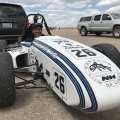
When you take off, you get to go 160-200 mph! I mean, it's BECAUSE kind of like a RACE CAR. After that, most of it just expecting what happens; usually the plane banks a little bit after take off, and rises to about 10,000 feet before leveling off a little to the expected altitude. It doesn't rise as sharply after that, so you'll barely notice at all.
If the flight's really short, the plane probably won't stay at the cruising altitude for long, and will begin its decent about 30 minutes before landing. Just like before, it won't lower quickly (although you may notice it if you've leaning forward to write things on the little folding table). The last 10,000 feet drops a little more rapidly, it will probably make a turn or two, although it's not until 500 feet that it goes in for a final landing. Usually once you see highways and open land, you know you're at the right place to land.
If you prefer, you can look out the window, if you get such a seat. I prefer the window seat, except if I know I'm traveling on a DC-9/DC-10 (less leg room due to the seat frame in front of you ). That distracts me enough to not think about much of anything except thinking I'm a bird, or an aerial cartographer.
Commerical jet planes are absurdly safe and their track record proves it...far safer than any other common form of transportation per passenger mile. Most commercial pilots (especially the captain) have served in the Air Force; they aren't twenty-somethings who just graduated college and only have the experience of bagging groceries. Basically, it's like asking a former racing champion to drive a tour bus; they're more than capable for the job.
Many modern jet planes don't even allow for "stupid maneuvers" to be committed accidentally, the computers assist a lot, they warn the pilot and first officer before allowing them to do something that might be outside the capability of the machinery. Those computers and fail-safes can prohibit accidents and foolhardy things from happening.
Drinking before a flight is not always recommended; it may calm you down a little bit, but you'll be thirsty later (the higher altitude does that to non-drinkers too). Then you'll have to use that incredibly tiny restroom. The only time I have a drink before a flight is if I'm not required to be on the job site after landing and the plane is expecting a multi-hour delay/bump me to first class (on the house). And if you're really sloshed, the staff can actually bar you from boarding the plane.
The rest is just calming down before the plane takes off; give yourself time to get to the airport; deal with parking/transportation, ticketing, baggage, security lines, getting scanned, getting your stuff back, and then waiting to board. The best advice I can give you is to be prepared (check in online 24 hours before the flight), print it out, and don't try to pass liquids or your pocket knife through the TSA checkpoint...best not to argue with the TSA people at all, you'll just embarrass yourself.







 Do you solve all of your problems with alcohol? In that case you may consider watching the following:







 . That's never worked, although we did get upgraded once. Club World in British Airways. I was SO happy we got the upgrade (13 hour flight from Heathrow to Tokyo). Also, try to get the bulkhead seats. More leg room. Lastly, don't bother getting a window seat if it's a long flight. Once you're at 30 000 feet, all you see is green or blue or grey (:.