Performance Points unreasonable?

  • Thread starter Thread starter snowgt
  • 20 comments
  • 1,933 views
Messages
2,990
Austria
Austria
Messages
GTP_SnowCrash
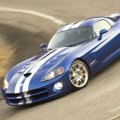
I've been wondering for a while how PD determines the Performance Points for a particular car. Wouldn't you agree that the purpose of the PP-system is to allow different cars to compete on a level playing field? And yet, e.g. there is no way you will beat a Ferrari California in standard spec (623 PP) with, say, a Viper GTS tuned up from 608 to 623 PP. Therefore, the Viper should have less PPs in standard spec, because otherwise it can't compete whereby making the whole PP-system somewhat useless, because it entices people to use certain cars instead of encouraging variety.

The PP-system is actually very similar to what is used in GT-racing, Le Mans, etc, to be able to let cars with different displacements, weights, etc. fight it out on the track by limiting engine-power, making them heavier/lighter, adjusting wing-sizes etc. But with such obvious inequalities between cars when tuned to the same PPs, PD could do a much better job as GT5P-'governing body'. :sly:

I think the premise is actually very simple: In the hands of a capable driver, equal PPs should be able to produce similar lap times on the track. Of course, this will vary depending on the track, but on average, this is what the PP-system should achieve. This 'peak'-performance will be harder to achieve with some cars, which are simply trickier to drive, but that's the whole point of diversity. (It could be argued that cars that are easier to drive, i.e. more forgiving, should get a tiny bit more PPs than say, mid-engine cars, so that someone that is able to handle such a tricky car is rewarded for it, but that is subject to discussion).

So what do you guys think?
 
It's a very hard thing to juggle, everytime PD adjusts PP points another car just becomes dominant. I am sure next update like all the last will include PP adjustments in a attempt to even out the playing field.
 
I think that the system does work in general, it simply isn't refined enough yet. Therefore, PP points can stand for equal chances with specific cars, but with others, they probably don't.

I remember stumbling into an online race on Suzuka, solely equipped with PP-downgraded NSX's. I was in a boosted Golf GTI. Usually, one would expect the Golf not to have a chance against an NSX, but I was able to keep up with them quite well and even overtook a few cars. The race didn't last long for me, as I was shown quite clearly that I'm not welcome. Nevertheless, it was a nice demonstration that PP equality can mean good competition.
 
I've been wondering for a while how PD determines the Performance Points for a particular car. Wouldn't you agree that the purpose of the PP-system is to allow different cars to compete on a level playing field? And yet, e.g. there is no way you will beat a Ferrari California in standard spec (623 PP) with, say, a Viper GTS tuned up from 608 to 623 PP. Therefore, the Viper should have less PPs in standard spec, because otherwise it can't compete whereby making the whole PP-system somewhat useless, because it entices people to use certain cars instead of encouraging variety.
I've not tried 623pp but at the new Fuji event I have raced a 550pp California, which is pretty close to stock on N3s, against 550pp Vipers and they were pretty closely matched for performance.
 
Also the California shifts very fast due to it's dual clutch transmission (faster than the Viper thats for sure), which would give a acceleration advantage, I don't know if PD took that into consideration when forming it's PP number.
 
There are an awful lot of variables. Power, weight, aerodynamics, all the suspension, steering and gear ratios. Then we have different tracks.
 
It's a very hard thing to juggle, everytime PD adjusts PP points another car just becomes dominant. I am sure next update like all the last will include PP adjustments in a attempt to even out the playing field.


I feel that Viper is right , each event does bring out a dominant car. They could do PP events in which only 2-3 cars are allowed to participate and take away the dominance factor of the "big boy cars" , it would definately level out the playing field and make it a lot more competitive.
 
I see where everyones coming from here, but some cars are way out. 650PP Viper/Tuned V 650PP GTR is over 2 seconds a lap different. on Daytona Road and the story wasn't much different on Suzuka 650PP.
 
Yup, the GTR appears way overpowered in most races. Ofcourse, in real life, it would be, but not if it would have it's weight/power adjusted to match the opponents.
 
I kind of think that that PD favors certain newer models like the ford GT and ferrari california. Yes I know these cars are pretty quick, but why is it that even with equal PP's these cars still dominate the competition?
It also seems that some of the cars they favor are also owned by Kaz himself, coincidence?
 
The only problem with the PP system is that it dose not keep track of results from past events.PD should be able to see what car is "THE" car to have from past events,take a look at what the restrictions where at the events and adjust the PP for each car to try to bring them closer together and make the racing even better.
 
The only problem with the PP system is that it dose not keep track of results from past events.PD should be able to see what car is "THE" car to have from past events,take a look at what the restrictions where at the events and adjust the PP for each car to try to bring them closer together and make the racing even better.

For all we know, thats what they are doing but they just aren't implementing any fixes yet or are working on a new system for GT5.
 
i think the pp system is ok because it all depend on what track you race on.. cars with the same pp level will preforme different some wil be very fast on the straights and slow in the corners and other will be fast in the corners and slower on the straights..
so it all depend on the track .
 
It has been the same way since gt1. There always seems to be a few cars that just don't make sense. As pointed out earlier, usually cars kaz himself owns or thinks highly of.
 
I've actually been thinking about this too, the last few days.

In the past GT games, power-to-weight ratio (PWR) has been a pretty accurate way to tell if one car is faster than another. Usually, the better a car's PWR, the faster it is. If you have two cars with the same PWR, the one with more hp will be faster on the straight, and the one with lower weight will be faster in the corners.

Out of curiosity, I thought I'd compare a few cars...
Code:
Car                Power (hp)     Weight (kg)    Tires     Downforce   PP      Power-To-Weight Ratio (hp/kg)
California         523            1261           S2 / S2   15 / 20     650     0.4147501982553
Z06                515            1207           S2 / S2    0 /  0     650     0.4266777133388
GT-R               537            1479           S2 / S2    2 /  2     650     0.3630831643002
Evo X / Tuned      460            1049           S2 / S2   10 / 20     650     0.4385128693994
GT LM              454            1339           S2 / S2   10 / 20     650     0.3390589992531
Z06 / Tuned        461            1299           S2 / S2   10 / 20     650     0.3548883756736

I'm still not too sure what to make of the numbers.

The GT-R has a worse PWR and way less downforce than the California (it's closest competiton at Daytona), yet it's around a second a lap faster. That doesn't make sense to me, especially since the California is faster than the GT-R on the straights. It seems 4WD is a HUGE advantage (which I guess we already knew).

It's easy to see why the Evo, GT and Z06 Tuned are slower at Daytona. To get them to 650pp, you have to take away a lot of power. Combine that with the extra downforce, and you have cars that are slow on the many long straights.
 
i think the pp system is ok because it all depend on what track you race on.. cars with the same pp level will preforme different some wil be very fast on the straights and slow in the corners and other will be fast in the corners and slower on the straights..
so it all depend on the track .

+1 👍

Certainly is down to the track, 2 different cars with the same PP take 2 tracks and one car could dominate on one track whilst the other car could dominate on the other.

There isn't that huge a difference mind you, with a good car (not nesercerily the best for the track) set up well and with a good driver it's got a good chance of winning.
 
PP also needs to be reformulated based on factors such as drive train, tire selection and power.
When a lower grade tire is selected (or chosen for you by the event) PP for the individual car should be altered.
The case of S-2 Tires at 650PP.
AWD have a distinct advantage here, as the amount of throttle that can be applied out of a low speed turn is greater then what a 2wd vehicle can use. Low speed, hard acceleration out of the turn is what makes a difference here.
But if we have say R-1/R-2 Tires at 650PP, the amount of power need to break those tires loose on a 2wd vehicle is quite different and throttle usage is more in line to keep all vehicles close.
However if we went to the extreme and had R-3 Tires at 1200PP AWD's would have the advantage again, because the amount of power delivered to the tires, is once again to much for just 2 tires to handle.

As for cars that have pure unfair PP advantages, that just needs to be monitored more closely and adjusted.

My friends and I have tested FF vehicles at Suzuka No Mercy.
Integra had to be set at 515PP
Focus at 525PP
Golf at 525PP
Mazda 6 at 530PP
To keep these cars closely competitive.

Now I agree that some cars are just plain better then others, however the PP system in my opinion should be the tool that keeps cars competitive, and remove mechanical advantages. I would much rather be beat by a better driver, then by "better" cars.
 
I've actually been thinking about this too, the last few days.

In the past GT games, power-to-weight ratio (PWR) has been a pretty accurate way to tell if one car is faster than another. Usually, the better a car's PWR, the faster it is. If you have two cars with the same PWR, the one with more hp will be faster on the straight, and the one with lower weight will be faster in the corners.

Out of curiosity, I thought I'd compare a few cars...
Code:
Car                Power (hp)     Weight (kg)    Tires     Downforce   PP      Power-To-Weight Ratio (hp/kg)
California         523            1261           S2 / S2   15 / 20     650     0.4147501982553
Z06                515            1207           S2 / S2    0 /  0     650     0.4266777133388
GT-R               537            1479           S2 / S2    2 /  2     650     0.3630831643002
Evo X / Tuned      460            1049           S2 / S2   10 / 20     650     0.4385128693994
GT LM              454            1339           S2 / S2   10 / 20     650     0.3390589992531
Z06 / Tuned        461            1299           S2 / S2   10 / 20     650     0.3548883756736

I'm still not too sure what to make of the numbers.

The GT-R has a worse PWR and way less downforce than the California (it's closest competiton at Daytona), yet it's around a second a lap faster. That doesn't make sense to me, especially since the California is faster than the GT-R on the straights. It seems 4WD is a HUGE advantage (which I guess we already knew).

It's easy to see why the Evo, GT and Z06 Tuned are slower at Daytona. To get them to 650pp, you have to take away a lot of power. Combine that with the extra downforce, and you have cars that are slow on the many long straights.

well of course 4WD is an advantage and the GT-R is defenately faster than a California in real life... look how fast the GT-R is round nurburgring, PWR has nothing to do with it, the GT-R smashed the Turbos time with a much heavier car.... and same goes for the Superleggera Gallardo on Tsukuba, the GT-R is only a fraction behind yet it weighs hundreds of kilos more and has abour 50HP less.... its because it has the technology to keep up with it, PWR means nothing (well it does but technology is getting to the point where electronic grip is being created with Damptronic shocks and computer controlled drivetrain) nowadays, heavier cars will beat lighter ones....
 
well of course 4WD is an advantage and the GT-R is defenately faster than a California in real life... look how fast the GT-R is round nurburgring, PWR has nothing to do with it, the GT-R smashed the Turbos time with a much heavier car.... and same goes for the Superleggera Gallardo on Tsukuba, the GT-R is only a fraction behind yet it weighs hundreds of kilos more and has abour 50HP less.... its because it has the technology to keep up with it, PWR means nothing (well it does but technology is getting to the point where electronic grip is being created with Damptronic shocks and computer controlled drivetrain) nowadays, heavier cars will beat lighter ones....

PP is meant to eliminate these differences though, the GTR should have higher PP then the Cali for the reasons you just mentioned.

Nurburgring times are only relevant to the base PP with no modifications and as similar tyres as they tyres used for those laps, non of which are relevant when aiming for a certain PP as any car would need changing to meet the PP requirement, at which point cars should be very similar if set up in similar ways (ie not wasting points on downforce for a course where power is neccessary). PP isn't Power Points after all, it's Performance, which accounts for every aspect be it electronic wizardry, or brute force.
 
PP is meant to eliminate these differences though, the GTR should have higher PP then the Cali for the reasons you just mentioned.
As a matter of fact, that is the sole point of the PP system. If it doesn't negate those differences somehow, what's the point of it? The GT-R needs to have its PP adjusted, because it is so good.
 
well of course 4WD is an advantage and the GT-R is defenately faster than a California in real life... look how fast the GT-R is round nurburgring, .... its because it has the technology to keep up with it, PWR means nothing (well it does but technology is getting to the point where electronic grip is being created with Damptronic shocks and computer controlled drivetrain) nowadays, heavier cars will beat lighter ones....

Well, that's just one laptime, all the Ring cars were driven on differnt days, that can make a huge difference. And at the risk of sounding like a biased GT-R hater, I'm still not convinced that the car can beat the Porsche 911 GT2.

But aside from that, as was stated above, the PP system exists to balance the car, so in a PP limted race, it shouldn't matter how good a car is stock in reality. Now if the GT-R dominated one or two races, no problem, as not every car is exactly the same. But the fact is the GT-R is the car in 80% of events. Something is wrong.

The Ford GT's, Ferrari 599, and Viper's are also poorly respresented to name a few. The GT (300 lbs lighter and way more aerodynamic than the real car) drives like an Enzo while the the 599 (whose rear diffuser has vanished in transition to GT5P, also 300 lbs too light) is woefully under represented. In the case the of the Vipers, the superior in every way SRT-10 is somehow worth less PP (when both have the same power and weight) than the GTS which is 10 years older.

Besides obvious bias at PD and/or blantent errors in car modelling, there is the issue of physics. Acceleration is really the only thing captured well in GT. And I mean only acceleration. Tire grip, gear changes, downforce, braking; it's all wrong. Better than it used to be, better than most racing games, but not what "the Real Driving Simulator" should be using.

Tire grip- Determined completely by the tire OR a stupid "grip multiplyer" in the case of the Lotus Elise tuned and GT-R. Every car will pull the same g in a skidpad as long as they have the same tire and muliplyer. Also, 4WD has a huge and unrealistic grip advantage over 2WD.

Gear changes-Horrendously slow. Every modern Ferrari has quick paddle shifters in the game. Only the overpower California comes close to real shift times. In cars with H shifters, the driver apparently thinks it's a Sunday drive.

Dowforce- Changing its setting has no effect on drag. Some cars that have it in reality, lack it completely in game.

Braking- Pretty much like tire grip, the tire determines how fast you stop. Brake rotor size and power of the calipers is totally ignored.

PD has some work to do if they really want to own that title.
 
Back