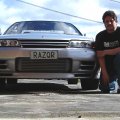
Check out the exterior of the car:
Do a thorough walk around and look for scratches, dings and rust.
Make sure the doors, hood and trunk seal well and evenly align with the surface of the car.
Look for differences in color on the panels and paint on the rubber seals around body openings. These are signs that the car may have undergone body repair work or been repainted.
Take a look at the tires:
See if tread wear is even on all four tires. If not, they may not have been rotated regularly.
Make sure the tires have enough tread on them to be safe. (This could be a negotiating point if the car will soon need new tires.)
Make sure there isn't a mix of brands or sizes on the same axle.
Open the trunk:
Sniff for a mildew smell and look for signs of water leakage. Look for rust in the bottom of the wells.
Check the condition of the spare tire. Make sure the jack and other tools are there.
Look under the hood:
Check for signs of leaking fluids, battery corrosion, damaged wires or cracked hoses.
Check all the fluidsare they at the correct levels? The engine oil should be a smooth dark brown or black. Transmission fluid should be pinkish and smell like oil.
If the engine is completely cool, remove the radiator cap and look at the color of the coolant. If you see a layer of oily film or what appears to be rust, there could be a problem.
Look under the car with a flashlight:
Look for signs of oil leaks, green coolant or rust.
Check out the condition of the different parts. If you see any pristine sections, then the car may have been repaired.
Inspect the condition of the tailpipe. It shouldn't be overly black and greasy or heavily rusted.
Inspect the interior of the car:
Try every function, from electric windows and locks to the sunroof to lights. Play the radio and tape or CD player if there is one.
Sit in the back of the car and study the upholstery for wear and tear or sagging.
Check the car's history:
Purchase a vehicle history report. You'll need to provide the VIN (Vehicle Identification Number) to conduct the search, so ask the owner for it.
Ask to see the title and compare the VIN on the title to the number on the car's dashboard under the windshield on the driver's side to make sure they're the same
Take the car for a long drive, so you can get a good idea of how well the car handles in a variety of driving conditions as well as how comfortable you feel in it. Because you're test-driving a used car, you'll need to pay attention to all aspects of driving.
Once under way, there are a few things you can ask yourself:
Does the transmission shift smoothly?
If you're driving a manual, does the clutch fully engage before you take your foot off the pedal?
How is the alignment? Does the car drift to the left or right?
Do you notice any shuddering, vibrating, rattles or squeaks?
Does the cruise control work?
Perform some turning maneuvers on a side street. What is the turning radius like?
Are there any blind spots?
Drive over bumps and dips. How is the suspension?
Now get on the highway. Does it have the acceleration you need?
While you're driving, think about comfort:
Does the seat offer plenty of support?
Do you have ample leg and headroom?
If you're sure you want to purchase this car and have talked price with the owner, now's the time to call in the professional to inspect it. Of course, you should stipulate to the seller that the sale is contingent upon the inspection. Some of the things they should focus on are:
General mechanics
Body work, including paint and frame
Title fraud
Odometer fraud
Proper trim options and features


 Nissan?