Fake Intakes.

  • Thread starter Thread starter JMoney
  • 70 comments
  • 4,494 views
@Harry6784: Not really. Most add-on wings are designed to be lift-neutral. Hint: If the wing is plastic, this is almost assuredly so.

The grand-daddy of all fake vents... the 64 Mustang. Sixty years strong and counting.

Ford_Mustang_GTA_Fastback_1967.jpg


The Vette, surely it needed all that cooling?
1963_Corvettes.jpg

No? Hood vents and side vents, all fake.

Not that the Brits were any better:
800px-Triumph_TR5_PI_Front.jpg

Is that a carburetor in your pocket, or are you happy to see me? What? It's just a pressed-in hood bulge? EFI? No carbs? For shame!
 
Last edited:

That may be true just compared to other cars it doesn't translate speed into downforce very effectively. Nearly any car with some type of wing traveling fast enough will create some downforce.
Net downforce requires a specific design. You do not get it by simply slapping a wing on. The area of the wing is much, much smaller than that of the car so it must be much, much more effective than the car at producing lift. When you do start producing net downforce, you often have to worry about balance. Just placing all the downforce in the rear won't make a good car.

080409_19.jpg


This appears to be a pressure plot. Blue on a horizontal surface is strong lift. Red is strong downforce. Even on a race car, the downforce from the splitter and wing are counter acted by the natural lift on the car.
 
Net downforce requires a specific design. You do not get it by simply slapping a wing on. The area of the wing is much, much smaller than that of the car so it must be much, much more effective than the car at producing lift. When you do start producing net downforce, you often have to worry about balance. Just placing all the downforce in the rear won't make a good car.

080409_19.jpg


This appears to be a pressure plot. Blue on a horizontal surface is strong lift. Red is strong downforce. Even on a race car, the downforce from the splitter and wing are counter acted by the natural lift on the car.

Yes, I agree. But back to my original point, when talking about the Toyota Supra, its wing is there mostly for aesthetic purposes. Purpose of a wing is to produce downforce and the Supra doesn't do that very well compared to other wing-ed vehicles.

Fake air vent's that don't cool the motor, fake intakes that don't provide air and big spoilers that have little impact on the car's handling can all exist to make a car look appealing.
 
As for fake vents, Lamborghini Murcialago is a good one. On one side (left?) is the oil cooler vent behind the door but on the other side is a similar design but is blocked out. Symetrical and half is fuctional so i don't see that a problem.
 
What other wing-ed vehicles of the time produced appreciable downforce, though? During the 90's, most (plastic) spoilers were mostly for cosmetic effect.

The gigantic wing on the back of the F40 was merely to negate lift... as was the whale tail on some of the turbo Porsches. That Toyota claimed different drag coefficients for the regular Supra and the Turbo meant that the wing did something. I wouldn't be surprised if the Turbo had less lift than the regular Supra.

Of course, no downforce. It wasn't as big a thing with automakers back then as it is now.
 
Does anyone know if any of the scoops and vents on the S7 are just on for looks or if they have a purpose?

2006_saleen_s7_twin_turbo-pic-9159.jpeg
 
Anyone happen to know what exactly the side vents on a '79 Z28 are supposed to do? Everywhere I read says they are functional, but how? My best guess is to evacuate air from under the hood/fenders to reduce lift.

147692_b9e5f1a4f1_low_res.JPG


Also note the fake hood scoop, hehe.
 
Anyone happen to know what exactly the side vents on a '79 Z28 are supposed to do? Everywhere I read says they are functional, but how? My best guess is to evacuate air from under the hood/fenders to reduce lift.

147692_b9e5f1a4f1_low_res.JPG


Also note the fake hood scoop, hehe.

1978-1979 they weren't functional. For 1980 and 1981, they were functional. They channeled hot air out the engine bay. I've been told if you stand behind one after a hard drive, you'll feel the heat come out of them. Work very well if you have a big block car.

They were on those, Firebirds, Cudas etc.
 
Exactly. There are plenty of cars that have cool looking aero parts that are practically useless. Toyota Supra's wing for example, provides hardly any downforce yet defines the look of the car.

As for 'cars from the 60's made sense', please tell me more about the utterly useless 3 foot fins on most of the land barges we used to call cars.

60%20Caddy%2062%20coupe.JPG

Although it wasn't what the designers had in mind, the fins will help keep the car in a straight line, as seen on the Le Mans-winning Audi R18.
 
Although it wasn't what the designers had in mind, the fins will help keep the car in a straight line, as seen on the Le Mans-winning Audi R18.

Only if the fin is designed to do so. The vertical fin on the R18 is positioned to catch the air flowing under the rear wing. Tailfins on cars do have some stabilization effect, but nothing so dramatic, and they're often angled incorrectly on older cars, causing excess drag.
 
Air pockets create little drag as its just a little pressure that forces the rest round the car. Actual vents can restrict airflow at most causing less down force but more drag as air passing out the other side would be slower.

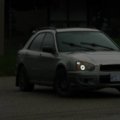
Crap. Obviously, the "brake ducts" on my car (more like empty space behind where the fog lights would be if I had them,) are the reason why I have poor fuel economy. Not because it's a wagon, not because it's AWD, and not because it's slightly more powerful than your average city car. Nope, in the eyes of the OP, my car's lack of fog lights is causing poor fuel mileage. :lol:

But, you know what else? Since I use the wagon's headroom, the cargo area, the back seat, and the AWD, I'm extremely glad to have "poor fuel mileage." It's a trade-off.


Edit: No fog lights:

2004_subaru_impreza_wagon_natl_2_5_ts_sport_manual_96635332054634336.jpg


With fog lights:

images
 
Last edited:
Although it wasn't what the designers had in mind, the fins will help keep the car in a straight line, as seen on the Le Mans-winning Audi R18.

:lol:

Refer to my first post in this thread. You have a lot to learn about aerodynamics.
 
Crap. Obviously, the "brake ducts" on my car (more like empty space behind where the fog lights would be if I had them,) are the reason why I have poor fuel economy.

While they are not the primary cause, that's beside the point. Having open ducts in the front end of the car increases aerodynamic drag and turbulence. Which, in turn, increases the need for power to maintain speed. Which, in turn, causes poorer fuel consumption.

Why do you think many modern cars come with active grille shutters? And why do you think land speed racers tape up every seam and joint on the car, and go so far as to block off the grille entirely? A depression does form a pocket of circulating air that does push air around and away from itself. This is also how carmakers justify making such ridiculously oversized grille openings, only to block half of it off with black plastic.

Now granted, where that duct points and where the air exits can either have a positive or negative effect on aerodynamics, but it's simpler to not have the ducting in the first place, unless you're doing something fancy like preventing turbulence around the wheel wells or energizing the air travelling underneath the car.
 
While they are not the primary cause, that's beside the point. Having open ducts in the front end of the car increases aerodynamic drag and turbulence. Which, in turn, increases the need for power to maintain speed. Which, in turn, causes poorer fuel consumption.

Why do you think many modern cars come with active grille shutters? And why do you think land speed racers tape up every seam and joint on the car, and go so far as to block off the grille entirely? A depression does form a pocket of circulating air that does push air around and away from itself. This is also how carmakers justify making such ridiculously oversized grille openings, only to block half of it off with black plastic.

I know, I'm just pointing out that it's minor compared to the massive low-pressure turbulence zone that occurs because my dad put that silly mid-spoiler on the hatch. I honestly believe I have 10"Hg. following my car along at any point in time, at 100 km/h. :lol: I don't care how bad the front's aerodynamics are, they'll never be worse than having a brick wagon. And I'm fine with that.
 
A good grille block can be worth up to 4-5% in fuel savings. Foglight holes won't be so significant, but 1-2% isn't out of the question.

The wing under your rear glass isn't in an ideal place to do much. The roof-lip spoiler should already be pushing most of the air away from the back end of the car.

If the net effect of both is positive, your glass should stay clear when driving in the rain. If the glass gets wet, consider removing the lower spoiler.
 
If the net effect of both is positive, your glass should stay clear when driving in the rain. If the glass gets wet, consider removing the lower spoiler.

There was a huge difference between the two, but it's gotten better.


As far as the fog light holes go, I'm not sure what to do. I like the look, so I think I'll just leave it and suffer with that 1%.
 
Truthfully, yes, it's not that big a deal. But since they're there, might as well add some tubing to make the vent purposeful... probably won't be a big cooling effect in a low-speed rallycross or autocross, but every little bit... ;)
 
Truthfully, yes, it's not that big a deal. But since they're there, might as well add some tubing to make the vent purposeful... probably won't be a big cooling effect in a low-speed rallycross or autocross, but every little bit... ;)

I mentioned that on my build thread on the local Subaru Club forums, and they said it'd be minimal... But, I seriously want to do it. Thanks for agreeing with me. :lol: I plan on doing proper track days, and I actually already have. Now, though, time for some piping for brake ducts! :D I honestly believe that the fog lights should be on the back, anyways, ever since I saw a MINI Cooper with its fog lights on.


images


:eek: It's sooo beautiful! Forget your front-facing fog lights. Legally, you're only allowed to have 4 bulbs on at one time, and I'd so much rather have rally lights.. :D
 
I'm taking a ridiculous amount of crap from the "60 years ago" statement. 60 years ago was the 1950's, when Eisenhower launched the construction of the IHS. THAT made sense.
 
Crap. Obviously, the "brake ducts" on my car (more like empty space behind where the fog lights would be if I had them,) are the reason why I have poor fuel economy. Not because it's a wagon, not because it's AWD, and not because it's slightly more powerful than your average city car. Nope, in the eyes of the OP, my car's lack of fog lights is causing poor fuel mileage. :lol:

But, you know what else? Since I use the wagon's headroom, the cargo area, the back seat, and the AWD, I'm extremely glad to have "poor fuel mileage." It's a trade-off.


Edit: No fog lights:

2004_subaru_impreza_wagon_natl_2_5_ts_sport_manual_96635332054634336.jpg


With fog lights:

images
Well STis come with Covers to devert the air away from that point. Just get covers.....
 
Back