The Luce rides on an entirely new platform, packing four electric motors and up to 1,050 horsepower.
And maybe importantly, this isn’t some limited-run halo project. The Luce is a regular production
Ferrari, sitting alongside the rest of the lineup, with orders opening immediately and prices starting at €550,000—or about $640,000 at current conversion rates.
[...]
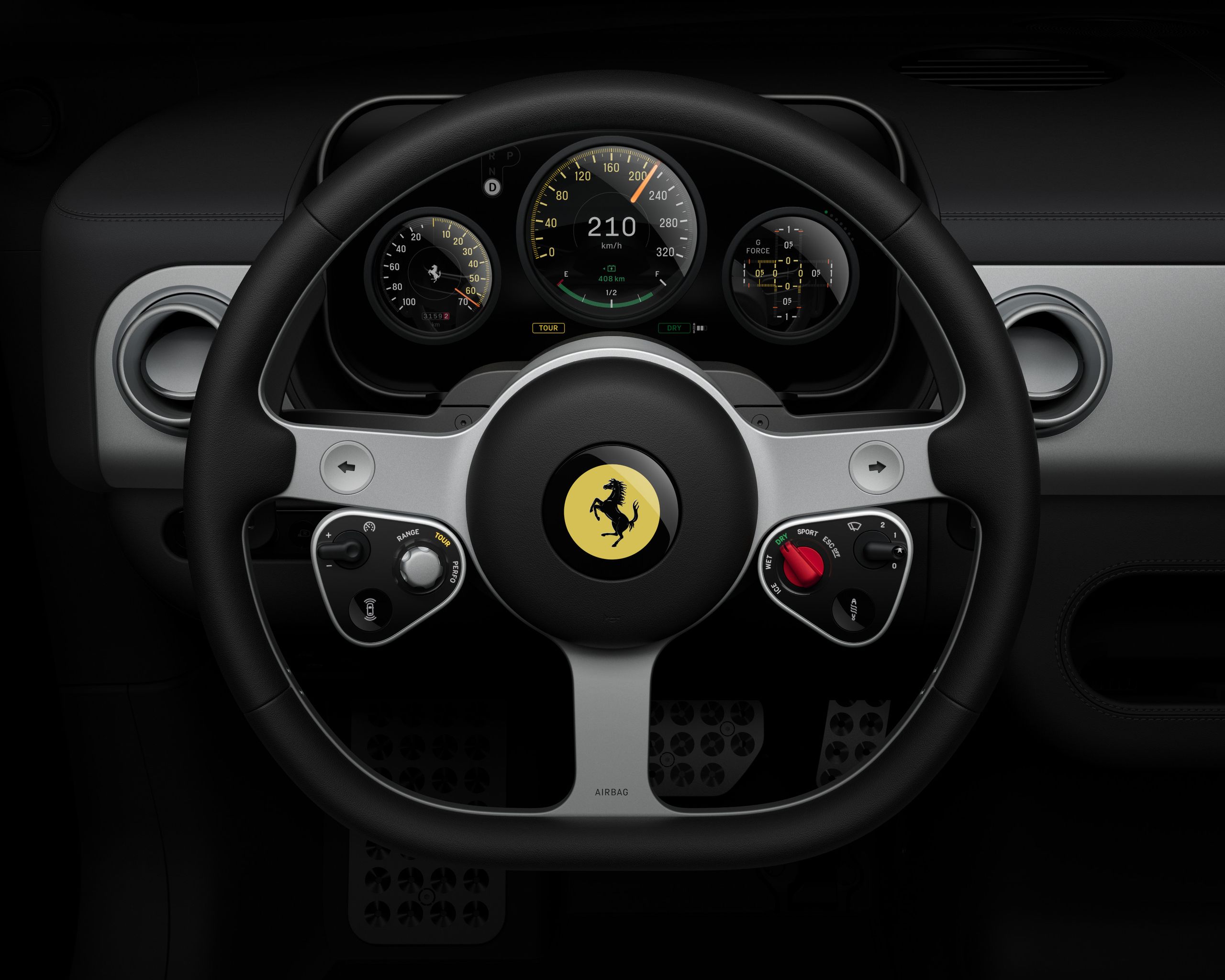
The Luce was designed jointly by Ferrari’s Centro Stile in Maranello and LoveFrom, the design firm founded by Jony Ive—the man behind the original iPhone’s iconic look. But Ferrari says this wasn’t just a styling exercise. Engineers shaped the surfaces around aerodynamic and functional needs first, and LoveFrom essentially came in afterward to "dress" the car.
The final result is a car that’s 197.6 inches long—or about as long as a Tesla Model S. It’s also 78.7 inches wide, 60.6 meters tall, and about 2.0 inches lower than the Purosangue. And it looks nothing like the renders people (including ourselves) have been circulating online. The shape is dramatic, unusual, and undoubtedly divisive.
Aerodynamics were clearly the top priority. Without a massive V12 up front, Ferrari no longer felt tied to classic supercar proportions. The result is an incredibly slippery drag coefficient of 0.254 cD, achieved without active aero—a deliberate choice meant to keep the car lighter and visually cleaner.
[...]
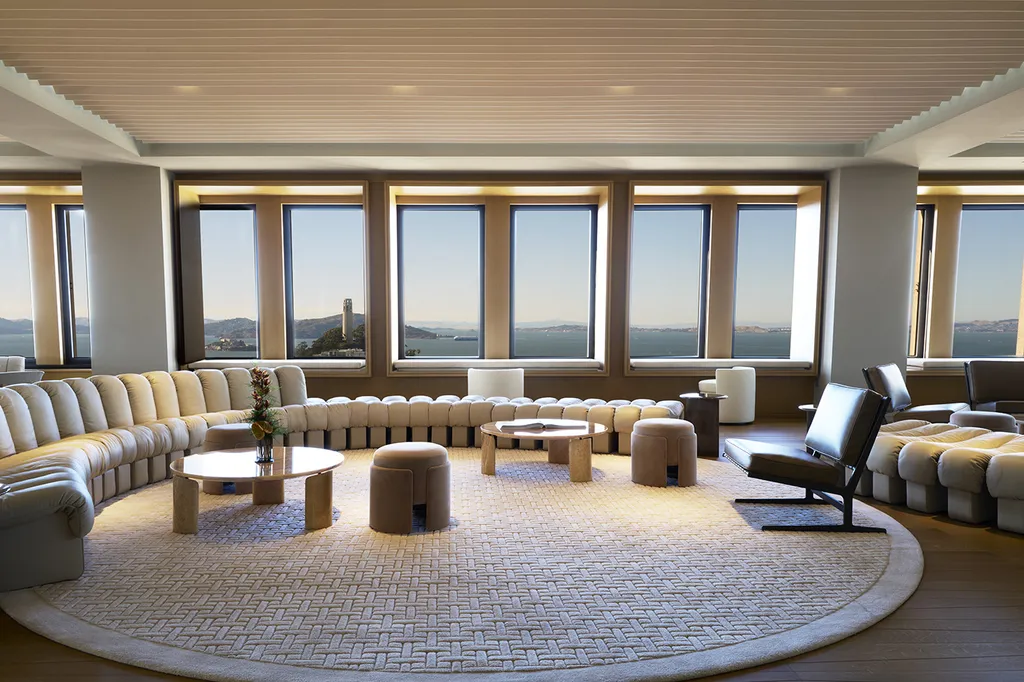
One of the biggest practical changes is that the Luce has five proper seats. Since there’s no transmission tunnel running through the center of the vehicle, a fifth passenger can actually sit comfortably in the back. The trunk is massive by Ferrari standards, too: 21.1 cubic feet. That’s about as much as a modern compact SUV, and the largest luggage capacity the company has ever offered.
[...]
Each wheel gets its own dedicated electric motor, all developed and built by Ferrari in Maranello. The front motors spin to 30,000 rpm, while the rears hit 25,500 rpm. They’re permanent-magnet motors derived from Ferrari’s F80 program and built using technology and expertise from Formula 1 and endurance racing.
The rear motors produce 355 kilowatts each, while the front motors make 105 kilowatts each. But the really interesting part is how Ferrari manages all that power. The E-Manettino modes control how aggressive the car feels, changing torque delivery, drivetrain behavior, and overall performance depending on the mode:
Range Mode: 320 kW (430 horsepower) and rear-wheel drive, with a top speed of 260 kilometers per hour.
Tour Mode: 460 kW (617 hp) with all-wheel drive for everyday use.
Performance Mode: 725 kW (986 hp), permanent AWD, and a 310 kmh top speed
Launch Control: The full 1,050 hp. Ferrari claims 0–100 kmh in 2.5 seconds and 0–200 kmh in 6.8 seconds.
[...]
The 800-volt battery pack is designed and assembled in Maranello—and it’s actually a structural part of the chassis. Its placement lowers the center of gravity by almost 3.7 inches compared to the Purosangue. Ferrari says the effect feels like driving a car that’s 882 pounds lighter.
The independent motors also enable advanced torque vectoring, and the car gets rear-wheel steering as well. Ferrari engineers claim the handling is surprisingly close to a 296 GTB, despite the Luce’s size.



Who designed that. Fisher-Price?