Gran Turismo 2 A-Spec Mod Setups

  • Thread starter Thread starter agungdm
  • 43 comments
  • 2,691 views
🔧 Guide No. 7
JGTC GT500 ’99 Version Gear Management
(Gran Turismo 2 A-Spec Mod)

📌 GT500 ’99 Technical Context (READ THIS FIRST)

Cars covered:
NSX GT500 ’99 — NA, MR
Supra GT500 ’99 — Turbo, FR
Skyline R34 GT500 ’99 — Turbo, FR

Common characteristics:
Power: ~460–500 hp
Weight: ~2425 lb
Downforce: Medium
Powerband: Narrow
Design goal: Acceleration + stability, not top speed

➡️ GT500 is NOT an endurance prototype
➡️ RPM drop = cardinal sin

🔥 Key Summary (GT500 Edition)
Default Gear 23 = WRONG CONTEXT
GT500 cars live on RPM
Gearing too long = dead car
Gearing too short = tire abuse & instability

➡️ GT500 sweet spot: 16–18
If you’re using 21+ and thinking
“This car feels stupid”
→ It’s not the car. Your gears are too long.
🔍 Realistic Gear Management Range (GT500 ONLY)

1️⃣ Highly Technical Tracks
Tight, bumpy, stop-and-go
Examples:
Trial Mountain
Deep Forest
Laguna Seca
Rome Full
Midfield Raceway
Grand Valley Speedway (Full)
➡️ Recommended Gear: 16–17

Why:
Corner exits dominate lap time
RPM must stay in the powerband
Top speed rarely exceeds 260 km/h
Perfect for GT2’s “dirty” tracks

🧠 Notes:
NSX → 17 is the safest
Supra / R34 → 16–17 depending on throttle discipline

2️⃣ Mixed Tracks
Straights exist, but still technical
Examples:
Special Stage Route 5
SSR11
Seattle Short
Autumn Ring
Grand Valley East
➡️ Recommended Gear: 17–18

Why:
Acceleration still critical
Straights allow 280–300 km/h
18 is the upper practical limit for GT500
➡️ 18 = MAXIMUM SANE VALUE

3️⃣ Fast Tracks (Semi High-Speed)
Examples:
SSR5 Club
Red Rock Valley
Rome Night
➡️ Recommended Gear: 18–19

⚠️ Use 19 ONLY if:
Long straights dominate
Tires are still healthy
You need breathing room up top
If 19 kills corner exit → go back to 18.
GT500 engines do not have torque to hide gearing mistakes.

4️⃣ High-Speed Tracks (Rare for GT500)
Examples:
Test Course
High Speed Ring Reverse
➡️ Recommended Gear: 20–21 (situational)

⚠️ This is NOT normal racing.
This is for:
Slipstream abuse
Top-speed events
Weird GT2 scenarios

❌ Gear 22–30
➡️ TRASH. DELETE. IGNORE.
Not relevant for:
JGTC
GT500
GT2 circuits
Real racing

If someone argues:
“But top speed is higher”
Answer:
Lap time is slower. End of discussion.

📊 GT500 ’99 Gear Summary
Track Type
Gear
Technical
16–17
Mixed
17–18
Fast
18–19
High-Speed
20–21 (rare)

➡️ Most races are won at 17–18
🧠 Final Takeaway (No Sugarcoating)
Guide No. 8 For GT500:
Narrow the range
Prioritize RPM, not top speed
If you naturally cap out at gear 18 →
👉 that means your setup logic is healthy and correct.
 
Guide No. 8 JGTC GT300 ’99
(Gran Turismo 2 – Hardcore / Competitive Play)

Gear manajement guide

📌 Technical Context (Read This First)
Cars covered (GT300 ’99 examples):
Momo Corse (~330 hp)
RX-7 RE Amemiya (~330 hp)
RX-7 Okura (~295 hp)
Daishin Silvia S15 (~345 hp)

Common characteristics:
Power: 290–350 hp
Weight: 2300–2500 lb
Moderate downforce
Narrow powerband
Low torque compared to GT500

➡️ GT300 cars do NOT win with top speed
➡️ They win with RPM continuity and corner exit
RPM drop = race over.

🔥 Key Summary (GT300 Edition)
Factory default gear (15) = too long
Long gears kill acceleration and duel capability
Short gears keep the engine alive and responsive

➡️ GT300 sweet spot: Gear 11–13
If your car feels “slow” at gear 12 —
it’s not the car, it’s your right foot.
🔍 Universal Gear Range — GT300 ’99

1️⃣ Highly Technical / Bumpy Tracks
Tight corners, elevation, constant exits
Examples:
Trial Mountain
Deep Forest Raceway
Midfield Raceway
Laguna Seca
Rome Full Circuit
Grand Valley Speedway (Full)
➡️ Recommended Gear: 11–12

Why:
Frequent corner exits
RPM must stay in powerband
Top speed rarely exceeds 240–260 km/h
Best for wheel-to-wheel combat
➡️ Gear 12 = default race weapon

2️⃣ Mixed Tracks
Medium straights + technical sections
Examples:
Special Stage Route 5
SSR11
Seattle Circuit
Autumn Ring
Grand Valley East
➡️ Recommended Gear: 12–13

Why:
Still exit-focused
Slightly longer straights (270–290 km/h)
Gear 13 is the upper practical limit
⚠️ If gear 13 kills exit speed → go back to 12.

3️⃣ Fast Tracks (Situational)
Not ideal for GT300, but sometimes required
Examples:
Red Rock Valley
Rome Night
➡️ Recommended Gear: 13–14

⚠️ Use only if:
Track has long uninterrupted straights
Tyres are stable
You need top-end breathing room
If acceleration feels dead → wrong gear.

🚫 Forbidden Zone
Gear 15+
Not suitable for:
GT300 racing
Duel situations
Bumpy GT2 tracks
Realistic JGTC behavior

If someone says:
“But my top speed is higher”
Answer:
“And your lap time is slower.”

📊 Quick Reference Table
Track Type
Gear
Technical / Bumpy
11–12
Mixed
12–13
Fast (Rare)
13–14
Anything above


➡️ Most races are won at Gear 12
🧠 Final Takeaway (No Ego, Just Physics)
GT300 cars live on RPM continuity
Torque is limited → gearing must compensate
Short gears = alive engine = faster exits
If you naturally end up at gear 12
👉 your tuning logic is correct

This is universal, not car-specific. Fine tuning comes later.
 
World Endurance No.1 – Car List E

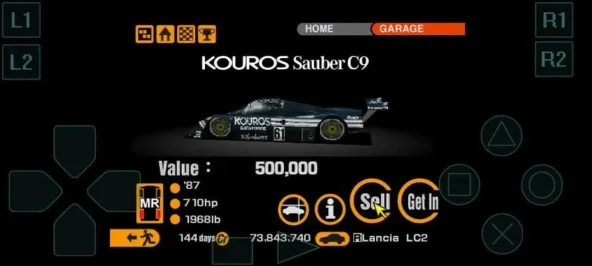
Sauber-Mercedes C9 — Group C
By Sauber Motorsport

Refined Handling & Aero Platform Balance — GT2 A-Spec Mod
Running Super Soft Tires

---

Driving Philosophy — Tom Kristensen Endurance Mentality

If you approach the C9 with a sprint mindset, you will overdrive it.

Through a Tom Kristensen lens, this car is about sustained precision over long stints. High-speed discipline. Mechanical sympathy under extreme load.

The principles are simple:

Brake with authority, but never with panic

Keep steering inputs clean and efficient

Commit early once the platform is stable

Build throttle progressively under boost

Think in laps, not corners

Kristensen’s hallmark was composure in traffic, consistency through fatigue, and absolute confidence in high-speed sections without unnecessary drama.

The C9 rewards exactly that.

You don’t hustle it. You manage it.

At 200+ mph, stability is speed.

---

Engineering Foundation — Peter Sauber’s High-Load Stability Concept

Under the direction of Peter Sauber, the C9 was engineered with one dominant objective:

Stability under sustained aerodynamic and mechanical load.

This was a Le Mans weapon. Long straights. Heavy braking. Prolonged high-speed cornering.

The design priorities were clear:

Aero platform consistency at extreme velocity

Controlled chassis pitch under braking

Suspension compliance that protects downforce

Structural durability for 24-hour punishment

The C9 was not built to feel lively.

It was built to remain stable at speeds where instability becomes dangerous.

If the aero platform is disturbed, efficiency collapses.
If efficiency collapses, the advantage disappears.

This setup preserves the original engineering intent.

---

Setup Philosophy — Protect the Aero Window

This configuration prioritizes:

Controlled pitch movement under heavy braking

Stable front aero engagement

Predictable rear traction under turbo load

Repeatable high-speed balance over distance

It is not designed for sudden rotation or qualifying theatrics.

It is engineered for endurance dominance.

---

Track Adjustment — Surface Compliance Management

On uneven or technical circuits such as:

Trial Mountain
Midfield Raceway
Deep Forest Raceway
Grand Valley Speedway
Laguna Seca
Special Stage Route 5

Apply the following adjustment:

👉 Reduce BOTH Bound and Rebound dampers by 2 clicks
👉 Front AND Rear

---

Why This Works

The C9 generates significant aerodynamic load at speed.

But downforce only functions if the chassis remains composed.

If damping is too stiff:

The aero platform becomes unstable over bumps

Pitch oscillation increases under heavy braking

High-speed confidence decreases

Tire contact becomes inconsistent

Reducing damping slightly:

Improves mechanical compliance

Preserves aerodynamic balance

Stabilizes elevation transitions

Maintains high-speed corner integrity

With Super Soft tires, vertical sensitivity increases.
That makes platform stability even more critical.

This adjustment does not soften the car.

It protects aerodynamic efficiency.

---

Driver Discipline — Endurance Over Ego

The C9 does NOT reward:

❌ Abrupt steering inputs
❌ Aggressive throttle spikes
❌ Emotional corrections mid-corner

It rewards:

✔ Calm rhythm
✔ Strategic braking
✔ High-speed trust in the aero
✔ Long-run consistency

If the car feels “too easy” at high speed, you are driving it correctly.
If you feel like you are fighting it, you are working against its design.

The C9’s strength is not spectacle.

It is relentless, controlled speed — lap after lap.

That is endurance racing at its highest level.

Spring rates
Front 13,2 lb/in
Rear 14,8 lb/in
Min bar 2,0 lb/in
Max bar 20.0 lb/in

• Ride height
Front 82 inc
rear 86 inc
Min bar 55 in
Max bar 100 in

• Bound dampers:
Front 5 in
rear 4 in .
Min bar 1
Max bar 10

• Rebound dampers:
Front 6 in
rear 7 in .
Min bar 1
Max bar 10

• Camber:
Front 2.0 degree
rear 1.0 degree
Min bar 0.0 degree
Max bar 12.0 degree

• Toe:
Front minus 0.05
Rear plus 0.05
Min bar 0.20 minus
Max bar 0.20 Plus

Note: for toe, in the Gran Turismo 2, bar system goes from

minus 0,20 to 0,15 to 0,10 to 0,05
To 0,0 netral,
Then
plus 0,05 to 0,10 to 0,15 to 0,20

• stabilizers
Front 4
Rear 5
Min bar 1
Max bar 7

• Front downforce = 0.72
0.34 (min bar)
0.78 (max bar)

• rear downforce = 0,88
0.53 (min bar)
0.99 (max bar)

• initial limited slip torque /
LSD initial torque = 9
Min bar 1 is more soft
Max bar 56 is more hard or stiff

• acceleration limited slip effect /
LSD acceleration = 17
Min bar 1 is more soft
Max bar 56 is more hard or stiff

• Deceleration limited slip effect /
LSD Decel = 16
Min bar 1 is more soft
Max bar 56 is more hard or stiff

• Stability control effect/
ASCC = 22
Min bar 1 is more soft
Max bar 101 is more hard or stiff

• Traction control effect/
TCSC = 2
Min bar 1 is more soft
Max bar 51 is more hard or stiff

Super Soft tires
 

Attachments

  • FB_IMG_1771500415862.webp
    FB_IMG_1771500415862.webp
    30.8 KB · Views: 0
Last edited:
World Endurance No.2 – Car List E

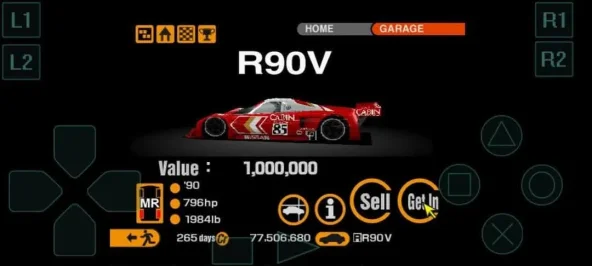
Nissan R90V ’90 — Group C
By Nissan Motorsport

Refined Control, Sustained Pressure & Turbo Authority — GT2 A-Spec Mod
Super Soft Tires

---

Setup Philosophy — Controlled Aggression, Sustained Authority

The R90V is turbocharged — but it is not a spike-and-pray machine.
It is a high-speed endurance prototype built to carry force through distance.

A Tom Kristensen-style approach means:

Firm, confident turn-in

Decisive brake phase

Immediate platform stabilization

Early but measured throttle commitment

Sustained pressure through corner exit

This is not reckless aggression.
It is calculated dominance.

You do not wait for the car to settle — you make it settle.

If you hesitate, the turbo feels muted.
If you stay committed, the boost builds cleanly and keeps building.

The objective is controlled pressure from entry to exit — not sudden bursts.

---

Engineering View — Design Intent Behind the R90V

The R90V evolved from the Lola Group C chassis lineage, shaped by the aerodynamic philosophy of Eric Broadley, founder of Lola Cars.

Broadley believed in:

Clean aerodynamic efficiency

High-speed directional stability

Predictable balance under sustained aero load

This was never designed to be a nervous prototype.
It was engineered to remain planted above 300 km/h with composure.

On the Nissan side, leadership figures such as Yoshihiko Matsuo reinforced a philosophy of mechanical integrity and durability over theatrics.

Engineering priorities included:

Progressive, stable turbo delivery

Balanced weight distribution

Endurance-level cooling efficiency

Chassis consistency during long stints

In simple terms:

The R90V was built to apply pressure for hours — not flash brilliance for seconds.

In GT2 A-Spec Mod, the translation is direct:

Disturb the chassis → you interrupt boost efficiency.
Control the platform → you unlock sustained turbo authority.

---

Track Conditions Requiring Adjustment

On technical or uneven circuits such as:

Trial Mountain

Midfield Raceway

Deep Forest Raceway

Grand Valley Speedway

Laguna Seca

Special Stage Route 5

Momentum retention becomes critical under elevation changes and surface variation.

---

Suspension Adjustment — Stability Under Pressure

👉 Reduce BOTH Bound and Rebound dampers by 2 clicks
👉 Front AND Rear

Why This Works

The R90V depends on stable vertical load to maintain predictable turbo delivery.

If damping is too stiff:

The chassis skips over uneven sections

Tire load fluctuates

Boost application loses continuity

Exit acceleration becomes inconsistent

Slightly softer damping:

Keeps the contact patch stable

Protects aerodynamic balance

Maintains throttle continuity

Preserves RPM build over crests and compressions

Super Soft tires magnify load sensitivity.
Compliance is not softness — it is control under stress.

This adjustment is not about comfort.
It is about maintaining authority over changing surfaces.

---

Driver Discipline — Apply Pressure, Don’t Create Chaos

The R90V does NOT reward:

❌ Hesitation under braking
❌ Steering corrections mid-corner
❌ Throttle spikes
❌ Reactive driving

It rewards:

✔ Early assertion
✔ Stable steering load
✔ Progressive throttle authority
✔ Relentless momentum carry

If the car feels flat, you are releasing pressure too early.
If it feels unstoppable down the straight, you have maintained platform stability and turbo continuity.

The R90V does not win with drama.
It wins by applying disciplined pressure — lap after lap.

---

Spring rates
Front 13,2 lb/in
Rear 14,8 lb/in
Min bar 2,0 lb/in
Max bar 20.0 lb/in

• Ride height
Front 82 inc
rear 86 inc
Min bar 55 in
Max bar 100 in

• Bound dampers:
Front 5 in
rear 4 in .
Min bar 1
Max bar 10

• Rebound dampers:

Front 6 in
rear 7 in .
Min bar 1
Max bar 10

• Camber:
Front 2.0 degree
rear 1.0 degree
Min bar 0.0 degree
Max bar 12.0 degree

• Toe:
Front minus 0.05
Rear plus 0.05
Min bar 0.20 minus
Max bar 0.20 Plus

Note: for toe, in the Gran Turismo 2, bar system goes from
minus 0,20 to 0,15 to 0,10 to 0,05
To 0,0 netral,
Then
plus 0,05 to 0,10 to 0,15 to 0,20

• stabilizers
Front 4
Rear 5
Min bar 1
Max bar 7

• Front downforce = 0.72
0.34 (min bar)
0.78 (max bar)

• rear downforce = 0,88
0.53 (min bar)
0.99 (max bar)

• initial limited slip torque /
LSD initial torque = 9
Min bar 1 is more soft
Max bar 56 is more hard or stiff

• acceleration limited slip effect /
LSD acceleration = 18
Min bar 1 is more soft
Max bar 56 is more hard or stiff

• Deceleration limited slip effect /
LSD Decel = 16
Min bar 1 is more soft
Max bar 56 is more hard or stiff

• Stability control effect/
ASCC = 22
Min bar 1 is more soft
Max bar 101 is more hard or stiff

• Traction control effect/
TCSC = 2
Min bar 1 is more soft
Max bar 51 is more hard or stiff

Super Soft tires
 

Attachments

  • FB_IMG_1771500495991.webp
    FB_IMG_1771500495991.webp
    29.9 KB · Views: 0
Last edited:
World Endurance No.3 – Car List E

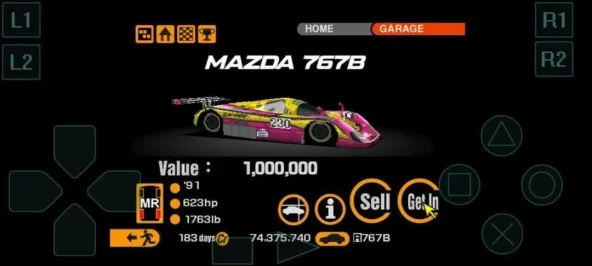
Mazda 767B ’91 — Group C
By Mazdaspeed

Refined Control, Sustained RPM Authority & Rotary Precision — GT2 A-Spec Mod
Super Soft Tires

---

Setup Philosophy — Sustained Pressure, Mechanical Authority

The 767B is not a torque-driven prototype.
It is a naturally aspirated rotary Group C machine that depends on continuous RPM discipline.

There is no turbo surge to rescue hesitation.
If you let the revs fall, performance drops immediately.

A Tom Kristensen-style interpretation means:

Commit firmly on entry

Brake with intent, not hesitation

Stabilize the chassis early

Hold a constant steering load

Apply throttle with deliberate progression

This car does not reward elegance for its own sake.
It rewards authority applied with control.

You don’t chase corner speed.
You secure it early — and defend it through the exit.

The objective is sustained pressure through RPM continuity.

---

Engineering View — 767B Design Intent

The 767B was developed within Mazda’s endurance program under engineers such as Nigel Stroud and Takayoshi Ohashi, who refined Mazda’s rotary endurance architecture.

Their priorities were precise and technical:

Lightweight structural balance

Aerodynamic stability at high speed

Efficient cooling for sustained high RPM

Predictable mechanical grip characteristics

Unlike turbocharged Group C competitors, the 767B relied on:

Continuous high-rev operation

Smooth weight transfer

High minimum corner speed

The rotary engine produces power through sustained rotation, not torque spikes.

This creates a direct relationship:

Unstable chassis → RPM fluctuation
RPM fluctuation → acceleration loss

The platform must remain settled for the engine to remain effective.

This car was engineered for controlled intensity — not brute force.

In GT2 A-Spec Mod, that philosophy remains intact.

---

Track Conditions Requiring Adjustment

On technical or elevation-heavy circuits such as:

Trial Mountain

Midfield Raceway

Deep Forest Raceway

Grand Valley Speedway

Laguna Seca

Special Stage Route 5

Surface variation can interrupt RPM continuity if the chassis becomes unsettled.

---

Suspension Adjustment — Protecting Rotary Continuity

👉 Reduce BOTH Bound and Rebound dampers by 2 clicks
👉 Front AND Rear

Why This Works

The 767B depends on consistent vertical load to preserve corner speed and engine rev stability.

If damping is too stiff:

The chassis reacts sharply over bumps

Tire load becomes inconsistent

Mid-corner speed drops

RPM falls during transition phases

Reducing damping slightly:

Improves surface compliance

Keeps tire contact consistent

Preserves minimum corner speed

Maintains uninterrupted RPM build

Super Soft tires increase load sensitivity.
Compliance here means control — not softness.

This adjustment protects engine efficiency under sustained pressure.

---

Driver Discipline — Apply Pressure Without Disrupting Rhythm

The 767B does NOT reward:

❌ Hesitation in throttle application
❌ Over-rotation on entry
❌ Reactive steering corrections
❌ Late braking recovery moves

It rewards:

✔ Early commitment
✔ Stable steering angle
✔ High minimum corner speed
✔ Continuous throttle authority

If the car feels weak on exit, the RPM was compromised earlier.
If it feels light, precise, and constantly pulling, the platform is stable and the rotary is operating efficiently.

The 767B does not overpower a circuit.

It controls it — by maintaining disciplined, uninterrupted pressure from entry to exit.

---.

Spring rates
Front 13,8 lb/in
Rear 15,2 lb/in
Min bar 2,0 lb/in
Max bar 20.0 lb/in

• Ride height
Front 82 inc
rear 86 inc
Min bar 55 in
Max bar 100 in

• Bound dampers:
Front 6 in
rear 6 in .
Min bar 1
Max bar 10

• Rebound dampers:
Front 7 in
rear 7 in .
Min bar 1
Max bar 10

• Camber:
Front 2.0 degree
rear 1.2 degree
Min bar 0.0 degree
Max bar 12.0 degree

• Toe:
Front minus 0.05
Rear plus 0.05
Min bar 0.20 minus
Max bar 0.20 Plus

Note: for toe, in the Gran Turismo 2, bar system goes from
minus 0,20 to 0,15 to 0,10 to 0,05
To 0,0 netral,

Then
plus 0,05 to 0,10 to 0,15 to 0,20

• stabilizers
Front 4
Rear 5
Min bar 1
Max bar 7

• Front downforce = 0.72
0.34 (min bar)
0.78 (max bar)

• rear downforce = 0,88
0.53 (min bar)
0.99 (max bar)

• initial limited slip torque /
LSD initial torque = 10
Min bar 1 is more soft
Max bar 56 is more hard or stiff

• acceleration limited slip effect /
LSD acceleration = 18
Min bar 1 is more soft
Max bar 56 is more hard or stiff

• Deceleration limited slip effect /
LSD Decel = 20
Min bar 1 is more soft
Max bar 56 is more hard or stiff

• Stability control effect/
ASCC = 22
Min bar 1 is more soft
Max bar 101 is more hard or stiff

• Traction control effect/
TCSC = 2
Min bar 1 is more soft
Max bar 51 is more hard or stiff

Super Soft tires
 

Attachments

  • FB_IMG_1771500571457.webp
    FB_IMG_1771500571457.webp
    31.2 KB · Views: 0
Last edited:
World Endurance No.4 – Car List E

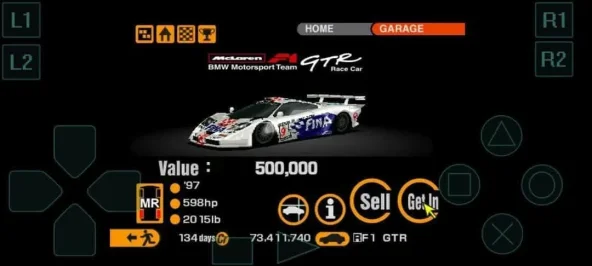
McLaren F1 GTR Longtail ’97 (LMGT1)
By BMW Motorsport

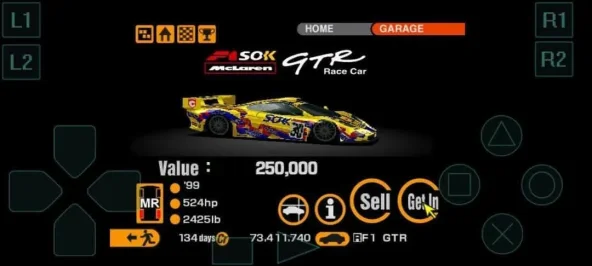
McLaren F1 GTR Longtail ’99 (JGTC GT500)
By Team Take One

Refined Aero Stability & Sustained Endurance Authority — GT2 A-Spec Mod
Super Soft Tires

---

Engineering DNA — Longtail Structural Discipline

The Longtail evolution was not built to look aggressive.
It was built to remain stable when the speed stays high.

Under Gordon Murray at McLaren in Woking, the F1 platform followed strict engineering principles:

Centralized mass distribution

High structural rigidity

Mechanical grip as foundation

Aerodynamic efficiency layered with purpose

The Longtail body extension refined rear airflow and increased high-speed stability under sustained load.

On the powertrain side, Paul Rosche at BMW Motorsport ensured the naturally aspirated V12 delivered:

Linear throttle response

High-RPM durability

Predictable torque progression

Endurance-level reliability

This is not a twitchy GT car.

It is a long-wheelbase endurance machine that rewards discipline under pressure.

It was engineered to stay composed when driven with authority — not when attacked emotionally.

---

Tom Kristensen Approach — Controlled Pressure at Speed

Applied to this chassis, a Tom Kristensen-style interpretation means:

Commit early and decisively on entry

Brake with confidence, not hesitation

Stabilize the platform immediately

Maintain a constant steering load

Apply throttle with deliberate authority

You do not “wait” for the rear to settle.
You create stability through controlled inputs.

The Longtail magnifies instability if you hesitate.

If you are firm and precise, it becomes incredibly secure at speed.

The performance comes from sustained pressure — not flashy rotation.

---

Setup Philosophy — Authority Through Stability

This configuration prioritizes:

Managed weight transfer

Rear aero platform protection

Linear mid-corner balance

Repeatable high-speed composure

It is not built for aggressive, over-rotated qualifying laps.

It is built for sustained dominance over distance.

The Longtail performs best when the chassis remains planted from entry to exit — without correction.

---

Track Adjustment — Maintaining Structural Control

On technical or uneven circuits such as:

Trial Mountain

Midfield Raceway

Deep Forest Raceway

Grand Valley Speedway

Laguna Seca

Special Stage Route 5

Vertical disturbances can interrupt rear aero stability.

Maintaining platform compliance becomes critical.

---

Suspension Adjustment — Protecting Rear Aero Authority

👉 Reduce BOTH Bound and Rebound dampers by 2 clicks
👉 Front AND Rear

Why This Works

The Longtail carries extended rear bodywork and significant rear aero load.

If damping is too stiff:

The chassis reacts sharply over uneven surfaces

Rear aero load fluctuates

Throttle progression becomes inconsistent

High-speed confidence decreases

Reducing damping slightly:

Improves surface compliance

Maintains consistent rear load

Preserves aerodynamic balance

Enhances long-run stability

Super Soft tires increase vertical sensitivity.
Compliance here protects aero integrity — not comfort.

This is a structural safeguard for sustained speed.

---

Driver Discipline — Pressure Without Overreach

The Longtail does NOT reward:

❌ Hesitation on entry
❌ Forced mid-corner rotation
❌ Reactive steering corrections
❌ On-off throttle inputs

It rewards:

✔ Early commitment
✔ Stable steering load
✔ Progressive throttle authority
✔ Confidence at high speed

If the car feels unstable, the inputs are inconsistent.
If it feels calm and relentlessly fast, the platform is under control.

The Longtail does not win by looking dramatic.

It wins by staying composed while others push beyond the limit of stability.

---

Spring rates
Front 13,6 lb/in
Rear 15,0 lb/in
Min bar 2,0 lb/in
Max bar 20.0 lb/in

• Ride height
Front 82 inc
rear 86 inc
Min bar 55 in
Max bar 100 in

• Bound dampers:
Front 6 in
rear 6 in .
Min bar 1
Max bar 10

• Rebound dampers:
Front 7 in
rear 7 in .
Min bar 1
Max bar 10

• Camber:
Front 2.0 degree
rear 1.2 degree
Min bar 0.0 degree
Max bar 12.0 degree

• Toe:
Front minus 0.05
Rear plus 0.05
Min bar 0.20 minus
Max bar 0.20 Plus

Note: for toe, in the Gran Turismo 2, bar system goes from
minus 0,20 to 0,15 to 0,10 to 0,05
To 0,0 netral,

Then
plus 0,05 to 0,10 to 0,15 to 0,20

• stabilizers
Front 4
Rear 5
Min bar 1
Max bar 7

• Front downforce = 0.72
0.34 (min bar)
0.78 (max bar)

• rear downforce = 0,88
0.53 (min bar)
0.99 (max bar)

• initial limited slip torque /
LSD initial torque = 10
Min bar 1 is more soft
Max bar 56 is more hard or stiff

• acceleration limited slip effect /
LSD acceleration = 18
Min bar 1 is more soft
Max bar 56 is more hard or stiff

• Deceleration limited slip effect /
LSD Decel = 20
Min bar 1 is more soft
Max bar 56 is more hard or stiff

• Stability control effect/
ASCC = 22
Min bar 1 is more soft
Max bar 101 is more hard or stiff

• Traction control effect/
TCSC = 2
Min bar 1 is more soft
Max bar 51 is more hard or stiff

Super Soft tires
 

Attachments

  • FB_IMG_1771501471992.webp
    FB_IMG_1771501471992.webp
    32.5 KB · Views: 0
  • FB_IMG_1771501474554.webp
    FB_IMG_1771501474554.webp
    33.4 KB · Views: 0
Last edited:
World Endurance No.5 – Car List E

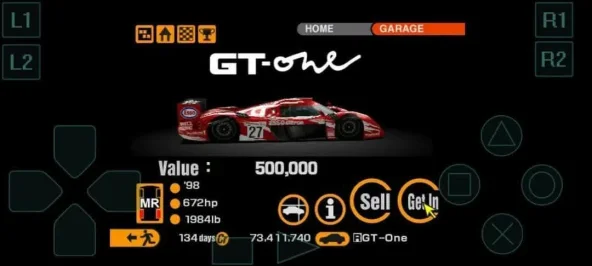
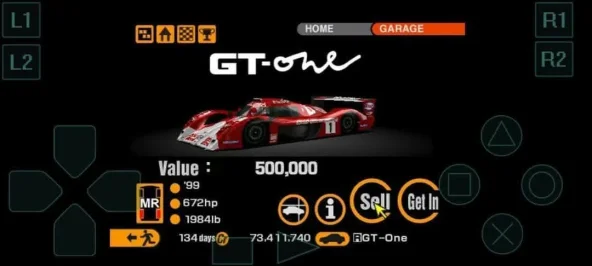
Toyota TS020 ’98 (LMGT1)
Toyota TS020 ’99 (LMGTP)
By Toyota Team Europe

Extreme Aero Prototype — Sustained Aero Authority Setup (GT2 A-Spec Mod)
Super Soft Tires

---

Engineering Foundation — Managing the Aero Platform

The TS020 program was led by André de Cortanze, with aerodynamic and race engineering development involving Norbert Kreyer, John Litjens, and Alastair Moffitt.

The core concept was simple but uncompromising:

Maintain a stable aerodynamic platform at extreme speed.

The TS020 does not merely generate downforce.
It operates inside a very narrow aero window.

That means:

Pitch control is non-negotiable

Ride height consistency defines grip

Suspension must support airflow stability

Sudden balance shifts immediately reduce total downforce

This is not a forgiving prototype.

It is brutally fast — as long as it remains inside its operating range.

This setup exists to protect that range.

---

Tom Kristensen Approach — Command the Platform

In a Tom Kristensen-style interpretation, the TS020 is not “placed gently.”

It is positioned early — and then controlled.

That means:

Decisive commitment on entry

Firm, confident braking phase

Immediate platform stabilization

Constant steering load through mid-corner

Deliberate throttle authority once aero load is secured

You do not wait for the aero to settle.

You make the chassis settle through disciplined inputs.

If you hesitate, pitch changes.
If pitch changes, front downforce drops.
If downforce drops, the car reminds you instantly.

Speed comes from controlling the aero platform — not testing it.

---

Setup Philosophy — Protect the Aero Window Under Pressure

This endurance configuration prioritizes:

Controlled pitch movement

Stable front aero engagement

Predictable rear platform behavior

Repeatable high-speed confidence

It is not built for dramatic rotation.

It is built to maintain aerodynamic authority lap after lap.

The TS020 performs at its peak when the platform remains composed from brake phase to full throttle.

---

’98 vs ’99 Characteristics

1998 LMGT1

Slightly sharper front response

More reactive during brake release

Demands precision in entry timing

It feels lighter on its nose — but less tolerant of imbalance.

1999 LMGTP

More refined aerodynamic efficiency

Higher overall grip ceiling

Larger performance penalty if pitch balance is disturbed

The ’99 version offers more total performance — but less forgiveness.

Both require disciplined load transfer.

Neither tolerates emotional corrections.

---

Track Adjustment — Maintaining Aero Integrity

On technical or elevation-heavy circuits such as:

Trial Mountain

Midfield Raceway

Deep Forest Raceway

Grand Valley Speedway

Laguna Seca

Special Stage Route 5

Vertical disturbance can push the car outside its aero window.

Apply:

👉 Reduce BOTH Bound and Rebound dampers by 2 clicks
👉 Front AND Rear

---

Why This Matters

The TS020 is extremely sensitive to vertical movement.

If damping is too stiff:

The chassis skips over surface changes

Aero balance fluctuates

Front downforce unloads under compression

Snap oversteer can appear without progressive warning

Reducing damping slightly:

Improves surface compliance

Preserves aerodynamic consistency

Maintains stable front load

Allows controlled recovery when downforce briefly reduces

Super Soft tires amplify vertical load sensitivity.

This is not a comfort adjustment.

It is a measure to protect aerodynamic authority under sustained speed.

---

Driver Discipline — Authority Without Disruption

The TS020 does NOT reward:

❌ Hesitation on entry
❌ Abrupt steering corrections
❌ Late, aggressive rotation attempts
❌ On-off throttle inputs

It rewards:

✔ Early commitment
✔ Stable steering angle
✔ Controlled weight transfer
✔ Confident throttle application once the platform is secure

If the car feels unstable, you are operating outside its aero window.

If it feels planted and relentlessly fast, the chassis is stable and the aero is fully engaged.

The TS020 does not win because it is dramatic.

It wins when the driver commands the platform — and never lets it fall out of range.

---

Spring rates
Front 13,6 lb/in
Rear 15,2 lb/in
Min bar 2,0 lb/in
Max bar 20.0 lb/in

• Ride height
Front 82 inc
rear 86 inc
Min bar 55 in
Max bar 100 in

• Bound dampers:
Front 6 in
rear 6 in .
Min bar 1
Max bar 10

• Rebound dampers:
Front 7 in
rear 7 in .
Min bar 1
Max bar 10

• Camber:
Front 2.0 degree
rear 1.2degree
Min bar 0.0 degree
Max bar 12.0 degree

• Toe:
Front minus 0.05
Rear plus 0.05
Min bar 0.20 minus
Max bar 0.20 Plus

Note: for toe, in the Gran Turismo 2, bar system goes from
minus 0,20 to 0,15 to 0,10 to 0,05
To 0,0 netral,

Then
plus 0,05 to 0,10 to 0,15 to 0,20

• stabilizers
Front 4
Rear 5
Min bar 1
Max bar 7

• Front downforce = 0.72
0.34 (min bar)
0.78 (max bar)

• rear downforce = 0,88
0.53 (min bar)
0.99 (max bar)

• initial limited slip torque /
LSD initial torque = 10
Min bar 1 is more soft
Max bar 56 is more hard or stiff

• acceleration limited slip effect /
LSD acceleration = 18
Min bar 1 is more soft
Max bar 56 is more hard or stiff

• Deceleration limited slip effect /
LSD Decel = 20
Min bar 1 is more soft
Max bar 56 is more hard or stiff

• Stability control effect/
ASCC = 22
Min bar 1 is more soft
Max bar 101 is more hard or stiff

• Traction control effect/
TCSC = 3
Min bar 1 is more soft
Max bar 51 is more hard or stiff

Super Soft tires
 

Attachments

  • FB_IMG_1771501564239.webp
    FB_IMG_1771501564239.webp
    30.1 KB · Views: 0
  • FB_IMG_1771501566640.webp
    FB_IMG_1771501566640.webp
    30.3 KB · Views: 0
Last edited:
World Endurance No.6 – Car List E

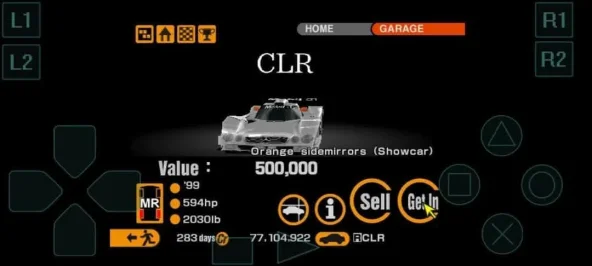
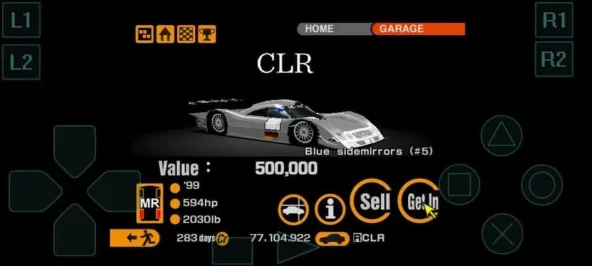
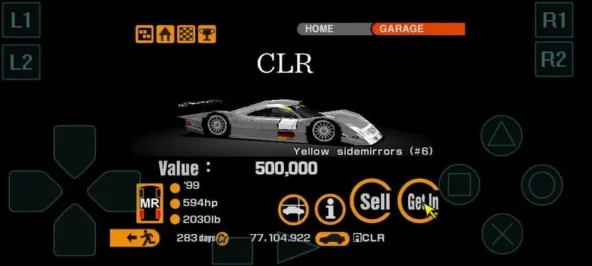
Mercedes-Benz CLR ’99

No.4 / No.5 / No.6
By AMG-Mercedes

LMGTP — Aero Platform Authority & High-Speed Stability Setup
Gran Turismo 2 — Project A-Spec Mod
Super Soft Tires

---

Engineering Foundation — Aerodynamic Efficiency at Extreme Speed

The CLR program operated under Mercedes-AMG and HWA leadership, with key figures including:

Hans Werner Aufrecht

Norbert Haug

Gerhard Ungar

The mandate was clear:

Deliver a low-drag LMGTP prototype capable of extreme straight-line velocity while maintaining aerodynamic efficiency at sustained speed.

The CLR’s design emphasized:

Minimal frontal area

Aggressive underbody airflow

High-speed aerodynamic load generation

A narrow and highly sensitive pitch window

The car generates significant downforce —
but only when the chassis remains inside its operating aero range.

Disrupt pitch balance, and aerodynamic load deteriorates rapidly.
Maintain platform control, and the car becomes devastatingly fast.

This setup exists to preserve that operating range under pressure.

---

Tom Kristensen Approach — Command the Platform Early

Applied to the CLR, a Tom Kristensen mindset changes the rhythm.

This is not about waiting for the platform to settle.
It is about forcing stability through disciplined authority.

That means:

Firm, confident braking

Early and decisive steering commitment

Immediate platform stabilization

Sustained steering load through mid-corner

Assertive throttle once aero load is secured

You do not “ease into” speed with this car.

You position it early.
You control weight transfer deliberately.
You keep the aero platform stable through commitment — not hesitation.

If you hesitate, pitch variation increases.
If pitch increases, front aero load drops.
If front aero drops, instability follows immediately.

Speed comes from controlling the platform — not negotiating with it.

---

Setup Philosophy — Protect the Aero Window Under Authority

This configuration prioritizes:

Controlled pitch movement

Stable front aero engagement under braking

Predictable rear traction under power

High-speed composure lap after lap

It is not a nervous qualifying setup.

It is engineered for sustained aerodynamic authority across race distance.

The CLR performs at its peak when brake phase, turn-in, and throttle application occur within a controlled load transfer sequence.

---

Track Adjustment — Maintaining Aero Integrity on Uneven Surfaces

On elevation-heavy or technical circuits such as:

Trial Mountain

Midfield Raceway

Deep Forest Raceway

Grand Valley Speedway

Laguna Seca

Special Stage Route 5

Apply:

👉 Reduce BOTH Bound and Rebound dampers by 2 clicks
👉 Front AND Rear

---

Why This Works

The CLR is extremely sensitive to vertical load changes and pitch variation.

If damping is too stiff:

The chassis oscillates over surface changes

Aero balance fluctuates

Front downforce unloads under compression

Rear stability becomes inconsistent at speed

Reducing damping slightly:

Improves surface compliance

Preserves aerodynamic continuity

Maintains stable front load under braking

Allows controlled recovery if downforce briefly reduces

Super Soft tires amplify vertical sensitivity.

This adjustment protects aerodynamic authority —
it does not sacrifice speed.

---

Driver Discipline — Authority Without Instability

The CLR does NOT reward:

❌ Hesitation at turn-in
❌ Abrupt steering corrections
❌ Late, aggressive rotation attempts
❌ On-off throttle inputs

It rewards:

✔ Early commitment
✔ Stable steering angle
✔ Controlled load transfer
✔ Confident throttle once the aero platform is secured

If the car feels unstable, you are outside its aero window.
If it feels planted and relentlessly fast in long, high-speed sections, the platform is working correctly.

The CLR is not unpredictable.

It is intolerant of indecision.

Drive it with authority, and it becomes one of the fastest endurance machines in the field.

---

Spring rates
Front 13,8 lb/in
Rear 15,2 lb/in
Min bar 2,0 lb/in
Max bar 20.0 lb/in

• Ride height
Front 82 inc
rear 86 inc
Min bar 55 in
Max bar 100 in

• Bound dampers:
Front 7 in
rear 6 in .
Min bar 1
Max bar 10

• Rebound dampers:
Front 7 in
rear 6 in .
Min bar 1
Max bar 10

• Camber:
Front 2.2 degree
rear 1.2 degree
Min bar 0.0 degree
Max bar 12.0 degree

• Toe:
Front minus 0.05
Rear plus 0.05
Min bar 0.20 minus
Max bar 0.20 Plus

Note: for toe, in the Gran Turismo 2, bar system goes from
minus 0,20 to 0,15 to 0,10 to 0,05
To 0,0 netral,

Then
plus 0,05 to 0,10 to 0,15 to 0,20

• stabilizers
Front 5
Rear 5
Min bar 1
Max bar 7

• Front downforce = 0.72
0.34 (min bar)
0.78 (max bar)

• rear downforce = 0,88
0.53 (min bar)
0.99 (max bar)

• initial limited slip torque /
LSD initial torque = 10
Min bar 1 is more soft
Max bar 56 is more hard or stiff

• acceleration limited slip effect /
LSD acceleration = 18
Min bar 1 is more soft
Max bar 56 is more hard or stiff

• Deceleration limited slip effect /
LSD Decel = 20
Min bar 1 is more soft
Max bar 56 is more hard or stiff

• Stability control effect/
ASCC = 22
Min bar 1 is more soft
Max bar 101 is more hard or stiff

• Traction control effect/
TCSC = 2
Min bar 1 is more soft
Max bar 51 is more hard or stiff

Super Soft tires
 

Attachments

  • FB_IMG_1771501646268.webp
    FB_IMG_1771501646268.webp
    28.4 KB · Views: 0
  • FB_IMG_1771501648288.webp
    FB_IMG_1771501648288.webp
    29.7 KB · Views: 0
  • FB_IMG_1771501650426.webp
    FB_IMG_1771501650426.webp
    29.7 KB · Views: 0
Last edited:
World Endurance No.7 – Car List E

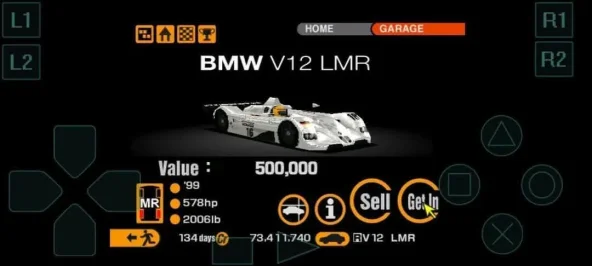
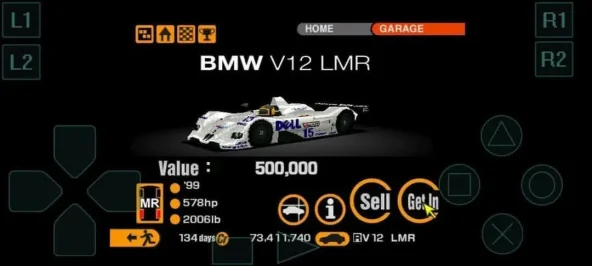
BMW V12 LMR ’99

No.15 / No.16
By BMW Motorsport

LMP Class — Mechanical Authority & Aero-Stabilized Endurance Setup
Gran Turismo 2 — Project A-Spec Mod
Super Soft Tires

---

Engineering Foundation — Mechanical Platform First

The V12 LMR program was developed under technical leadership including:

Geoff Willis

Paul Rosche

John Russell

Patrick Head

Unlike several late-1990s LMGTP designs, the V12 LMR was not built around extreme aerodynamic sensitivity.

Its core priorities were:

Strong mechanical grip foundation

Balanced aero distribution

A wide and forgiving operating window

Linear, reliable naturally aspirated V12 power delivery

The BMW V12 was engineered for progressive torque application and long-run durability — not explosive peaks.

This car was designed to remain predictable under pressure.

The aero supports the chassis.
It stabilizes the platform — it does not define it.

This setup follows that mechanical-first philosophy.

---

Tom Kristensen Approach — Assert Control, Carry Authority

Applied to the V12 LMR, a Tom Kristensen mindset changes the dynamic.

You do not simply “flow” with this car.

You control it.

That means:

Strong, confident braking phase

Clear and decisive turn-in

Immediate platform stabilization

Maintaining steering load with purpose

Committing to throttle once rear grip is secured

The V12 LMR allows authority because it has mechanical depth.

You can lean on the front under braking.
You can demand rotation through weight transfer.
You can apply throttle early — provided the rear is settled.

If you hesitate, you lose momentum.
If you over-rotate, you waste traction.

The key is decisive control without disturbing rear grip.

Speed comes from commanding the mechanical platform — not nursing it.

---

Setup Philosophy — Neutral Under Authority, Strong on Exit

This configuration is engineered to:

Maintain stable braking rotation

Preserve mid-corner composure

Deliver confident rear traction under early throttle

Produce repeatable lap times across long stints

It is not a nervous, entry-biased setup.

It allows assertive driving while preserving exit efficiency.

Momentum matters —
but authority defines the lap.

---

Track Adjustment — Rear Platform Compliance

On technical or uneven circuits such as:

Trial Mountain

Midfield Raceway

Deep Forest Raceway

Grand Valley Speedway

WeatherTech Raceway Laguna Seca

Special Stage Route 5

Apply:

👉 Reduce Bound and Rebound dampers by 2 clicks
👉 Prioritize the Rear axle

---

Why Rear First?

The V12 LMR depends heavily on rear mechanical grip.

If rear damping is too stiff:

Tire contact becomes inconsistent over surface changes

Exit traction deteriorates

Elevation shifts unsettle throttle application

The car feels artificially sharp but slower on exit

Reducing rear damping slightly:

Improves contact patch consistency

Enhances traction under early throttle

Preserves aero stability

Allows confident power application under load

Super Soft tires amplify vertical load sensitivity.

This adjustment protects traction efficiency — not softness.

---

Driver Discipline — Authority Without Waste

The V12 LMR does NOT reward:

❌ Indecisive brake release
❌ Excessive steering correction
❌ Late, forced rotation
❌ Abrupt throttle spikes

It rewards:

✔ Decisive braking
✔ Stable steering angle
✔ Controlled load transfer
✔ Early, confident throttle once grip is confirmed

If the car feels calm and relentlessly quick on exit, the platform is working.

If you are fighting rotation mid-corner, you are overdriving the entry.

The V12 LMR wins by exiting stronger than its rivals.

Mechanical endurance.
Controlled aggression.
Commanded with discipline.

---

Spring rates
Front 13,8 lb/in
Rear 15,4 lb/in
Min bar 2,0 lb/in
Max bar 20.0 lb/in

• Ride height
Front 82 inc
rear 86 inc
Min bar 55 in
Max bar 100 in

• Bound dampers:
Front 7 in
rear 6 in .
Min bar 1
Max bar 10

• Rebound dampers:
Front 7 in
rear 6 in .
Min bar 1
Max bar 10

• Camber:
Front 2.3 degree
rear 1.2 degree
Min bar 0.0 degree
Max bar 12.0 degree

• Toe:
Front minus 0.05
Rear plus 0.05
Min bar 0.20 minus
Max bar 0.20 Plus

Note: for toe, in the Gran Turismo 2, bar system goes from
minus 0,20 to 0,15 to 0,10 to 0,05
To 0,0 netral,

Then
plus 0,05 to 0,10 to 0,15 to 0,20

• stabilizers
Front 5
Rear 5
Min bar 1
Max bar 7

• Front downforce = 0.72
0.34 (min bar)
0.78 (max bar)

• rear downforce = 0,88
0.53 (min bar)
0.99 (max bar)

• initial limited slip torque /
LSD initial torque = 10
Min bar 1 is more soft
Max bar 56 is more hard or stiff

• acceleration limited slip effect /
LSD acceleration = 17
Min bar 1 is more soft
Max bar 56 is more hard or stiff

• Deceleration limited slip effect /
LSD Decel = 22
Min bar 1 is more soft
Max bar 56 is more hard or stiff

• Stability control effect/
ASCC = 22
Min bar 1 is more soft
Max bar 101 is more hard or stiff

• Traction control effect/
TCSC = 2
Min bar 1 is more soft
Max bar 51 is more hard or stiff

Super Soft tires
 

Attachments

  • FB_IMG_1771501732617.webp
    FB_IMG_1771501732617.webp
    29.9 KB · Views: 0
  • FB_IMG_1771501729504.webp
    FB_IMG_1771501729504.webp
    30.7 KB · Views: 0
Last edited:
JGTC No.1 – Car List E

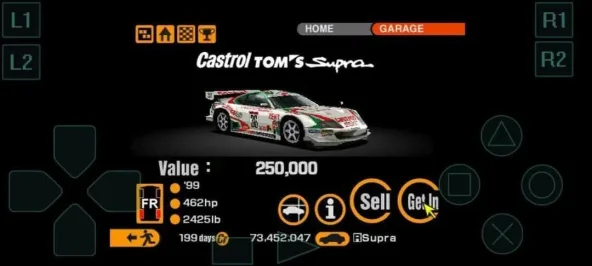
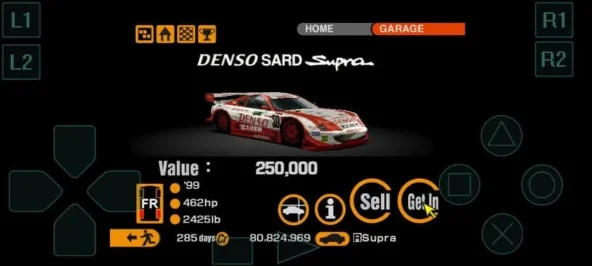
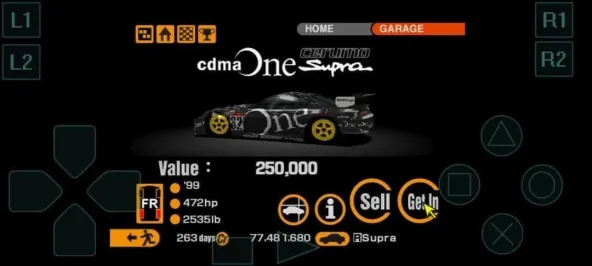
No.36 Toyota Supra GT500 – Toyota Team TOM’S
No.39 Toyota Supra GT500 – DENSO Toyota Team SARD
No.32 Toyota Supra GT500 – Toyota Team Cerumo

Updated Handling System & Electronic Refinement — GT2 A-Spec Mod
Running on Super Soft tires

---

Engineering Foundation — TRD’s GT500 Logic

Developed under the technical direction of Toyota Racing Development during the 1999 JGTC GT500 era, the Supra platform was engineered around structural stability rather than nervous agility.

Core priorities included:

Strong rear traction under power

Stable, confidence-inspiring braking behavior

A wide mechanical grip operating window

Balanced aerodynamic distribution

Electronic refinement to smooth torque delivery

Unlike lighter mid-engine GT500 rivals, the Supra carried more mass and more rotational inertia.

Because of that, TRD’s philosophy did not chase hyper-aggressive front-end rotation.

The emphasis was:

Controlling weight transfer

Protecting rear tire stability

Allowing early throttle application without destabilizing the platform

This car was built to be repeatable under race conditions.

This setup respects that engineering logic.

---

Tom Kristensen Approach — Control the Weight, Own the Exit

Applied to the Supra GT500, a Tom Kristensen mindset shifts the tone.

You do not wait for balance.

You establish it.

That means:

Firm, decisive braking

Early and confident turn-in

Intentional weight transfer to help rotation

Stabilizing the chassis before throttle

Committing to power with authority once rear grip is confirmed

The Supra will not rotate like an NSX.

So you create rotation through braking discipline — not steering aggression.

If you are timid on entry, the car pushes.
If you are abrupt mid-corner, inertia punishes you.

The key is commanding the front on entry, then locking the rear platform down before throttle.

Exit speed is earned — not gifted.

---

Setup Philosophy — Authority Over Inertia

This configuration is engineered to:

Maintain stable braking rotation

Support controlled front engagement

Preserve rear traction under early throttle

Deliver consistent lap times across race distance

It is not built for flashy rotation.

It allows assertive driving without breaking rear stability.

You drive this Supra with pressure — not panic.

---

Track Adjustment — Required on Uneven Circuits

For technical or elevation-heavy tracks such as:

Trial Mountain

Midfield Raceway

Deep Forest Raceway

Grand Valley Speedway

WeatherTech Raceway Laguna Seca

Special Stage Route 5

Apply:

👉 Reduce BOTH Bound and Rebound dampers by 2 clicks
👉 Front AND Rear

---

Why This Is Necessary

The Supra carries more mass and inertia than most GT500 rivals.

If damping is too stiff:

The front destabilizes under heavy compression

Tire contact becomes inconsistent over bumps

Mid-corner corrections trigger abrupt balance shifts

Rear traction suffers on throttle application

Reducing damping slightly:

Improves braking composure

Enhances mechanical grip consistency

Maintains aero balance

Reduces violent weight transfer

Super Soft tires amplify vertical load sensitivity.

This is not a comfort tweak.

It is protection against inertia-induced instability.

---

Driver Discipline — Command, Don’t Chase

The Supra GT500 does NOT reward:

❌ Hesitant braking
❌ Late steering corrections
❌ Forcing rotation mid-corner
❌ Abrupt throttle spikes

It rewards:

✔ Decisive entry control
✔ Stable steering angle
✔ Intentional weight transfer
✔ Confident throttle once rear grip is secured

If the car feels lazy, you are under-driving it.
If it feels nervous, you are over-driving it.

When it feels planted and exits stronger than everything around it —
you are inside its operating window.

The Supra GT500 is not about drama.

It is about controlling mass, stabilizing the platform, and applying power with authority.

That is TRD engineering — driven with endurance-level discipline.

---

Spring rates
Front 14,0 lb/in
Rear 13,2 lb/in
Min bar 2,0 lb/in
Max bar 20.0 lb/in

• Ride height
Front 82 inc
rear 86 inc
Min bar 55 in
Max bar 100 in

• Bound dampers:
Front 7 in
rear 6 in .
Min bar 1
Max bar 10

• Rebound dampers:
Front 7 in
rear 6 in .
Min bar 1
Max bar 10

• Camber:
Front 2.3 degree
rear 1.2 degree
Min bar 0.0 degree
Max bar 12.0 degree

• Toe:
Front minus 0.05
Rear plus 0.05
Min bar 0.20 minus
Max bar 0.20 Plus

Note: for toe, in the Gran Turismo 2, bar system goes from
minus 0,20 to 0,15 to 0,10 to 0,05
To 0,0 netral,

Then
plus 0,05 to 0,10 to 0,15 to 0,20

• stabilizers
Front 5
Rear 5
Min bar 1
Max bar 7

• Front downforce = 0.72
0.34 (min bar)
0.78 (max bar)

• rear downforce = 0,88
0.53 (min bar)
0.99 (max bar)

• initial limited slip torque /
LSD initial torque = 10
Min bar 1 is more soft
Max bar 56 is more hard or stiff

• acceleration limited slip effect /
LSD acceleration = 18
Min bar 1 is more soft
Max bar 56 is more hard or stiff

• Deceleration limited slip effect /
LSD Decel = 22
Min bar 1 is more soft
Max bar 56 is more hard or stiff

• Stability control effect/
ASCC = 22
Min bar 1 is more soft
Max bar 101 is more hard or stiff

• Traction control effect/
TCSC = 2
Min bar 1 is more soft
Max bar 51 is more hard or stiff

Super Soft tires
 

Attachments

  • FB_IMG_1771501814308.webp
    FB_IMG_1771501814308.webp
    32.6 KB · Views: 0
  • FB_IMG_1771501816794.webp
    FB_IMG_1771501816794.webp
    30.7 KB · Views: 0
  • FB_IMG_1771501819463.webp
    FB_IMG_1771501819463.webp
    30.8 KB · Views: 0
Last edited:
JGTC No.2 – Car List E

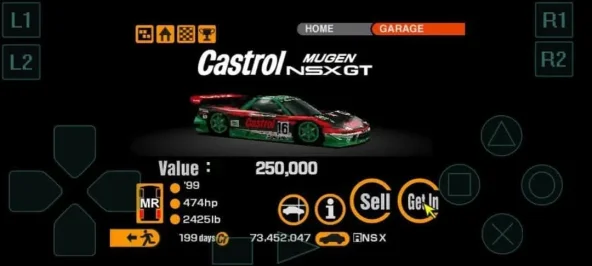
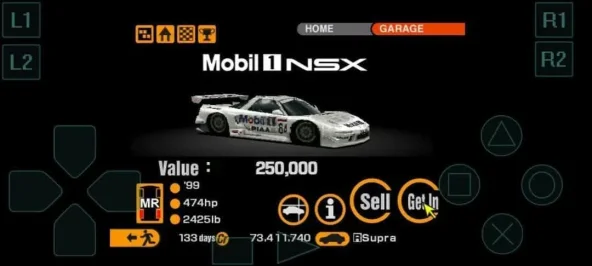
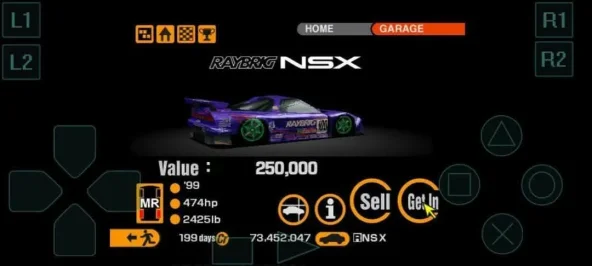
No.16 Honda NSX GT500 – Castrol Mugen
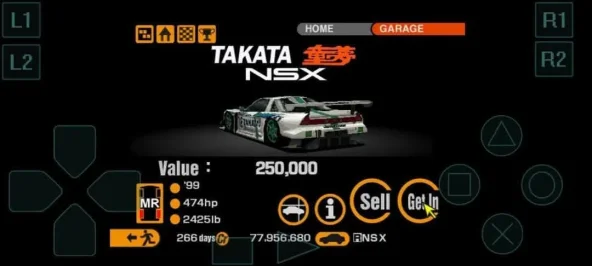
No.18 Honda NSX GT500 – Takata Dome
No.100 Honda NSX GT500 – Raybrig Team Kunimitsu
No.64 Honda NSX GT500 – Mobil 1 Nakajima Racing

Updated Handling System & Electronic Refinement — GT2 A-Spec Mod
Running on Super Soft tires

---

Engineering Foundation — Mugen Precision Philosophy

Developed in collaboration with Mugen Motorsports during the 1999 JGTC GT500 season, the NSX platform emphasized responsiveness and balance over brute stability.

Core engineering priorities included:

Maximum front-end precision

Efficient mid-corner rotation

Balanced aerodynamic distribution

Suspension compliance suited for elevation-heavy circuits

Strong rear traction despite short wheelbase

Unlike heavier FR competitors, the mid-engine NSX was naturally agile.

It did not require forced rotation.

Its shorter wheelbase and rear weight bias allowed it to rotate quickly — but also made it sensitive to abrupt inputs.

Mugen’s philosophy was not about nervous speed.

It was about controlled response.

This setup follows that logic.

---

Tom Kristensen Approach — Control the Rotation

With the NSX, a Tom Kristensen mindset does not mean aggression.

It means authority through precision.

That translates to:

Strong, confident braking to initiate rotation

Early and decisive steering input

Immediate stabilization of the rear platform

Holding a consistent steering angle through mid-corner

Committing to throttle once the rear is settled

The NSX rotates easily.

Your job is not to create rotation —
your job is to control it.

If you hesitate at turn-in, the car becomes lazy.
If you overcorrect mid-corner, the rear reacts sharply.

You must initiate rotation with discipline, then lock the platform down before power application.

Speed comes from managing rotation — not chasing it.

---

Setup Philosophy — Precision Under Authority

This configuration is engineered to:

Support controlled braking rotation

Preserve front-end sharpness

Maintain rear stability during transition

Deliver strong, repeatable exit speed

It is not an entry-attack gimmick.

It allows assertive driving while protecting rear balance.

The NSX rewards commitment —
but punishes emotional corrections.

---

Track Adjustment — Required on Uneven Circuits

For technical or elevation-heavy tracks such as:

Trial Mountain

Midfield Raceway

Deep Forest Raceway

Grand Valley Speedway

WeatherTech Raceway Laguna Seca

Special Stage Route 5

Apply:

👉 Reduce BOTH Bound and Rebound dampers by 2 clicks
👉 Front AND Rear

---

Why This Matters

The NSX’s short wheelbase and mid-engine layout make it sensitive to pitch and vertical load changes.

If damping is too stiff:

Tire contact becomes inconsistent over bumps

Front aero unloads under compression

Mid-corner balance becomes nervous

Rear reactions feel abrupt

Reducing damping slightly:

Improves mechanical grip consistency

Maintains aerodynamic stability

Preserves rotation without snap behavior

Stabilizes throttle application over elevation change

Super Soft tires amplify vertical sensitivity.

This adjustment protects precision — not softness.

---

Driver Discipline — Decisive, Not Dramatic

The NSX GT500 does NOT reward:

❌ Hesitant entry
❌ Late steering corrections
❌ Over-rotation attempts
❌ Abrupt throttle spikes

It rewards:

✔ Confident braking initiation
✔ Clean, early steering commitment
✔ Controlled rear stabilization
✔ Assertive throttle once grip is confirmed

If the car feels nervous, you are overcorrecting.
If it feels dull, you are under-committing.

When it feels sharp, planted, and surgically precise —
you are inside its operating window.

The NSX GT500 is not about drama.

It is about commanding rotation, stabilizing the platform, and exiting with authority.

That is Mugen engineering — driven with endurance-level discipline.

---

Spring rates
Front 13,8 lb/in
Rear 15,4 lb/in
Min bar 2,0 lb/in
Max bar 20.0 lb/in

• Ride height
Front 82 inc
rear 87 inc
Min bar 55 in
Max bar 100 in

• Bound dampers:
Front 7 in
rear 6 in .
Min bar 1
Max bar 10

• Rebound dampers:
Front 7 in
rear 6 in .
Min bar 1
Max bar 10

• Camber:
Front 2.3 degree
rear 1.3 degree
Min bar 0.0 degree
Max bar 12.0 degree

• Toe:
Front minus 0.05
Rear plus 0.10
Min bar 0.20 minus
Max bar 0.20 Plus

Note: for toe, in the Gran Turismo 2, bar system goes from
minus 0,20 to 0,15 to 0,10 to 0,05

To 0,0 netral,

Then
plus 0,05 to 0,10 to 0,15 to 0,20

• stabilizers
Front 5
Rear 5
Min bar 1
Max bar 7

• Front downforce = 0.72
0.34 (min bar)
0.78 (max bar)

• rear downforce = 0,87
0.53 (min bar)
0.99 (max bar)

• initial limited slip torque /
LSD initial torque = 10
Min bar 1 is more soft
Max bar 56 is more hard or stiff

• acceleration limited slip effect /
LSD acceleration = 18
Min bar 1 is more soft
Max bar 56 is more hard or stiff

• Deceleration limited slip effect /
LSD Decel = 22
Min bar 1 is more soft
Max bar 56 is more hard or stiff

• Stability control effect/
ASCC = 23
Min bar 1 is more soft
Max bar 101 is more hard or stiff

• Traction control effect/
TCSC = 2
Min bar 1 is more soft
Max bar 51 is more hard or stiff

Super Soft tires
 

Attachments

  • FB_IMG_1771501905152.webp
    FB_IMG_1771501905152.webp
    32 KB · Views: 0
  • FB_IMG_1771501907113.webp
    FB_IMG_1771501907113.webp
    30.7 KB · Views: 0
  • FB_IMG_1771501909391.webp
    FB_IMG_1771501909391.webp
    30.4 KB · Views: 0
  • FB_IMG_1771501911737.webp
    FB_IMG_1771501911737.webp
    29.7 KB · Views: 0
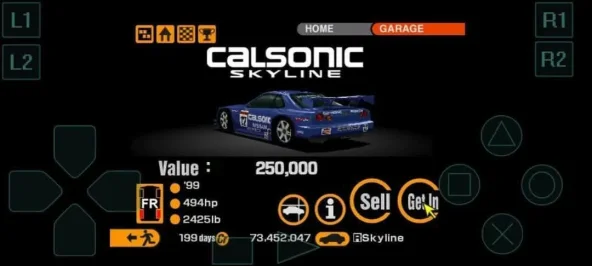
Last edited:
JGTC No.3 – Car List E

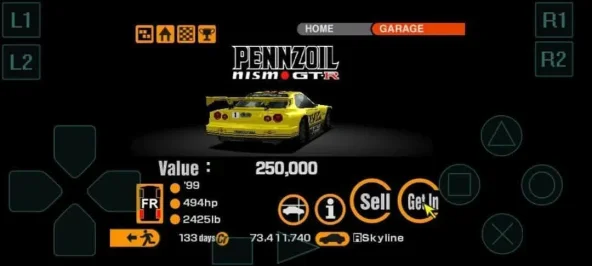
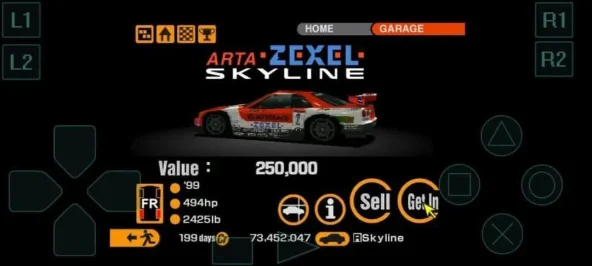
Nissan Skyline GT-R R34 GT500

No.1 – Pennzoil Nismo GT-R
No.2 – ARTA ZEXEL Nismo GT-R
No.12 – Calsonic Team Impul

Updated Handling & Electronic Refinement
GT2 A-Spec Mod — Super Soft Tyres

This configuration applies to all 1999 R34 GT500 variants under competitive race load.

This is not a casual baseline tune.
It is a race-developed balance package built for stability, authority, and repeatability.

The objective is clear:

Maximum high-speed control.
Zero wasted motion.

---

Engineering Foundation — NISMO GT500 Logic (1999)

Developed under the technical structure of Nismo during the 1999 GT500 season, the R34 platform was engineered around structural stability and controlled power deployment.

Primary engineering priorities included:

1. Front-end stability under heavy braking

2. Aerodynamic platform consistency

3. Progressive rear traction under turbo torque

The RB26 twin-turbo engine delivered strong mid-range torque.
Without disciplined load control, that torque could easily overwhelm rear grip.

At the same time, the R34 carried significant front mass due to its front-engine layout.

That meant:

Damper control was critical

Pitch sensitivity had to be managed

Front aero engagement had to remain stable under compression

NISMO’s approach focused on:

Controlled weight migration

Maintaining splitter stability under braking

Keeping rear traction progressive rather than explosive

This setup follows that philosophy.

It is not loose.
It is not dramatic.
It is efficient under pressure.

---

Tom Kristensen Approach — Command the Front, Control the Power

With the R34 GT500, a Tom Kristensen mindset changes the rhythm completely.

You do not “guide” this car.

You command it.

That means:

Strong, confident braking to load the front axle

Early and decisive steering commitment

Immediate stabilization of chassis pitch

Holding a consistent steering arc

Applying throttle assertively once rear grip is confirmed

The Skyline will push if you are passive.

It carries front weight.
It demands authority.

If you hesitate on entry, understeer builds.
If you rush throttle, turbo torque punishes rear traction.

You must control the front first —
then deploy power with discipline.

Rotation comes from braking authority and weight transfer, not steering aggression.

Speed comes from managing inertia and turbo load — not chasing rotation.

---

Setup Philosophy — Stability Under Pressure

This configuration is engineered to:

Support controlled braking rotation

Maintain aero platform stability

Deliver predictable turbo power application

Produce consistent exit speed over long runs

It is not built for entry theatrics.

It allows assertive driving while preserving structural balance.

The R34 performs best when the platform remains stable from brake phase to throttle release.

---

Track-Specific Suspension Adjustment

On technical or elevation-heavy circuits such as:

Trial Mountain

Midfield Raceway

Deep Forest Raceway

Grand Valley Speedway

WeatherTech Raceway Laguna Seca

Special Stage Route 5

Apply:

👉 Reduce BOTH Bound and Rebound Dampers by 2 clicks
👉 Front AND Rear

---

Why This Is Required

With Super Soft tyres:

Stiff damping overloads the heavy front axle

Braking zones become unstable

Mid-corner push increases

Aero platform oscillates over elevation changes

Reducing damping slightly:

✔ Improves tyre compliance
✔ Smooths weight transfer
✔ Stabilizes aero engagement
✔ Improves turn-in response without snap oversteer
✔ Preserves rear traction under turbo torque

This is not optional.

It is required for this tyre + chassis + circuit combination.

---

Driver Discipline — Authority Without Drama

The R34 GT500 does NOT reward:

❌ Hesitant braking
❌ Late steering corrections
❌ Emotional throttle spikes
❌ Forced mid-corner rotation

It rewards:

✔ Decisive front loading
✔ Clean, early steering commitment
✔ Stable chassis attitude
✔ Confident throttle once the rear is secure

If the car feels lazy, you are under-committing.
If it feels unstable, you are rushing the process.

When it feels planted under braking and brutally effective on exit —
you are inside its operating window.

The 1999 R34 GT500 was engineered to win championships, not entertain the crowd.

Drive it with authority.
Control the front.
Deploy the turbo with discipline.

That is how NISMO designed it to operate..

Spring rates
Front 14,2 lb/in
Rear 13,4 lb/in
Min bar 2,0 lb/in
Max bar 20.0 lb/in

• Ride height
Front 82 inc
rear 86 inc
Min bar 55 in
Max bar 100 in

• Bound dampers:
Front 7 in
rear 6 in .
Min bar 1
Max bar 10

• Rebound dampers:
Front 7 in
rear 6 in .
Min bar 1
Max bar 10

• Camber:
Front 2.4 degree
rear 1.2 degree
Min bar 0.0 degree
Max bar 12.0 degree

• Toe:
Front minus 0.05
Rear plus 0.05
Min bar 0.20 minus
Max bar 0.20 Plus

Note: for toe, in the Gran Turismo 2, bar system goes from
minus 0,20 to 0,15 to 0,10 to 0,05
To 0,0 netral,
Then
plus 0,05 to 0,10 to 0,15 to 0,20

• stabilizers
Front 5
Rear 5
Min bar 1
Max bar 7

• Front downforce = 0.72
0.34 (min bar)
0.78 (max bar)

• rear downforce = 0,88
0.53 (min bar)
0.99 (max bar)

• initial limited slip torque /
LSD initial torque = 10
Min bar 1 is more soft
Max bar 56 is more hard or stiff

• acceleration limited slip effect /
LSD acceleration = 18
Min bar 1 is more soft
Max bar 56 is more hard or stiff

• Deceleration limited slip effect /
LSD Decel = 22
Min bar 1 is more soft
Max bar 56 is more hard or stiff

• Stability control effect/
ASCC = 23
Min bar 1 is more soft
Max bar 101 is more hard or stiff

• Traction control effect/
TCSC = 2
Min bar 1 is more soft
Max bar 51 is more hard or stiff

Super Soft tires
 

Attachments

  • FB_IMG_1771501986749.webp
    FB_IMG_1771501986749.webp
    30.5 KB · Views: 0
  • FB_IMG_1771501989246.webp
    FB_IMG_1771501989246.webp
    31.1 KB · Views: 0
  • FB_IMG_1771501991613.webp
    FB_IMG_1771501991613.webp
    30.3 KB · Views: 0
Last edited:
JGTC No.4 – Car List E

No.81 Nissan Silvia S15 GT300 ’99 — Team Daishin

Tom Kristensen Style

Updated Handling Balance & Electronic Refinement
(GT2 A-Spec Mod — Super Soft Tyres)

---

Lightweight Precision — Kristensen Interpretation

This configuration refines the late-1990s GT300 Silvia around mechanical grip control, braking stability, and rotation discipline.

The S15 GT300 is lighter and more reactive than GT500 machinery.
That responsiveness must be managed, not exaggerated.

This setup does not chase exaggerated oversteer.
It builds controlled rotation that can be repeated over a race distance.

Tyres: Super Soft

---

Driving Philosophy — Controlled Rotation

From a Kristensen endurance perspective:

Brake cleanly and in a straight line

Initiate rotation with balance, not steering aggression

Keep rear slip progressive, not abrupt

Prioritize exit stability over entry theatrics

Eliminate unnecessary corrections

The Silvia will rotate naturally due to its front-engine balance and lighter mass.
If you provoke it aggressively, you sacrifice exit efficiency and tire life.

Precision creates speed. Excess movement wastes it.

---

Setup Intent

Engineered to:

Improve braking platform stability

Maintain rear grip under throttle

Deliver progressive, predictable rotation

Enhance mechanical compliance over uneven surfaces

Produce consistent lap times across stints

Super Soft tires amplify weight transfer sensitivity.
Excessively stiff damping makes the rear reactive and unstable.

This configuration keeps the chassis responsive without becoming nervous.

---

Track Adjustment Recommendation

For technical or elevation-heavy circuits such as:

Trial Mountain

Midfield Raceway

Deep Forest Raceway

Grand Valley Speedway

Laguna Seca

Special Stage Route 5

Adjustment:

→ Reduce front and rear damper bound & rebound by 1–2 clicks

Technical rationale:

Improves mechanical grip over bumps

Stabilizes braking zones

Reduces snap rotation on compression

Maintains tire contact consistency

The objective is controlled compliance — not softness.

---

Final Note

This is not a drift-oriented GT300 setup.
It is an endurance-focused configuration built on balance and repeatability.

If the car feels precise, responsive, and stable over multiple laps, the setup is correct.

If it feels overly dramatic or requires constant correction, you are exceeding its optimal window.

The Silvia GT300 rewards control.

Race it with discipline, manage the rotation, and build speed through clean exits.

Spring rates
Front 13,8 lb/in
Rear 14,2 lb/in
Min bar 2,0 lb/in
Max bar 20.0 lb/in

• Ride height
Front 82 inc
rear 86 inc
Min bar 55 in
Max bar 100 in

• Bound dampers:
Front 7 in
rear 6 in .
Min bar 1
Max bar 10

• Rebound dampers:
Front 7 in
rear 6 in .
Min bar 1
Max bar 10

• Camber:
Front 2.3 degree
rear 1.2 degree
Min bar 0.0 degree
Max bar 12.0 degree

• Toe:
Front minus 0.05
Rear plus 0.05
Min bar 0.20 minus
Max bar 0.20 Plus

Note: for toe, in the Gran Turismo 2, bar system goes from
minus 0,20 to 0,15 to 0,10 to 0,05
To 0,0 netral,

Then
plus 0,05 to 0,10 to 0,15 to 0,20

• stabilizers
Front 5
Rear 5
Min bar 1
Max bar 7

• Front downforce = 0.38
0.15 (min bar)
0.52 (max bar)

• rear downforce = 0,50
0.21 min bar
0.85 max bar

• initial limited slip torque /
LSD initial torque = 8
Min bar 1 is more soft
Max bar 56 is more hard or stiff

• acceleration limited slip effect /
LSD acceleration = 16

Min bar 1 is more soft
Max bar 56 is more hard or stiff

• limited slip effect Decel/
LSD Decel = 18
Min bar 1 is more soft
Max bar 56 is more hard or stiff

• Stability control effect/
ASCC = 14
Min bar 1 is more soft
Max bar 101 is more hard or stiff

• Traction control effect/
TCSC = 2
Min bar 1 is more soft
Max bar 51 is more hard or stiff

Super Soft tires
 
JGTC No.5 – Car List E

No.25 Toyota MR-S GT300 ’99 — MOMO Corse Racing Team
GT300 Class

Tom Kristensen Style

GT300-Specific Handling Refinement — MR Chassis
(GT2 A-Spec Mod — Super Soft Tyres)

---

Mid-Engine Discipline — Kristensen Interpretation

This configuration is built specifically for the MR-S GT300 in its mid-engine layout.

It is not a softened GT500 setup.
It is a focused MR chassis refinement designed for race-distance control.

The MR platform rotates naturally and reacts quickly to weight transfer.
That responsiveness must be managed with precision.

This setup reduces snap behavior while preserving controlled rotation.

Tyres: Super Soft

---

Driving Philosophy — Structured Rotation

From a Kristensen endurance perspective:

Brake straight and release progressively

Initiate rotation through balance, not aggression

Use throttle with discipline mid-corner

Keep rear slip progressive and manageable

Prioritize exit stability over dramatic entry

The MR-S will rotate easily due to its central mass distribution.
If you provoke it, the rear will step out quickly and recovery margins are limited.

The objective is controlled rotation — not instability.

---

Chassis Characteristics — MR Platform

Compared to front-engine GT300 cars, the MR-S is:

More reactive under braking

More sensitive to throttle modulation

Quicker to rotate on entry

Less forgiving once grip is exceeded

Excessively stiff damping increases snap oversteer.
Abrupt inputs destabilize the rear axle.

This setup moderates those tendencies without removing the car’s agility.

---

Setup Intent

Engineered to:

Improve braking platform stability

Preserve progressive rear rotation

Maintain traction under early throttle

Enhance compliance over uneven surfaces

Deliver consistent lap times over a stint

Super Soft tires amplify abrupt load transfer.
Damping must allow controlled weight movement, not restrict it.

---

Track Adjustment — MR-S Critical Guidance

For technical or elevation-heavy circuits such as:

Trial Mountain Circuit

Midfield Raceway

Deep Forest Raceway

Grand Valley Speedway

Laguna Seca Raceway

Special Stage Route 5

Adjustment:

→ Reduce bound and rebound dampers by 1–2 clicks
→ Front AND Rear, with slight priority to rear compliance

Technical rationale:

Improves rear tire contact over bumps

Prevents snap rotation during compression

Maintains usable throttle application

Stabilizes the aero platform without dulling response

The MR layout amplifies vertical load changes.
Controlled compliance is essential.

---

Final Note

This is not a passive or forgiving setup.
It is not drift-oriented.

It is an endurance-focused MR configuration built on precision and repeatability.

If the car feels responsive but controllable over multiple laps, the setup is correct.

If it feels unstable or dramatic, inputs are likely too abrupt.

The MR-S GT300 rewards authority with discipline.

Control the rotation.
Manage the rear.
Build speed through clean exits.

Spring rates
Front 13,2 lb/in
Rear 13,8 lb/in
Min bar 2,0 lb/in
Max bar 20.0 lb/in

• Ride height
Front 85 inc
rear 90 inc
Min bar 55 in
Max bar 100 in

• Bound dampers:
Front 6 in
rear 4 in .
Min bar 1
Max bar 10

• Rebound dampers:
Front 5 in
rear 5 in .
Min bar 1
Max bar 10

• Camber:
Front 1.8 degree
rear 1.2 degree
Min bar 0.0 degree
Max bar 12.0 degree

• Toe:
Front neutral 0.00
Rear plus 0.10
Min bar 0.20 minus
Max bar 0.20 Plus

Note: for toe, in the Gran Turismo 2, bar system goes from
minus 0,20 to 0,15 to 0,10 to 0,05
To 0,0 netral,

Then
plus 0,05 to 0,10 to 0,15 to 0,20

• stabilizers
Front 4
Rear 3
Min bar 1
Max bar 7

• Front downforce = 0.38
0.15 (min bar)
0.52 (max bar)

• rear downforce = 0,50
0.21 min bar
0.85 max bar

• initial limited slip torque /
LSD initial torque = 8
Min bar 1 is more soft
Max bar 56 is more hard or stiff

• acceleration limited slip effect /
LSD acceleration = 16

Min bar 1 is more soft
Max bar 56 is more hard or stiff

• limited slip effect Decel/
LSD Decel = 14
Min bar 1 is more soft
Max bar 56 is more hard or stiff

• Stability control effect/
ASCC = 15
Min bar 1 is more soft
Max bar 101 is more hard or stiff

• Traction control effect/
TCSC = 3
Min bar 1 is more soft
Max bar 51 is more hard or stiff

Super Soft tires
 
Back