Retrograde Steps in Human Technology

  • Thread starter Thread starter Famine
  • 64 comments
  • 1,601 views
May I remind you all that NASA is looking at returning to the moon- it is VERY high in minerals and could be a huge mine. They just lack the resources and technology at the moment. As for the whole retrograde technology thing, I think in the main scheme of things, money is the deciding factor. The second factor would probably be "how practical was that thing?" and thus never build anything as pointless as it again.

As for the Aurora, the government is denying its' existence. I did a project on it a couple of years back, and it's supposed to be able to hit Mach 6, but since no tests or specs have been revealed to the public as of yet, and there aren't any official photos, we can't be sure that it ever be used.
 
blue_sharky39
We don't. Especially bombers. All they do is fly over something and pound the bejesus out if it...

Then get blown out of the sky by Douglas Bader in his Sopwith Camel...
 
Famine
Why is mankind consistently taking retrograde steps in technology? What happened to striving for the fastest? Discuss.
Two words for you, Famine: William Proxmire.

And his ilk, worldwide.

Truthfully, the fact remains that current trends are for value rather than absolute performance. So these superalitives are no longer as cost-effective as they once were (and even then, did the Concorde ever turn a profit?) because people would rather get 80% at half price rather than 100% at a premium.

The tendency now is also to focus on exploration landers and rovers, which is a good thing too.
 
Famine
Blackbird never crashed. Concorde crashed once in 34 years (with 112 lives lost) - and I can't even begin to count how many 747s were lost, including the worst civilian air disaster in history at Tenerife airport - and the Shuttle went down twice in 113 missions (once because of NASA cutbacks and once because of NASA complacency). No Apollo astronauts were lost (Apollo 1 caught fire on the pad and killed the crew whilst on the ground, Apollo 13 nearly went totally tits up, but returned safely - and saw FOUR further missions).

Doesn't cut it. The four examples I've picked were all the safest in their field...

You can compare the crash rates, but they won't be realistic. 747's have crashed more times because there are more of them. If there were more Concordes, there would have been more crashes.
 
Also, the 747 was in service for almost 20 years before one crashed from anything other than pilot error. Tennarif was caused by one 747 pilot taking a wrong turn and taxiing across the runway in front of another 747 that had reached the point of commitment. The pilot on takeoff roll tried to hurdle him but didn't have airspeed enough to clear the other plane.

In the mid-'80s a 747 was finally lost over Kobe Japan when the rear hatch failed and explosively decompressed at altitude. That was the first airframe failure of the 747.

 
neon_duke
Also, the 747 was in service for almost 20 years before one crashed from anything other than pilot error. Tennarif was caused by one 747 pilot taking a wrong turn and taxiing across the runway in front of another 747 that had reached the point of commitment. The pilot on takeoff roll tried to hurdle him but didn't have airspeed enough to clear the other plane.

In the mid-'80s a 747 was finally lost over Kobe Japan when the rear hatch failed and explosively decompressed at altitude. That was the first airframe failure of the 747.

I'm afraid that's not actually true.

Tenarife was caused by the pilot taking off. He was KLM's chief pilot and decided not to bother asking for clearance and went ahead with his take-off. The plane crossing the runway had been cleared to do so. The KLM pilot was, seemingly, under the impression that all the other planes would stop for him - and his co-pilot was under the impression that KLM's chief pilot couldn't possibly be wrong. At 120mph, when it became readily apparent that this wasn't the case, the runway 747 had too much speed to stop and too little to take off (a 747 has a rotate speed of 170mph and a take-off speed of 180mph). The crossing 747 wasn't looking because he had been cleared to cross the runway.


Concorde - like the Shuttle Columbia - was lost when debris pierced the wing. In Columbia's case it was foam which penetrated the carbon tiles on the leading edge of the wing at about 300mph. In Concorde's case it was a large piece of Air France 747 tyre on the runway, which punctured fuel tank #2.

So neither Concorde or the Shuttle have ever been lost due to airframe failure...
 
Errrr...

What's there to reply to? You posed no questions and made a point which has also been made by other people before and since - that there may be better things floating around Nellis.


Back onto crash stats, I wasn't able to dig out total passenger numbers or all of the crashes involving 747s (only those with over 150 killed), but:
Concorde:
First flight in 1969. Entered service in 1976, retired in 2003 (27 year service period)
16 planes
2.5 million passengers in total
1 million flight hours (700,000 supersonic)
1 crash, 113 killed.

747
First flight in 1969. Entered service in 1970, still operational (35 year service period) - although just 144 of the originals remain in service
1356 planes delivered
No passenger details
~100 million flight hours
9 crashes, 2339 killed

That ignores several terrorist bombs (Air India, Korean Air, Pan Am) and the one shot down by MiGs.

The average Concorde (63,000 flight hours) and the average 747 (74,000 flight hours) aren't THAT far apart for air time, but remember that the 16 Concordes had never been replaced, whereas the 747 (747-100, 747-200) has had a few generational facelifts. Most of the current 747s in the air are 747-400s, first built in 1985 and still being built.

For reference, some 25 BILLION people have flown on commercial flights. Your chances of dying on a plane are somewhere between your chance of winning the UK National Lottery 6 weeks in a row (14.1 million to one against each week) and being killed by a wasp.
 
Famine
An incoming SAM or AAM running at Mach 1.9. Why did Blackbird "need" to go at Mach 3.5? Why is the MiG Foxbat capable of Mach 3? Why would the Panavia Tornado F2 need to fly at Mach 2.2?

There would be no time to accelerate to such a speed if there was an incoming missile. Most of these planes could fly at those speeds just because the could, or to prove that their planes were better.
The Mig 25 was also a reconnaisance aircraft. The Tornado and lancer were bombers/attackers and can fly fast over their targets but then slow when cruising. Tactically it is unecessary for fighters to perform such fast maouveres.
 
keram
There would be no time to accelerate to such a speed if there was an incoming missile. Most of these planes could fly at those speeds just because the could, or to prove that their planes were better.
The Mig 25 was also a reconnaisance aircraft. The Tornado and lancer were bombers/attackers and can fly fast over their targets but then slow when cruising. Tactically it is unecessary for fighters to perform such fast maouveres.

Blackbird outran 4,000 incoming missiles in its operational life.
 
Famine
Blackbird outran 4,000 incoming missiles in its operational life.

Those missiles (I assume) were fired when it was already travelling at sufficient speed. You can't accelerate from 500 to 2000mph in few minutes.
 
Keram, keep in mind the Blackbird's cruising speed was not very far off it's maximum speed. This is why it was able to evade so many missiles, and why it was easily able to make do without stealth technology.
 
Out of curiosity, has anyone ever seen the program Fast Jets? I know they cover the Blackbird in it, so I'll see if I can dig up the tapes and see what they say.
 
Famine
Blackbird could photograph 100,000 square miles every hour. Modern surveillance planes can't even get close to that - and satellites, whilst capable of providing higher resolution images, aren't able to cover the same amount of area in the same time as the Blackbird (partially due to the fact that they're going so fast, they pass over the same location twice in that hour), which is why it was resurrected in the mid-1990s.

Yes, but after the initial cost, taking pictures 10 times, or 50 times a day doesn't cost much more than taking just one. Plus whoever you're watching isn't aware that you are - or better yet, know that you're always watching. Either way is better than doing catch-me-if-you-can reconnaissance flights with a fast plane.
 
Another thing to remember is that the Black Bird flew so high that is that the missile didn't have much 'tailing' time.

How come no-one has mentioned the U2?
 
ExigeExcel
How come no-one has mentioned the U2?
The U2 was designed to fly on The Edge of space, but it kept on getting shot down 'cos it was too slow.

Hehe, did you see what I did there?
 
^I was Mullen it over for a while before I decided to post this. :) Does anyone have anthing for Clayton? [/thread hijack]
 
A couple of additions to the discussion:

I think that the Foxbat E could attain mach 3.8 clean.

What about the X-15? True it was rocket powered and not jet powered, but it was manned.

And finally, the engines on concorde remain to this day the most efficient engines ever produced. No other engine could maintain that speed, in an aircraft that size, for that amount of distance.
 
Aerospace is an interesting field (all of your examples come from that field). It's a field where the problems are fundmental and quite challenging. Get an aircraft to go faster than the SR-71 is a really tough problem, and then there's the old question... why would you want to?

Really the bottom line in all of these events is motivation.

We don't need to go faster than the SR-71.
People weren't willing to pay enough to fly to london as fast as the concorde would go.
The shuttle didn't do a whole hell of a lot in Low Earth Orbit and it was really expensive, so why risk astronauts (although the shuttle hangup is largely due to government overreaction).
Sending men to the moon just isn't that important from a science point of view. So why should we go to the expense - we already did it.

... and then there's one more major motivation that doesn't push these things.

No Cold War anymore. Competition is good.


At the same time, we're still making huge progress in space exploration, possibly more now than ever before in human history. It's just that we're doing it with a low profile and in a super efficient way (ie: no people on board).
 
Re: SR-71 vs. modern designs. I am not a UFO/Area 51/conspiracy theorist type. But I do believe the Blackbird has a successor (aka Aurora or whatever you want to call it). Simply because the history of the US Airforce would point to it.

Also, you can't really compare the SR to fighters or bombers because the SR's operational profile is completely different from tactical aircraft. Fighters are expected to be manuverable, the SR was not. Fighters are expected to have operational flexability in payload, loiter time (for sweeps and combat air patrol), operation from limited supplies and short airfields and more important, have good performance in a varity of altitudes and flight parameters.

The SR does none of those things. It was designed to go really damn fast in a straight line, at super high altitudes. It had unique and expensive fuel and could only operate from certain air bases which were long enough to accomodate it. Blackbird out ran missles because it wasn't designed to engage targets in the air or on the ground, like a fighter or bomber.

In short, it's an apples to orange comparision.

But I understand your main point, hence...

Re: The Big Picture of Famine's post. I couldn't really tell you why people in the 2000s don't seem to have the same "higher, faster, further" attitude than people in the 30s, 40s, 50s and 60s.

It's a stab in the dark, but perhaps it's a generational difference. Perhaps our grand parents had a firmer belief that science and technology (epitomized by the aerospace industry) could make lives better than we do. Perhaps people who grew up in a technologically permeated world have became jaded with it's accomplishments. Perhaps people are not interested in doing it "just because we can" anymore.

However, I will point out that while aerospace is apparently firmly out of it's "Golden Age", there are still huge advances in many other fields, like medicine and electronics. Perhaps humanity has simply shifted its focus for some reason. The same feeling of "faster and further" is still alive and well within the auto-industry. A typical high-end sports car of today could probably well win LeMans in the 50s.


M
 
I'd also like to point out that we are hitting a plateau in the feasibility and usability of performance as we know it.

Street (supercars) are topping out around 200 mph. Road race cars about 250 mph. Aircraft are topping out in the Mach 2-3 range.

The thing is, to go faster is going to require a quantum jump in the engineering, and it's going to turn into a quantum jump in performance. In the case of aircraft it will probably be hyperbolic suborbital shots. Frankly in the case of supercars, it's just not likely to be, due to the nature of driving on public roads, etc. F1-style race cars are going to be compromised by their ability to go very fast and their need to handle even when going very slowly in comparison.

We may see 600-knot conventional airliners and Mach 3 hyperliners... but we're not likely to see Mach 1.5 airliners. There's a threshold of diminishing returns to cross over.
 
Well Famine, I think that you picked some interesting examples.

I was devastated when Concorde was taken out of service. I really felt that it should have been marketed better - like as a high-speed taxi, rather than as an airliner. I think that the reason why airliners are sticking at around the 550mph mark is as much to do with engine noise and efficiency, and the desire to shift ever-larger loads, rather than shifting the same loads faster as it is to do with problems in Concorde's design.

With respect to the SR-71 Blackbird, and also the MiG-25 Foxbat, I think that the whole paradigm of war is continuing to shift. Blackbird and Foxbat really came out of the Second World War, where it was held that control of the skies equalled control of the battlefield, and that air battles would consist of lots of fighters tazzing after each other while the bombers lumbered in in the background. Is it coincidence that there isn't really such a thing as a "fighter" or a "bomber" any more? I don't think so. And don't tell me about the B-52, which is a 1960s aeroplane that only ever gets used when the surgical strikes fail. Ultimately, I think that modern battles are won and lost in the first few hours, where the fight is not for the skies, but for the electricity, and the C3i (Command Control Communication Intelligence).

The world is shifting, and the priorities of the 1960s aren't so relevant any more. However, you may draw comfort from the fact that Moore's Law (that the number of transistors per integrated circuit would double every two years) was first uttered in 1965, and holds true to this day.
 
GG, just to 'nit pick' on what you said, there is a true fighter just entering service at the moment. And it is the F-22 Raptor. Also the F117 and B2 were both designed purely as bombers, but shall soon be replaced (the F117 mainly) by the JSF which is a F/A plane.

Due to America's superiority and wealth compared to those of 'rogue states' air superiority fighters are less important. Ground attacks against SAM sites are more important.
 
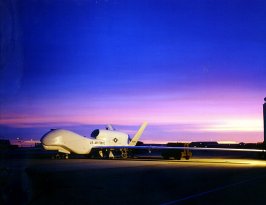
I thought the blackbird had been replaced by the Global Hawk. It can loiter for 30+ hours and provides far better real time battle information.

The poor ageing Concorde, an awesome plane 👍 The problems that they had to overcome just to make it work. One that sticks in my mind was the issue of heat. At its top speed, the skin of the aircraft had to be continuously cooled or the passengers would cook :crazy:

It was very expensive, and only the rich could afford it. In its prime it did turn a profit, but I think one reason for its downfall was the relative cheapness of private Jet charters.

A Lear Jet seats 12 and is as little as $2500 an hour to run. Many large companies choose to move VIPs in this way, more privacy and better security.

I've also heard that the Euro Fighter is the last "True" fighter to be built in the foreseeable future. There is no need for high speed combat aircraft anymore. Partly due to the success of the F16, F15 and the F14's ridiculous phoenix missiles.
It now makes no sense to take on a US led alliance in the air. The true fighters own success may lead to its own extinction!

In a certain war fought in an oil producing area, any target that was capable of taking off, was destroyed in the first 24 hours before it could even leave the ground.
GPS guided missiles and live satellite info may be the end of super performing jets. There are no air wars anymore.
 

Attachments

  • 1_global_hawk.jpg
    1_global_hawk.jpg
    30.2 KB · Views: 10
I think the problem with Global hawk is mainly control range and speed. But those are mainly problems of more primitive UAV's so I could be wrong.

The Eurofioghter is in no way a 'True Fighter'. It is very much a multirole aircraft, because otherwise Britain, Germany, Spain etc would not be able to afford it.
 
ExigeExcel
The Eurofioghter is in no way a 'True Fighter'. It is very much a multirole aircraft, because otherwise Britain, Germany, Spain etc would not be able to afford it.

Yes, but its primary role is Air Defence.

The Eurofighter is designed as a highly agile multi-role aircraft, capable of ground-attack as well as its primary air defence role.

Made mostly of carbon fibre composites, it has a top speed of twice the speed of sound.

State-of-the-art on-board computers and radar, a direct-voice input system for the pilot and an infra-red search and tracking system are other notable features.

But critics point out that plans were first conceived in 1983, years before the end of the Cold War and new military realities.

We can't afford it :lol: Its 22 years late, and already a White Elephant :lol:
There is nothing for it to do ;)
 
Roles
Counter-Air (CA). (Perhaps better described by it's more common title of 'Air Defence'. )
Air Interdiction (AI). Low- or medium-level attacks using precision-guided, freefall or retarded bombs.
Suppression of Enemy Air Defences (SEAD - pronounced 'see-add). Attacks on enemy air defence systems such as surface-to-air missile positions with ALARM.


You think that is funny, did you ever hear about the JSF being too heavy for the (British) air craft carriers it is supposed to use?
 
ExigeExcel
You think that is funny, did you ever hear about the JSF being too heavy for the (British) air craft carriers it is supposed to use?

Yeah, the reinforcements they added to make them rugged enough to withstand the carrier landings (hook and catapult) made them too heavy :dunce:

The Global Hawks range is 3000 nautical miles from its launch area...not bad, but I don't know its speed. Alt is 65,000 feet.
 
Back