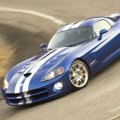
Lift? No... most modern cars are designed
not to lift. I dread the thought of some engineer saying:
"Hey, this Corolla is too pointy... let's give it some front end lift so it'll understeer."
"But that would make it incredibly dangerous at over 100 mph."
"Who cares? Nobody drives at those speeds."
There was a generation of Corolla in the 90's that had froint-end lift. Not on purpose... but as a flaw in the design. Really hairy to drive at triple digits. Come to think of it, many old Japanese cars were. Take a brand-new Corolla (arguably the most understeery car available nowadays) and peg it to the floorboard. The nose stays arrow straight. No lift.
Understeer is engineered in through suspension design. Softening the rear swaybars, adding some rear camber, changing the front suspension geometry. Nobody purposely makes their cars capable of flight anymore, that's just criminally dangerous.

---
Funny. Just the other day, I managed to catch a draft at 130 mph on my way to 140. The car literally slowed like a brick when I pulled out of my buddy's slipstream (I only have about 175 hp). There wasn't much of a
feeling of change, but the difference in pace is dramatic. It was easy to see because both cars had nearly equal power and top speeds. But at those speeds, with that power-to-drag ratio, we were just as close to the limit as your common PP630 car would be at 300 mph.
You're not going to feel the difference so much as see its effects. But the effects are most apparent if you have, like I said previously, cars which are all at the point where they will not accelerate any further under their own power.
Drafting is more noticeable in NASCAR because those are relatively slow racecars (750 hp pushing a large frontal area) compared to, say, Formula One cars which have so much power, they're still accelerating hard when they enter the braking zone at any track. And it's worse at sprint races, where they're limited to below 500 hp. In NASCAR, people can catch a draft at over a hundred meters. Problem is, with the restrictors, the cars slow like a brick when they leave the draft, so a good slipstream pass needs a lot of planning.
But back to F1... power... that's why you don't see more draft-overtakes in the top level of motorsports... too much acceleration. But if you watch the lower-level races... there's a huge advantage to a draft if the circuit is long enough.
In GT5P... your cars are making an average of "just" 200-600 hp, with cars that are much slower than tube-framed, carbon-bodied and bewinged racecars... mixed in with cars both faster and slower than you (due to the vagaries of PP balancing) on the straights... with different gearing (tuned) too. Catching enough draft to outright pass (given the right situation... if the other car has exited the previous corner faster than you or even at close to the same speed and has more power, catching a draft doesn't help as much... it just keeps you from getting left behind.
Again, I haven't made up my mind. Until I can take a car that's avaiable to me in both GT5P and in real life and do a back-to-back test (using a tow car that's available in both GT5P and in real life) on a preferably non-windy day (crosswinds and headwinds hamper drafting in real-life), I can't make a definitive statement on the accuracy of drafting physics.
Is it my imagination, or is the draft less in Spec III than Spec II?
----
My mistake about F1 wings... yeah, it is indeed to reduce turbulence and allow the driver behind more downforce.

 THANKS AGAIN. GT--ONE




 ?
?