- 24,344

- Midlantic Area
- GTP_Duke
...and have been since, oh, models being developed in 2000 or so.I think car manufacturers have started trying too hard...
...and have been since, oh, models being developed in 2000 or so.I think car manufacturers have started trying too hard...

It's like I say (and a6m5 is right)... the thing with concept cars is to imagine it was a retail model. Hardly ever do a concept car and its retail version look almost exactly alike.

They are showing what they intend their next flagship sports car(that's not NSX) to look like. It's a concept car.If they get poor reception, they can take it back, or change details. I really don't understand why you are flipping out over what Honda is doing. EVERYBODY does it.There's so much implied in those two statements: the manufacturers don't intend this to be the real thing; the fact that many changes will be made means that the concept wasn't so hot (or easy to produce); concepts are made simply to try out design ideas rather than new models.
If that's all true, then concept cars should do one of two things: resemble the production model as much as possible, or flat out tell the public it's a "styling exercise" (e.g., Cadillac Sixteen). To bring this two-bagger out and tell people it's the NSX replacement is either idiotic or...well, it's just idiotic.

I really don't understand why you are flipping out over what Honda is doing. EVERYBODY does it.
I think this is a bad generalization. I would agree that Japanese, Europeans, Americans, tend to make concepts in the direction you describe. But the Japanese do make near-production concepts. I do agree on the "survival mode" comment, and would like to remind you that when Detroit had a lot money, they did reach far into the future also.And here is where the problem lies. If you take a look at the concept cars over the past two or three years from each of the "major" powers in the automotive industry, you get a very different picture...
- The Japanese prefer whimsical, futuristic, and overtly Utopian designs and powerplants to create a future car by which technofiles and gearheads can unite and have a car for which to share. Designs seem completely irrational and far-off on the idea curve... Certainly it is what a concept is supposed to dream up, however it is the execution of these models that leaves us scratching our heads. Instead of coming up with something 10-15 years off, why not come up with something that can be here in 3 years or less?
- The Europeans prefer a similar idea of a future-oriented concept car, however much of their designs propose a fairly true down-to-earth feature set based on mechanicals that already exist, albeit in a highly modified, and generally highly efficient state. The Europeans dream of cars a few years into the future, and thus they set goals to meet these standards, and generally have done a good job matching them. Good ideas come from the notion of practicality, and that is where the Europeans have it in spades.
- The American concept car is one that projects the future in the sense that it is only around the corner. It has been that way for what seems like three decades in this country, and as of late, the overwhelming majority of American concept cars are either so quickly green-light for production that it is scary, or they come ever so close to production that we often end up disappointed. If anything, it is European practicality at the highest degree... Build with what you have, improve it just a bit, and call it a day. But much of this comes from the fact that GM, Ford, and DCX are in "survival mode," and thus they cannot afford to come up with whimsical concept cars and other "ideas on wheels." We want our concept cars, NOW! ...And that is why we see cars like the Camaro, Challenger, Interceptor, etc so likely for production by the time of their debut.
What is so "out there" with the Honda concept?What it comes down to is that Honda has plenty of room to dream of the future while still spending plenty of time on the present. Sure, GM can give us concept cars like the Volt, and Ford can give us something like the Airstream, but even they show direct lines to the near future.
 It's not like it's a maglev car. Honda makes cars for today, and their cars are very competitive, not in the future, but right now. I don't see anything wrong with Honda's philosophy.
Oh. My. God. I give up.This new NSX thing? It is an uncertainty if Honda will ever go along with the styling, much less the layout of the thing. Sure, technology lies abound, and it certainly points down a road that is filled with "filtered F1 content." Trust me, thats a good thing, but when you have managed to alienate the people by which your sporting credentials were either created or further established, you are cutting off your feet before jumping in the lake. No true NSX fan will settle for an FM-R sports coupe, and I think Honda knows that.
...The question is, is Honda willing to go back to the HSC concept to make the NSX-replacement a reality?

Ew. Just ew.*image of the newer NSX*


Wow. Just wow. I think I'm forever doomed to have the COMPLETE opposite taste in car design when compared with the rest of you guys.
I think this concept is absolutely STUNNING. Seriously. The only thing that is disappointing me here is that this NSX successor is front-engined instead of mid-engined.
Okay, so it could use some production-ish details and a more MR2-like rear deck (ideally with an engine back there, too), but I love the headlights and front end, I love how the taillights are set deep on what looks like a "shelf," and the side profile doesn't offend me nearly as much as the GT-R's does, and would look great with body-color A-pillars and a more production-like overall design.
I'm really looking forward to seeing what Honda will come up with when this turns into its production version. As of now, this thing is set to become my favorite late-model Japanese sports car.
Ew. Just ew.
The inset headlights and updated front bumper ruined that car. The original, with its pop-up headlights and oldschool bumper, was far superior in my opinion.


They are showing what they intend their next flagship sports car(that's not NSX) to look like. It's a concept car.If they get poor reception, they can take it back, or change details. I really don't understand why you are flipping out over what Honda is doing. EVERYBODY does it.
I guess I should have clarified. "EVERYBODY" as in "EVERYBODY has cell phones", and I know few people who doesn't have cell phone. Maybe "just about everybody"?. According to live4speed, TVR don't do it, and I'm sure there are others. But I know Big 3 in Detroit, just about all the European companies that sells cars in the U.S., and probably every single Japanese companies have produced concept cars that are going to be a lot different than the production version, or will never see production.No, not everybody does it. This is a concept that is nowhere near how it will look or work
Insult?and then they insult the NSX by calling this its replacement.
If they called this the new NSX, I can understand(though it's still front-mid), but while this car is replacing NSX as the Honda/Acura flagship, it is not the new NSX. Maybe "disappointing"?Well, I disagree with that comment, but that's your opinion.YSSMAN's right: the Japanese specialize in pointless concepts. It's as if they don't understand why they should do concepts any more than they know what overfishing is.




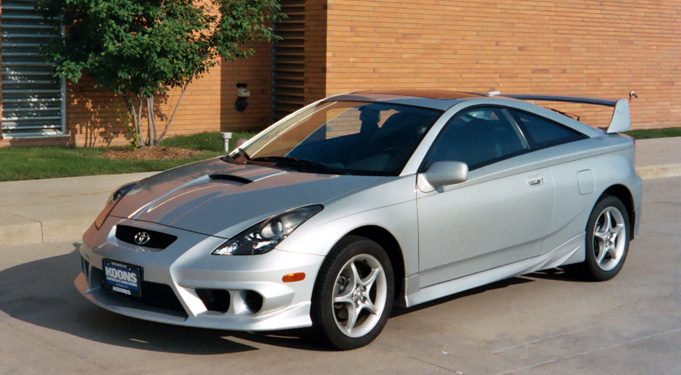
Erm this one, the last two generations of Celica were the best two, the last one was the best in terms of being a usable car with a bit of a leaning towards sportyness. Give some reasons why any of the rwd Celicas were better than any of the fwd ones? Because other than the misconception that rwd always equals better handling in a road car, I can't think of any.
I guess I should have clarified. "EVERYBODY" as in "EVERYBODY has cell phones", and I know few people who doesn't have cell phone. Maybe "just about everybody"?. According to live4speed, TVR don't do it, and I'm sure there are others. But I know Big 3 in Detroit, just about all the European companies that sells cars in the U.S., and probably every single Japanese companies have produced concept cars that are going to be a lot different than the production version, or will never see production.
Insult?
a6m5What did you mean by "overfishing"?
The whole human race is insanely overpopulated, so Japan is not alone in this, but they act as if it's not an issue for them.
 ). I thought that the U.S. is also starting to show the trend? But they do have the Mexican immigrants helping out with the numbers. In South Korea, it's supposed to be even worse than Japan.
That's very true and a very valid point.The problem here is that we're not only comparing FWD vs RWD, but also New vs Old. About 20 years' worth of "old," in this case.
The two cars arn't comparable, the Supra was right to be rwd, it was a high powered sportscar. The Celica was not a high powered sportscar rather it was a regular coupe with sporting intentions, like say a Mitsubishi FTO, only the Celica was a much better packaged car, at least it was when it was fwd.How about you and Casio give us some reasons why the FWD Celicas were "much better cars" than the third- and fourth-generation Supras?
No it doesn't, that's an argument I used heavily when people argued against the Veyrons weight. Rwd in more reguilar cars is not good because a: it reduces cabin space and b: the weight does have a negative effect on economy.Because other than the misconception that heaviness always equals poor handling in a road car, I can't think of any.
The Supra and Celica were originally one and the same, the car was even called the Toyota Celica Supra, Toyota then saw fit to split the two names into seperate brands using the Supra name for the more performance cars and the Celica for a lesser powered more regular car. Over time that gap became more prominent and eventually the link between the two model ranges dissapeared completely.(It's no coincidence that those two Supras carried the same chassis letter as the old RWD Celicas did, "A," while the FWD Celicas were given a new letter, "T.")
The two cars arn't comparable, the Supra was right to be rwd, it was a high powered sportscar. The Celica was not a high powered sportscar rather it was a regular coupe with sporting intentions, like say a Mitsubishi FTO, only the Celica was a much better packaged car, at least it was when it was fwd.
Rwd in more reguilar cars is not good because a: it reduces cabin space and b: the weight does have a negative effect on economy.
The Supra and Celica were originally one and the same, the car was even called the Toyota Celica Supra, Toyota then saw fit to split the two names into seperate brands using the Supra name for the more performance cars and the Celica for a lesser powered more regular car. Over time that gap became more prominent and eventually the link between the two model ranges dissapeared completely.
Actually, the Earth as a whole isn't overpopulated, it is just overpopulated in particular regions. Japan on the whole is getting older fast, much much older. Beyond that, their birth-rate is lower than their own death rate, and by that, I believe it was 2005 as the first "negative" year for the country in terms of population growth. People just don't want to have kids, beyond that, the further they go without having them, or maybe only having one, the more likely their children are to only have one or maybe none. What it comes down to is sociological suicide on the notion of birth/death rates alone, and it certainly won't help a quasi-ailing Japanese economy already.
YSSMAN...On the car (I promised I'd tie it in!), it is surprising that the Japanese automakers aren't more concerned for the age issue in the home country. Why aren't they building float-mobiles like our Buicks and Lincolns for them? Oh wait, they call those Toyotas and Lexii. Either way, these crazy concept vehicles certainly aren't going to fly with these last bastions of WWII Imperial Japan...
They're just as comparable as the latest-gen Celica and last RWD Celica, which was my point.
I was actually saying that the 4th Gen (First FWD) was better then the 3rd Gen (Last RWD). The car had a smaller, more efficent engine, yet was faster and had more interior space.
That's no real performance car (192 hp, FWD)