What is "feel"? (Also new cars vs. old cars)

  • Thread starter Thread starter ///M-Spec
  • 36 comments
  • 5,715 views

///M-Spec

Staff Emeritus
Messages
4,928
Continued from
The BMW History : It was fifty years ago. Today...
.

MSpec
My definition of "feel" is more than just the steering feel. That's a large part.

My definition also extends to how it sounds, how is responds, how tactile it is, the feedback you get from brakes, chassis, tires, steering, engine. The sense of total involvement. The use of all the senses.

I want my car to involve all my senses. To delight my whole being. To please my inner child. My 02s do that. And that only proves i'm easy.

New cars, and especially luxury cars, have too much insulation; from the noise, the street, the engine, the brakes, the suspension etc.

Old cars, well, it's you and them. No interface between you and the steering. You brake, and YOU are the one who is braking, not some computer deciding how much brake pressure to apply to which wheel. You accelerate, and your action directly affects the carb/ injection. In your new car, the computer decides how much acceleration you want.

How do you define 'feel'?

Is it, as the word implies, an entirely subjective experience? Or are there objective, measurable aspects of 'feel' that can make talking about it less like a nebulous philosophical debate and more like comparing statistics?

Furthermore, do modern cars have less 'feel' than older ones? Or are they just more refined and what many people consider 'feel' is simply NVH (noise, vibration, harshness) that is systematically eliminated through progress?

Is NVH integral to enjoying a car?

Discuss.


M
 
Last edited:

Don't forget confidence. When I feel that a chassis is well put together, it gives me confidence in the vehicle which I guess further enhances that feeling.

Otherwise, yeah, it's just all about NVH and feedback.
 
What is feel? Well it's anything that invokes a physical sensation. When it comes to driving all cars have a different feel to them because they are all built slightly different, this is even true when comparing the same models. Being in a S-Truck club for a number of years and none of the S-trucks I drove ever felt the same for one reason or another.

The feeling when driving comes from not only how the steering feels but also the NVH and other performance characteristics. I think it's hard to explain but I'm guessing a lot of car guys will understand.

As far as with old cars? My experience with them is limited but I wouldn't say they have any more or less feel, just a different feel. If that makes sense?
 
Although I haven't driven too many cars the ones I have driven are very different. When it comes to feel I also like to think interior comes into play.

My Barracuda fits me like a glove. The seat, pedal position, steering wheel position, and interior design and color make me feel great and comfortable before I even start it, which I think is essential. As for driving feel the steering is responsive, the brakes are perfect (despite being terrible, with no power brake I can really feel whats going on better), she handles great (for being a 43 year old boat, although her front suspension is pretty good even compared to new cars), and the throttle has great response. Even idling the beautiful sound of the V8, my arm situated perfectly on the edge outside the window, and the rocking side to side as the V8 pumps away gives off a great feel. It's almost like the car was made exactly for me, which I guess is why it's my dream car (can you still call it that after you have it). All in all for being a 43 year old chunk of Detroit steel I still get the best experience out of driving her and she feels wonderful, although she can be a bit of a handful sometimes.

My Volvo on the other hand has a terrible feel. Suspension has way too much travel and the acceleration and throttle response are horrid. On the other hand the brakes and steering aren't all that bad for being powered, but I'd still prefer not having them powered. The interior isn't bad but it is very boring, like the entire car pretty much, which doesn't give off any good feel, just kinda lazy and boring.

And I don't even have to describe the feel of my mom's Windstar :yuck:

Those are my experiences between old and new, although I may be a bit biased towards old but that's exactly how I feel.
 
Carrying an excerpt from my post in the proginal thread..

Myself
"...I'm a purist. I feel that the proper car has manual steering, manual transmission, and all lacks of ammenities except the basics (read: heat).."

I appreciate older cars much better. It comes from owning a few and sampling vehicles my family has owned over the years.. Older cars seemed much more tailored to the individual driver, as Diablo put it. There was more passion in the build of the car as opposed to the number-crunching of today's cars. Are there exceptions? Sure. The 1-Series looks promising, the Civic Si Coupe, Lotus Elise/Exige, Miata/MX-5, and a few other cars capture the drivers' connection of olde. But, about 90% of the time otherwise, everything's built too much with a safety-factor buffer zone.

Funny enough, The Brick's power steering recently just failed. Now with 100% manual steering, I'll admit that it's a bit of a pain in tighter parking lots, but I won't trade the amount of info I'm recieving from the wheel now. It's like finding a whole new dimension to my car. ;)


Cheers
Jetboy
 
Furthermore, do modern cars have less 'feel' than older ones? Or are they just more refined and what many people consider 'feel' is simply NVH (noise, vibration, harshness) that is systematically eliminated through progress?

I was thinking of making a thread like this at some point...

No, I don't think there is any less 'feel' in newer cars, it's just different. I don't have much experience with the way older cars work, but they really are different from what I've driven. Older cars do feel more involved, more mechanical and more like the driver is in control. And that's pretty awesome.

On the other hand, the GTI just feels good. Yes, it's like comparing a video game to real life, but it's a damn good video game. It's hard to describe how something so fake can feel 'right,' but it just does. Maybe VW just concentrated on the experience as a whole to make it fun to drive.

But there is also the question of how much is too much. I'm sure this has been beaten to death, but it just seems like the advancing of technology both makes cars faster and makes everything less impressive at the same time. The GTI is a quick car. But there are still a lot of sensors and things that help it go that quick. And DSG boxes. They make the car go faster, but is that what we want? Do we want the car itself to be faster or is it more important that the driver can say "Yeah, well I'm fast because of my driving, not the car's computers."

Also, a lot of this stuff is needed I think. Because a lot of cars would probably be very slow and boring to drive with all the weight that a car needs to pass government regulations. So I guess I can respect the more 'video game' feel of modern cars simply because it would be pretty difficult to make something that feels 'real' these days.
 
Good topic 👍

I place a lot of importance on feel, as long as the situation calls for it. The least "feelsome" car I've driven was a Toyota Landcruiser, and yet it was still enjoyable to drive in it's own way.

Conversely, my MX5 is rough as hell but for it's at the top of the tree out of things that I've driven with regards to feel. I'm glad I went with it because I suspect that I'd always be slightly disappointed with something that didn't offer the same level of communication. Everything from the pedals to the gearshift through to the steering are excellent - and all the controls feel well balanced.

I'm not keen on cars where the controls all feel like they should be in different vehicles. For example, a small car just wouldn't feel right with really heavy pedals, and a sports car just wouldn't feel right with very light steering. The MX5, and even my Fiesta before, had controls that felt perfectly weighted for the type of car - and it's something that shows that the engineers thought very carefully about how the car felt to drive. That the Mazda manages this even with power steering is a great achievement in my opinion.

When you couple this to a great choice of spring and damper settings you have a great handling car even if you don't have a lot of grip (the Fiesta being a great example of this).

NVH is part of the experience, but IMO you can have too much NVH. I'm wanting to switch from my 15" wheels with 195 tyres down to original 14" wheels with 185 tyres. I'll sacrifice some grip obviously, and possibly a little response, but steering feel will increase and ride quality will be improved, which are both more important to me. 95% of my driving is done at legal speeds so that's where I want to have fun.

All that considered, I can still see applications where feel makes next to no difference. 4x4s, for example. Or luxury cars. As long as the pedals and steering are consistant and accurate, that's equally as important when the main priority of the car is comfort. In such an application, I don't need feel. I need comfort and refinement. If an S-Class Merc sacrifices any comfort and refinement for feel it's a step in the wrong direction. Accuracy of control? Great. Feel isn't as important.
 
You quoted me so you know how I "feel."


Anyway, I wanted to add something, in light of HFS' comment about the wheel/ tire combo on his Miata.
On the BMW 2002s, it's common to change the tires from the original 165R13 to the more common 185/70-13 or 185/60-14 if they "upgrade" the wheels. However, many in the 02 community have lamented the change to wider tires as it comes at a price; a slight decrease in the tactility of the steering even though there is increased grip and higher cornering speeds.
Theres a certain liveliness about the steering when on the skinny original size tires that gets lost as your tires get wider. The delicacy and definition of communication between the contact patch of the tires and your hands is adversely affected. Yet the vestibular system and stopwatch agree that you are cornering faster.

That's a part of "feel" which is pretty hard to quantify. I liken it to listening to your favourite CD at a moderate volume, and just needing to turn it up. Whereupon the sound gets muddy as the amp is just not powerful enough or the speakers not matched or something else. Yes, higher volume. No better sound.
 
I personally think NVH is important, though not necessary, to enjoy a car. I remember riding in my uncle's 2006 GTO. The thing cooked up 400 horses, and really planted you in your seat at any speed. Apparently they put down pretty decent handling numbers too, but you couldn't feel it. The car was quiet, soft, comfortable, and even if you were tackling corners with aplomb you wouldn't realize it. It was boring.

My Civic however, is slow. But it revs like mad, has a loud an glorious intake and exhaust noise, tickle the gas and it revs, the shifter has very clear gates and you know when it's in gear, the suspension is stiff, there are squeaks and vibrations and the interior has rattles here and there when you hit bumps, and it's hella fun just driving it to Walmart because it's so rowdy and obnoxious. Great car. Slow as molasses compared to the GTO, but it's so much more enjoyable I'd take three of them in it's place.

As for "feel", the Civic has some, and then it doens't have much. Thanks to the stiff suspension and tight seat I can readily feel how the body of the car is moving and the g-forces going left and right. As for steering, it's almost impossible to feel when the tires are sliding or not. The power steering is light and has no feedback besides a little bump steer, which isn't good feedback. Effort doesn't build up as the forces on the front tires go up, it doesn't get light when they slide, and it generally feels pretty meh.

Speed Junkie's Miata does all that stuff. The car doesn't have power steering. A high effort doesn't always mean high feel (my mom's old G6 is a good example of heavy, numb steering), but it can help. When you're driving at speed on the highway the steering is really precise, not twitchy or anything. You can easily glide the car back and forth between lanes, but when you start bombing through corners the effort builds drastically as the forces on the front tires go up. When they start to understeer you can feel the steering go light and turn in your hands, and when the rear end slides out the steering tends to follow it, countersteering by itself. You just "know" what to do and when to do it. That car is also very noisy. You hear the engine, the suspension, the interior, the tires. That car is as slow as molasses...flowing through a pinhole...and yet it's the funnest thing I've ever driven besides that old 100cc race kart. When I drove my Civic after that I just stepped out disappointed. It wasn't fun.

That's the first time I ever realize what steering "feel" actually was concerning a car. I thought steering was steering, but it definitely isn't. When you can feel what the tires are doing, gripping, getting loose, etc, it allows to to react instantly. In the Civic you usually can't even tell what the car is doing until the butt dyno tells you, and by that time the car is already out of shape. When it comes to oversteer in that car, it can end pretty badly. Came, and did.

Hopefully my new car's steering reacts like the Miata's, just lighter.

As for modern cars, frankly I haven't driven enough of them to know. I can tell you that a Mazda 3, Cobalt SS, and RX8 don't have a lick of steering feel compared to that old Miata. The 3 was quick and precise, but the effort just didn't feel right. It was electric, and you knew it. The Cobalt was just bad, heavy and bad. When I started the RX8 I didn't even know I started it. The thing was perfectly smooth, perfectly quiet, and perfectly boring. When I got out of it I told my buddy "That thing sucks. Needs solid mounts, a straight pipe, and hydraulic steering. It feels like a video game." I drove my RX7 around the block just once, and I can already tell the car is going to be fun. The stock noise itself, the way the engine jumps when you tell it to, and the car kinda jerks back and forth when you tip into or let off the throttle, and the steering wheel that's actually connected to the wheels. You can feel that, even at parking lot speed.
 
Last edited:
I think that this 'feel,' something that tells you more about the road, comes in two forms: exquisite controls, and unrefined structures. (WARNING: Low Standards Ahead)

The best feel I've ever experienced was in a couple of 2004 or so Toyota Corollas (How low are my standards?). I could feel the wheel tugging this way or that, decisively and informatively, as I drove around the terribly paved roads that lace my town. Yet, at the same time, the rest of the car was totally refined. The bumps revealed to me by the steering were totally concealed by the suspension, and the car just steamrolled anything I could manage to throw at it. Everything revealed to me was kept totally hidden from the passengers.

The second best feel I've experienced is with my own car, a pretty much broken 1999 Altima. The steering vibrates without informing, the throttle is a matter of voodoo, and the brakes... actually kick ass because I've switched off the ABS. And that's the thing: My car offers great feel because, while the soft suspension soaks up bumps similarly to the 'Rolla, it squeaks and rattles in such a way to tell me I'm going over a bump. Braking urgently around town, I occasionally hear a bit of a skid, the tires literally telling me they can't take much more of this. In this case, I get pretty much no more driving feel than my passengers, because they can hear all of this (no wonder people don't like riding with me).

It seems that feel comes from two main places: controls, and everywhere else. In old cars, they typically got nothing right, so the feel came not from controls but from rattles. In new cars, they typically get everything right (when they try, at least), so feel comes from places it should, like the wheel and pedals. Of course, the ideal car for ultimate feel would be a piece of crap with fabulous controls and crap everything else, perhaps a Fiesta or Miata (DO YOU HEAR ME HFS?).

Though, while feel is lovely and all, I too don't think it's strictly necesary for pleasure. It's just not befitting to some cars, in my opinion. My stepmother just bought a Chrysler 300, which is pretty much an old Merc E55, and I absolutely adore driving despite its entirely feedback-free drive. I say that I want to feel like I'm driving on unforgiving concrete, but this car convinces me that marshmallows are good too; I literally can't feel some bumps in this car that could spill a drink in my car, the steering is blissfully feedback-free, and it's so secretive about your speed that my passengers never yelled at me for going redonkulously fast; they couldn't tell.

It seems that tons of feel is good for a visceral driving experience, while none at all is good for a luxurious drive. Both are fantastic, and I have trouble deciding which I prefer. I suppose the rule with feel is that you want a car to have either buttloads of it, or none at all.
 
As for M-Spec's question (thanks for making this a thread!), whether "feel" has a definable quantity to it, rather than subjective qualia that are indefinable and entirely subjective... I believe that it falls somewhere in-between.

There's a fuzzy area between a car with "feel" and one with "no feel". And for those who have actually experienced a car with, you can get 99.9% of them to agree that "Car A" has more "feel" than "Car B".

The trick is, though, to get all of those people to give the exact same definition of "feel". There's a lot that goes with it... excessive steering kickback, NVH (noise, vibration, harshness) and suspension movement... that isn't necessary for good feel, but invariably goes with it, and is thus associated with it.

You don't need a lot of the NVH, the rattling, clanking, gear-and-differential whine, chassis-twisting, etcetera... to know how the chassis is reacting to cornering forces, but it certainly helps. But the current European Ford Focus, which has excellent body feel and is a very "natural" car to drive sideways on loose surfaces, has excellent NVH isolation, and the chassis doesn't exhibit any flex at all... yet you always know what it's doing at any given moment, and what it's about to do... and what it may do should you decide upon a certain course of action.

Steering, however, is another matter entirely. Many modern systems lack any feel whatsoever. While the only difference may be the replacement of a hydraulic pump by an electric one, the effect is quite profound... many electric systems are non-linear, lack kickback... lack feedback and lack weight... or... even more bizarrely... have too much weight at the wrong times. Newer Korean systems are among the worst. They're programmed to be feather light at parking speeds, and get progressively heavier and more ponderous as speeds rise.

There is some hope... systems like the Mazda6 which locate the electric motor on the rack instead of the column... more "natural" weighting for higher end systems... but we're a long way from the ultimate evolution of hydraulic racks of the previous decade. And it only gets worse with modern tire compounds and sizes. Heavier wheels, wider tires, grippier compounds... all equal less feel.

Newer cars invariably lack steering feel compared to older ones... but in terms of overall feel, there are bright spots here and there... and when everything goes all-electric, with infinitely variable dampers, anti-rollbars, steering, etcetera...


well...


There's always go-karts. :dopey:

-

As for my "feel" benchmarks...

-the current spec Ford Focus... for its body-control... base wheels/tires... preferably the smallest engine (1.6/1.8) in the hatchback body. Steering feel is pretty decent, but the rack is slow.

-the Mazda Protege... for its steering and body control... lots of understeer in stock form, but the feedback from the steering rack is first-rate, and the car "dances" well at a mere 6-8/10ths.

-the 1st generation Miata... same as above, except for the understeer... and for the fact that you can actively feel cornering forces through chassis flex (with the top off).

-old BMW 3-series.

-current 1-series... steering not perfect, but the feedback from all corners of the car is go-kart like. Unfortunately, it's as stiff as one.

-BINI Cooper... reactive/responsive body. Steering on second gen could be better. The first gen had it just right.

-Shifter Kart... you can feel every pebble on the road. Countersteering out of a slide is as close to psychic reflex as possible on a wheeled vehicle where the wheels aren't glued to your limbs. Un-assisted steering, un-assisted brakes, un-assisted suspension (your spine and limbs are the suspension). :lol:
 
Last edited:
I agree with the people who say that older cars are more fun to drive than modern ones, even if they're not really that quick or have harder suspension than diamonds. The S'Line is a good example of this. Power steering is essentially the only assistance it has; it doesn't have ABS, traction contol, ASM or any other technical nonsense. And for me, it's the perfect car. Until I drive something with a little bit more poke obviously. Haven't had it dyno'd but considering that stock it produced about 155hp, it's certainly not the fastest thing in the world, however as a daily cruiser it's a great car. Comfortable but (for its size) nimble, and it has plenty enough power to do the usual daily drive to work. Still haven't driven my sister's Gen I MX-5 though so for the moment you could class my standards as low. That and I never got the chance to drive SIC EM, my mum's previous 2005 Impreza WRX as I wasn't old enough to hold a license.

I once drove a 2006 Corolla Ascent for a driving lesson and "feel" wise, it was apalling. There was literally no steering feel whatsoever (turn the steering wheel and it feels like it does absolutely nothing, there's no weight to it either), the pedals were mushy and felt weird, and even for my low standards in terms of power it was painfully slow. Then I drove a Mazda 2 Neo, which wasn't as bad, in fact it was sorta decent but it still felt lacking somehow. Then a 2005 Lancer ES. Same deal as the Corolla. The only car that I actually sort of enjoyed driving was very weirdly the Kia Cerato that I passed my VORT test on. But it still felt like crap to drive.
 
Last edited:
I'm still trying to figure out what car-guys mean by steering feel. what does numb mean, to them? my "butt-ometer" registers more what the suspension is doing, which way the car is leaning, and what the tires are doing (especially in conditions like this). I can also read RPM's and grip in nasty conditions.

I've never dealt with Manual steering, a stick shift (even 3 on the tree) or anything near performance. no-one's willing to risk they're precious investment for the future on anyone under the age of sixty :P so a lot of stuff no-one will let me near.
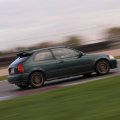
 
As for "feel", the Civic has some, and then it doens't have much. Thanks to the stiff suspension and tight seat I can readily feel how the body of the car is moving and the g-forces going left and right. As for steering, it's almost impossible to feel when the tires are sliding or not. The power steering is light and has no feedback besides a little bump steer, which isn't good feedback. Effort doesn't build up as the forces on the front tires go up, it doesn't get light when they slide, and it generally feels pretty meh.

That echos my findings from the couple of Civics I've driven. Though that said, I'd been led to believe that they were a lot worse for steering feel, so I was still pleasantly surprised. You can probably let me know your thoughts on this though Keef - the Del Sol that I drove had significantly better steering feel than the Civics I've driven. Would you say that's about right or was your Civic better than your Del Sol?

It seems that tons of feel is good for a visceral driving experience, while none at all is good for a luxurious drive. Both are fantastic, and I have trouble deciding which I prefer. I suppose the rule with feel is that you want a car to have either buttloads of it, or none at all.

I'd tend to agree with that. I can definitely see applications where feel is neither important nor wanted. This is on the provision that the steering is still accurate though, as nobody likes sloppy steering.

-----------------

I've driven an interesting collection of cars when it comes to "feel". At the top of the tree is my MX-5 and the 318ti Sport that I've driven. The steering, pedals and gearshift in both these two are fantastic. The BMW gets the nod for having less NVH, but can't come close for gearshift feel. Once the oil has warmed in the Mazda it's amazing. It's a little notchy cold but still better than anything else I've driven. Brake pedal feel in both is very good indeed, possibly better in the Mazda.

Next? Well, quite a few different cars really. My old Fiesta was very impressive indeed for a bottom-spec economy car. No power assistance so the steering weighted up nicely around corners and you could feel the road brilliantly. Even with tall tyres it was so easy to feel for the limits. It also had one of the best gearbox and clutch combos - a precise but not too sharp biting point and a gearlever that snicked between ratios quickly and accurately, even though it had a long throw. Good brake feel too, very progressive and easy to modulate.

Next we have the racing Mini Cooper. The brakes were scary until warm on racing pads - the pedal basically went to the floor at first with very little retardation but once warmed you don't even have to think about them - and that's a sign of a control that works well. The throttle was responsive though floor-hinged pedals as you find in BMWs always feel a little odd to me at first. Steering was merely good - very precise and very quick (2.5 turns lock to lock, I think) but feel was only average.

How about others? They can be summed up in a few words really:
- Alfa 146: Odd control weights - heavy pedals, clunky gearbox. Light, accurate steering with average feel
- Chrysler PT Cruiser: Poor throttle response (thanks, auto transmission), little brake feel but good progression, impressive and accurate steering
- Toyota Landcruiser: Poor feel, but pleasing response - a sort of "syrupy" feel to all the controls that felt right for the type of car
- Volkswagen Transporter TDI van: Quite incredible for a van. Good steering feel, plenty of info coming through the rim. Good brake feel, responsive throttle, precise gearbox - if the wheel wasn't tilted and you weren't sitting so high up, it'd feel like a pretty good car, let alone a pretty good van.

There are others, but nothing that stands out. I mention the above because they were all interesting to drive for one reason or another, even if feel wasn't high on the list.
 
That echos my findings from the couple of Civics I've driven. Though that said, I'd been led to believe that they were a lot worse for steering feel, so I was still pleasantly surprised. You can probably let me know your thoughts on this though Keef - the Del Sol that I drove had significantly better steering feel than the Civics I've driven. Would you say that's about right or was your Civic better than your Del Sol?
The most notable difference and the one that bothered me the entire time I had my Si was the Del Sol's steering ratio was noticeably quicker. Sports car quick. Even though the Si was newer Honda still gave it the same rack as all the others as far as I can tell. The Del Sol's lower seating position also makes you feel more confident. It wasn't the steering feedback that you felt, it was just more intuitive.
 
The most notable difference and the one that bothered me the entire time I had my Si was the Del Sol's steering ratio was noticeably quicker. Sports car quick. Even though the Si was newer Honda still gave it the same rack as all the others as far as I can tell. The Del Sol's lower seating position also makes you feel more confident. It wasn't the steering feedback that you felt, it was just more intuitive.

There was definitely more sensation through the rim though. I'm aware of the difference between feel and response, and whilst the Del Sol was certainly more responsive, the steering also felt less numb.
 
I'm still trying to figure out what car-guys mean by steering feel. what does numb mean, to them? my "butt-ometer" registers more what the suspension is doing, which way the car is leaning, and what the tires are doing (especially in conditions like this). I can also read RPM's and grip in nasty conditions.

I've never dealt with Manual steering, a stick shift (even 3 on the tree) or anything near performance. no-one's willing to risk they're precious investment for the future on anyone under the age of sixty :P so a lot of stuff no-one will let me near.

Steering feel consists of several factors:

Weight: Purely cosmetic, but proper weighting (not too firm, not too light) helps with ease of driving.

Texture: the way the steering itself transmits road texture to your fingertips. Yes, you can sense the same through your feet and behind, but feeling it through the rim of the steering wheel filters out the contribution of the rear tires and tells you what the fronts are driving on. This is affected by whether the rack is manual or assisted, where the assist motor is mounted (rack-mounted motors transmit more texture than column mounted motors) and what tires are on the car.

Feedback/Kickback: How the wheel responds to bumps, loading and etcetera. It's how it gets heavy as cornering forces build up and how it goes light when the tires become unloaded. It's how the wheel transmits deflections from bumps or dips. Many modern cars lack this completely... and others go out of their way to generate "un-natural" feel in terms of steering weighting in order to make cars easier to drive.

Linearity: Self-explanatory. Linearity means that you can be assured of "X" degrees of steering angle occuring at "X" degrees of steering wheel rotation. Variable ratio racks make it difficult to predict the effects of steering input.

Response: How directly steering inputs are transferred from the wheel to the wheels. Electric assist and tall tires adversely affect this.

There's probably something I'm missing, but this is what I look for when I try to analyze steering feel.
 
I may be repeating others, but every car has as much feel as another, modern cars don't have less feeling then old, simple cars don't have more then complicated uber driving aids computer cars. They feel different, some maybe to the point of being numb whereas some are very visceral and mechanical. I personally think it's wrong to say a car has no feel, of course it does, you're touching the steering wheel, pushing those pedals and it doesn't feel like nothing otherwise you'd be sat on a chair in mid air pretending to drive. That said, I don't think it's wrong to suggest cars have a bad feel, but the definition of that will change from person to person. Some will like a clutch, simplicity, direct steering and simplicity, others may only want to be thrilled by speed whereas others may want their car to feel docile and lazy, relaxing if you will. Even the mushiest of pedals and the feeling that the steering wheel isn't connected is still a feel, people say it feels like nothing but I believe numb is a better word.
 
No... it's more like...

Having a mouth full of novocaine is extremely comfortable, but it doesn't help you chew very well... hell, it's hard to do anything at all with your mouth till it wears off... that's what "feel" is all about. Comfort is not "feel", and not all "feel" is detrimental to comfort. Take Miatas. Lots of chassis feel... distinctly unstiff ride.
 
Steering feel consists of several factors:

Weight: Purely cosmetic, but proper weighting (not too firm, not too light) helps with ease of driving.

Texture: the way the steering itself transmits road texture to your fingertips. Yes, you can sense the same through your feet and behind, but feeling it through the rim of the steering wheel filters out the contribution of the rear tires and tells you what the fronts are driving on. This is affected by whether the rack is manual or assisted, where the assist motor is mounted (rack-mounted motors transmit more texture than column mounted motors) and what tires are on the car.

Feedback/Kickback: How the wheel responds to bumps, loading and etcetera. It's how it gets heavy as cornering forces build up and how it goes light when the tires become unloaded. It's how the wheel transmits deflections from bumps or dips. Many modern cars lack this completely... and others go out of their way to generate "un-natural" feel in terms of steering weighting in order to make cars easier to drive.

Linearity: Self-explanatory. Linearity means that you can be assured of "X" degrees of steering angle occuring at "X" degrees of steering wheel rotation. Variable ratio racks make it difficult to predict the effects of steering input.

Response: How directly steering inputs are transferred from the wheel to the wheels. Electric assist and tall tires adversely affect this.

There's probably something I'm missing, but this is what I look for when I try to analyze steering feel.

I've rarely encountered a "heavy" wheel, even on the likes of things such as lawn tractors

I have never registered any sort of feedback though a steering wheel (cracking a window tells me more what the fronts are doing) the only time I DO feel something, I know something's wrong with with the suspension or steering pieces , which usually means an expensive and labour intensive replacement. I also worry more about how "tight" the vehicle turns.
 
I have never registered any sort of feedback though a steering wheel

Is that because you drive cars with fairly tall tyres and very light power assistance, or are you perhaps just less receptive to steering feel? What kind of cars have you driven?

I've driven enough cars that I've pushed to their grip limits to know that, for example, you can feel through a good rim moments before a tyre breaks away, you can feel changes in the road surface through tiny changes in the steering resistance, you can feel the wheel squirm when you get towards the grip limits, and you feel the steering weight up when resistance builds.

All of those are things that steering with a lot of feel will tell you. The Landcruiser I drove had very few of those sensations. It was accurate, but the chassis and steering isolated a lot of the sensations that you'd expect. It was akin to turning the wheel through a vat of syrup. The car reacted to your inputs but didn't tell you what it was doing.

Also, it's not just all about steering feel. It's what you feel through your backside, what you feel through the brake pedal (many modern cars have pretty poor brake feel, I've found - the sort where the pedal just feels squashy - it slows the car down, but you don't feel like you're getting the sensation of pad and disc pushing together.

There's clutch and gearbox feel too. An auto box has absolutely no feel. Moving the lever may as well change the radio station. A couple of the manual boxes I've driven haven't been great either. Unnatural resistance, a baulky shift, a soft, sloppy action... they all detract from the feeling of your gearshift being a real, mechanical action that's swapping some cogs. In this respect, rod-operated changes are so much more satisfying than cable-operated changes, because you don't get anywhere near the free play.
 
Well, feel is hard to really say, it's just how everything is. The only cars I have any real experience in are a 2004 Mustang, 2006 Escape and my 1991 F150.

  • Mustang
    Great brake feel, can feel exactly what's going on.
    Good throttle response, but could be better if it wasn't a girlymatic
    In corners is where it shines: Through the wheel, I can feel what's going on with the front tires, and the chassis relays what's needed very well.

To me, it's the epitome of a very "feelful" drive aside from the too high seating position.

  • Escape
    The brakes communicate relatively well, so I never have to wonder what's going on with them
    The throttle response is beautiful, very direct, I attribute this the manual trans
    Cornering it feels like it's gonna fall over, but it tells you this well before you hit speeds where it really will.
    The steering is very direct and fast, but it lacks the feel of the Mustang. You can be spinning the fronts, or understeering, but that wheel will stay in one place.

But it's a more visceral experience than the Mustang. Slamming through the gears, because it doesn't really "snick", starting out with the clutch, downshifting, rev matching, and even heel-toe'ing(albeit badly :lol:). I'll drive the escape anytime except when I really wanna carve some corners. It just tickles my fancy, and has the best overall feel to anything I've driven extensively.

That brings me to my truck. The steering is light and slow, but it seems to communicate exactly what the wheels are doing in turns when they're trying to pull back to center. The brakes are mushy and seem to have variable clamping forces from one time you press the pedal to the next, but the throttle is great. While it doesn't go anywhere, you can tell your slightest input has been recieved and it's you really driving the truck, not some computer thinking how much throttle I wanted to give her. But that's the only upsides. It's a complete isolation of feel kind of vehicle, which really does sadden me :(
 
Feel, for me, is about accurate feedback of what exactley the car is doing underneath you. However, just getting a car with bags of feel isn't necessarily the best thing, learning to find and understand that feedback is half the fun.
 
Home: the states did not universally adopt low profile tyres untill recently. given the fact that I've never owned a vehicle that ever USED low profile tyres...
 
Feel and tall section tires are not mutually exclusive.

Just like grip is not feedback/ or handling.
 
I've rarely encountered a "heavy" wheel, even on the likes of things such as lawn tractors

"Heavy" is a relative thing. With manual racks, there's no such thing as "heavy". It's more like "of-course-it-won't-turn...give-it-some-gas-first"... the weight of the steering lessens as you build speed... increases as you apply lateral-gs and decreases as you lose grip.

With power-assist racks, some weight is left in to make it feel more natural... or sometimes weight is added to make the steering more stable at speed. "Heavy" steering does not lighten as it should under certain conditions, or has a large amount of artificial weight built into it. You don't expect a supermini to have steering as heavy as an SUVs, right? Some do... and it's even worse than the manual racks in other similar cars.
 
That's a part of "feel" which is pretty hard to quantify. I liken it to listening to your favourite CD at a moderate volume, and just needing to turn it up. Whereupon the sound gets muddy as the amp is just not powerful enough or the speakers not matched or something else. Yes, higher volume. No better sound.

I'm glad you brought up this analogy because it's one that I've wanted to use since we spun this thread off.

The amount of feedback a car gives is very much like listening to music. How loud people want their music is very much dependent on the disposition of the listener. And how much 'feel' people want in their cars is again dependent on how much feedback they are willing to tolerate/enjoy.

Imagine a 49 year old housewife listening to Kenny G at 52 dB (louder than a whisper, but lower than normal voice conversation). Compare this to her teenaged son listening to Slayer at 110 dB (average rock concert).

Who is having a more immersive, fuller, more enjoyable listening experience?

(please, no Kenny G jokes)

Furthermore, can Slayer be enjoyed at 52 dB?

Now compare this with driving ..say, a 3-series BMW quickly down a back road. Then... say, a Caterham 7. Does the music analogy hold?

EDIT:
Steering feel consists of several factors:

Weight: Purely cosmetic, but proper weighting (not too firm, not too light) helps with ease of driving.

Texture: the way the steering itself transmits road texture to your fingertips. Yes, you can sense the same through your feet and behind, but feeling it through the rim of the steering wheel filters out the contribution of the rear tires and tells you what the fronts are driving on. This is affected by whether the rack is manual or assisted, where the assist motor is mounted (rack-mounted motors transmit more texture than column mounted motors) and what tires are on the car.

Feedback/Kickback: How the wheel responds to bumps, loading and etcetera. It's how it gets heavy as cornering forces build up and how it goes light when the tires become unloaded. It's how the wheel transmits deflections from bumps or dips. Many modern cars lack this completely... and others go out of their way to generate "un-natural" feel in terms of steering weighting in order to make cars easier to drive.

Linearity: Self-explanatory. Linearity means that you can be assured of "X" degrees of steering angle occuring at "X" degrees of steering wheel rotation. Variable ratio racks make it difficult to predict the effects of steering input.

Response: How directly steering inputs are transferred from the wheel to the wheels. Electric assist and tall tires adversely affect this.

There's probably something I'm missing, but this is what I look for when I try to analyze steering feel.

This is a very good list. I would add powertrain vibration to the list of things under "feedback". BMWs in particular are very good at this. Hold a BMW steering wheel in your hand and even at idle, there is a certain vibration that comes through. It's very slight and unobtrusive, but it's there. The frequency of this vibration changes dependent on the engine speed. When driving quickly, it reinforces your sub-conscious awareness of how many RPMs the engine is turning. You instinctively know where you are on the tach. This one feature that is unfortunately missing in my current car.


M
 
-BINI Cooper... reactive/responsive body. Steering on second gen could be better. The first gen had it just right.

Like everything that gets older, the new Cooper is fatter. Having driven Mk1 Coopers and owning a Mk2 I can say that I do agree with you, the steering the Mk1 had it damn near perfect for the car, while the Mk2 needs a bit more cowbell. Although if you push the sport button in the Mk2 you get pretty much the exact same feeling back as the Mk1 had. I guess BMW just made it softer and lighter with the new generation to make it a bit more user friendly, but still gave the option to make it heavier and crisper.
 
Home: the states did not universally adopt low profile tyres untill recently. given the fact that I've never owned a vehicle that ever USED low profile tyres...

Feel and tall section tires are not mutually exclusive.

I should clarify, as my comment about taller tyres can be mis-construed. The tyres on my Fiesta had a width of 165 and a profile of 70. I'd call that quite a "tall" tyre, yet feel was pretty good. Indeed, a tall profile allowed more tyre deflection, and you could feel this through the rim pretty easily. The Mazda has a width of 195 and a profile of 50. I'd consider this fairly low profile, though I'm aware you can get much lower (my mum's Alfa has 215/45 R17s which are like rubber bands in comparison).

I've mentioned a few times that the Mazda, according to many owners, has better steering feel on the standard 14" rims with taller and narrower tyres. So tall tyres don't exclusively mean less feel, and can often mean the opposite (think old classics on tall tyres and comparatively tiny wheels).

But once you get up to SUVs and the like, you're often talking about very wide tyres with a very tall profile and squashy suspension, where much of the information from the road surface is filtered out long before it reaches the steering rack. And then, the usually power-assisted rack itself is heavily assisted to make the job of turning such massive tyres and a heavy body much easier. By this point, virtually all feel has disappeared.

Incidentally, I note that Sniffs in a subsequent comment has described very much what I'd call feel, so the previous comment about "never having registered feedback through a steering wheel" confuses me anyway...
 
New cars have electronics that old cars do not.

New cars that do not have those electronics may give you more feedback about what is going on (feel) than an old car.
 
Back