

- 568

- Western Sahara
Is engine braking finally simulated in GT?Not somehow. Engine braking is much better because of the Bugatti’s powertrain system.
Is engine braking finally simulated in GT?Not somehow. Engine braking is much better because of the Bugatti’s powertrain system.


Is engine braking finally simulated in GT?
I thought it's always basically on neutral gear when lifting off the gass... Except for H-patter users in GT5/6 who could gain very little advantage in braking by shiftin straight to lowest gears, whereas sequential driver's revs just kept bouncing at the limiter. What i just said, i wouldn't call engine braking*It has been modelled for a long time, at least since GT5P but probably since GT1 already.
I thought it's always basically on neutral gear when lifting off the gass... Except for H-patter users in GT5/6 who could gain very little advantage in braking by shiftin straight to lowest gears, whereas sequential driver's revs just kept bouncing at the limiter. What i just said, i wouldn't call engine braking*


Bugatti has same amount of downforce with enzo ferrari and it weights much more but somehow it stops faster.
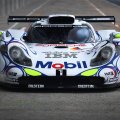

Don't remind me ahhh...You shoild try Vulcan lol...
Tell that to the one i quoted.You don’t gain any braking advantages by utilising engine braking.
Never noticed in the past games.Engine braking is something you need to be careful about, since shifting down too early can make the powered wheels skid, making you lose grip.
So how effective it actually is compared to real life or other games? I don't have h-patter so couldn't test, but it definitely felt like on neutral or with very minimal effect.2. In GT5/6 you can see when your car is in neutral, because the gear will be greyed out and the revs will quickly drop to idle. In a RWD car you can make that happen by tapping the handbrake button.
That's literally the only way i noticed any difference in earlier games, that's why i asked if it's different now in GTS.3. What you are describing is shifting down way too early, which would overstress the engine, crush the gearbox or instantly lock the wheels if you attempted that in real life.
So how effective it actually is compared to real life or other games? I don't have h-patter and it definitely felt like neutral.
P.S. Doesn't engaged gear push the car quite a bit, especially when braking at high speeds like 300km/h? Or is it that the tyres will give up first anyway? Nvm.


Who is Yamaguchi though?Yup and I think a large part of the problem is that it has zero front downforce whereas in real life it has huge front downforce.
Yamaguchi plz

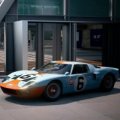

I tried it and didnt feel any difference.In this game, I find braking without shifting, to give shorter distances than braking while shifting down the gears. Try that.

Just adjust the brake balance and you'll be fine.Why this car has one of the worst brakes in game? Even the Ford F-150 Svt has better brakes than it.


I do. When doing the Ferrari event. Pulling up at T1. When I brake and downshift, it feels longer to slow than when I brake first to scrub speed and then, down shift.I tried it and didnt feel any difference.

Any advantage gained from the increased friction will be negated by the increased inertia.If the brakes are up to the task, ie. able to lock the wheels, weight doesn't directly affect braking distances. In fact a heavier car may have shorter braking distances as the weight increases grip
I have to make some tests for it.I do. When doing the Ferrari event. Pulling up at T1. When I brake and downshift, it feels longer to slow than when I brake first to scrub speed and then, down shift.
Brake balance only adjust oversteer and understeer while using your brakes.It doesnt decreases or increases braking distance in a straight line.Just adjust the brake balance and you'll be fine.


Brake balance can also affect weight transfer and braking efficiency so in some circumstances it can make a huge difference.I have to make some tests for it.
Brake balance only adjust oversteer and understeer while using your brakes.It doesnt decreases or increases braking distance in a straight line.
I have to make some tests for it.
Brake balance only adjust oversteer and understeer while using your brakes.It doesnt decreases or increases braking distance in a straight line.


