[Mod] Gran Turismo 2 plus (bug fixes, restored content and new content) - beta 7 released

  • Thread starter Thread starter pez2k
  • 3,076 comments
  • 1,013,346 views
Car sounds in general are probably very far down my list of priorities to be honest, I'm no sound engineer and none of them are great to begin with.

There are unused opponents with IDs near those of the used opponents in those events, but I'm not sure there's a version of the game where they're actually used or showing intent to be used. They could potentially be opponents for a removed event instead, or a copy and paste job, or they were removed from an event for a reason. I think the opponent list in all events is fairly deliberately picked, other than the obvious bugs already fixed, so I probably won't be adding unused opponents to events just because they're there.
 
Super nice mod!! Also, congrats on the 1M views on this thread!
 
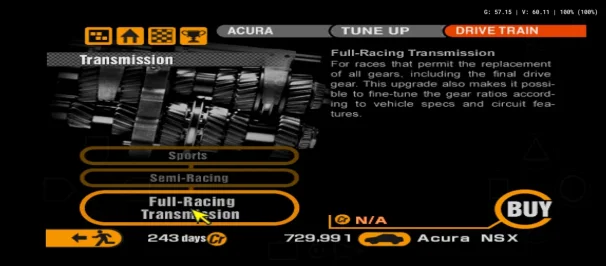
I discovered a mistake while preparing for the internal competitions — you can’t buy a transmission for the ‘91 Acura NSX.
 

Attachments

  • 1000194109.webp
    1000194109.webp
    51.1 KB · Views: 4
I discovered a mistake while preparing for the internal competitions — you can’t buy a transmission for the ‘91 Acura NSX.

Thanks - I think it's been reported before, just the wrong car ID on the part. It's fixed in the next version, whenever it's done.
 
Hi, it is true the original PAL version have physics issues? I had some problems with the NSX on the GT1, and some people said it was cause some PS1 PAL games had issues witch NTSC games didn't. I tried to play the NTSC USA version, but it use the imperial system.
Thanks for all your work!
 
Hi, it is true the original PAL version have physics issues? I had some problems with the NSX on the GT1, and some people said it was cause some PS1 PAL games had issues witch NTSC games didn't. I tried to play the NTSC USA version, but it use the imperial system.
Thanks for all your work!
Yes, but it's linked to the frame rate. Some cars experience some odd behaviours such as bouncing on some corners strangely. This is because the PAL version was locked to 25 FPS instead of 30 and the physics engine in GT2 is tied to the FPS, but it was designed for 30 FPS.
 
Hi, it is true the original PAL version have physics issues? I had some problems with the NSX on the GT1, and some people said it was cause some PS1 PAL games had issues witch NTSC games didn't.

The PAL versions of both GT1 and GT2 are completely playable and don't have any major issues with the physics.

As mentioned above, the lower framerate in PAL can make stiffly-sprung cars a bit bouncier, but especially in GT1 that's an issue in all regions even at 30fps.
 
Hello. Judging by the posts, you’re working on refining the car’s specifications, bringing them closer to real‑world vehicles. I don’t know if this will help you, but here’s a list of comments about the Mitsubishi Galant from a real owner. I’m passing on his notes:
What’s wrong with Gran Turismo 2 with the Galant models:
Galant VR-G ‘99
1. The model name…
Most likely, there’s an error in the model name, since the car’s appearance doesn’t match the VR-4 configuration from 1999. The letter “V” in the VR-G abbreviation stands for “Viento Racheado” — it implies the presence of aerodynamic bumpers, side skirts, and a rear wing on the trunk lid. In reality, the appearance of the VR-G 1999 trim level completely copies the appearance of the VR-4 1999 trim level. However, the appearance of the VR-G 1999 model in the GT2 game matches the appearance of the “VE” (Vivace Equipaggiamento) trim level. Yes, Mitsubishi’s marketers were inspired by European languages. “VE” is the most basic trim level, without fog lights, as in the GT2 model. If you take a closer look at the textures of the trunk lid, in the right corner you can see only two pixels responsible for the trim label, which also corresponds to “VE”; if the trunk lid had “VR-G” on it, there should be at least 3 pixels, as in the textures of the 1996 VR-G touring model.
2. Model characteristics…
Power: In the game, the stock model produces 143hp at 6400rpm, and the red zone on the tachometer starts at 6500rpm; however, in the original model with the 4g93 engine, it produces 140hp at 6000rpm, and the red zone on the tachometer begins at 6000rpm and ends at 8000rpm.
Moment of power: in the game, 18.5 kg·m is available at 3900 rpm, while in reality, 18.5 kg·m is available at 3750 rpm.
Galant VR-4 ‘99
Model specifications
Power.
In the game: 271 hp is achieved at 5900 rpm, and then the power drops sharply. The red zone starts at 6000 rpm and ends at 7000 rpm.
In reality: 280hp is achieved already at 5500rpm, then the solenoid in the turbines limits the increase in pressure and, consequently, the increase in power, which remains at the level of 280–276hp until 7000rpm. At 7000rpm, the red zone begins and ends at 9000rpm, where power rapidly decreases.
Torque:
In the game, 35.6kgm is achieved at 4000rpm.
In reality, 37 kgm (363 Nm) at 4000 rpm.

The ground clearance is 140 mm instead of 150 mm.
 
Galant VR-G ‘99
...
In reality, the appearance of the VR-G 1999 trim level completely copies the appearance of the VR-4 1999 trim level.

Is there any supporting documentation for this? The only 1999 VR-G brochure excerpt I've seen depicts the same car modelled in GT2, with an optional 'super sport package' that features the VR-4 look bodykit. There are also real-world used car listings showing VR-Gs without bodykits, such as this one (see photo 5 for the VR-G badge).

Moment of power: in the game, 18.5 kg·m is available at 3900 rpm, while in reality, 18.5 kg·m is available at 3750 rpm.
Galant VR-4 ‘99
...In the game, 35.6kgm is achieved at 4000rpm.
In reality, 37 kgm (363 Nm) at 4000 rpm.
...
The ground clearance is 140 mm instead of 150 mm.

The game only has a 500rpm resolution on the torque curve points so it's not possible to make peak torque occur at 3750rpm in the physics data, 3500 or 4000 is the closest it's possible to get. The dealership stats are just preset numbers so they can say anything, but the physics are more limited.

The '99 VR-4 has a 96% power multiplier applied for some reason, which is why the 37kgm that the torque curve data produces is reduced in-game and so is the resulting power. Not sure why, but it's consistently and seemingly deliberately done.

I don't even know how the person you've quoted measured the ground clearance of a car in GT2 so I'm afraid there's not much I can do on that front.

As for the not quoted parts about redlines and so on, the dials in the average production car rarely match what's set up in the engine / ECU, so I generally avoid using the gauges as a source of information (my own car has a rev limit just below the start of the redline on the dial, for example).

Finally, little differences like 3hp between the dealership stats and the actual physics data are hugely common throughout the whole game, and I probably won't be changing anything that small as often they're just a consequence of the 500rpm resolution. Manufacturer-quoted stats are ballpark estimates anyway rather than exact specific numbers, there were probably quite a few VR-Gs making 143hp or more from the factory just through variations in tolerances so I'm happy to let small differences in the physics data slide.
 
I have passed on the information; thank you for the reply.
 
And sorry for the question, I don’t know where else to ask — based on what system data is one car faster than another? Does the power and weight specified in the specifications matter, or is there a separate условная unit in the system files that is responsible for the dynamics?
And one more thing — would you like to join our events? We’re currently hosting the Apricot Hill 200 km competition.
 
This isn't a change as such, but more a bit of tidying up and a preview of the sort of detailed changes that each car will end up with in the next version - I'm probably going to rewrite the changelog to make it more readable. As it stands now, there are separate sections for model fixes, stats, physics changes, and so on, but I think it'll be much easier to make sense of by just listing each car with all of the changes made to it underneath.

Here's an example with a few randomly picked cars of how it might look - not every single one of these changes are actually implemented yet, but they will be eventually:

-- Acura NSX '91
Art: Corrected the taillights to all-red Acura spec.
Art: Replaced the 1997 wheels with the correct 1991 wheels.
Art (Night): Fixed warped rear wing.
Colours: Replaced the 1997 paint colours with the 1991 lineup of Sebring Silver, Berlina Black, Formula Red.
Stats: Corrected the year from '97 to '91 (JP only).
Physics: Corrected the weight from 1997 1412kg to 1991 auto 1405kg.
Physics: Corrected the tyres sizes from 1997 to 1991 sizes.
Physics: Replaced the 1997 manual transmission with the 1991 4-speed auto.

-- BMW 528i
Colours: Replaced the UK market colour names with the original German names (e.g. Alpine White -> Alpinweiss).
Physics: Replaced the 142ps 525tds engine with the correct 190ps 528i engine.
Physics: Replaced the 525tds 260Z transmission with the correct 528i 320Z and matching final drive ratio.
Physics: Corrected the stock LSD type from Helical to Open.
Physics: Corrected the tyre sizes to 225/60R15.
Upgrades: Improved the NA Tune upgrades to match the 328i.
Upgrades: Added the turbo kits from the 328Ci.

-- Dodge Viper RT/10 '99
Art: Fixed palette error on non-striped colours.
Art: Removed the 1997 spec foglight covers.
Colours: Adjusted the colour names to Viper Red and Viper Black to match the brochure.
Colours: Added missing Viper Bright Silver Metallic paint colour.
Physics: Fixed incorrect rev limit causing the garage to display a higher power value than the engine actually produced.
Physics: Fixed the car making too little peak power, hidden by the above issue.
Physics: Corrected the stock wheel sizes from 17" to 18".

-- Fiat 500R '75
Colours: Replaced the invented paint colours with the 1975 lineup of Rosso Corallo Scuro, Bianco, Giallo Tufo, Blu Scuro, Turchese Farfalla.
Stats: Added the missing valvetrain type of OHV.
Physics: Replaced the 23ps 126 engine with the correct 18ps 500R engine.
Physics: Replaced the Honda Z transmission with the correct 500R gear ratios and much shorter final drive.

I might shuffle the format around a bit, but this is generally what I'm intending to do. Some existing changes will probably also be reworded to make them clearer, now that I'm not trying to pack them all into a single line.

And sorry for the question, I don’t know where else to ask — based on what system data is one car faster than another? Does the power and weight specified in the specifications matter, or is there a separate условная unit in the system files that is responsible for the dynamics?
And one more thing — would you like to join our events? We’re currently hosting the Apricot Hill 200 km competition.

The preset power values shown in the dealership don't affect the car performance at all, the torque curve values are used to calculate the real power output (shown in the garage and pre-race), but the weight is the real physics value. There's also the aerodynamic drag of the car which isn't displayed anywhere in the game, and probably a few other detailed stats I'm not aware of.

Thanks for the invitation, but I haven't seriously played GT2 in over 15 years so I'm extremely slow on any track.
 
It's not a big deal. Everyone participates without restrictions, even with minimal experience, and even with results like yours. We welcome newcomers, and thank you for your response.
 
And again, information that may not be helpful — it has been empirically established that in GT2, the more revolutions a car has, the faster it is, provided the torque is the same… for example, the Mitsubishi FTO, which has 29 Nm and 9,000 rpm, is faster than the BMW 840, which has 50 Nm and 6,000 rpm.
“Why did they cut 1,000 rpm from the Galants and thereby make them slower than the Legacy?” — a question from the leader of the GT2 community in the CIS.
"They rev up to 8000 instead of 6000. This technical error means that the Galant VR‑4 stops being a competitor to the Legacy B4, which has everything in order with its engine speed".
 

Attachments

  • D-CiVeP9z9UuWZwA1iRGeCJFz0Ii-Y10OdBuiSkVBvup_nGDk7DJu3NIzUMSJOsrL3eN-n2fjEJZrTIQV5rbc1Pl-1.webp
    D-CiVeP9z9UuWZwA1iRGeCJFz0Ii-Y10OdBuiSkVBvup_nGDk7DJu3NIzUMSJOsrL3eN-n2fjEJZrTIQV5rbc1Pl-1.webp
    33.7 KB · Views: 2
And again, information that may not be helpful — it has been empirically established that in GT2, the more revolutions a car has, the faster it is, provided the torque is the same… for example, the Mitsubishi FTO, which has 29 Nm and 9,000 rpm, is faster than the BMW 840, which has 50 Nm and 6,000 rpm.

I'm afraid I don't really understand what you're trying to say here - the FTO is much lighter than the 840Ci and has a better power to weight ratio as well as shorter gearing, so it's definitely going to accelerate faster regardless of the rev limit.

Torque doesn't really directly have much to do with performance, but horsepower is calculated from torque and RPM. The Fiat Punto GT has the same peak torque value as the FTO GPX, but makes 70hp less because its peak power and torque are at low RPM.

“Why did they cut 1,000 rpm from the Galants and thereby make them slower than the Legacy?” — a question from the leader of the GT2 community in the CIS.
"They rev up to 8000 instead of 6000. This technical error means that the Galant VR‑4 stops being a competitor to the Legacy B4, which has everything in order with its engine speed".

I can't find any sources (official or unofficial) saying that the rev limit on a stock VR-4 ECU is anything higher than 7200rpm, and that's for a manual VR-4 where the sole manual in GT2 revs to 6500 (the rest are tiptronic automatics). Peak power is right down at 5500rpm anyway, so revving them much higher isn't going to produce a lot of power, like the Legacy B4 which peaks at 6500rpm and starts to severely drop power past 7000rpm.

I'm happy to fix things that are incorrect, but I need actual sources, for example a workshop manual that lists the ECU rev limit for auto and manual VR-4s. I'm not going to make changes just because someone is of the opinion that the VR-4 should be able to keep up with the lighter and shorter-geared B4 and that changing the redline will magically achieve that.
 
People are asking if it’s possible to set it to at least 7,000 RPM, like on the instrument cluster?
 
Last edited:
People are asking if it’s possible to set it to at least 7,000 RPM, like on the instrument cluster?
Which people? I only see you asking.

If you have an official source you can provide, please do provide that, but please don't keep asking for the same thing without first providing something meaningful as requested first.
 
People are asking if it’s possible to set it to at least 7,000 RPM, like on the instrument cluster?

Gauges aren't always accurate, as mentioned previously the rev limit in my own car is actually just before the marked redline, never mind the end of the dial. I have looked at whether I could use photos of clusters before, but some cars even have a single generic tachometer shared between every engine no matter what the performance - I believe the VR-4 itself uses the same tacho for both the 260hp and 280hp versions. I need better sources than that to say that Polyphony definitively got it wrong, as there have been multiple cases where I've changed things and they've turned out to be less accurate.

I'm not sure it'll give any useful performance increase either if that's the purpose of the request, and even worse with auto gears the car will spend most of its time way above peak power making 200hp or less. The plotted torque curve for the '99 VR-4 makes 190hp at 6500rpm, less than it does at 4000rpm.

edit: Just to illustrate this, I actually went and tried it out. The '99 VR-4 as it is now managed a 26.618 standing 1000m (just holding down the throttle with auto gears, so no driver influence). I then increased the redline to 8000rpm and extended the torque curve data to continue the existing shape. The power drop-off after 6000rpm was so severe that it took until the 700m mark for the car to reach 2nd gear.

galant-8k.png


Since posting this I've also looked up VR-4 brochures, and found this (poorly photographed) torque curve graph in one of them:

galant-brochure.png


The chart ends at 6000rpm, which is probably why Polyphony put the redline there - the manufacturer provided no data past that point.
 
Last edited:

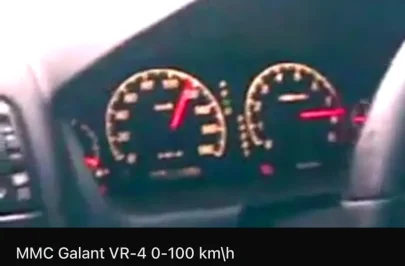
Thank you for your response. This is a 1999 VR‑4 automatic Type‑S, fully stock. In drive mode, the automatic transmission shifts at 6,500 rpm. If you switch to Tiptronic mode, you can reach 7,000 rpm. This video was provided to me as assistance.
 
Thank you for your response. This is a 1999 VR‑4 automatic Type‑S, fully stock. In drive mode, the automatic transmission shifts at 6,500 rpm. If you switch to Tiptronic mode, you can reach 7,000 rpm. This video was provided to me as assistance.

As mentioned multiple times, gauge readings are not accurate enough for me to use as a source. The car's specs match the data in the brochure, and it's slower in-game if the rev limit is increased.

I understand that real world performance doesn't always match manufacturer claims, but the car is accurate to the data that Mitsubishi provided. Every car in the game is set up around the manufacturer claimed values, and I don't plan to revise every single car to match owner-observed performance as I'd need third party dyno sheets for 600 different engines. TVR alone would be a nightmare, as they routinely claimed unrealistic figures that customer cars don't achieve.
 
I don't know if this will help, but while preparing for the event, we discovered an issue with the Dodge Avenger ES.
There is an error in the specifications...
13.3 kg of torque instead of the intended 18 kg.
13 kg of torque is comparable to a 1.4L engine, certainly not a 2.0L.
The ES's 420A engine is identical to the one in the Dodge Neon.

I am also attaching a "document" showing that I am acting on behalf of the CIS community, rather than on my own initiative.
 

Attachments

  • 1788375925199.webp
    1788375925199.webp
    32.4 KB · Views: 1
Last edited:
I don't know if this will help, but while preparing for the event, we discovered an issue with the Dodge Avenger ES.
There is an error in the specifications...
13.3 kg of torque instead of the intended 18 kg.

I looked into this a little while ago - it's quite a funny one. The power and torque in the brochure are just listed as 140 and 130, meaning bhp and ft-lb. Whoever set up the showroom stats for the Avenger assumed it was 130 Nm instead, which is 13.3 kgm. Fortunately the physics are roughly correct.

That's not all though - Dodge brochures of that era had completely fake power and torque 'graphs' with more or less the same stylised curves on all of them. For the Stratus, the developer who set up the physics data recreated that fake curve without checking if it made sense, and assumed that the 170 figure with no unit was 170 Nm and not 170 ft-lb. As a result, the Stratus makes 105ps and 17.2 kgm instead of 170ps and 23.5 kgm, a much worse version of the same mistake.
 
You could use the schedule from the Dodge Neon. They use the same engine and graphs.
 
Last edited:
You could use the schedule from the Dodge Neon. They use the same engine and graphs.

The physics data for the Avenger is fine, but the Neon engine is not the same spec (ECC rather than 420A) - it had a different cylinder head and made slightly more power. The Stratus is the one with broken physics, which has a Mitsubishi V6 that I had to source from their cars instead.
 
@pez2k , now that we have Gran Turismo 2 PC Recomp, does that change anything for your project? Will we be able to use the Plus version with Recomp?
 
Last edited:
@pez2k , now that we have Gran Turismo 2 PC Recomp, does that change anything for your project? Will we be able to use the Plus version with Recomp?
Probably won't change anything because a "recomp" is essentially a glorified pirate ship.
 
@pez2k , now that we have Gran Turismo 2 PC Recomp, does that change anything for your project? Will we be able to use the Plus version with Recomp?

It changes nothing - as far as I'm aware that recompilation project is basically the results of running a tool to make one, combined with some LLM slop and allegedly stolen emulator code. A recompilation is effectively an emulator that only runs one specific game disc, so the mod won't work with it. It adds no new possibilities, and just distracts attention away from actual mod projects like Beige Edition.
 
@pez2k , now that we have Gran Turismo 2 PC Recomp, does that change anything for your project? Will we be able to use the Plus version with Recomp?
It's not a good recompilation, in the sense they haven't fully decompiled the code and then rewritten it and recompiled it to work natively on PC. It's still relying on some emulation and it's very sloppily done so it won't easily be modified. If someone does eventually do it properly, it'll open up new possibilities for sure, but it won't work on original hardware.
 
It's not a good recompilation, in the sense they haven't fully decompiled the code and then rewritten it and recompiled it to work natively on PC. It's still relying on some emulation and it's very sloppily done so it won't easily be modified. If someone does eventually do it properly, it'll open up new possibilities for sure, but it won't work on original hardware.
That's a shame. If we had a good recomp, it would probably be much easier to create mods.
 
That's a shame. If we had a good recomp, it would probably be much easier to create mods.
Theoretically, with a good one we could remove all of the limitations on events, car bodies, tune shops etc. and new tracks could be added too. It'd be up to modders to decide if they want to go that route or stick to mods that will work on original hardware though.
 
Back