- 18

- Temple City
Which Nsx is best for tuning? The type r, type s, or type s zero?



XSThey're all very similar in final performance after a full tune. That being said there subtleties between each model that make this or that car slightly better. I think my NSX RM 91' is the fastest of all my NSXs that start out as the standard model. The NSX-R is another top contender. I don't own them all, but if you want to compare full tunes you can check out this website, https://sites.google.com/site/gt5tune/home


Your max tuned NSX RM verses my NSX LM Road car ????

Compare from a normal, stock NSX, not a road-legal race car.
I left out the NSX LM Road car because the OP seems curious which base, completely generic NSX (out of type r, s, and s zero) takes the best tune over all the other NSX variants. The LM Road car is obviously one of the top NSXs, certainly faster than the RM, but isn't a regular ol' NSX you buy for 70k cr.Your max tuned NSX RM verses my NSX LM Road car ????


Which Nsx is best for tuning? The type r, type s, or type s zero?


All the NSX's are good, but I believe the type R's are the best of the bunch and the NSX Type R 02' is the best of the best, almost unbeatable with with a good tune on it.
Does anyone bother to read the OP? Does it say "concept" or "LM" or "RM" anywhere?
All the NSX's are good, but I believe the type R's are the best of the bunch and the NSX Type R 02' is the best of the best, almost unbeatable with with a good tune on it.
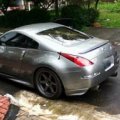
There are other differences besides the power and weight of certain models, the old generation non Type R NSX have softer stock suspension and all comes with skinnier tire at the rear from factory - pre 2002. Since the facelift on 2002 onwards, the rear tires gets wider and larger at 255.
The S Zero model is also distinctive, the suspension is stiffer by using the NA1 Type R (1992 to 1995) suspension but retaining the Type S's larger rear sway bar.
1997 models onwards have C32B, 3.2 liter engine with more power and torque, other notable changes include a brake rotor size increase from 11.1 in (280 mm) to 11.732 inches (298 mm) which means larger diameter wheels and tires.
The lightest of all NSX variants at 1,230 kg (2,712 lb) is the pre 2002 NSX-type R.
This comparison below is for the usual NSX model against the type R ( pre 2002 ) :
The stock NSX has a rear bias in its spring rates, where the rear springs are stiffer than the front. On hard deceleration upon corner entry, the softer front springs allow weight transfer to the front wheels, increasing front grip and thus improving steering response.
However, the weight transfer also takes weight off of the rear wheels, causing them to lose grip. The net result is a tendency toward oversteer, as the rear wheels are more likely to break traction and cause a fishtail or spin. For the NSX-type R, Honda reversed the spring bias, placing stiffer springs on the front suspension along with stiffer front sway bar. This had the effect of preventing weight transfer to the front suspension under hard braking. This way, the rear tires would remain firmly set when entering the corner.
Of course, by keeping weight off of the front wheels, front grip was reduced and the change therefore had the negative effect of increasing the understeer tendency of the car. This change required better driver skill to manage.
Overall, the NSX-type R uses much stiffer front sway bar along with stiffer springs than the stock NSX (21.0mm xt2.6mm front sway bar :F 3.0 kg/mm—R 4.0 kg/mm for the NSX versus F 8.0 kg/mm—R 5.7 kg/mm for the NSX-type R).