Statistical anomalies in motorsports.

  • Thread starter Thread starter Carbonox
  • 448 comments
  • 98,383 views
Benetton is the only team in F1 history to win Grands Prix under two different team nationalities; 26 of their victories were under a British licence and 1 was under an Italian licence.

 
Benetton is the only team in F1 history to win Grands Prix under two different team nationalities; 26 of their victories were under a British licence and 1 was under an Italian licence.
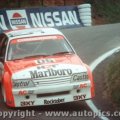
Now you've sent me down the rabbit hole of all constructors to change nationalities.

Alfa Romeo (Italian and Swiss)
Benetton (Italian and British)
BMW Sauber (German and Swiss)
Force India (Indian and British)
Lotus (British and Malaysian)
Marussia (Russian and British)
Red Bull (British and Austrian)
Renault (French and British)
Shadow (British and American)
Virgin (British and Russian)
 
The Stage system of racing, where a race is broken up into 3 sections with championship points awarded to the top 10 at the end of stages 1 and 2, was introduced to NASCAR at the start of 2017. The Cup race at Martinsville last weekend was the first stage race where the winner didn't score the most points:
  • Denny Hamlin won stages 1 and 2, gaining 10 points each, came second overall for another 35, and got 1 point for fastest lap, totalling 56;
  • Chase Elliot was outside the top 10 after stages 1 and 2 so scored no points from either, but won the race for 55 championship points.
 
Last edited:
Roo
The Stage system of racing, where a race is broken up into 3 sections with championship points awarded to the top 10 at the end of stages 1 and 2, was introduced to NASCAR at the start of 2017. The Cup race at Martinsville last weekend was the first stage race where the winner didn't score the most points:
  • Denny Hamlin won stages 1 and 2, gaining 10 points each, came second overall for another 35, and got 1 point for fastest lap, totalling 56;
  • Chase Elliot was outside the top 10 after stages 1 and 2 so scored no points from either, but won the race for 55 championship points.
Yeah, kinda smells a bit I reckon. Almost as much as splitting the races into stages.

I'm OK with drivers scoring points for things like qualifying so long as pole position scores the most.
I'm even fine with points for setting the fastest lap of the race, leading a lap of the race or leading the most laps of the race.
What should not be possible in any way at all, is for someone to end up with more points than the winner of the race. That should always be the ultimate prize and pay the most in points.
 
Yeah, kinda smells a bit I reckon. Almost as much as splitting the races into stages.

I'm OK with drivers scoring points for things like qualifying so long as pole position scores the most.
I'm even fine with points for setting the fastest lap of the race, leading a lap of the race or leading the most laps of the race.
What should not be possible in any way at all, is for someone to end up with more points than the winner of the race. That should always be the ultimate prize and pay the most in points.
In fairness to NASCAR the events of last weekend are the only possible combination that can allow someone to score more points than the winner; the points system has a 20 point gap from 1st to 2nd, then a 1 point gap from 2nd down, so winning does give a healthy points advantage.

Do you follow the WRC at all? The points system they've got at the moment means the points scored often bears little resemblance to the finishing order.
 
Roo
In fairness to NASCAR the events of last weekend are the only possible combination that can allow someone to score more points than the winner; the points system has a 20 point gap from 1st to 2nd, then a 1 point gap from 2nd down, so winning does give a healthy points advantage.

Do you follow the WRC at all? The points system they've got at the moment means the points scored often bears little resemblance to the finishing order.
I've followed the WRC since the final year of Gtoup B, admittedly at differing levels of commitment.
I used to buy Autosport magazine every week, and others, but not just for the WRC, and we used to get a 1 hr TV review after every round, but if I didn't follow the YouTube channel nowadays, I wouldn't have a clue what's going on.
I've been more dedicated in 2025/26 thanks to Taylor Gill just missing the WRC3 title and having a limited program for this year in WRC2.
Unfortunately, I feel like the current version of the WRC is Formula Yaris, with Hyundai playing a dutiful support role, and Ford wasting their time and money by continuing to turn up.
I'd much rather the rulemakers just adopt the WRC2 class as the main attraction for its increase in manufacturer variety and unpredictability from 2027 and move on.
As for the points and how they work, I just look at the results and points table at the end of each rally.
 
I've followed the WRC since the final year of Gtoup B, admittedly at differing levels of commitment.
I used to buy Autosport magazine every week, and others, but not just for the WRC, and we used to get a 1 hr TV review after every round, but if I didn't follow the YouTube channel nowadays, I wouldn't have a clue what's going on.
I've been more dedicated in 2025/26 thanks to Taylor Gill just missing the WRC3 title and having a limited program for this year in WRC2.
Unfortunately, I feel like the current version of the WRC is Formula Yaris, with Hyundai playing a dutiful support role, and Ford wasting their time and money by continuing to turn up.
I'd much rather the rulemakers just adopt the WRC2 class as the main attraction for its increase in manufacturer variety and unpredictability from 2027 and move on.
As for the points and how they work, I just look at the results and points table at the end of each rally.
We won't be far off that in 2027 to be fair, although no one really knows what it's going to look like, we do know that there is a high likelihood that Rally2 and WRC27 cars will be competitive with each-other. With Hyundai even committing to a Rally2 car for their main WRC title charge next year whilst Toyota are developing a new WRC27 machine. Apparently 10 'tuners' are also registering interest in WRC27, although not many have actually committed yet.
 
We won't be far off that in 2027 to be fair, although no one really knows what it's going to look like, we do know that there is a high likelihood that Rally2 and WRC27 cars will be competitive with each-other. With Hyundai even committing to a Rally2 car for their main WRC title charge next year whilst Toyota are developing a new WRC27 machine. Apparently 10 'tuners' are also registering interest in WRC27, although not many have actually committed yet.
The WRC is just crying out for a stable set of sensible regulations.
Nothing more than instability will scare away the money behind any class. That includes commitments from manufacturers, and any kind of decent media package that can be sold to sponsors for the competitors or the championship.
Extremely difficult to put forward any proposal when it's full of question marks.
 
I just noticed, there are an awful lot of iconic drivers who died an untimely death in their early 30s. Ayrton Senna, Jim Clark, and Bruce McLaren are three that I've immediately noticed.
 
Last edited:
I just noticed, there are an awful lot of iconic drivers who died an untimely death in their early 30s. Ayrton Senna, Jim Clark, and Bruce McLaren are three that I've immediately noticed.
Davey Allison and Fireball Roberts would also make this list. Alan Kulwicki as well. I'm not sure if he falls into the same category and of the 3, only Roberts died in a car crash (the other 2 died in air accidents).
 
In the eras where death was an occupational hazard, I'd say that most drivers needed to make it to their 30s to become reputable enough to be remembered after dying whilst racing.

There must surely be a plethora of 20-somethings who are less well remembered because of their lack of comparative success.
 
In the eras where death was an occupational hazard, I'd say that most drivers needed to make it to their 30s to become reputable enough to be remembered after dying whilst racing.

There must surely be a plethora of 20-somethings who are less well remembered because of their lack of comparative success.
I can only think of one driver in that category: Greg Moore.
 
Yeah, not to say that it's cut-and-dry but I meant it as a general rule.

Greg Moore is a specifically tragic fatality.
 
With GP2/F2 having turned 20 recently-ish, it's a worthy observation that in 2026, the 2006 champion Lewis Hamilton is still the most recent feeder series champion to have won the F1 title, and is also the most recent from that group to have won a GP as of recent events.

2005 champion Nico Rosberg, meanwhile, continues to be the latest first-time F1 champion with a GP2 title with his 2016 run. Norris' 2025 title did make him the first F2 graduate in 9 years to get his first on the top level, but with him and Antonelli not being champions down there, it might take yet another while for another F2 champion besides the literal first 2 to secure an F1 title.
 
Last edited:
Famously, three F3000 champs never made it to Formula One — Jörg Müller, Bruno Junqueira and Björn Wirdheim — the other 17 all made it to the top of the pyramid. Vincenzo Sospiri was contracted as a driver and did enter the 1997 Australian and Brazilian Grands Prix.

How does GP2 stack up in that regard from a similar amount of time?

 
Last edited:
Famously, three F3000 champs never made it to Formula One — Jörg Müller, Bruno Junqueira and Björn Wirdheim — the other 17 all made it to the top of the pyramid. Vincenzo Sospiri was contracted as a driver and did enter the 1997 Australian and Brazilian Grands Prix.

How does GP2 stack up in that regard from a similar amount of time?
There were 12 seasons of GP2, 9* champions made it to F1. Just Giorgio Pantano*, Davide Valsecchi and Fabio Leimer who didn't get the chance as GP2 champions.

The champions being:
Nico Rosberg
Lewis Hamilton
Timo Glock
Nico Hulkenberg
Pastor Maldonado
Romain Grosjean
Jolyon Palmer
Stoffel Vandoorne
Pierre Gasly

*Pantano went to F1 before becoming GP2 champion, racing F1 in 2004, GP2 champ in 2008.

Similarly, 3 F2 champions haven't made it to F1, and those 3 have were champions in the last 4 years. Fornaroli, Pourchaire and Drugovich. Although with the asterisk that Fornaroli may yet get there.
 
Last edited:
And currently 3 champions from 9 seasons of F2 haven't made it to F1 - Felipe Drugovich, Théo Pourchaire and last year's champion Leonardo Fornaroli.

So 5 or 6 drivers in total haven't made it to F1 despite being GP2/F2 champion, depending on how you count Pantano.
 
Last edited:
Famously, three F3000 champs never made it to Formula One — Jörg Müller, Bruno Junqueira and Björn Wirdheim — the other 17 all made it to the top of the pyramid. Vincenzo Sospiri was contracted as a driver and did enter the 1997 Australian and Brazilian Grands Prix.

How does GP2 stack up in that regard from a similar amount of time?
Vincenzo Sospiri and Riccardo Rosset being the two unfortunate victims of the dreadful, and sad end to Lola's involvement in Formula One.

I was working at the Albert Park circuit when word came through that the new Lola-Fords did not qualify for the race.

Neither car managed to dip below 1m40s in any session, with Sospiri being exactly five seconds slower than last "qualifier" Pedro Diniz in the Arrows-Yamaha.

Diniz with 1:35.972 was outside the 107% time of 1:35.625 but allowed to start at the discretion of the Stewards.

His time was a full second slower than 21st qualifier, Jos Verstappen, in the Tyrrell-Ford on 1:34.943.

This highlights just how far from making the grid the Lolas were.

For the record, Jacques Villeneuve put his Williams-Renault on pole position with 1:29.369, annihilating team-mate, and fellow front row starter, Heinz-Harald Frentzen's 1:31.123.

Michael Schumacher started third on 1:31.472.

The Lola cars and the team personnel made it all the way to Interlagos, Brazil for Round 2, when word came from England to pack up and come home asap.

To say the MasterCard financial backing of the Lola team was complicated, is a massive understatement.

As soon as the slightest sign of cash flow problems arose, Eric Broadley shut the doors.
 
Sorry, I meant GP2/F2 as a whole given it's the same 20-year timespan as F3000 but ta for the info.
 
The irony of F3000 was that it was the successor to European F2; in which no F2 champ became an F1 world champ. The best drivers seemed to be plucked right from success in European or British F3.

I think Rubens Barrichello was the most successful F3000 champ to make in F1? Though Jean Alesi was the first F3000 champ to win an F1 race.
 
Last edited:
Money talks louder than a driver's skill set.
 
Michael Schumacher won his 16th race from 16th on the grid - the 1995 Belgian Grand Prix.
 
The irony of F3000 was that it was the successor to European F2; in which no F2 champ became an F1 world champ. The best drivers seemed to be plucked right from success in European or British F3.

I think Rubens Barrichello was the most successful F3000 champ to make in F1? Though Jean Alesi was the first F3000 champ to win an F1 race.
Barrichello wasn't an F3000 Champion, he had one season in the category in 1992 and ranked 3rd overall, then moved up to F1 with Jordan for 1993.

He was British F3 Champ in 1991 though.
 
1996 Australian Grand Prix, Forti enter the season with two drivers who previously finished 1-2 in the International F3000 standings (Badoer 1st, Montermini 2nd in 1992), both of whom fail to qualify.

1997 Australian Grand Prix, Lola enter the season with two drivers who previously finished 1-2 in the International F3000 standings (Sospiri 1st, Rosset 2nd in 1995), both of whom fail to qualify.

Both teams go bust before the season is out.

(Not exactly anomalous, I know)
 
1996 Australian Grand Prix, Forti enter the season with two drivers who previously finished 1-2 in the International F3000 standings (Badoer 1st, Montermini 2nd in 1992), both of whom fail to qualify.

1997 Australian Grand Prix, Lola enter the season with two drivers who previously finished 1-2 in the International F3000 standings (Sospiri 1st, Rosset 2nd in 1995), both of whom fail to qualify.

Both teams go bust before the season is out.

(Not exactly anomalous, I know)
Definitely one of those "weird that it happened twice" moments.


From the GP2 & F2 eras, the times when both 1st and 2nd went up to F1 the year after were:

  • 2009 - Hulkenberg to Williams, Petrov to Renault
  • 2010 - Maldonado to Williams, Perez to Sauber
  • 2018 - Russell to Williams, Norris to McLaren
  • 2024 - Bortoleto to Kick Sauber, Hadjar to Racing Bulls
So yeah, quite a low occurrence and crazy that the title rivals ended at the same team in your examples.
 
1996 Australian Grand Prix, Forti enter the season with two drivers who previously finished 1-2 in the International F3000 standings (Badoer 1st, Montermini 2nd in 1992), both of whom fail to qualify.

1997 Australian Grand Prix, Lola enter the season with two drivers who previously finished 1-2 in the International F3000 standings (Sospiri 1st, Rosset 2nd in 1995), both of whom fail to qualify.

Both teams go bust before the season is out.

(Not exactly anomalous, I know)
Definitely one of those "weird that it happened twice" moments.


From the GP2 & F2 eras, the times when both 1st and 2nd went up to F1 the year after were:

  • 2009 - Hulkenberg to Williams, Petrov to Renault
  • 2010 - Maldonado to Williams, Perez to Sauber
  • 2018 - Russell to Williams, Norris to McLaren
  • 2024 - Bortoleto to Kick Sauber, Hadjar to Racing Bulls
So yeah, quite a low occurrence and crazy that the title rivals ended at the same team in your examples.
Thanks.

What is more, both Lola and Forti were using Ford ECA Zetec-R 3.0 V8 engines.

As for the F1 feeder series theme, Bruno Junqueira and Nicolas Minassian went from 1-2 in the 2000 Formula 3000 season to (briefly) CART team-mates at Chip Ganassi in 2001.
 
Not a statistical anomaly but the Jordan 198 used Elf fuel and lubricants despite being sponsored by Repsol.
Sauber used Castrol (1996) and Shell (1997 onwards) fuel from 1996-2002 despite their main sponsor and engine naming rights being Petronas. It wasn't until 2003's Sauber C22 that they actually used Petronas fuel.

Ferrari used Shell fuel so it was probably a condition of using their engines that led to this anomalous situation.
 
Last edited:
1999 - A British driver with 5 letters in his first name and 6 letters in his surname, driving car #4 lost the title by 2 points. (Eddie Irvine 76-74)

2025 - A British driver with 5 letters in his first name and 6 letters in his surname, driving car #4 took the title by 2 points. (Lando Norris 423-421)

Despite all the changes made to the points system in that time period.
 
Here's a funny one:

Antonio Giovanizzi is classified as having led 4 laps at the 2019 Singapore Grand Prix, the only time in his F1 career he led a lap. Since his first F1 start in 2016, Max Verstappen, 71 times race winner and 4 time WDC, has led a total of 3 laps at Singapore.
 
Back