The ABS Mystery

  • Thread starter Thread starter Epinionator89
  • 43 comments
  • 4,165 views
Messages
152
I've read a lot of claims (possibly rumors though) on the internet about how people say the car's tires lock up sometimes and you must use "thresh-hold" braking or something like that (spelling?) to use 100% of the tires' traction. If all the cars in the game have ABS, how is it possible to lock a tire without using the E-brake? Is there an ARMAX code or something to shut it off?

Also, does anyone know if the controller vibrates because the car's slowing down or that I've activated ABS?

(By the way, feel free to talk about anything related to Anti-Lock Brakes on this thread. The more I learn about how it's been used in GT4 only makes me more interested in the game. Though, if this is the real life driving simulator, you'd think it's be on cars that have it in real life and have older cars not have it.)
 
Threshold braking (yes, it's all one word) is braking at the very limit before locking up the wheels.

Before ABS, drivers would have to get all the way to the threshold, then back off briefly, then press the brakes some more. This is called brake modulation. They would have to do this repeatedly and quickly. One instructional tip I've heard was to push the brake pedal almost to lockup then "tickle" the pedal with your toes.

ABS does the modulating at a higher frequency and with greater sensitivity than virtually any driver. In my own car, when ABS is activated, it's so fast that it actually makes a buzzing sound; there's no way that I can modulate the brakes that quickly with my foot.

GT4 has the option of using ABS on any car just so that they're reasonably easy to drive. Even so, you'll notice that an older car like the Ford GT40 (the one with orange-and-blue Gulf colors) has weaker brakes than more recent racing machinery.
 
Follow the Car won't stop quick enough link in my sig, it will take you to a very large thread where this subject (and a whle lot more on brakes) has been discused in detail.

I think it may help.
 
BarracksSi
GT4 has the option of using ABS on any car just so that they're reasonably easy to drive. Even so, you'll notice that an older car like the Ford GT40 (the one with orange-and-blue Gulf colors) has weaker brakes than more recent racing machinery.

OK, all I need to know is how to shut it off. There's no option for "ABS: ON/OFF" anywhere in the game, or to my knowledge anyways. Do you know how to shut it off?

Edit: I know how ABS works in real life, but my main concern was how well it's recreated in the game. And, as I said in my starting post, when I hit the brakes on a flat surface (in GT4 on the Test course for example), is the vibrations on the controller due to slowing down in general or the ABS is working?
 
BarracksSi
GT4 has the option of using ABS on any car just so that they're reasonably easy to drive. Even so, you'll notice that an older car like the Ford GT40 (the one with orange-and-blue Gulf colors) has weaker brakes than more recent racing machinery.
You should try the Ruf CTR "Yellow Bird". I think it just uses wind resistance to slow it down. :dopey:
 
daan
You should try the Ruf CTR "Yellow Bird". I think it just uses wind resistance to slow it down. :dopey:

LOL!! I was just using that car last week and discovered just that! I must have driven that thing 20-30 laps in practice before I finally learned how to control that thing when braking. :lol:
 
Epinionator89
OK, all I need to know is how to shut it off. There's no option for "ABS: ON/OFF" anywhere in the game, or to my knowledge anyways. Do you know how to shut it off?

Edit: I know how ABS works in real life, but my main concern was how well it's recreated in the game. And, as I said in my starting post, when I hit the brakes on a flat surface (in GT4 on the Test course for example), is the vibrations on the controller due to slowing down in general or the ABS is working?

This post is from the GT4 & Brakes thread, its a test i carried out to look at how to turn off ABS in GT4.

ABS Test

Hope it helps
 
Epinionator89
Though, if this is the real life driving simulator, you'd think it's be on cars that have it in real life and have older cars not have it.)

Ooooh forget about that theory. So many cars that were around when computers were the sizes of rooms are running with computer-driving-aids in GT4...
 
if turning off asm and traction control disables breaking. SHouldnt slamming on breaks in a trueno when your going 100mph cause some problems?
 
daan
You should try the Ruf CTR "Yellow Bird". I think it just uses wind resistance to slow it down. :dopey:

I love how it oversteers just the right amount when you turn. It's a really good car, but really difficult to control.
 
Scaff
This post is from the GT4 & Brakes thread, its a test i carried out to look at how to turn off ABS in GT4.

ABS Test

Hope it helps

Your test was using a Ford GT, a new sports car that comes wth ABS standard in real life. Wouldn't it be better if you used an old GT40 (or something without ABS in real life) and compare it to the same car with the ABS controller on its default setting? I'm sure you might find a difference.

It is weird that I can drive a Ford Model T and the wheels don't lock up as with other car pre-ABS. This probably proves that, once again, PD put ABS standard on all the in-game cars, just like with the other games in the series.
 
Here's some aid I even got from my brother; he found out nearly accidentally. Your ABS setting is in the brake balance controller. Check this theory for yourself.

Before my brother mentioned it to me, I had set my brake controller up to my standard 20F / 15R. I had been using 20 / 15 from GT all the way through GT3. I figured that with GT4 I would use the same setting. However, when I entered my B-Spec driver in a race, the DTM race in fact, my driver in a very well setup and built Mercedes could not beat the Alfa Romeo at Opera Paris. I personally could win the event, but my driver couldn't.

I had my brother watch the race and review my settings. He noticed that my B-Spec driver would have to hit the brakes long before the Alfa would and my car wasn't slowing down nearly as quickly as the A.I. driven Alfa. Why? My driver would slam the brakes on (mind you they're at a setting of 20 / 15) and would get into the ABS. ABS stops the car fine, and it works very well on the street when you need to "stomp and steer," but ABS does not stop the car as quickly as holding the brakes at what is called "impending lockup" or "threshold braking." The reason I could win the Opera event is because even at a setting of 20 / 15, I would pull the stick back three-quarters of the way which wouldn't get into the ABS. If I needed to brake and corner at the same time however, I could pull the stick back the rest of the way.

There's another way to deactivate ABS, and this is what my brother told me to do: set the brakes to a bias of 7F / 5R, or thereabouts. This enables you (and your B-Spec driver) to get deep into the brakes and the calipers grab as hard as they can without any lockup and without getting into ABS.

After I set my controller down to 7 / 5, I reran the DTM race and my B-Spec driver was no longer losing time to the Alfa in braking zones. My driver would go deeper into the corner and slam on the brakes hard. Just changing my brake balance controller made all the difference in the world and my B-Spec driver was able to win the event.

One warning if you decide to bring your brakes down to the 7 / 5 range, do all of your braking in a straight line before you enter the corner. If you happen to leave your brakes active while cornering, you may upset the balance of the chassis and could spin as a result.
 
After reading this thread and becoming curious I decided to do some brake testing. Before I get criticised about it, yes I know I wasn't as thorough as I could have been but I'm still quite satisfied with the results.

I used a brand new Ford GT and a fresh GT40(1969). The only modification (at first) was a brake balance controller. My test is a little different as some that have come before as I was only interested in whether the brakes lock up or not, not my stopping distance. I'm assuming that the e-brake does indeed lockup the brakes. I'm pretty sure of this. Not only does the car react accordingly at speed but I can see the results when applying both throttle and e-brake at the same time in a FF car. So my theory is if I can lock up the rear brakes it should have the same effect as the e-brake. In each test I compared the normal braking results with the e-brake results. The e-brake never let me down.

I first took the new Ford GT to Gymkhana, using the default settings (brake bias F3, R3). I got up to speed, used 100% braking, and didn't lose control at all, I was able to steer fine and it didn't spin around on me. Next I changed the brake bias towards the back all the way, F1 R24. Again, no lockup. Then I changed ASM to 0 Oversteer, and kept it at 10 Understeer. Nothing. ASM 10 Understeer, 0 Oversteer. The car understeered quite badly under the brakes, but still no lockup. I was getting a little impatient so I turned off both ASM and TCS. The car actually handled the best under braking with this setup, no lockup at all. Just to try it, I changed the brake bias F24 R1. I was still able to steer with no problem. So far I couldn't get the GT to lockup any wheels.

I started testing the GT40. No lockup on the default setting, or with a bias of F1 R24. I skipped right to no driving aids, again no problem. Using a brake bias of F24 R1 caused some understeer, but no loss of steering. I decided to try using N1 tires rather than the equiped racing tires, and it had no effect. I tried the same thing on the GT, then tried a brake bias of 24 all around on each car, both sets of tires. I never could satisfactorily lockup any wheels, except when using the e-brake, which always worked.

Although it is possible to affect the handling with the brake bias, I don't think it is possible to lockup any tires, therefore there must be some kind of ABS.

As a side note, I've always been confused with the brake bias adjustment in GT, IRL it would be a ratio between the front and rear, it isn't possible to increase or decrease both at the same time (hence bias). Usually it is just a knob that you rotate, one direction moves bias towards the front the other direction the rear. The brake pedal is attached to a bar which is connected to two master cylinders (one front, one rear). As you rotate the knob, the bar (looking from above) rotates, so if you add front bias the bar is closer to the front master cylinder and therefore you get more front braking that way.

Here is a link that has some more explanation and some info on proportion valve systems too. I've never actually seen a proportion valve system , I don't think the adjustments would be any different though.
http://members.ozemail.com.au/~earls/tilton.htm
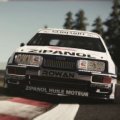
 
Yes there is ABS in the game, but in order to slow your car in the shortest distance you don't want ABS to be pulsing the brakes on and off constantly.

Take any car of your choice, put the racing R5 tires on it and go to a track practice. The test course is a great location to perform the practice session at because it has well defined lines marked on the pavement; the track also gives you a flying run to the starting line. Accelerate to a point you like on the track and hammer down on the brake pedal. This track will enable you to see how far and how short braking distances are when trying different settings.

Set the brake controller to somewhere in the 20/15 range, drive to a marker and slam hard on the brakes. What you should hear is a pulsing squeaky sound; like a chipmonk jabbering up a storm. Now set the brake controller to 7/5 with the same tires, drive to the same marker and slam hard on the brakes. You shouldn't hear the chipmonk jabbering any more. The brakes are not locking, though the tires are rolling and biting into the pavement, the calipers are grabbing *HARD* onto the rotor, but ABS is not becoming active. This should also produce a stopping distance shorter than with the 20ish/15ish brake controller setting.

What is happening in this case is some good, hard, threshold braking or braking at "impending lockup." Any harder squeeze from the caliper to the rotor and the rotor will lock causing a skid. Any less squeeze from the caliper and the car will not be slowing down as quickly as it possibly can.

ABS is present in the game, but you can avoid using it if you either: A) set the controller relatively high (20/15) but don't give the brakes 100% input. Or B) set the controller relatively low (7/5) and slam hard on the brakes.
 
Actually, in real life ABS is faster than "threshold braking". Compare a pre-abs Viper's stopping distances with anything that has ABS. The Viper will lose every time, even though it has massive steamroller tires, massive discs (which will dissipate the heat faster), and weighs less. Now look at the new Viper which has ABS. In initial testing it stopped shorter than any car the magazine (don't remember which one..motor trend or C&D) had ever tested. Also, this is why ABS was banned from Formula 1. Because it was too fast, and was viewed almost as "cheating". But, what you say does seem to be true in the game. When you hear the ABS pulsing in the game, it seems to actually make the car slower. I'm not sure why, but what I can figure is that they want people to actually figure out what brake level setting is best for their car rather than just turn them both all the way up. Who knows.
 
JTSnooks
Actually, in real life ABS is faster than "threshold braking". Compare a pre-abs Viper's stopping distances with anything that has ABS. The Viper will lose every time, even though it has massive steamroller tires, massive discs (which will dissipate the heat faster), and weighs less. Now look at the new Viper which has ABS. In initial testing it stopped shorter than any car the magazine (don't remember which one..motor trend or C&D) had ever tested. Also, this is why ABS was banned from Formula 1. Because it was too fast, and was viewed almost as "cheating". But, what you say does seem to be true in the game. When you hear the ABS pulsing in the game, it seems to actually make the car slower. I'm not sure why, but what I can figure is that they want people to actually figure out what brake level setting is best for their car rather than just turn them both all the way up. Who knows.

In real life ABS is not quicker than 'threshold braking'; if you are able to hold the tyres at the maximum point before they lose traction while braking you are using every avaliable bit of braking potential. With ABS you are always modulating the braking force to keep the tyres from locking up, so you (or to be exact the car) are not using every avaliable bit of braking potential. In identical cars a driver who is able to perfectly balance the braking at the threshold will stop quicker than a car with ABS and a mashed brake pedal.

But, if by 'in the real' world you mean with a less than perfect driver and poor conditions, such as a damp or wet surface or broken tarmac, where the surface grip levels differ, then in many circumstances the ABS car may well stop the quickest, but thats because the non-ABS car is not always at the threshold, due to the changing grip levels and changes to the braking force required.

You also need to take into consideration the car, if you get very little feel or feedback from the car with regard to how close to the limit you are with the tyres grip level (and this applies to braking and cornering) then you will never be able to truely threshold brake, as judging were the limit is becomes so hard that you rarely reach for it.

BTW, the reason why ABS was banned in F1 was not because it was quicker, but because it was seen to remove driver skill, if you can't lock up a tyre (because the ABS cuts in), then you can't flat spot it.

It takes far greater levels of skill to consistently hold a car at its braking threshold, and as a result what you say is 'true' for a lot of real world circumstances (in particular on public roads), but it is not always true on the track.

Russ Bentley, in his book Speed Secrets, talks about running a Corvette (if memory serves me) with and without ABS in both wet and dry conditions. In the dry the non-ABS car was approx 1 sec a lap quicker, however in the wet the ABS car was 1 sec quicker.
 
Frank Budesa
So far I couldn't get the GT to lockup any wheels.


Although it is possible to affect the handling with the brake bias, I don't think it is possible to lockup any tires, therefore there must be some kind of ABS.

It is possiable, but its a lot harder than in the real world.

In GT, you need massive speed and all the ASM aids turned off, also mid engined cars tend to be more prone to it (generally due to the lower weight transfer to the front under hard braking).

The Renault 5 Turbo (a non ABS car in real life) at the end of the Mulasanne straight (no chicanes) should do the trick.


In the shot above, I managed to lock the rear left (the shot is from just after I can off the brakes).

It would however have been nice, if in GT4 we could have had the loss of grip from tyres better recreated, as it stands its just to hard to lock the tyres.

You have to try to lock up the tyres in GT4, in my view you should have to try not to lock them.
 
Scaff
In real life ABS is not quicker than 'threshold braking'; if you are able to hold the tyres at the maximum point before they lose traction while braking you are using every avaliable bit of braking potential. With ABS you are always modulating the braking force to keep the tyres from locking up, so you (or to be exact the car) are not using every avaliable bit of braking potential.
Yep. JT, think of ABS as a real quick "on-off-on-off-on-off-on-off-on-off" of the brake caliper (and consequently the brake pad) grabbing the rotor/disc. Whereas a non-ABS car, braking at its threshold, is simply holding the brakes at a hard, constant, non-locking force. The brakes grabbing at the threshold will slow/stop a car more quickly than brakes going "on-off-on-off-on-off-on-off-on-off."

In the above scenario, if on=100 and off=0, their average is going to be right around 50. A variable will be if there is one more "on" than "off" the average will step up to about 53, give or take. Now let's say both on & off =80 (It's a random shot in the dark number). No matter how many "80s" you insert into that equation, the average will always be "80." Hold the brakes at "80" and you'll beat that pulsing ABS every time.

The downside to a non-ABS car, as Scaff mentioned, is that you have to be one very good driver to hold the brakes at their most firm point where you don't get any lockup. Lockup lengthens stopping distances, as does not holding the brakes at their hardest point. It's for this reason why ABS is great for the street with Joe Average driver. ABS also allows a driver to (as they advertise) "Stomp & Steer." When avoiding a collision, an average driver can mash the brake pedal to the floor and use the pulsing brakes to her/his advantage because the brakes are active, but they won't lock and therefore the driver is able to safely steer around obsticles.
 
63AvantiR3
Yep. JT, think of ABS as a real quick "on-off-on-off-on-off-on-off-on-off" of the brake caliper (and consequently the brake pad) grabbing the rotor/disc. Whereas a non-ABS car, braking at its threshold, is simply holding the brakes at a hard, constant, non-locking force. The brakes grabbing at the threshold will slow/stop a car more quickly than brakes going "on-off-on-off-on-off-on-off-on-off."

In the above scenario, if on=100 and off=0, their average is going to be right around 50. A variable will be if there is one more "on" than "off" the average will step up to about 53, give or take. Now let's say both on & off =80 (It's a random shot in the dark number). No matter how many "80s" you insert into that equation, the average will always be "80." Hold the brakes at "80" and you'll beat that pulsing ABS every time.

The downside to a non-ABS car, as Scaff mentioned, is that you have to be one very good driver to hold the brakes at their most firm point where you don't get any lockup. Lockup lengthens stopping distances, as does not holding the brakes at their hardest point. It's for this reason why ABS is great for the street with Joe Average driver. ABS also allows a driver to (as they advertise) "Stomp & Steer." When avoiding a collision, an average driver can mash the brake pedal to the floor and use the pulsing brakes to her/his advantage because the brakes are active, but they won't lock and therefore the driver is able to safely steer around obsticles.
Whilst I agree that in theory a good brake system in a good car with a very good driver should be able to hold the brakes at the limit without locking, the very fact that F1 used it shows that unless you are braking on a flat, grippy, constant surface, straight piece of tarmac, ABS will stop you quicker. It wouldn't be 50/50 in the above scenario either, ABS will only let off the wheel that is locking not all 4 at once and even then it will be the instant it locks and will then brake upto that point again, many times a second.
 
soptom
Whilst I agree that in theory a good brake system in a good car with a very good driver should be able to hold the brakes at the limit without locking, the very fact that F1 used it shows that unless you are braking on a flat, grippy, constant surface, straight piece of tarmac, ABS will stop you quicker. It wouldn't be 50/50 in the above scenario either, ABS will only let off the wheel that is locking not all 4 at once and even then it will be the instant it locks and will then brake upto that point again, many times a second.

Why does the fact that F1 used ABS means its quicker? Sorry, but I do not see the logic in that, ABS was prinicipally introducted in F1 to help preserve tyre life (with fuel one of the main factors in modern F1 that wins you races). remember F1 is run on flat, grippy constant surfaces, as the FIA limit slope angles and set very strict conditions on the materials used on F1 cuircuits. However most race circuits are far smoother and offer more grip than almost any public road.

Not only can profesional race drivers stop cars on a track quicker through threshold braking but they do it consistently.

One other problem with ABS that has not been pointed out it that the constant on/off modulation can upset the balance of a car, not a major problem on teh street, but a major pain if you are on the track and trying to balance the car for turn in.

I did point out in one of my posts above that Ross Bentley (profesional race driver and instructor) was consistenly faster in the dry in a non-ABS car that an ABS equiped car and that in the wet its the reverse.

In the right hands (and the right conditions) threshold is faster than ABS, this is not speculation, its fact. On the road or in the wet, ABS is faster than threshold (because in these conditions its not true threshold braking).
 
yeha if you for istance drive with teh RAS(right analog) and you hold it all the way bak you brakes will lock-i should know it happens to me all the time....but when or how strong it does it depends on your brake pressure


EX
3- you can slam your brakes all you want
24-less than 2secs your brakes are lock and your car starts drifting off to the side.........

a good way to test how hard you can ride you brakes do the drage races.......(Take a 8sec 1000hp car and set the brakes to 24-lonce you finish a drag race watch the computer ride the brakes and once it reaches its limits the car will slide.......you can also test this by doing a normal race)
 
soptom
It wouldn't be 50/50 in the above scenario either, ABS will only let off the wheel that is locking not all 4 at once and even then it will be the instant it locks and will then brake upto that point again, many times a second.
Where did you get the 50/50 factor from? In my scenario I was trying to illustrate for JT a way of deciphering ABS. I said that (100+0)/2 = 50 and (80+80)/2 = 80. The "50" was a numeral showing the average force of ABS while "80" was a numeral showing the average force of threshold braking.

Here's something to ponder over in terms of common sense; ABS causes the brake pad to come off the brake rotor. What does this mean? It means that time and (as a result) braking distance are lost. What if the pad didn't come off, or didn't have to come off the rotor? The car could spend more time slowing down, correct?

If we look at any one pulse of the ABS, it's a small amount of time. Now add up all of those small amounts of time and the result is quite a bit of time and distance lost while the pad is not in contact with the rotor.

Similarly, what is 1° of a circle drawn on a piece of notebook paper? Pretty small huh? What's 1° of a circle that spreads from our sun to the next nearest star? The portion of that 1° section covers an enormous amount of area as it fans out.

I've said it before and I shall continue to say it because it is a fact. Threshold braking stops the car quicker than ABS. There are a few variables in this statement, but generally speaking it is true.

-ABS can stop the car quicker in situations where traction is limited. In these situations, threshold braking is not possible because the tires cannot transfer 100% of their traction to the road surface.
-ABS is better for the average driver of the streets. Drivers training schools do not get into the dynamics of how to threshold brake, they generally only teach the basics of street driving.
-People keep bringing up F1 with ABS but we haven't approached it from this angle yet. Many street technologies are tried and tested in racing sanctioning bodies before they are brought to street cars. ABS on mass produced street cars came out when ...? The early to mid-1980s? Granted race series' have used ABS since then, but there is always room for fine tuning an existing system.
 
63AvantiR3
Where did you get the 50/50 factor from? In my scenario I was trying to illustrate for JT a way of deciphering ABS. I said that (100+0)/2 = 50 and (80+80)/2 = 80. The "50" was a numeral showing the average force of ABS while "80" was a numeral showing the average force of threshold braking.
I'm not disagreeing with the whole ABS/Threshold braking subject, but the average force of ABS in your illustration is wrong. The pad only lets go of the disc the moment it locks, for the rest of the on/off cycle it is in contact with the disc bringing it up to the point of locking and it doesn't equate to 50%on 50% off. That is all I was questioning.
As for the track use of ABS, even then there are too many variables to be able to consistently be able to threshold brake in every corner every lap. How does ABS alleviate tyre wear? By stopping the drivers locking a tyre thus going over the threshold point losing them steering input from usually the inner front tyre, of course it takes away driver skill but it does mean quicker lap times with ABS. I'd like to see consistent evidence of lap times in a competitive race with and without ABS to compare them. I'd bet that being the only car on a track that having learnt the circuit and had time to get used to the surface over a given time, you could beat the ABS times on that day, but with other cars all over you leaving rubber and fluids, I wouldn't be so sure.
 
soptom
I'm not disagreeing with the whole ABS/Threshold braking subject, but the average force of ABS in your illustration is wrong. The pad only lets go of the disc the moment it locks, for the rest of the on/off cycle it is in contact with the disc bringing it up to the point of locking and it doesn't equate to 50%on 50% off. That is all I was questioning.
As for the track use of ABS, even then there are too many variables to be able to consistently be able to threshold brake in every corner every lap. How does ABS alleviate tyre wear? By stopping the drivers locking a tyre thus going over the threshold point losing them steering input from usually the inner front tyre, of course it takes away driver skill but it does mean quicker lap times with ABS. I'd like to see consistent evidence of lap times in a competitive race with and without ABS to compare them. I'd bet that being the only car on a track that having learnt the circuit and had time to get used to the surface over a given time, you could beat the ABS times on that day, but with other cars all over you leaving rubber and fluids, I wouldn't be so sure.

The consistent evidence you have asked for is unlikely to ever be provided as most race regulation I have every seen normally ban ABS, and when it is allowed it is normally applied globally.

You also seem to be forgeting one of the drawbacks of ABS that I pointed out in my last post, the effect it has on the weight transfer and balance of the car. This is rarely an issue when using ABS on the road, as you are not normally trying to stop while entering a corner on the limit. Not only does the constant ABS action cause rapid and unrequired weight transfer, but you also experience a hugh amount of brake pedal judder as the system operates, this completly removes any feel you may have from the pedal. Try trail braking after that. This juddering is also sometimes felt through the steering wheel, and is not a sensation that helps keep a smooth line through a corner.

Ask any professional racer (or read a few good books on the subject) and the secret to fast lap times is smooth inputs and effective control of the brakes. This requires absolute control of the car at all time and anything that takes that away is going to cause you problems.

In the course of my job I have (with professional drivers) carried out high speed test at various proving grounds on all modern active safety systems, these include ABS, TCS, ESM, EBD and brake assist systems. I also train people on these subjects professionally. This is what I do for a living, it is not speculation that a professional driver can stop a car quicker on a dry track with threshold braking, its something I have seen proved a number of times. However, get the track wet and the situation is reversed.

All of the above is also looking at the subject using road tyres, which general have a large range of slip, this means that they lose traction in a progressive manner, decreasing the chances of a lose of control due to ABS induced weight transfer. DOT race tyres or slicks offer a higher level of grip, but across a smaller range of slip, meaning they lose traction quickly and the weight transfer form ABS activation may well be sufficent for the tyre to lose grip and lock up despite the ABS being fitted. Remember ABS is not infaliable, its far better that panic or cadence braking, but it does not give the driver as much control on the track as threshold braking.

You say its not possiable to threshold brake on every corner of every lap, and while no one is perfect, at the higher level of international motorsport that is just what these guys do. They take the perfect line, with expert controlled threshold braking on nearly every single corner, of every lap.

Yes they do make mistakes and thats why we watch it.
 
Okay, we'll have to agree to disagree on the motorsport aspect (in my very limited experience of club races, with novices and wannabe's alike, you don't have the time to brake at the limit every corner, you're too busy avoiding the early brakers and the hero brakers at the same time). In the game however, what would you suggest as a decent starting brake bias position? I've searched and some suggest 3/3 while others go to the opposite end of the scale.
 
soptom
Okay, we'll have to agree to disagree on the motorsport aspect (in my very limited experience of club races, with novices and wannabe's alike, you don't have the time to brake at the limit every corner, you're too busy avoiding the early brakers and the hero brakers at the same time). In the game however, what would you suggest as a decent starting brake bias position? I've searched and some suggest 3/3 while others go to the opposite end of the scale.

Personally I always start with a 3/3 setting and only ever play around with it if needed. Heading straight to the other end of the scale I just find throws the brakes right out.

Good point on the club races BTW, ABS or Threshold doesn't matter if you can't use your brakes to the max, LOL.
 
Scaff have you tryed the ABS test on the wet track at all?

i have noticed with my car (real life here) that i can stop faster in the wet if i just let the ABS do all the work where as the dry i stop quicker without it.. (the car is a Xedos6 in the UK, Eunos 500 over here)

does GT4 simulate aquaplaning at all on the wet?
 
Either I am missing something in this thread or there is no ABS in the game.

If you have to fiddle with the brake balance to prevent lockup then there is no ABS. You need to adjust the brakes to get the best brake performance.

Some cars lockup with defaults settings.

I can not see that there is any evidence of ABS in the game.
 
gumpy
Either I am missing something in this thread or there is no ABS in the game.

If you have to fiddle with the brake balance to prevent lockup then there is no ABS. You need to adjust the brakes to get the best brake performance.

Some cars lockup with defaults settings.

I can not see that there is any evidence of ABS in the game.

I agree 100% with the above comments.

The scrolling notes at the bottom of the screen (PAL) make no mention of ABS in the Brake Balance Settings or the ASM settings.

In the special missions and license test when the ASM is working you still get brake lock up and loss of steering until you ease up on the brake pressure.
 
Read post 12, but to sum it up ABS depends upon where you set the brake balance controller. At the higher levels, ABS becomes apparent. If the brake balance controller is set below about 10, ABS is not present.

It's true there is no mention of ABS in the scrolling text but if you do the test on post 12 you will hear ABS functioning at the higher balance controller levels. It's not present at the lower balance controller levels because the brakes grip hard, but not quite hard enough to lock the tires.
 
Back