Weght reduction vs PP

  • Thread starter Thread starter SS Chuck
  • 8 comments
  • 837 views
Messages
20
United States
United States
Messages
Charles.walker@sdsheriff.org
I know that it seems to be popular to immediately slap on a stage 3 weight reduction but I just ran a test and I'd like to get opinions.*
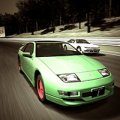
I bought a ZR-1 from the NCD and ran it stock 3 times with auto trans on the acceleration track. Then I did a stage 1 weight and dropped the engine power to match the stock PP. *It was faster in almost all respects. Then I did a stage 2 and dropped the engine power. It was now slower than stock. Then a stage 3 and still slower.*
I know it may be track, and car, dependent but is the potential improved handling a stage 3 weight may bring better than just doing a stage 1 for better speed? I'm not an adequate enough driver to test that out.*
 
I think it has to do with weight transfer and its effect on traction... the ZR-1 is a FR supercar and a perfect example of this. Beyond a certain point, weight reduction reduces the car's ability to put the power to the road, but this also depends on TCS settings and tire selection. I am confident that weight reduction can only help braking performance. Regarding the effect of various weight reduction stages on handling performance, there are probably several schools of thought that involve centrifugal force vs increased traction, rotation through the turn, suspension settings, etc. It's a complicated affair.
 
Last edited:
Generally the lighter a car, the better. It is pretty much always like this unless you are on a circuit that is entirely high speed based (Route X, Le Mans circuit .etc), only then will the extra power over come the extra weight. Power effects top speed, not the vehicle's weight, but the vehicle's weight will effect everything else - accelerating, braking and turning. All rather obvious stuff that most people already know.

In most circumstances, the first thing I do is carry out all of the weight reductions, and then add some ballast to get the weight balance that I desire. It depends on the car's drivetrain and handing style, but I like a 47/53 balance in most of my cars and add as little ballast as possible to achieve this.

The only time it's a major problem to perform any weight reduction is if the car already weights less than around 900kg, because then that's where GT5's PP level starts to faulter, the game punishes the ultra light weight cars.
 
For your average racing circuit which has plenty of corners and a couple of straights I like to get the weight as low as possible, if the weight distribution is more towards the front of the car however I will add weight to the back to get it to at least 50:50.
 
Did you buy the car brand new and took it to track right away?
 
What lewis hamilton :rolleyes: said .

But most of the times u do all the weight reduction u can and then u ad weight in the tuning menu.
1: To give the car a better weight balance.
2: A little For getting more HP to match PP.
Atleast it works for 500pp roadcars Nordschleife runs.
 
Unless it is a track for shear top speed, then I will go as low as possible with the weight Nd adjust the hp to match. Also, the lighter the car becomes, the more critical the weight balance becomes. For a fr car, I will drop the weight all the way, and then add it back to give rear weight bias to maintain traction.
 
I think it has to do with weight transfer and its effect on traction...

👍

In my experience, once you do something like a significant weight reduction, you need to start tuning the settings on the weight balance, LSD, and especially the suspension. Otherwise, you're taking a car that was made to be drivable in its stock set-up (at least hopefully), and making it have completely different specs, which require very different set-ups.
 
Generally the lighter a car, the better. It is pretty much always like this unless you are on a circuit that is entirely high speed based (Route X, Le Mans circuit .etc), only then will the extra power over come the extra weight. Power effects top speed, not the vehicle's weight, but the vehicle's weight will effect everything else - accelerating, braking and turning. All rather obvious stuff that most people already know.

In most circumstances, the first thing I do is carry out all of the weight reductions, and then add some ballast to get the weight balance that I desire. It depends on the car's drivetrain and handing style, but I like a 47/53 balance in most of my cars and add as little ballast as possible to achieve this.

The only time it's a major problem to perform any weight reduction is if the car already weights less than around 900kg, because then that's where GT5's PP level starts to faulter, the game punishes the ultra light weight cars.

Exactly this.
 
Back