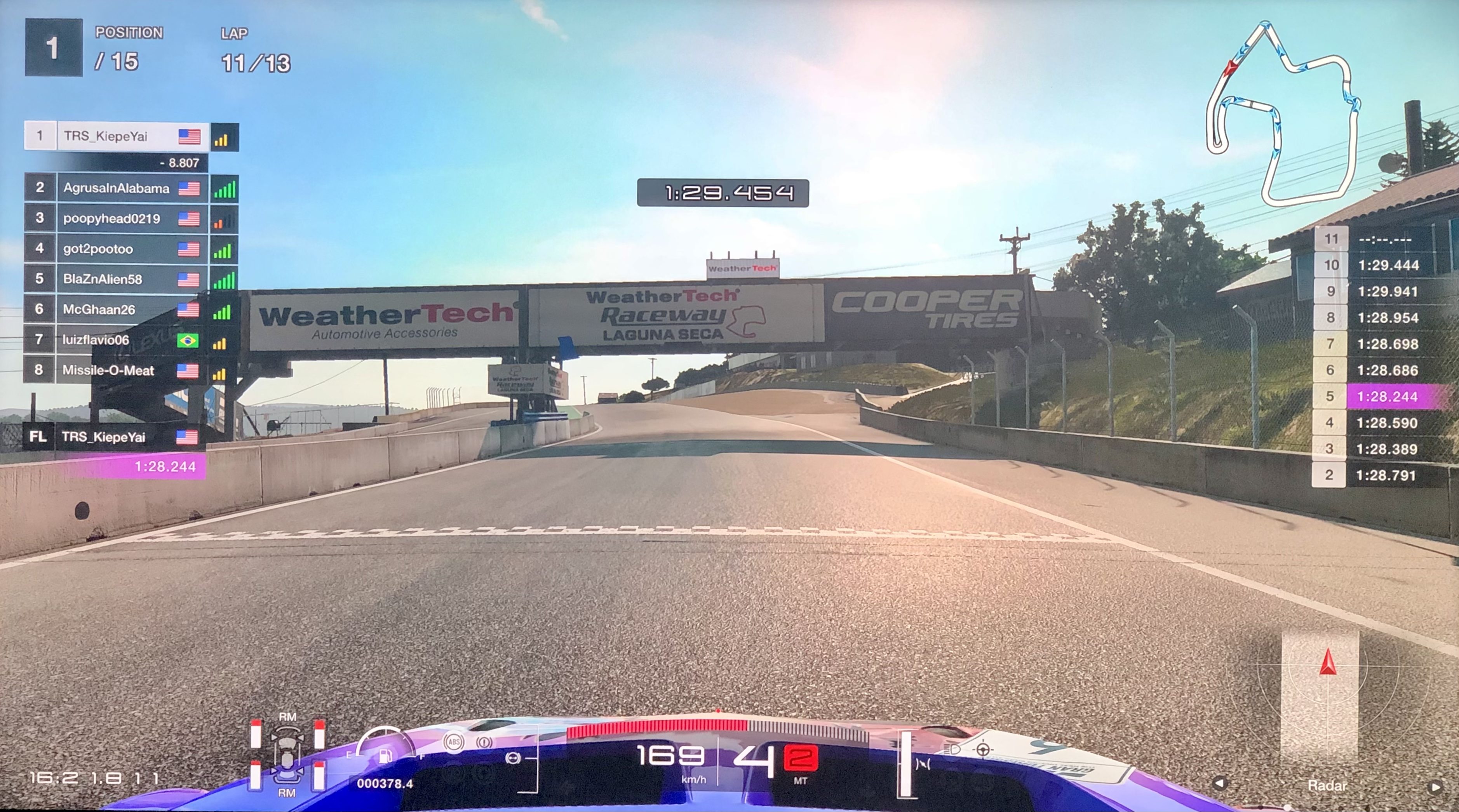
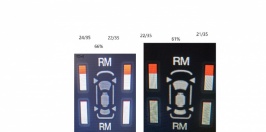
That I don't know, although my main thought process when racing is the tyres (When there is wear). To me it appears the tyre temps matter, I don't think the game calculates brake temps but I can't be 100% sure.
That's a very good question... I suspect Tidgney is right... I worked at an automaker, on brakes, including testing of brake performance in track situations and measuring brake fade along with changes in braking performance at temperature. It would be a very complicated model to try and implement, and the variation from one car to the next would require a lot of data or credible assumptions, to differentiate between models. Nor have I ever noticed any change in braking performance, that doesn't seem attributed to tire temperature, when racing in the game. But I'd be interested to see under the hood at PD to know for sure. (As I would, the tire model, which I'm sure is pretty basic compared to what Michelin could actually provide.)
The model for a race car, with carbon/ceramic brakes versus road car brakes would also require pretty different models, which further complicates the idea. Again, it's possible PD have built in a rudimentary brake performance model, but I've never noticed anything that would suggest they have, outside of the tires.
(PS, I'm pretty hard on the brakes, to a fault, so I'd have expected to notice if it was doubly penalizing to me, if the brakes were not performing as well in abuse conditions... something I need to work on to get faster, as a side note.)
There are so many similar modeling questions that I would wonder about, if PD were open to explaining the game:
1) track temp / humidity, rubber / surface impacts, and humidity impacts on tire model / traction
2) air temp vs HP, differentiated for turbo/intercooled cars, impact on engine performance curves
3) variation in track material (concrete vs asphalt) and environmental impacts