McLaren
Premium
- 46,710

- Texas
I didn't see that that was what he was referring to.But what does that have to do with a 1.6L engine vs the 2 liter?
I didn't see that that was what he was referring to.But what does that have to do with a 1.6L engine vs the 2 liter?

???? huh?????Well, hasn't the FR-S technically been the one preferred over the Toyota variants?
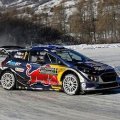

Subaru are expected to announce a return to rallying, but it is believed they will be entering the IRC and will use the Impreza R4. But I think that the BRZ or GT86 could make for a fantastic rally car; certainly one that will look good. According to Wikipedia, these are the technical regulations for 2011 and beyond:Oh, WRC homologation rules call for a 1.6L now? Didn't know that. That makes sense now.
However, the major problem for the BRZ/GT86 is that they're rear-wheel drive. Although there is nothing in the regulations to say that a WRC car must be four-wheel drive, you're mad if you don't have it. So I suppose a Subaru BRZ WRC or Toyota GT86 WRC would be possible provided a) the cars can actually be converted to four-wheel drive, and b) Toyota or Subaru produce the minimum number of road cars required for homologation; as of 1997 when the World Rally Car replaced Group A, that number was 25,000 (with 2,500 engines produced) and I can find no references to that number having changed when the WRC regulations were changed for 2011.Starting in 2011, rules for WRC cars have changed to be more restrictive. Now the regulations are derived from the ones for S2000 cars, with a different engine and an aerodynamic kit. The cars are smaller models (there is no longer a minimum 4m length), with a 1600 cm3 direct injection turbo engine with a 33 mm diameter air restrictor and a maximum pressure of 2.5 bar absolute (this will limit torque to about 400 N.m or less). Exotic materials (titanium, magnesium, ceramics and composite) are forbidden except when present in the base model. Carbon fibre and aramid fibre are very restricted ("only one layer of fabric is used and is affixed to the visible face of the part"), except for bodywork's side protections where multiple layers of aramid fibre are allowed. The gear changes must be made with a mechanical system (so paddle shifters are not allowed). There is no center differential (earlier it used to be 3 differentials, with a center/3rd differential included), but the new regulation allows only front and rear axle differential (eliminating the center differential to run down on the cost and make it more economical), and they must be mechanical, without electronic control or hydraulic or viscous systems (from 2006 to 2010 the center differential and previously all 3 could be active). Minimum weight is 1200 kg empty and 1350 kg with driver and co-driver (in both cases with only one spare wheel).


Subaru are expected to announce a return to rallying, but it is believed they will be entering the IRC and will use the Impreza R4.


http://dsportmag.com/browse/cover-story/greddy-spec-scion-fr-sWHEELING AND DEALING
You would think that fitting the wheels and tires on the Scion FR-S would be among the easiest of upgrades. Unfortunately, Subaru designed the FR-S with the less popular 5x100mm bolt pattern, instead of the more popular 5x114.3mm bolt pattern. Rather than limit wheel choices to 5x100mm selections, GReddy opted to prototype a hub conversion to open the options to the more popular 5x114.3mm pattern. With this conversion in place, GReddy selected a staggered setup featuring 19x8.5-inch (+45mm) Volk Racing G12s in the front and 19x9.5-inch (+35mm) G12s in the rear. The wheels were fitted with 225/35ZR19 (front) and 245/35ZR19 (rear) Hankook Ventus V12 EVO tires.
S-DROPPED AND C-BALANCED
While the Scion FR-S already features an extremely low center-of-gravity, a properly setup coilover suspension system can drop the FR-S to levels below six-figure supercars while still providing the same ground clearance as these supercars. GReddy’s Type-S coilover system was chosen to lower the FR-S while allowing for proper corner balancing and damper tuning. Adjustable spring perches allow the four corners to be individually adjusted until the proper cross balance, F/R and L/R balances are set. In addition, the Type-S damper features 32-settings that provide balanced compression and rebound damper rates. A larger 46mm piston is centered in the monotube design. GReddy states that its Type-S coilover spring rates are optimized to provide additional travel and longer stroke for improved ride and road surface compliance.
BRAKING NEWS
While the factory FR-S brakes may be adequate for street and mild track use, a properly engineered big-brake kit offers substantially more thermal capacity. The large 330mm two-piece rotors of the GReddy brake system allow for extended periods of abuse. When asked to stop 2,900 pounds of car and driver on an FR-S application, these rotors should barely break a sweat. GReddy 6-piston front and 4-piston rear calipers ensure that the pads make an even contact with the rotor while providing the proper pedal effort and travel. Earl’s Teflon-lined, stainless-steel brake lines are included with the system to eliminate pedal squish.
GREDDY SPECTRUM ELITE SE
Considering that GReddy currently offers five different exhaust lineups, the first order of business was to select the proper series for a future FR-S tuner. Ultimately, GReddy chose the Spectrum Elite series based on its combination of sound, performance and looks. The Spectrum Elite series combines increased diameter tubing with free-flowing muffler(s). Sound control is below the 95dBA standard while the tips are sized to avoid unwanted attention. The system prototyped for the FR-S utilizes a single muffler with dual inlets and outlets. Piping diameter is 70mm.
THE END RESULT
Some simple touches definitely allowed this Scion FR-S to stand out from the crowd. While GReddy had just a week with the FR-S, we can only imagine what the future will bring. Air intake systems, strut tower braces and chassis reinforcements are likely to be among the first additional tuning offerings for the FR-S. Later, we expect to see the aftermarket offering off-road headers, straight pipes, camshafts and maybe even stroker kits. Will there be aftermarket turbo systems? Yes. However, they’ll have to be properly engineered to work with the high-compression engine and D-4S direct-plus-port fuel injection system. Needless to say, the FR-S is going to be a tuner choice for a number of years to come.



They only support national-level competitors. Their plans for the R4 are to enter it into the IRC.Subaru already supports a couple teams in the Rally America series.


Put some more thought into it and answer a couple of questions from the course of the WRC regulations.[...] Toyota or Subaru produce the minimum number of road cars required for homologation; as of 1997 when the World Rally Car replaced Group A, that number was 25,000 (with 2,500 engines produced) and I can find no references to that number having changed when the WRC regulations were changed for 2011.

http://en.wikipedia.org/wiki/World_Rally_CarBetween 1997 and 2010, the regulations mandated that World Rally Cars must have been built upon a production car with a minimum production run of 2500 units. A number of modifications could be made including increasing the engine displacement up to 2.0L, forced induction (including an anti-lag system), addition of four wheel drive, fitment of a sequential gearbox, aerodynamic body modifications, weight reduction to a minimum of 1230 kg and chassis strengthening for greater rigidity.
Unlike the requirements for the preceding Group A cars, manufacturers were no longer required to build "homologation specials" in order to meet approval. The base model did not need to have all the characteristics of the WRC car, as evidenced from cars such the Peugeot 206, 307, Citroën Xsara and Škoda Fabia, which during this period had no road car variant with a turbocharged petrol engine or four wheel drive.


Do you know what I find amusing about your post? You are so quick to accuse me of "not putting thought" into what I wrote that you've missed the way the answer is right under your nose. You quoted the Wikipedia article on the World Rally Car like this:Put some more thought into it and answer a couple of questions from the course of the WRC regulations.
Where are the 25.000 four wheel drive Peugeot 206s?
Where are the 25.000 four wheel drive Peugeot 307s?
Where are the 25.000 four wheel drive Citroen Xsaras?
Where are the 25.000 four wheel drive Citroen C4s?
Where are the 25.000 four wheel drive Citroen DS3s?
Where are the 25.000 four wheel drive Ford Focuses?
Where are the 25.000 four wheel drive Ford Fiestas?
Where are the 25.000 four wheel drive Toyota Corollas?
That's a damn big lot of invisible cars and the list doesn't even include all the models that have been used as basis for WRC racers.
When what you really should have paid attention to is this:Between 1997 and 2010, the regulations mandated that World Rally Cars must have been built upon a production car with a minimum production run of 2500 units. A number of modifications could be made including increasing the engine displacement up to 2.0L, forced induction (including an anti-lag system), addition of four wheel drive, fitment of a sequential gearbox, aerodynamic body modifications, weight reduction to a minimum of 1230 kg and chassis strengthening for greater rigidity.
Unlike the requirements for the preceding Group A cars, manufacturers were no longer required to build "homologation specials" in order to meet approval. The base model did not need to have all the characteristics of the WRC car, as evidenced from cars such the Peugeot 206, 307, Citroën Xsara and Škoda Fabia, which during this period had no road car variant with a turbocharged petrol engine or four wheel drive.
There is a very good reason why Peugeot, Citroen, Ford and Toyota never produced 25,000 four-wheel drive variants of those cars: they did not need to. The idea behind homologation is simple - it is to keep rally cars consistent in appearance with their road-going counterparts. The 2,500 is the minimum number needed for major changes to the bodywork, like when Ford revised the Focus' styling some time around 2004. The rules are written that way so that manufacturers can enter their cars as soon as a new model is produced; they don't need to waste time making 25,000 before they can be re-homologated.Between 1997 and 2010, the regulations mandated that World Rally Cars must have been built upon a production car with a minimum production run of 2500 units. A number of modifications could be made including increasing the engine displacement up to 2.0L, forced induction (including an anti-lag system), addition of four wheel drive, fitment of a sequential gearbox, aerodynamic body modifications, weight reduction to a minimum of 1230 kg and chassis strengthening for greater rigidity.
Unlike the requirements for the preceding Group A cars, manufacturers were no longer required to build "homologation specials" in order to meet approval. The base model did not need to have all the characteristics of the WRC car, as evidenced from cars such the Peugeot 206, 307, Citroën Xsara and Škoda Fabia, which during this period had no road car variant with a turbocharged petrol engine or four wheel drive.
Wikipedia isn't the only source out there. This is taken from page 540 of Reinard Klein's Rally Cars, published in 2000:No but really, that rule is from the era of Group A and nowadays reads like this. It's actually the paragraph preceding the one you copied for your post.
As I said, I can find no references to that number changing when WRC regulations were revised for 2011."[World Rally] Cars have to be based on true production cars. They are steel-bodied, front-engined four-seaters, derived from a "family" that may include saloons, hatchbacks and other variants, but made in a minimum quantity of 25,000 per year - ten times the Group A figure. They have to be at least four metres long. At least 2,500 of the basic engines must be produced annually, and the maximum capacity is two litres."

We're talking about the same FIA ... right?if FIA isn't to be trusted in this case, I have no idea who is.

That's the only thing that bothers me also. But not all is lost, because the selection of pretty awesome wheels for WRXs is plenty vast. Any legit wheel I might be interested in is available with that pattern and plenty of WRX fitments.The 5x100 bolt pattern.
The brakes are stock, with STI Brembo calipers. Four-piston solid fronts and two-piston solid rears, versus the stock two-piston single-sided sliding fronts and single piston sliding rears. I probably wouldn't spend the money, but that's a serious upgrade in response, feel, and heat capacity.Those coilovers don't make sense to me on that car. The rest of the mods being over the top, IMO, and the coilovers being the equivalents of BC or other low tier sets.
You have $4-$5k rims on there, overkill. You have a huge BBK on there, overkill. You have the top tier exhaust on there, overkill. Yet you put it all on a set of junky 32 way adjustable coilovers? I'm assuming greddy makes better sets than that.

How do you guys think this car should be compared to an S2000? Minus the roadster and 2+2 difference, I think the S2000 is the next closest comparable car after the RX-8. These are the three cars I'm considering, and after driving the S2000, the RX-8 isn't good enough, and I don't see how the FR-S could even approach the 'specialness' that the S2000 exudes. I know the chassis is something very special, but everything else seems a little generic. The S2000 is fantastic in almost every tangible regard, minus low end torque of course.
The lack of feel isn't a result of a lack of power - an RX8 is plenty faster than my old RX7. What the RX8 lacks is the actual "feel" in the first place. The engine in particular emits virtually no vibration through its mounts, and the sound is very subdued and very smooth. I don't like it, personally. If I owned an RX8, stiffer engine mounts would be on my list of things to change. I don't like the immensely smooth refinement that engine was designed with. I need it to talk to me, I need a little vibration or noise so I feel like I'm actually driving a machine and not a computer.A few things about the RX-8. I think the exterior is a little fussy looking, the car is too heavy, I don't like the rear doors (chassis reinforcements had to be increased to allow it, meaning more weight, and they just look strange) and the engine wasn't as responsive as I had hoped. I don't mind the lack of torque, I just wished it felt more connected to my right foot.


The lack of feel isn't a result of a lack of power - an RX8 is plenty faster than my old RX7. What the RX8 lacks is the actual "feel" in the first place. The engine in particular emits virtually no vibration through its mounts, and the sound is very subdued and very smooth. I don't like it, personally. If I owned an RX8, stiffer engine mounts would be on my list of things to change. I don't like the immensely smooth refinement that engine was designed with. I need it to talk to me, I need a little vibration or noise so I feel like I'm actually driving a machine and not a computer.
I'm hoping the BRZFRS doesn't have the same issue, but piston engines are rarely as smooth as an RX8 outside a top-end Mercedes or something. I'm confident the car will be plenty talkative to satisfy me for at least a little while.

And, I'm not sure who it was but someone loved the BRZ on TE37's. Someone over on Deviant Art did this: