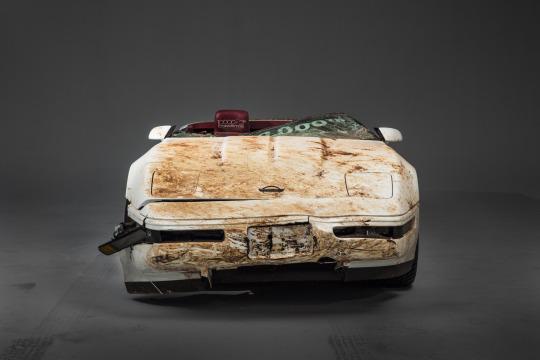
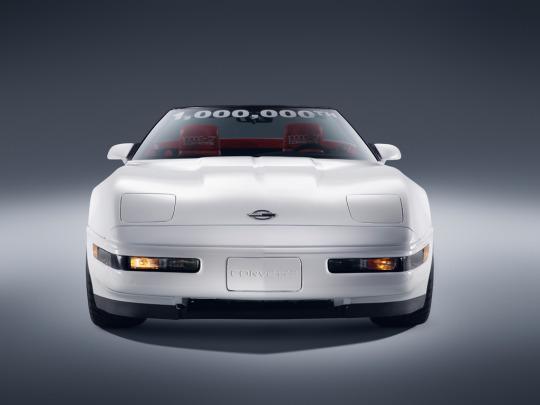
It took 18 months, 1,200 man hours and the resources of one of the world’s largest automakers, but the one millionth
Chevrolet Corvette ever built was returned to the National Corvette Museum today looking as if it
had never fallen into a 40-foot sinkhole. The white ‘92 convertible wasn’t the most valuable car among the eight cars that fell into the sinkhole, but it was perhaps the most meaningful to General Motors and Corvette builders. The car had rolled off the line with signatures of every worker who helped build it, and for its restoration, GM committed to preserving as many of those signatures, and as much of the original car, as possible.
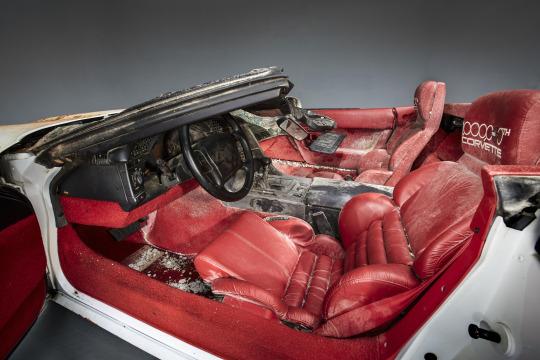
After being fetched out of the sinkhole, the damaged Vette was taken to GM’s tech center in Warren, Mich., where a team of 30 workers spent four months examining every detail of the Vette. The engine and drivetrain turned out to be in good shape; they even saved the original Goodyear Eagle GS-C tires. The interior and windshield turned out to have the most damage, and even then most parts were preserved rather than replaced — from the red leather headrests with “1,000,000th Corvette” embroidery to the exhaust system. For the body parts destroyed in the fall, GM techs replaced them with parts from a similar car of the same vintage. In two cases, a signed original part was too damaged to use, so GM scanned the workers’ signatures and reapplied them to the new pieces. And in the one case where a signature couldn’t be saved, the worker in question, one Angela Lamb, signed the replacement part. GM even still had the original computer graphic file used to print the “1,000,000th” windshield banner.
Of the other seven Corvettes, GM lightly restored one that had far less damage, and the National Corvette Museum will restore a third. The other five will remain as they were pulled from the Kentucky clay.