Not to start an argument, but what is to say 0 in-game is 0 irl?


Does that statement not disqualify ABS and TC from existing also? Reducing drive force and/or adding appropriate braking pressure along with proper steering inputs CAN recover a skid, yes?Yep, sure is. Anything that gives you more traction when you start to lose it is wrong.
Jerome


Yes, I know it is, that is why I never use it, no matter if SRF is on or off.Visually camber value are correct, when you add camber, the changes can be seen, but the effect is non existent, it's a gradual grip reduction all the way to 10.0 camber.


The answer to the magical question is yes, SRF does things that tuning cannot, which is give you unrealistic grip and control when the car should be spinning out. Take any two cars, throw on the same power and drivetrain mods, you do whatever you want tuning your suspension, I'll do nothing except add SRF and you will never ever beat me, given equal skill levels of course it makes that much of a difference.Here's (I think) the magical question: Does it do anything you can't do by tuning the car? This assumes some value of TC and ABS enabled, as you want the input of the aid when there's a traction issue, not on all the time. I'm not a good or dedicated enough tuner to answer this.
Then what's with all the TTs where no aids is the faster way around (because the car is "looser")?The answer to the magical question is yes, SRF does things that tuning cannot, which is give you unrealistic grip and control when the car should be spinning out. Take any two cars, throw on the same power and drivetrain mods, you do whatever you want tuning your suspension, I'll do nothing except add SRF and you will never ever beat me, given equal skill levels of course it makes that much of a difference.
It does, you can feel it doing just that. Well, I can anyway.You guys still dont get it, the game says "skid recovery force - increases grip to the tyres when the car starts to skid". thats totally unrealistic, and you asume thats how it works just because it says so. what if it does'nt?
Question everything, don't believe what you read. I didn't think you guys would think this was correct, but I thought you'd at least understand where I'm going with this...
@Ridox2JZGTE : What if the the increased grip from added camber is'nt coming from SRF like you described, but actually comes from the added camber and you get more rubber in contact with the ground? so why then is'nt camber worknig without SRF? because you have switched on a magic button that reduces grip.
Every TT with SRF available was won using SRF and nearly every one of the top 1000 times used SRF.Then what's with all the TTs where no aids is the faster way around (because the car is "looser")?
EDIT: I'm confused because I've done this.
Well I dont feel the transition from real grip to SRF grip. that's why I'm arguing if its even there...It does, you can feel it doing just that. Well, I can anyway.
Well maybe I just suckEvery TT with SRF available was won using SRF and nearly every one of the top 1000 times used SRF.
 ...There have been TTs where tuning is not allowed, and my last resort to get gold is to turn everything, including SRF, off. My natural wont is to use SRF in such events, as if I can't do my "usual" setup, I'm not likely to care for the car, thus my desire to "play it safe". But it's happened that just the car with no aids at all works best for me. Of course, I'm NEVER so fast as to be a threat to the top 98%.....so.....ok, back to I suck
 . I'll be over >>>>>>watching and trying to learn something.
Let's imagine it isn't for arguments sake, what do you believe is happening with it off? Grip is being taken away outside the normal physics calculations? You feel that?Well I dont feel the transition from real grip to SRF grip. that's why I'm arguing if its even there...

Does that statement not disqualify ABS and TC from existing also? Reducing drive force and/or adding appropriate braking pressure along with proper steering inputs CAN recover a skid, yes?
Yes, thats what I was thinking, but I dont feel that either...Let's imagine it isn't for arguments sake, what do you believe is happening with it off? Grip is being taken away outside the normal physics calculations? You feel that?




Yes, thats what I was thinking, but I dont feel that either...
Nooo, I can't feel the transition between tyre grip and SRF grip. of corse I can feel the difference!You're saying that you feel no difference between SRF and no SRF? On all cars?
I'm sorry, but if you can't feel it then there's not much any of us can do to convince you. I can feel it when I'm driving, and it feels more or less exactly like what it says on the box. It gives me more grip than I would expect when I've got slip on the tyres, as compared to both reality and other sims.
Hmm, maybe you're on to something... but if that is true, you should be able to drive as fast without it, and there is no way in hell that is possible.You can try doing circles at the skid pan with the data logger, but I wouldn't be surprised if it doesn't show much. It's the drop off after the peak that it really changes, more than absolute grip.
Nooo, I can't feel the transition between tyre grip and SRF grip. of corse I can feel the difference!
Hmm, maybe you're on to something... but if that is true, you should be able to drive as fast without it, and there is no way in hell that is possible.
Right, But fact of the matter is that without SRF, the fastest way is with a higher slip angle than it is with it set to ON. so that would mean that SRF increases "peak" grip, but that it falls away at a faster rate when your slide gets to wide. hence its kind of the opposite to a "skid recovery force".There's no such thing as a transition. SRF modifies the tyre grip.
Nope. The fastest way to drive a car through a corner is to balance the slip angle with the loss of grip from increased slip angle. There's a maximum there that results in the fastest speed through the corner. Not enough slip angle, and you could be pushing harder. Too much slip angle and you're scrubbing speed because you don't have enough grip.
If you change that balance of how the grip falls away, you change what is the fastest way to drive. If you make it fall away slower, you promote high slip angle driving. The limiting factor in cornering speed is the lateral grip of the tyre, and if you can move some of that lateral grip to longitudinal grip without sacrificing overall grip (by hanging the back of the car out more), you'll end up going through the corner faster.
It's kind of hard to explain in words, and I'm not sold that this is exactly how SRF works anyway, but it's probably pretty close.

I use SRF always now. I used to tune with SRF turned off, but, I would purposely tune the cars loose because they would turn well, and I knew SRF would save the back end of the car.@et_ I can see where you're coming from.
Grip-slip transitions in GT6 are not progressive enough IMO, but there is an improvement from previous games.
SRF goes too far in the right direction, if they reduced the "force" by 75-80% perhaps it would do a better job.
Currently it ruins the front-to-rear slip balance of cars that are well balenced and somewhat negates the negative aspects of poorly balanced cars.
At the same time it can have sudden and "dangerous" effects on weight transfer.
I think we have yet to see the best of the GT6 physics and tyre model though, so I think we should look forward to see what future updates bring.
IIRC, GT5 didn't recieve any major physics overhauls until October 2011, almost a full year after release.
Hopefully they can deliver faster this time.
Right, But fact of the matter is that without SRF, the fastest way is with a higher slip angle than it is with it set to ON.

 , check the new seasonal TT description. The good thing is now we have 2 TT with SRF ON and OFF.

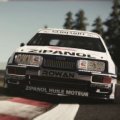
Now aside from the fact that the labeling on the graph axis are potentially misleading (skid angle should be slip angle and slip generates without you going sideways until the slip limit is reached), what having SFR switched on is not teh blue line alone.Look at it this way, you can make a chart of how tyre slip affects the grip, and the line would look roughly like the ones below, even IRL. Its just a matter of figuring out how the line should be drawn to reflect reality, and no one knows exactly how that line would be drawn. If they knew that, every single racing simulator would be using it and they would all feel the same. But the fact is, we dont know exactly, so all we (and PD) can do is estimate. Anyway, this is somewhat how I experience it in game:
Now, who says the green line is the most realistic one, maybe its the blue one?
(Also updated OP)

Overheard a conversation in a room recently where a chap proposed something relating to this sort of argument. His point was that the ultra modern cars, such as the FT-1 and M4 Coupe for instance, have been designed from the ground up to be used in conjunction with electronic stability controls.
My understanding of these systems is not voluminous to be honest, but isn't it true that they monitor yaw, pitch etc thousands of times per second and are able to modulate the throttle and even apply the brakes individually and independently on each wheel in order to stabilise the car in a manner that no driver, however skilful, possibly could.
If that is so it might explain why some of those cars feel a bit weird being driven without any stabilising gadgets. The M4 is bloody awful, switching seemingly randomly between hopeless understeer and then snap oversteer. In such cases the use of SRF could well be 'more realistic' because the cars themselves do interfere whilst being driven IRL.
Of course, such systems are only necessary because most people aren't driving gods like us. (S******).
Cheers, Zo.
If the FT-1 and M4 have these advanced stabilizing gadgets, it's all the more peculiar that SRF is forced off in the FT-1 Seaonal. I have always been under the impression that all assists off (including ABS) resembles the car's abilites IRL and adding any type of assist merely makes driving it easier.
For example, if I drive a car in GT that's equipped with ABS in real life, then the braking should replicate ABS even if I set ABS to '0'. Therfore, increasing the setting merely makes braking easier and less prone to locking up.
That said, the only assist that coincides to the real car's setting would be cars that have adjustable TC systems. I personally disable TCS on cars I'm certain that have it.
As for SRF, I don't believe there's a real world application in existence and it's mainly a driving crutch that GT offers.
Interesting subject here with lots if unanswered questions. Who knows, but it's fun reading everyone's take on GT assists.
 It's nothing but brake assist.