Random Car Facts

  • Thread starter Thread starter Slash
  • 838 comments
  • 76,506 views
I am not sure those hyperutectic pistons, powdered metal rods and shallow skirt block agree with that. The LS engines have a crazy strong block making them stay together, not so much the V6/60° family. And I have never heard anything but grief about how weak the GM front drive trans were at the time.

Sorry, not trying to troll here, just skeptical of these claims.
Well, it took me a while to dig for the information. I found it somewhere obscure so the credibility is a bit questionable...
 
I have an ancient GM performance parts catalog hiding somewhere. It has a section devoted to the 60 degree engines. Summit even sells aluminum Bowtie V6/60 blocks still. 400 hp is well within reach with a little work, and a generous amount of forced induction. I just doubt the stock setup would hold up very long is all.

But what do I know, stock 5.3 truck engines have held over twice that power with similar questionable internals. I figure it has to be the block holding it all in for them.
 
Does term armourcars gets used for something else than literally?

Balogna is the last thing you want on your paint. Vienna Sausage may be just as bad. Please don't Armour my car...
 
  • Audi never intended to bring the TT RS to the American market, but decided to do so after a large FaceBook protest.
  • To reduce weight, badges on most racing-oriented Porsches are actually just stickers.
  • To deter thieves, the hood ornament on all current Rolls Royce models will automatically retract into the hood if touched.
  • The Noble M400 uses the same exact taillights as the 4th-gen Hyundai Sonata
  • Honda lost money on every Integra Type-R DC2 ever sold.
  • The Ford Thunderbird was the last American car to have porthole windows.
  • The 2009-2015 Toyota Prius and Scion FR-S use the same exact tires.
  • The first wrecked ND Miata was totaled after it's new owners had only driven it 1/2 a mile!
  • All current Rolls Royce models have built-in umbrellas into the rear doors.
  • If you drive a Bugatti Veyron at it's top speed for 9 minutes, it's tires will completely wear out.
  • The U.S. government classed the first-gen Lexus IS as a subcompact car, due to it's abysmal interior legroom.
  • The Tesla Model S used the same steering wheel stalks as the Mercedes-Benz E-Class
  • The subcompact has more interior legroom than a full-size Toyota Avalon!
  • The Dodge Charger is the only sedan on the market that still uses lift-up door handles, rather than pull-out ones.
  • The GMC Terrain has the GMC Logo in it's taillights, if you look very carefully.
  • Mercedes originally wanted to name the ML-Class crossover "M-Class", but BMW would not allow that, due to it's line of M performance cars.
  • The Chevrolet Suburban has been the longest produced car that's still in production. It has been produced for 79 model years so far.
  • In Russia, it is a criminal offense to drive a dirty car in the city.
  • The 4th generation Honda Prelude beat every Ferrari, Porsche, and Lamborghini model (from it's time) on the slalom test.
  • 18% of all American car owners drive a manual.
  • The current Lotus Elise and Exige uses engine and transmissions designed by Toyota.
 
The Ford Sierra RS500 Cosworth has Recaro seats.
0Y7A7434-620x413.jpg
 
• The Alfa Romeo 8C Competizione shares a similar V8 to the Ferrari 458.

• Buick used Shaquille O'Niel as a benchmark for headroom in the LaCrosse.

•President Lyndon B. Johnson used an amphibious car to scare guests by driving into a lake while screaming about brake failure.

•Google's self-driving Prius has only ever been in two accidents, and both were from external causes.

•The Tesla Model S broke the NHSS' rollover testing machines.
 
The air conditioning buttons in the Pagani Zonda are the same ones used for the Rover 45.
 
Reviving this thread for a great car fact:


P-Jones is Richard Parry-Jones, the engineer most hold responsible for turning Fords from utter crocks in the 1980s and early 90s into some of the best handling cars in their class from the mid-90s onwards.

Reminded me of another great fact though, which I read recently in a review of an Abbot Racing-tweaked version of the old Saab 9-3 Viggen from the late 90s. One of Abbott's modifications was a hefty brace for the steering column to quell that car's huge torque steer - the company found that under full load the steering column was moving as much as 4-5cm...
 
You can play Tetris on a GAZelle Next

The video is in Russian, this the the translation on how to get it
1) Turn the ignition on 2) Start a car 3) Activate the right turn signal for three blinks 4) Two click the trip odometer reset twice (the computer translated this as “two times distant,” but this is what I think that means5) Push the clutch five times 6) Rev the engine to 2000 RPM while turning on the left turn indicator
Jalopnik
 
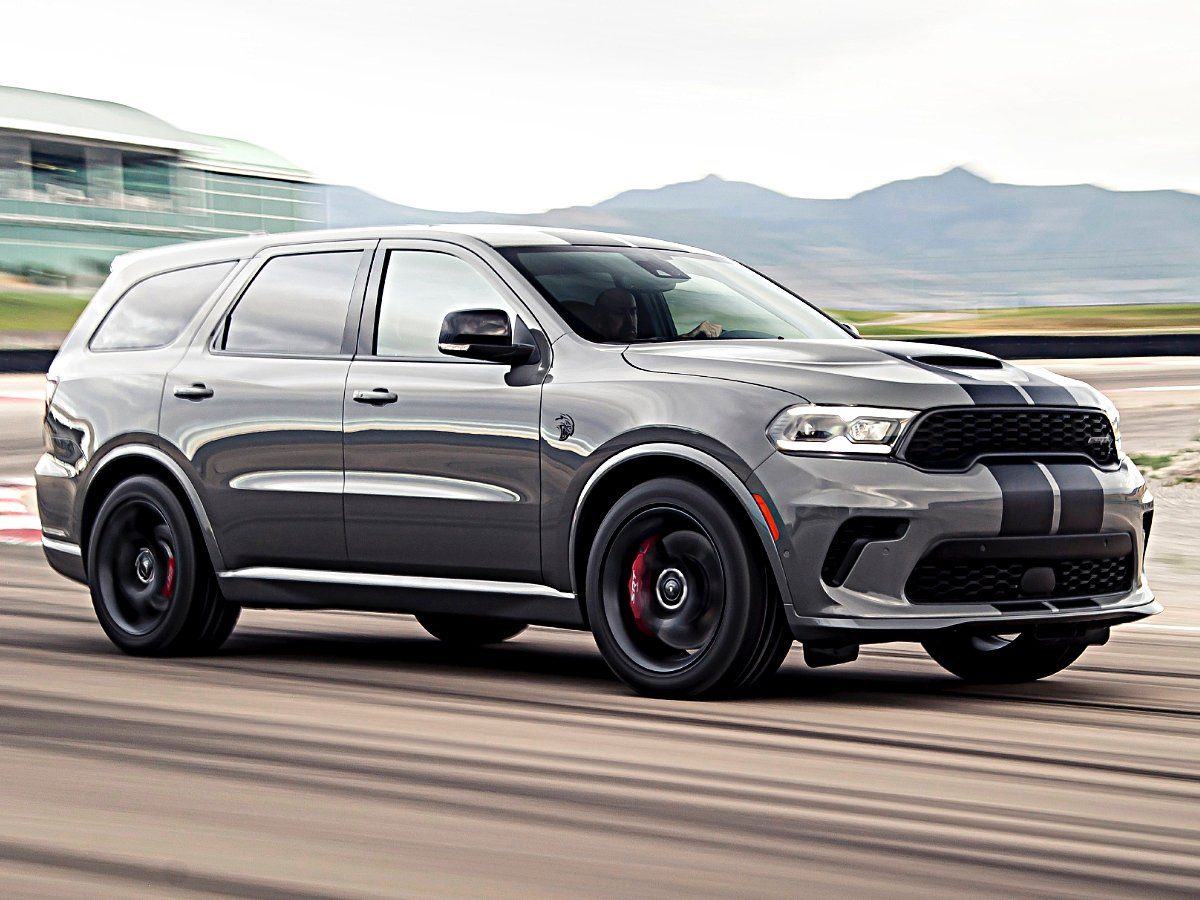
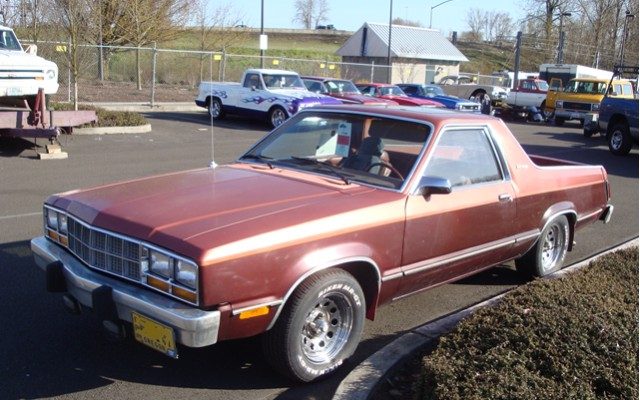
Here's an interesting one. All three of the Big Three (Chevrolet, Dodge, Ford) have made a car called the Durango at one point or another.

Most obviously is the Dodge Durango, 1997-

JDPA_2021%20Dodge%20Durango%20SRT%20Hellcat%20Gray%20Front%20on%20Track.jpg


1979-1982. A dealership conversion of the Ford Fairmont mid-size sedan into an ute. Between 250-350 were produced.

Ford_Durango.jpg


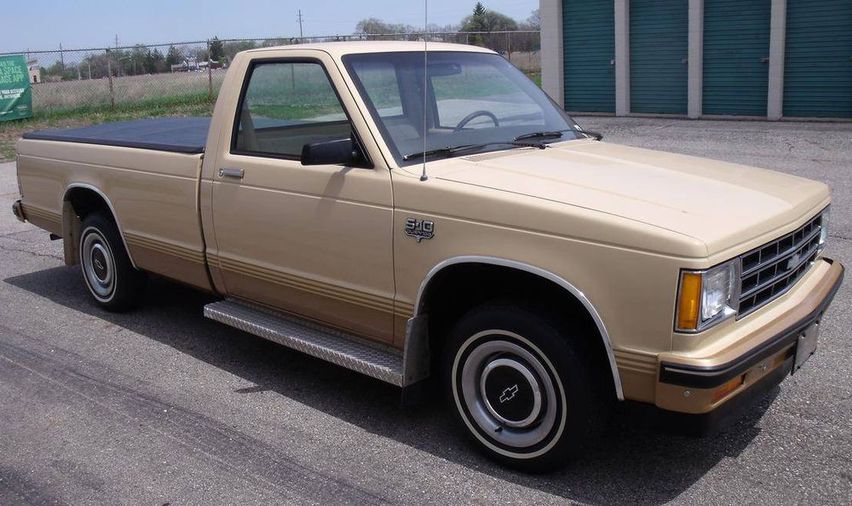
Finally, the Chevrolet S-10 Durango, which was the name given to the middle-of-the-road trim of the 1980s S-10.

1983ChevroletS10_01_1000.jpg
 
  • The first-generation Rover 200 (launched 1984) initially used the same suspension settings as the Honda Ballade, upon which the 200 was based. Rover later investigated the 200's suspension after reports of bad handling, and found that the rear spring rates differed by up to 17% per side. They made the necessary adjustments, and the changes were so successful they were later adopted by Honda themselves.
  • A 2010 study of BMW 1-series (hatchback) owners revealed that about 80% of them thought that the car was FWD, not RWD.
  • In 1995, Volvo was originally going to name the new S40 and V40 model, the S4 and F4 respectively. Due to Audi already having used the S4 name, the names were going to be switched to S40 and F40, and ultimately V40 was chosen after F40 was already used by Ferrari.
  • Mercedes-Benz attempted to sue Volvo, in 2000, for naming their mid-sized car the S60, for bearing too much similarity to the flagship S600.
  • The 1998-2011 Lincoln Town Car can reach speeds as high as 63mph in reverse.
  • In 1980, Chrysler had to decide if they wanted a 4 speed or 5 speed stick shift transmission. A 5 speed would had been $20 more to produce. They went with the 4 speed because that's what Ford and Chevrolet had.
  • The roofs of the 2007 Ford GT and Tesla Model S are so strong that when they were roof crush tested, they both broke the machine.
  • The TVR Chimaera had design input from Trevor Wilkinson's (founder of TVR) dog. The story goes that his dog got hold of a scale model of the car and gave it a good chewing. Having got the model off the dog, Trevor looked at the result and thought "actually, that looks pretty good" and incorporated some of the bite marks into the car.
  • The Chrysler PT Cruiser was the first car completely designed in CAD. Because of how tight the engine fit it took several weeks to get production up from more than just a handful of cars a day.
  • Apparently the decision to cancel a production version of the HSV-010 in 2009 was SO unpopular among Honda engineers, the brands marketing director was literally warned not to visit the R&D centre in case of a riot.
  • A 1987 Yugo was the only car to ever get blown off the Mackinac Bridge due to strong winds. The incident took place in 1989.
  • In production of the 2018 Dodge Demon, Dodge decided to skip production number 666 to avoid creating a bigger resale market for a single customer. There are rumors that this production number was secretly produced anyway.
  • Following the sale of the new '99 Mustang Cobra, people began realizing that it was making around 285 horsepower, far less than the 320 Ford had advertised. This actually made it slower than the Cobra of the previous model year. Ford halted new 1999 Cobra sales in August of '99 and recalled every single car. They replaced "the intake manifold, certain computer components, and the factory cat-back" to reach the 320hp number they were looking for.
  • The Volkswagen Phaeton was supposed to be designed with 10 required parameters. When Ferdinand Piëch announced them, half of the engineering team supposedly walked about because it was impossible to achieve. The only parameter that’s been made public is this: "The Phaeton must be able to be driven all day at 186mph, in 120-degree weather, while maintaining a cabin temperature of 71.6-degrees".
  • The Saab Sonett name has nothing to do with the poetry style, but rather from the Swedish expression "Så nätt den är", which means "it's so neat".
  • Volvo's turn signal sound come from the sound of branches being broken in the Swedish forest. Took about 300 different branches to find the perfect sound.
 
  • The first-generation Rover 200 (launched 1984) initially used the same suspension settings as the Honda Ballade, upon which the 200 was based. Rover later investigated the 200's suspension after reports of bad handling, and found that the rear spring rates differed by up to 17% per side. They made the necessary adjustments, and the changes were so successful they were later adopted by Honda themselves.
  • A 2010 study of BMW 1-series (hatchback) owners revealed that about 80% of them thought that the car was FWD, not RWD.
  • In 1995, Volvo was originally going to name the new S40 and V40 model, the S4 and F4 respectively. Due to Audi already having used the S4 name, the names were going to be switched to S40 and F40, and ultimately V40 was chosen after F40 was already used by Ferrari.
  • Mercedes-Benz attempted to sue Volvo, in 2000, for naming their mid-sized car the S60, for bearing too much similarity to the flagship S600.
  • The 1998-2011 Lincoln Town Car can reach speeds as high as 63mph in reverse.
  • In 1980, Chrysler had to decide if they wanted a 4 speed or 5 speed stick shift transmission. A 5 speed would had been $20 more to produce. They went with the 4 speed because that's what Ford and Chevrolet had.
  • The roofs of the 2007 Ford GT and Tesla Model S are so strong that when they were roof crush tested, they both broke the machine.
  • The TVR Chimaera had design input from Trevor Wilkinson's (founder of TVR) dog. The story goes that his dog got hold of a scale model of the car and gave it a good chewing. Having got the model off the dog, Trevor looked at the result and thought "actually, that looks pretty good" and incorporated some of the bite marks into the car.
  • The Chrysler PT Cruiser was the first car completely designed in CAD. Because of how tight the engine fit it took several weeks to get production up from more than just a handful of cars a day.
  • Apparently the decision to cancel a production version of the HSV-010 in 2009 was SO unpopular among Honda engineers, the brands marketing director was literally warned not to visit the R&D centre in case of a riot.
  • A 1987 Yugo was the only car to ever get blown off the Mackinac Bridge due to strong winds. The incident took place in 1989.
  • In production of the 2018 Dodge Demon, Dodge decided to skip production number 666 to avoid creating a bigger resale market for a single customer. There are rumors that this production number was secretly produced anyway.
  • Following the sale of the new '99 Mustang Cobra, people began realizing that it was making around 285 horsepower, far less than the 320 Ford had advertised. This actually made it slower than the Cobra of the previous model year. Ford halted new 1999 Cobra sales in August of '99 and recalled every single car. They replaced "the intake manifold, certain computer components, and the factory cat-back" to reach the 320hp number they were looking for.
  • The Volkswagen Phaeton was supposed to be designed with 10 required parameters. When Ferdinand Piëch announced them, half of the engineering team supposedly walked about because it was impossible to achieve. The only parameter that’s been made public is this: "The Phaeton must be able to be driven all day at 186mph, in 120-degree weather, while maintaining a cabin temperature of 71.6-degrees".
  • The Saab Sonett name has nothing to do with the poetry style, but rather from the Swedish expression "Så nätt den är", which means "it's so neat".
  • Volvo's turn signal sound come from the sound of branches being broken in the Swedish forest. Took about 300 different branches to find the perfect sound.
Just a small correction. Trevor Wilkinson had left the company in 1962 and it was the company's third owner, Peter Wheeler, who's dog made the styling suggestion*


* I actually got to pet said dog on a impromptu visit to the factory back in 1993.
 
The 1960 Maserari 3500 GTi was the first car to carry the GTi nomenclature. It was also the first Italian fuel-injected car. A Grand Tourer injected, the suffix would later be adopted by hot hatches without any relevance to a car actually being a grand tourer.
 
Last edited:
  • The second-gen Mitsubishi Diamante was extensively facelifted in 2004, yet its sales were less than half of the pre-facelifted car in 2003. Only 1,400 of the 2004 Diamantes were sold in the US market in 2004. The 2004 Diamante was also the first Diamante to be sold in Canada, and only 400 were sold.
  • For model year 2015 only, Infiniti sold the Q50a- just a Q50, but an ultra base trim. All that differentiated a Q50a from a 2014 normal base model was the lack of a moonroof and the standard tech package. Most dealers had removed the "a" from the badging to lessen confusion.
  • The facelifted 2009 Hyundai Azera was so poorly received that Hyundai moved forward the second generation model that had been scheduled for release in summer 2011 to early 2010, and pulled the plug on the Azera in the Canadian market altogether.
  • The classic Mini Cooper, produced from 1959-2000, outlived its successor, the MG Metro, by two years. Much of the OG Mini's later success was attributed to the Japanese market, where later models featured multi port fuel injection, power windows and locks, AC, and passenger side airbags. Ironically, Japan wouldn't allow them to be sold there in the Mini's early years.
  • The quickest 0-60 time for an American car in 1978 and 1979 was... the Dodge Ram Lil Red Express. Boasting a time of 7.4 seconds, it was more than an entire second quicker than a Corvette.
  • The model names Pacer, Villager, Citation, Ranger, and Corsair all first appeared on Edsels.
  • The 2000-2005 Cadillac Deville was the first production car to use full led taillights and a night vision camera, beating out Mercedes by a few years
  • The most powerful FIAT ever made was... the Freemont, that crappy rebadge of a Dodge Journey for the European market. With the 3.6L V6, it made 290hp.
  • A 1999 Citroen Xantia Activa held the record of the highest cornering speed for the swedish moose test at 86 km/h, beating the Porsche 911 GT3 RS as well as the Audi R8. It was only beaten in 2019 by a Nissan Juke.
  • The Buick Regal Grand National was, for years, widely recognized by car guys as one of the fastest production cars you could buy in the mid 1980s, mainly because Car and Driver clocked it at the absurd 0-60 time of 4.7 seconds in a road test. Even in that article they scratched their head a little and said the math didn’t seem to add up (hp vs weight), but in the end they hand-waved it away by citing atmospheric conditions, declaring the car unbelievably fast and the sleeper of the century. Then 20 years later in a retrospective in their 50th anniversary issue, C&D admitted they’d been slipped a ringer by GM.
  • Honda developed the CVCC system which used a special carburetor design which sent a small rich mixture near the spark plug to ignite a larger lean mixture, allowing the engines to meet 1970s California emissions requirements without a catalyst, meaning you could run them on cheaper leaded fuel. Ford and Chrysler licensed the system from Honda, but GM’s CEO dismissed it as a technology that only worked on "little toy motorcycle engines." So as a screw you to GM, Soichiro Honda bought a 1973 Impala with a 350ci V8, had his engineers build CVCC heads for it, then had the EPA emissions test it. It passed with no loss in power, plus improved fuel economy.
  • The 1980 Ferrari Pinin concept was originally green-lit for production, but Ferrari pulled the plug at the last minute, believing there would be no market for a 4-door Ferrari.
  • Many believe that the Ford Pinto was the deadliest car ever made due to its gas tank being able to catch fire. However, more than four times the amount of people died from ignition issues in the Chevrolet Cobalt/Pontiac G5 (27 versus 124).
  • The Suzuki Carry is the only car to have been rebadged as both a Ford and a Chevrolet.
  • In 1969, Pontiac developed an experimental lightweight 427 hemi V8. It had direct port injection, overhead cams and an aluminum block. Pontiac engineers claimed it could make 640hp.
  • The 4-beep door chime on 1970s Honda models is the letter H in morse code.
  • The Honda S2000 had the highest horsepower per liter of any naturally aspirated production car until it was beaten by the Ferrari 458, 9 years later.
  • GEO, despite being a GM brand, never sold any actual GM based vehicles.
  • The Honda Accord from 86-89 was available with both fuel injected and carbureted versions of the same 2.0 four-cylinder engine. Yet the carbureted version got 3 higher MPG than the fuel injected one. This was because the fuel injected version, with its 4 fuel injectors, had only 25% of the computing power available for each injector.
  • The Dodge Avenger sold so poorly in the UK, that some dealers started offering a buy one/get one free deal in fall 2008, at the height of the financial crisis.
  • The 1958 Chrysler Norseman concept was never shown to the public. It was on SS Andrea Doria when it sank near Nantucket. That was the only concept of the Norseman that existed. Amazingly, someone explored the Andrea Dorias remains in the 1990s and found the Norseman’s mangled remains (mainly just the steel bits and the wheels) among the rusted ship.
  • Layne Staley from Alice In Chains was born in 1967 and died in 2002 - the same years the Pontiac Firebird began and ended production. In fact, he never lived in a world without the Firebird being in production. He also happened to own a 2000 Firebird- a 6-speed manual Trans Am WS6 even, during the height of his heroin addiction.
  • Jaguar won a NASCAR cup series race in 1954.
  • The rearview mirror was invented in 1911 on the Marmon Wasp, the first car to win the Indy 500, as a way to get around the rule requiring riding mechanics.
  • The GMC Motorhome, the only RV ever made by a Big Three automaker, was FWD. Same FWD setup developed for the Oldsmobile Toronado (and later used on the Buick Riviera and Cadillac Eldorado).
  • Cadillac was in the midst of developing a 7.4L V12 for the 1967 Eldorado. If it had been produced, it would be the only FWD car to ever have a V12. Cadillac again revisited the V12 around 1974 for the Fleetwood, but these plans were cancelled in light of tightened emissions laws.
  • Princess Anne once had a Reliant Scimitar GTE.
  • A De Tomaso revival was attempted in the mid 1990s, which morphed into the Qvale Mangusta. It had Italian styling with Ford Mustang running gear. Qvale hoped to sell a few thousand of them but pulled the plug after less than 300 were sold. MG Rover bought Qvale for a few million, and engineered the Mangusta into the X-Power SV (still using Ford V8s), which sold 100 units.
  • The 1958 Chevrolet Full Size lineup was the most expensive American car ever developed, costing over $3.5 billion adjusted for inflation. Yet they were only to be replaced in 1959 with the next generation.
  • The Chrysler turbine engine was allegedly past its development issues when it was scuttled as part of the US government bailout deal.
  • The 2012-2014 Toyota RAV4 EV was co-developed with Tesla after they released the Roadster but before the Model S.
  • Speaking of RAV4s, the V6 RAV4 Sport was unintentionally the quickest Toyota in its lineup from 2006 to 2009, reaching 0-60 in 6.1 seconds.
  • The 1994 McLaren F1 is still the fastest naturally aspirated car ever produced, 31 years later.
  • The Škoda 105 was sold as 1050 in France, for the same reason Porsche scrapped the 901 name in favor of 911- Peugeot had trademarked a three digit number with a 0 in the middle for a car model name. Yet the Ferrari 206, 208, and 308 slipped by because Ferrari paid an undisclosed amount of money to Peugeot to get around the trademark.
  • 27 paint colors were offered on the Lexus LFA. Of the 500 LFAs produced, none had been optioned in Ivory White, Aqua, Lavender, Lime Green, or Moss Green. The only LFAs that exist in these colors are in Gran Turismo 6.
  • In the 1960s, there were only two other cars made in America that had positraction, an independent rear suspension, and enough power to make those marks. One was the C2 Corvette, which could never be confused with the Buick Skylark. The other had the same body length, height, width, weight, wheelbase, and wheel track as the '64 Buick Skylark, and that was the 1963 Pontiac Tempest.
  • In 1950, Studebaker had patented the sliding rear door glass on pickup trucks.
  • The most recycled consumer product is lead acid automotive batteries. Over 99% of the materials in a car battery are recovered during the recycling process. And 99% of batteries sold are returned for recycling.
 
Last edited:
Last edited:
  • The quickest 0-60 time for an American car in 1978 and 1979 was... the Dodge Ram Lil Red Express. Boasting a time of 7.4 seconds, it was more than an entire second quicker than a Corvette.
Dodge found a cute little one-year loophole in EPA regulations and came out with something legitimately impressive amongst an extremely woeful lineup, but it probably wasn't actually the fastest in 1978 and it definitely wasn't in 1979 when they had to detune it a bit. The main test that Dodge leaned so hard on in its marketing was a top speed test Car and Driver did. For that test the gearset you could get for what was most likely actually the quickest car in America for those two years (the 6.6 Trans Am, because Pontiac pushed the car as an actual Corvette competitor and the Trans Am weighed more so it had a lot less issues with grip than plagued the C3) was specified with a 3 speed auto with a 2.56 final drive because that's the transmission the Pontiac engineer/driver who brought the car thought he could get in the car with broad enough gear ratios for a top speed test against an L-82 Corvette.

In comparison, the manual Trans Am that Car and Driver tested the following year basically destroyed all of the acceleration tests the Express (or anyone else in the test) set, and still would have had the second highest top speed in the original test Car and Driver did in the first place (and the only practical difference between a 1978 and a 1979 is the exterior facelift, the availability of rear disk brakes and a slightly lower final drive). An L-82 Corvette with a 4 speed would have been very similar in performance, faster on some days and slower on others.
 
Last edited:
  • In its Japanese press releases, Mitsubishi called the asymmetrical hood bumps on the first and second gen Eclipse "Power Bulges."
  • The 2020-2021 Geely Icon, a Chinese compact CUV, featured an "intelligation air purification" system that was specifically designed to filter out the COVID-19 virus.
  • In the UK market, the Lada Niva only had one available option: a snowplow.
  • To help further differentiate it from the luxurious Crown and Century sedans, the all-new 1990 Toyota Celsior (Lexus LS) was specifically marketed to Japanese businessmen for having a glovebox fax machine, which no other Toyota sedan featured.
  • The first-year (1993) only Nissan Altima was officially the "Nissan Stanza Altima" despite being marketed as just the Nissan Altima. The new 1993 Altima was originally supposed to be named Stanza, just like its predecessor. Due to US auto naming regulations, it needed to have the "Stanza" name at least once somewhere on the car, so in very small font, there was a "Stanza" badge on the rear, right next to the comparatively massive "Altima" badge.
  • The Fiat Tempra 2.0 had both an 8V and a 16V version, and in the 8V version, the car used the same engine but instead of being Single Cam it still has Double Overhead cams for some reason.
 
Today I learned the origin of the name “Plymouth” (which was Chrysler’s new low priced car line introduced in 1928).

The name was suggested internally not primarily to honor Plymouth Rock, even though Plymouth branding used Mayflower/Pilgrim imagery, but because “Plymouth” was already a familiar, trusted name to the target market of farmers via “Plymouth binder twine,” a widely used agricultural twine made by the Plymouth Cordage Company of Plymouth, Massachusetts.

EDIT: I should mention that I live in Plymouth Massachusetts

1767027259302.webp
 
Last edited:
Today I learned the origin of the name “Plymouth” (which was Chrysler’s new low priced car line introduced in 1928).

The name was suggested internally not primarily to honor Plymouth Rock, even though Plymouth branding used Mayflower/Pilgrim imagery, but because “Plymouth” was already a familiar, trusted name to the target market of farmers via “Plymouth binder twine,” a widely used agricultural twine made by the Plymouth Cordage Company of Plymouth, Massachusetts.

EDIT: I should mention that I live in Plymouth Massachusetts

View attachment 1502636
Wait, you're out in Plymouth? Sorry for the off topic question, but have you stopped by the Rebels and Rods event at East Bay? If you have, chances are that we may have crossed paths while I was out in my Midget.
 
have you stopped by the Rebels and Rods event at East Bay?
Sadly, no. 7:00AM on a Sunday morning is, how shall I say, a little before the Sunday rising time for these old bones 😂

However, it's definitely on my wish list

EDIT: - When I make it, I'll definitely be keeping my eyes open for the Midget 👀
 
Last edited:
  • Both the Cadillac and Lincoln brands were founded by the same person, Henry Leland. Leland created Cadillac in 1902 and later left General Motors to establish Lincoln in 1917, subsequently acquired by Ford in 1922.
  • During its time, the Alfa Romeo Alfasud was known to be the most rust prone car in Europe. Alfa Romeo used substandard quality steel and improperly stored unpainted shells in the "backlot" until they could be painted. Those rusted, fast, leading Alfa Romeo to paint over the rust.
  • Bugatti built over 100 engines for the ultra luxurious Royale from 1927 to 1933, but only six Royales were ever produced. They developed a railcar for the french railway that used 2-4 of the engines each to get rid of them without losing even more money.
  • The original Porsche 911 RS' famous "ducktail" spoiler was not part of the car's road approval. Porsche had an employee drive each one down to the local TÜV and beg for a "unique" approval, as if it was an aftermarket piece.
  • In 2009, Maserati offered the Centurion special edition for the Quattroporte for the US market. You could only buy one if you had a black AMEX credit card. A black AMEX-card is given to you if you spend at least 500k USD per year on your American Express Card while maintaining an 800+ credit score. All the Centurion package included was a pearl black exterior, black and white interior seats, and "Centurion" badges throughout the car. It retailed for $135,000.
  • In a marketing blunder, the 265hp 2011 WRX was faster than a 305hp STI in the 0-60 test by 0.1 seconds. The WRX had a 5 speed manual, with the STI having a 6 speed manual, requiring 1 extra shift to get to 60mph, allowing the less powerful and less expensive car to hit that 60mph point sooner. At 80mph (and everywhere else), The STI smokes the WRX- but that's not what was in the reviews.
  • Mercedes had an awkward situation on their hands in 2004 when their new CL600 turned out to be quicker from 0-60 than the more expensive and exclusive CL65 AMG. Something about torque curves and gearing ratios meant that the CL600 could use more of its power more of the time. The solution was to just straight up lie about the numbers. Officially, the CL65 will do 0-60 in 4.2 seconds and the CL600 does 4.5. Unofficially, the latter will do it in 4.0.
  • The C6 Corvette Z06 could hit 61 mph in first gear @ 7000 RPM.
  • Toyota intentionally made the ECU in the Celica GT-Four difficult to modify by locking the software and encasing the internals in epoxy, preventing the use of piggyback tuners. It was a strategic move to ensure the Supra remained the brand’s flagship performance car. If left unrestricted, the GT-Four risked having been tuned to outperform the Supra at a lower cost.
  • The first-generation Opel Zafira minivan was partially developed by Porsche. While Opel provided the design, engines, and suspension, Porsche developed the overall concept and engineered the innovative "Flex7" seven-seat, fold-flat, seating system in Weissach.
  • While 3,000 Pontiac G8 GXPs were sold in the United States, only four were sold in Canada. 10 were shipped, and for unknown reasons, 6 of them were disposed of by GM.
  • The automatic transmission of the 2009-2015 BMW 7-Series is linked to the navigation system. This is so that the transmission can provide the correct gear if the upcoming road is on an incline or on a bend. It also understands the incline and distance to the next speed decrease and tells the car when it’s time to coast.
  • "That’s a doozy", an informal expression meaning something is extraordinary, came about in the early 20th century as a reaction to the Duesenberg luxury automobile which was opulent and impressive to the average passerby.
  • The 2016-2025 Nissan Titan was the most "Made in the USA" truck on the market, having been designed in California, its engined built in Tennessee, and produced in Mississippi. Its only part to come from outside of the US was the transmission.
  • The redesigned 2004 Honda Legend (Acura RL) was the first Japanese car to break the 276hp gentleman's agreement. The car was marketed to have 296hp.
  • MK5 Golf GTI speedometers were notorious for showing higher than actual speeds by up to 8-10%, but also had a "secret" menu activated using the climate control buttons that would show the actual speed and other info.
  • The 2016 Dodge Viper ACR Extreme had the honor of being the fastest manual transmission production car to hit the Nurburgring for almost 10 years (7:00) until it was beaten in 2025 by the 992.2 GT3 (6:56).
  • The 5th Gen Camaro Z28 has a "setting" in its traction control called "Flying Car Mode." It’s a track mode setting so it doesn’t activate if the car goes airborne for better track times.
  • The 6th gen Camaro ZL1 1LE never made it to the EU market because it was deemed "too dangerous" for pedestrians due to its canards.
  • The 1962 Oldsmobile Jetfire was the first production car with a turbocharger. Garrett produced the turbo, and the car produced 215hp from a 3.5L V8.
  • The current-gen Honda Odyssey has lower ground clearance than a McLaren F1. 4.5 inches versus 4.7 inches.
  • Ford could not legally sell the Mustang by its name in Germany until 1979. A large truck manufacturer called Krupp owned the rights to the name and wouldn't let Ford buy the rights to the name, so until the rights expired in 1979, the car was sold as the T-5. The T-5 was the project name for the car during development before it was released.
  • Despite looking similar, the first-gen Audi RS5 actually shares very few of the same parts with the A5 and S5. Even the Quattro system is completely different from the S5. Other than the interior, it has much more in common with the Golf R and Scirocco R.
  • The third-gen Nissan Primera was designed to look like a snowdrift had covered it. Its designer, Stephane Schwarz, saw a car covered in snow on the way to work, which inspired his design for the 3rd-gen Primera.
  • The first-gen Mercedes AMG GLA 45 didn't have rear window tint in the US even though the normal GLA models did. The suspension was lower than the normal GLA, so apparently Mercedes had to classify it as a car rather than an SUV, invoking stricter rules about tint. It's the only instance where the low-end version of a car had rear tint and the high-end one didn't.
  • The long-defunct US luxury car brand Marmon ran a print ad with Helen Keller boasting how great their cars felt in 1923.
  • A fair amount of people know that in 1986, the Buick Riviera was the first production car to feature a touch screen, but the first color touch screen was offered in the the Oldsmobile Toronado only 3 years later.
  • In France, the Toyota MR2 was just called the Toyota MR because the abbreviation "MR2" sounds like the profanity "merde" when spoken in French.
  • In 1993 the original Lancia plant that build the Delta Integrale was turned over to coach builder Maggiora, the company that built the De Tomaso Pantera and Mangusta. Maggiora built the Integrale Evo2 through the end of production. they also wanted to keep production going after the Evo2 and use the many extra parts they had and developed an updated Delta Integrale Evo3 and built a prototype. Lancia, now under control of Fiat, didn’t take Maggiora up on the offer as the Delta was so far removed from all of Lancia’s current products and because the Lancia Squadra Corse was redirected away from rally to build the Alfa 155 touring car program. The 155 touring cars and the Q4 street car (and also the prototype GTA Stradale) had Integrale underpinnings.
    • This whole chain of events led to multiple championships: 6 WRC victories for Lancia and DTM and British touring car championships for Alfa. Created two of the greatest “what if” prototype cars in the Delta Integrale Evo3 and Alfa 155 GTA.
 
  • Both the Cadillac and Lincoln brands were founded by the same person, Henry Leland. Leland created Cadillac in 1902 and later left General Motors to establish Lincoln in 1917, subsequently acquired by Ford in 1922.
Henry Ford is worth mentioning here. Cadillac is the successor to the Henry Ford Company; Leland reorganised the firm after Henry Ford was booted out with the firm close to bankruptcy. Ford later founded a second firm, the Ford Motor Company. In fact, Ford was so bitter about being kicked out of his own company that he made it a personal mission to take over Lincoln in a spiteful move to get back at Henry Leland.

Edit: If I remember the story correctly, Henry Ford took great pleasure in sacking Henry Leland after Ford bought Lincoln.

Henry Ford founded Cadillac (give or take) and Ford.
Henry Leland founded Cadillac and Lincoln.

The fact that Ford then bought Lincoln is not coincidental.
 
Last edited:
Back