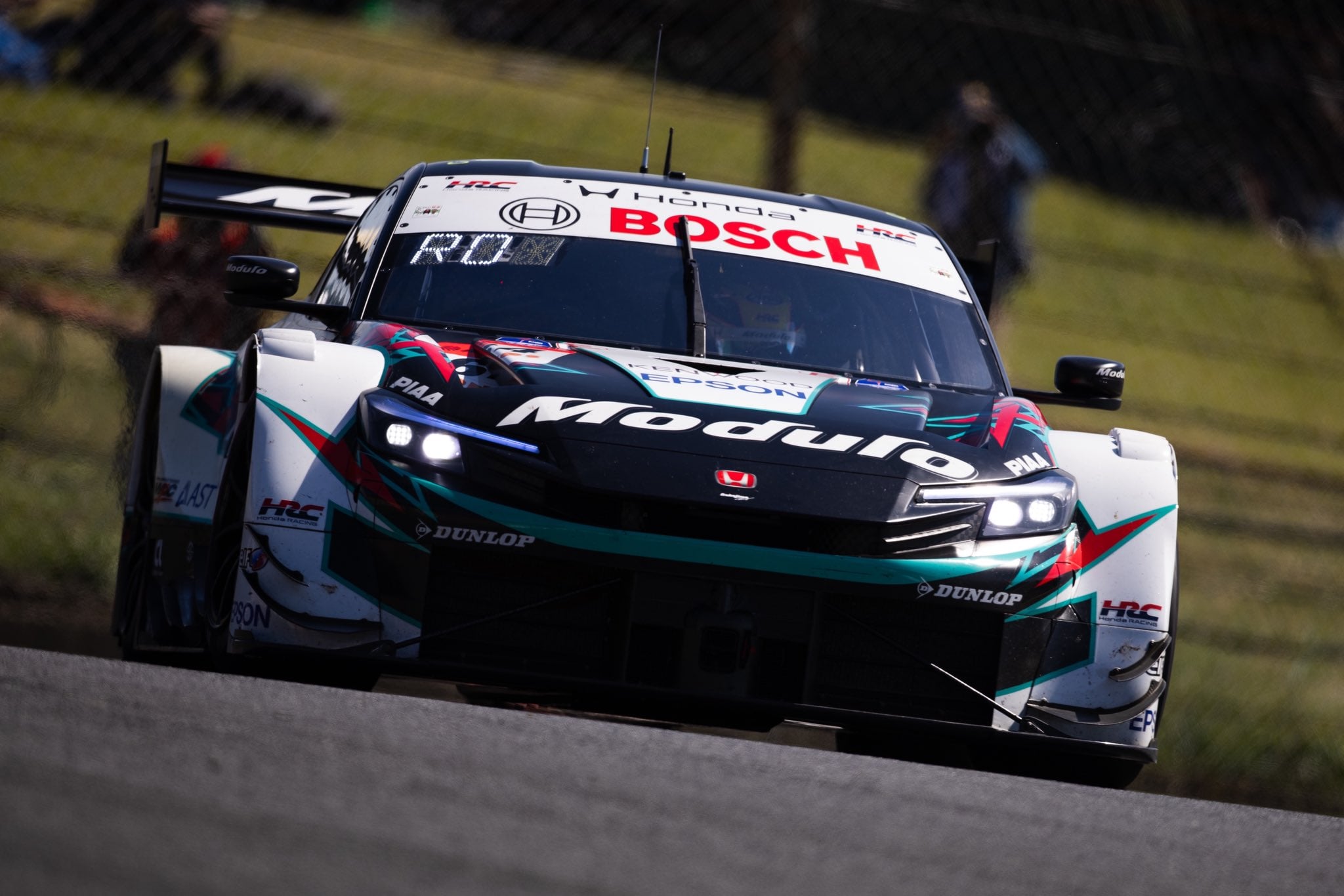
Igor Fraga‘s October keeps getting better. One week after converting a Super Formula pole into a full-distance win at Fuji, he and co-driver Riki Okusa have put the No. 64 Modulo Nakajima Racing Honda on pole position for Sunday’s Super GT round at Autopolis.
It’s the second Super GT pole in a row for the car, following its pole at Sugo last month, and Fraga has now been part of three pole-winning efforts in eight days across the two series.
Qualifying
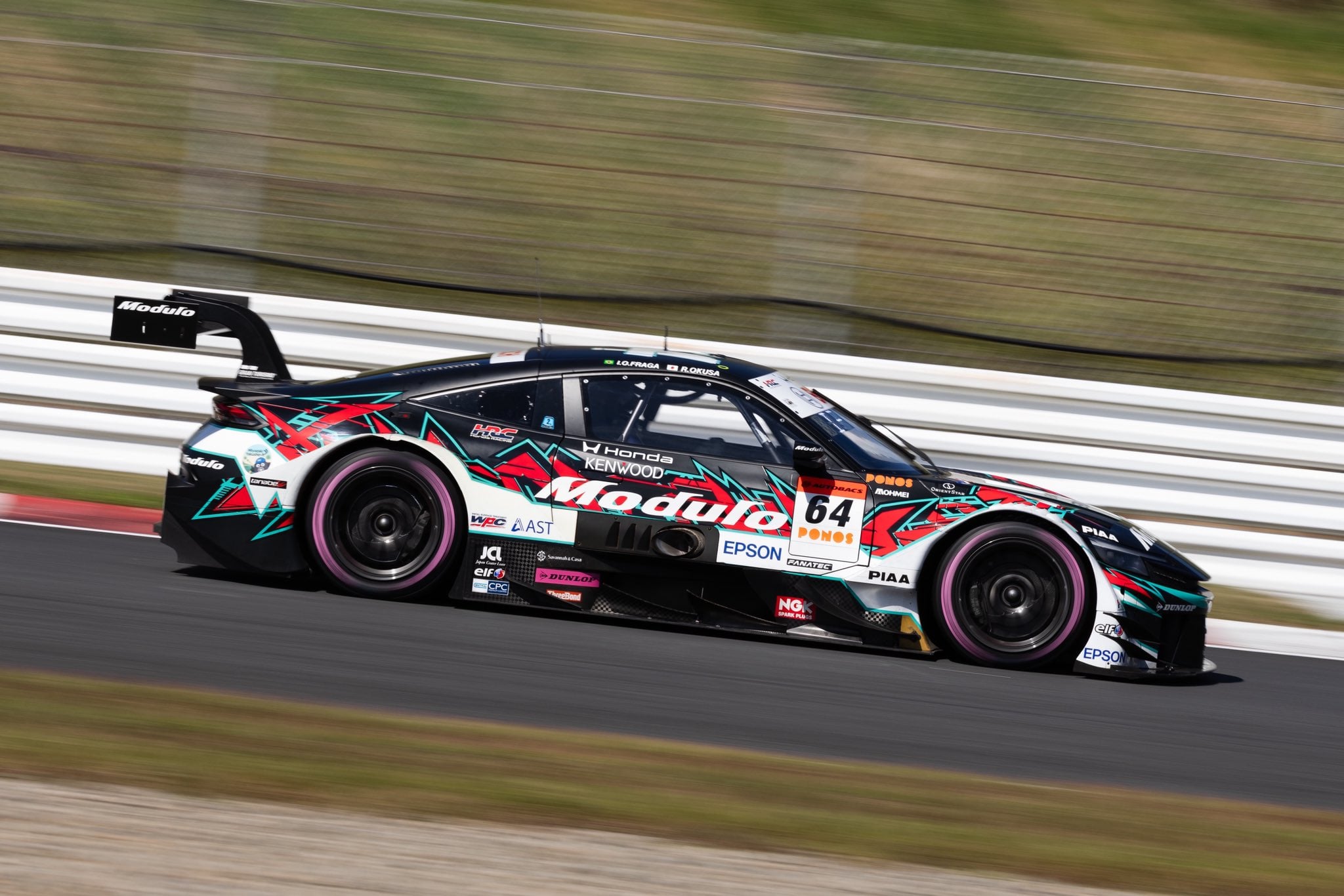
Super GT’s GT500 class uses a two-stage knockout format in which each car’s drivers split the work, one taking Q1 and the other taking the Q2 shootout. Fraga handled the first half, setting a 1:32.550 to go fastest in Q1 by around four-tenths of a second over Naoki Yamamoto in the No. 100 Stanley Team Kunimitsu Honda.
Okusa then did the rest, lapping in 1:32.414 to take pole by more than three-tenths from Yuto Nomura in the No. 17 Astemo Real Racing Honda.
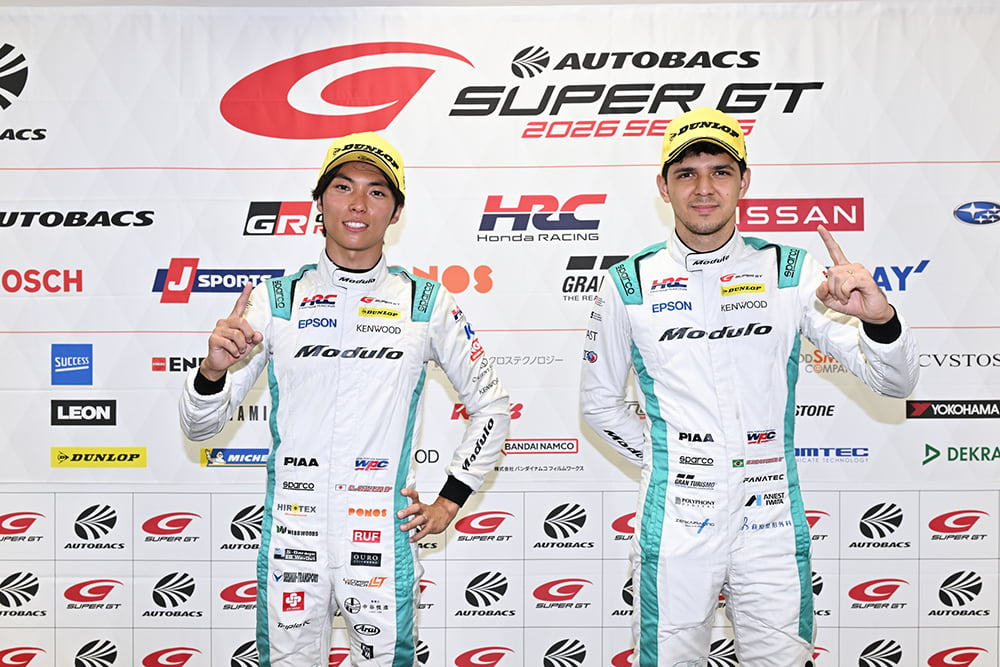
Okusa credited his co-driver afterward, explaining that Fraga’s feedback from Q1 helped him find the lap he needed in Q2. Fraga said he hadn’t known how quick the rest of the field had gone in Q1 and was thrilled to learn he’d topped the session. Looking ahead to Sunday, he said he wanted to end the run of disappointing race results and fight for the win.
The pole is a big deal for Nakajima Racing, but it also comes with some unfinished business.
The No. 64 car is the only GT500 entry running on Dunlop tires, and it has had a rough 2026 on race days. It failed to score in the opening four rounds, Fraga was launched into the air in a heavy crash at Fuji in August, and at Sugo the car led from pole before contact and tire damage during Fraga’s stint forced an extra stop, leaving it 12th at the finish.
The car has not finished inside the top ten all year, and its only championship point coming into this weekend came from the Sugo pole. With only the Motegi double-header left after this weekend, Autopolis is one of the last chances for Okusa and Fraga to turn their qualifying pace into a race result.
Super GT uses a “Success Weight” system, a handicap assigned based on championship points, so the teams at the top of the table are slowed down and Fraga’s car is carrying just 2kg of it this weekend. Eight of the 14 GT500 cars have success-weight handicaps above 50kg, which in 2026 means they take the maximum 50kg of actual ballast plus restrictions on engine fuel flow. The Autopolis round is the last of the year run at full handicap, so this is the moment where a light car has its biggest advantage.
A Busy Week for Fraga
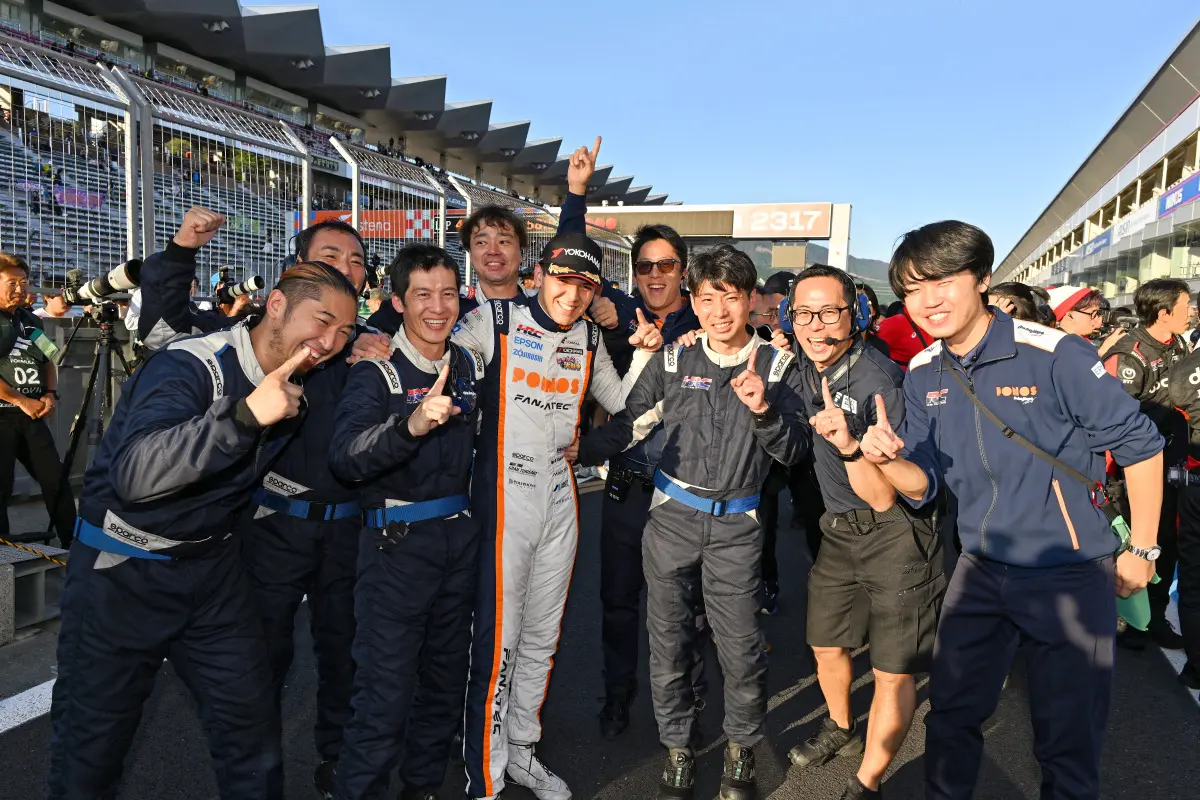
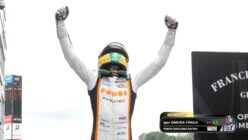
If you’ve been following along, you’ll know Fraga had the best Saturday of his Super Formula career at Fuji last weekend, taking pole and converting it into his first full-length win. He took pole again on Sunday, though that race went less smoothly after contact with championship leader Kakunoshin Ohta while the two were fighting for position.
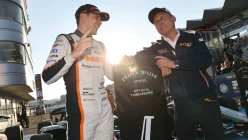
The following evening he was in Tokyo for a motorsport reception at the Italian Embassy marking 160 years of diplomatic relations between Japan and Italy, where he was spotted playing Gran Turismo 7 at the same event as Kazunori Yamauchi, with Akio Toyoda, Naoki Yamamoto, and Giuliano Alesi among the 200-plus guests. Fittingly, Yamamoto was one of the drivers Fraga outqualified in Q1 five days later.
The Race
The Autopolis GT 3 Hours Race starts at 1:10pm JST on Sunday, October 18. For readers in North America, that’s 12:10am EDT on Sunday, October 18, or 9:10pm PDT on Saturday, October 17.
Three-hour races in Super GT are their own beast, with more pit stops and more opportunities for strategy (and weather) to reshuffle the order than in the standard 300km sprints. A pole position is a good place to start, but as Nakajima Racing found out at Sugo, it guarantees nothing.
See more articles on Igor Fraga and Super GT.