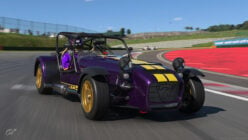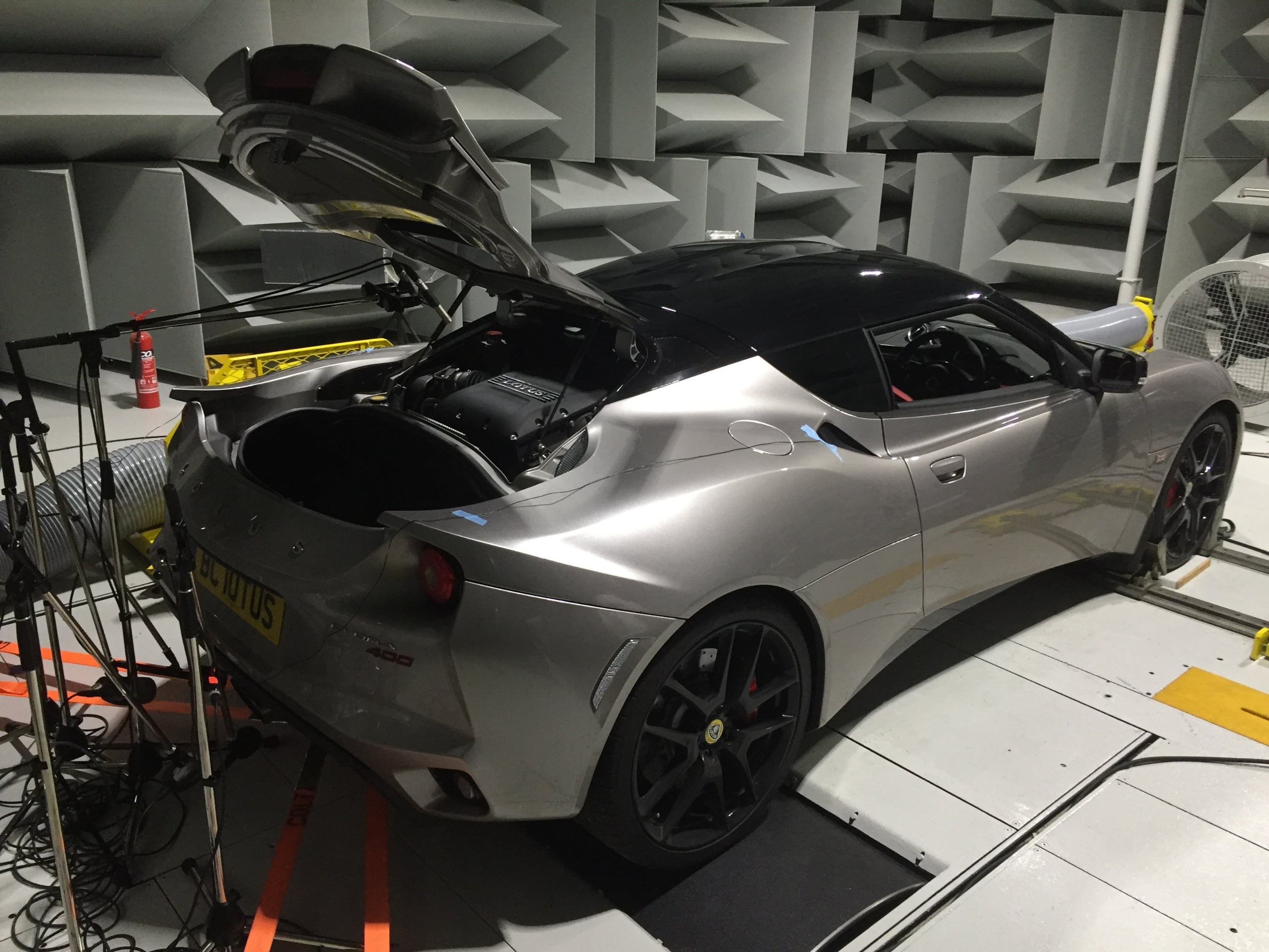
Polyphony Digital’s audio team has given a new technical presentation on how Gran Turismo 7 makes its engine sounds, and the slides include photos of two cars being recorded that have never appeared in the game.
The talk, “Interactive Sound Design in Gran Turismo”, was an invited lecture at the 156th meeting of the Acoustical Society of Japan, held September 8-10. It was presented by audio engineer Takashi Minagawa, with Daisuke Takeuchi, Masao Kimura, and Tatsuya Akita credited as co-authors. The first three names will be familiar from the studio’s CEDEC+Kyushu session in 2023, and the team also presented on GT7’s audio at GDC in 2024.
This latest lecture covers similar territory to those earlier talks, but for a different audience. The Acoustical Society of Japan is an academic body rather than a game developer conference, and the presentation brings the recording, synthesis, and reflection systems together in a single walkthrough of how the game’s sound fits together.
The presentation was delivered in Japanese, and you can download the original slides here. We’ve translated the slides and the presenter’s notes and picked out the highlights below.
Polyphony has a long habit of sharing technical work at conferences, and it’s always a treat to have such a rare glimpse into how the secretive studio operates. Past presentations include the “Iris” ray tracing system, circuit scanning and course creation, physically based tone mapping, and, most recently, the NeuralPVS rendering system.
Two Cars Not in the Game
Before the technical stuff, let’s talk about the photos that most players will be interested in.
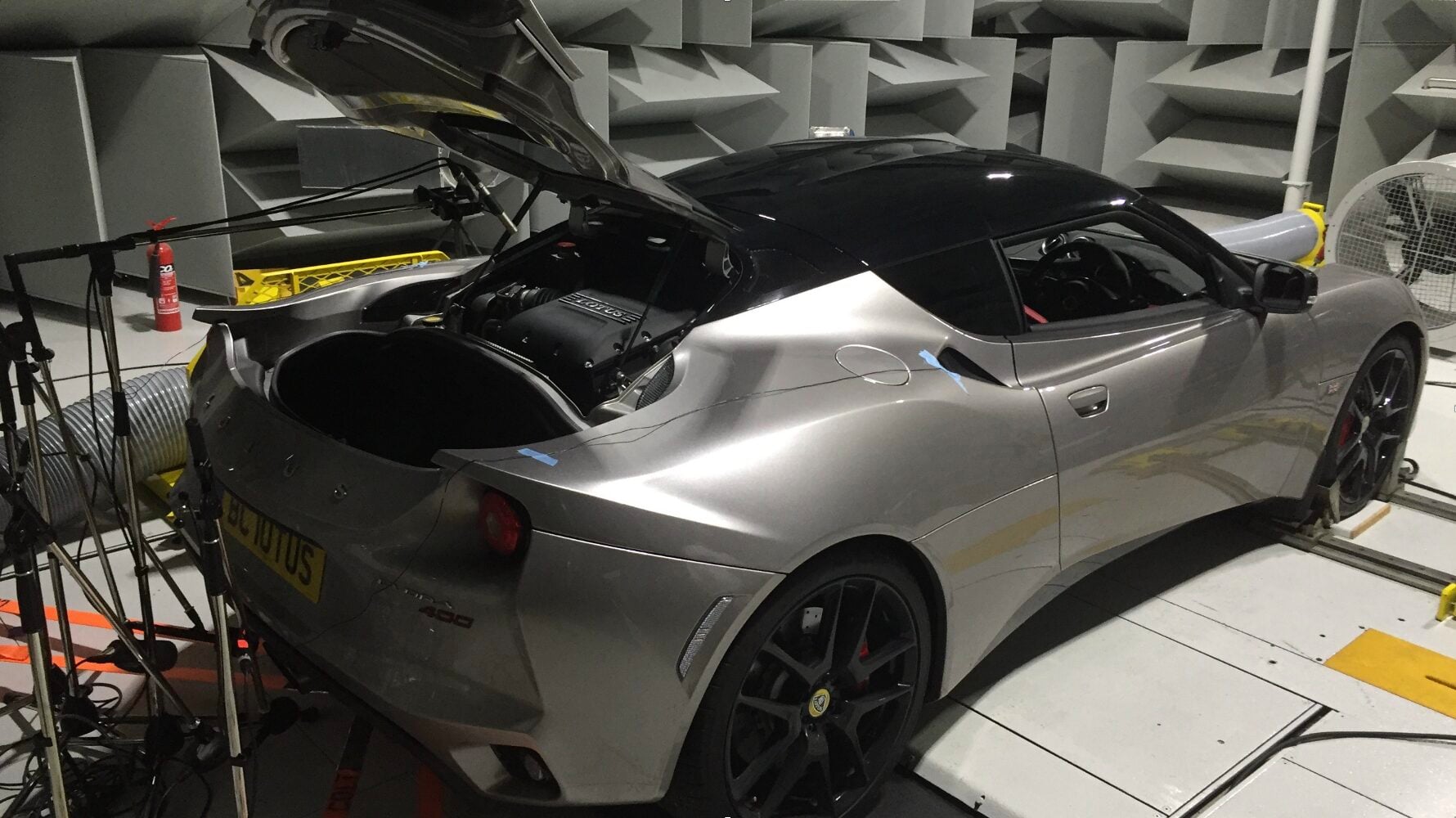
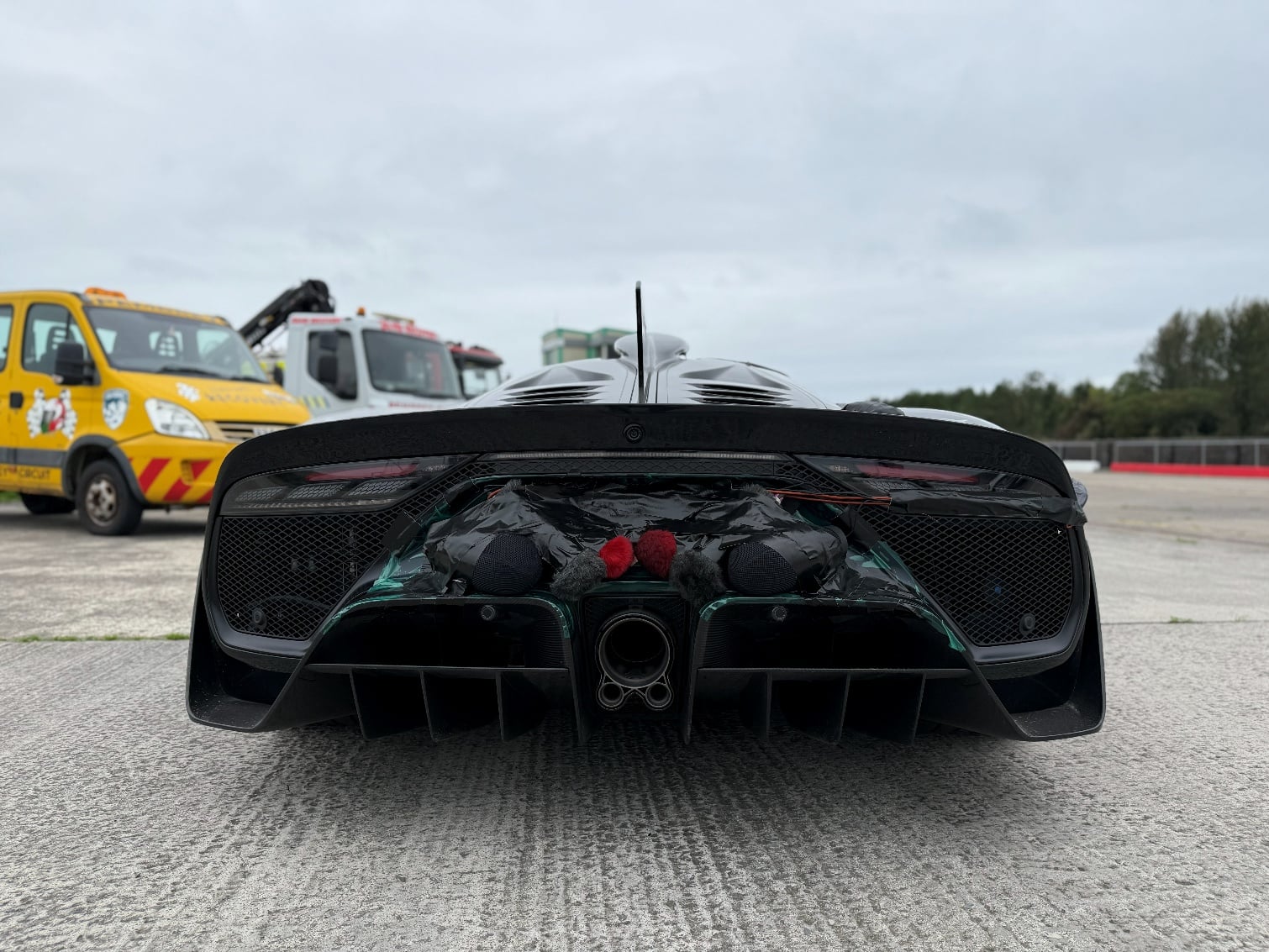
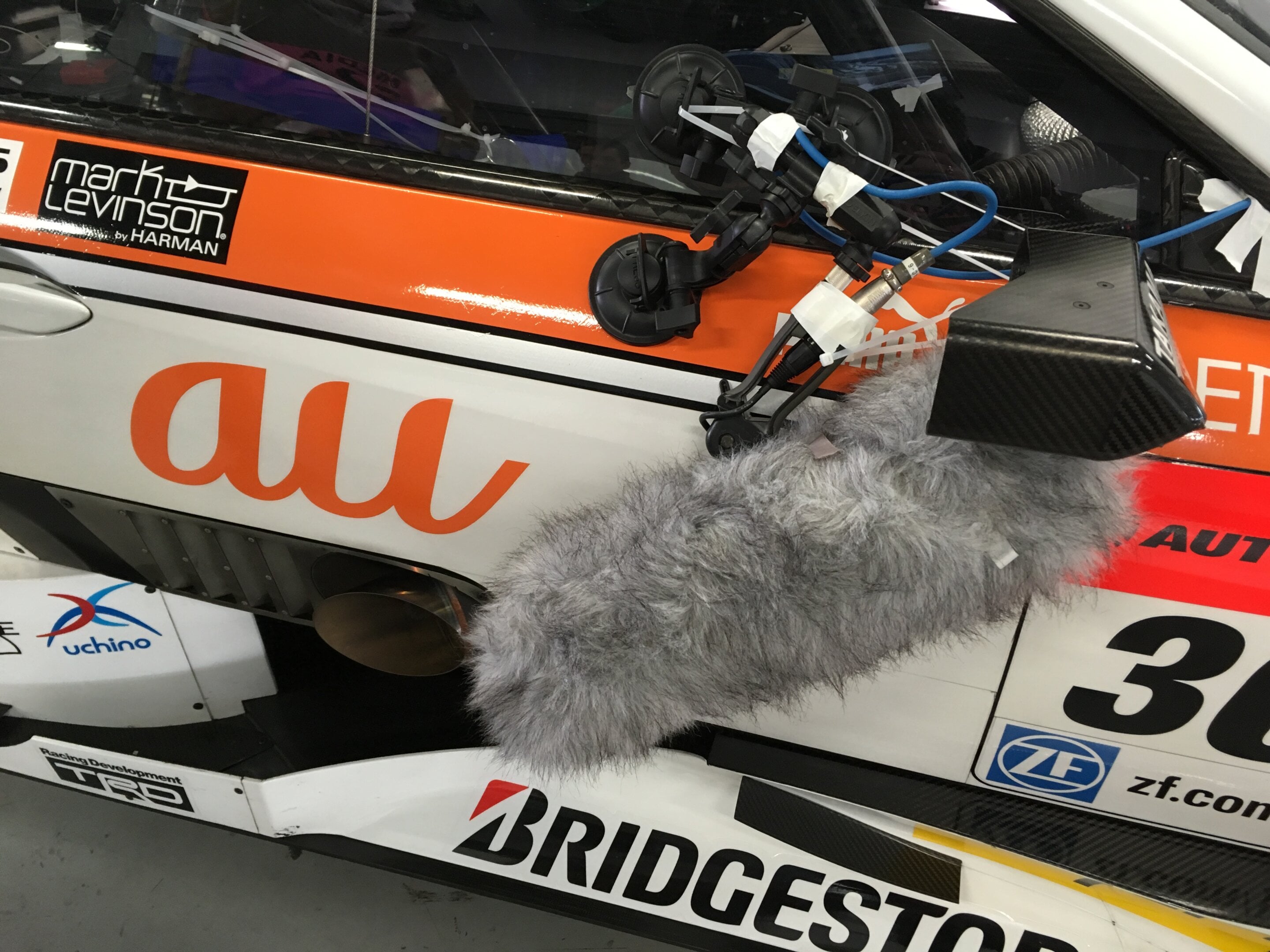
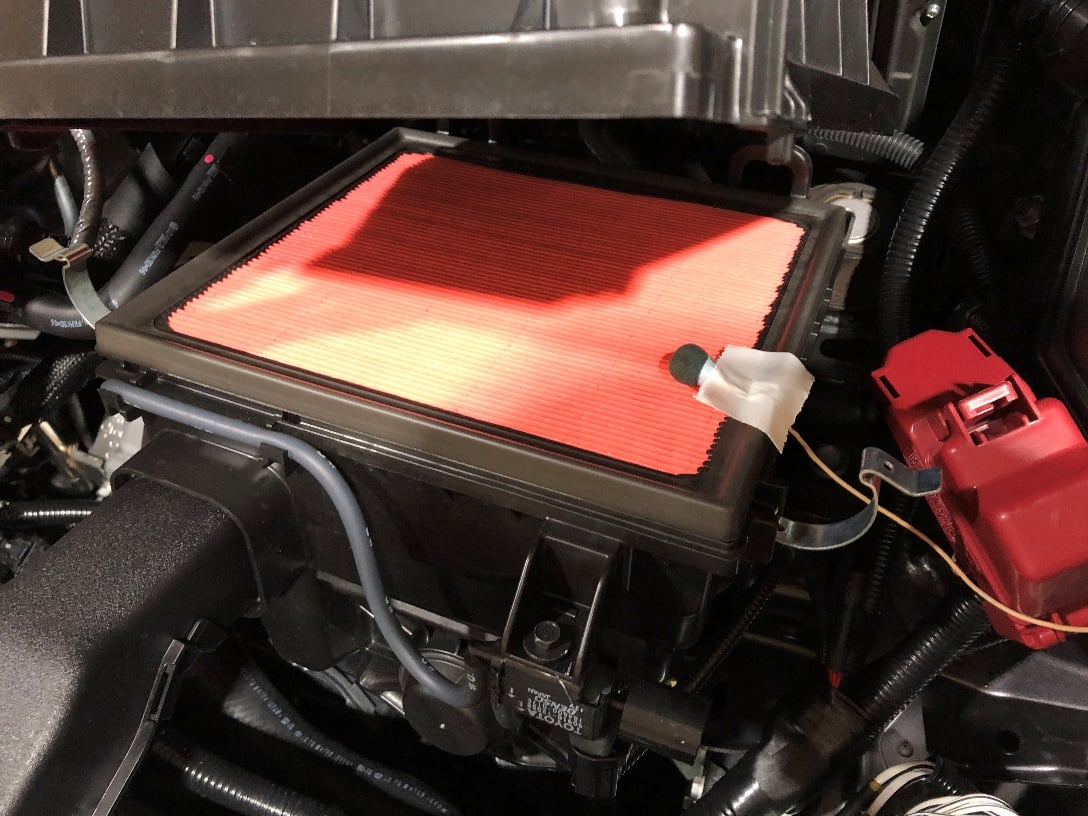
Just as a Ferrari 488 Challenge Evo turned up in the 2023 slides, the photos used to illustrate the recording process reveal some interesting cars. One is a Lotus Evora 400 in an indoor test chamber; the other is a Mercedes-AMG One shot from behind at what appears to be a track or motorsports venue.
Of course, neither is in Gran Turismo 7. No Lotus of any kind has appeared in the game since launch, despite the brand’s history with the series going back to the first Gran Turismo. The Evora appeared in GT5 Prologue, GT5, and GT6 before dropping off the roster, and the lack of any Lotus in GT7 has been a sore point for many players.
The AMG One has never been in a Gran Turismo title at all. With production limited to just 275 cars, it’s not the easiest thing to get in front of a microphone. Mercedes-AMG is already a close partner of Polyphony’s through its Virtual Championship esports series, so the relationship is certainly there.
To be clear, a recording session doesn’t mean a car is coming. The slides don’t say when these sessions took place, and Polyphony has recorded cars for reference purposes before. However, it begs the question why the team would go to the trouble if there weren’t at least some plans to bring these models to the game.
Recording the Cars
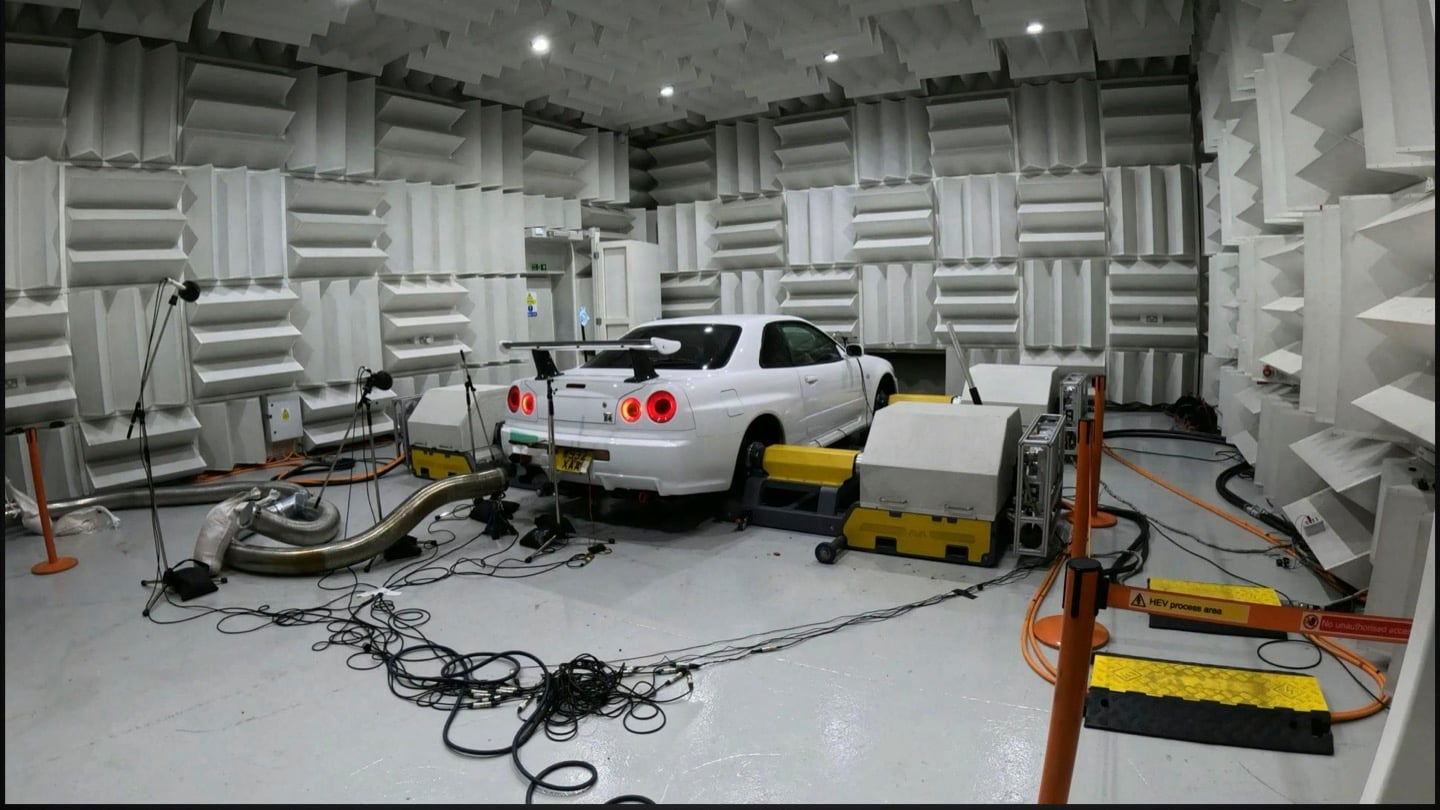
The recording process is largely as described in 2023, but Minagawa added some detail on where it happens.
The team records either with the car held stationary on a dynamometer or by driving it around a circuit, choosing between them based on the car and the facilities available.
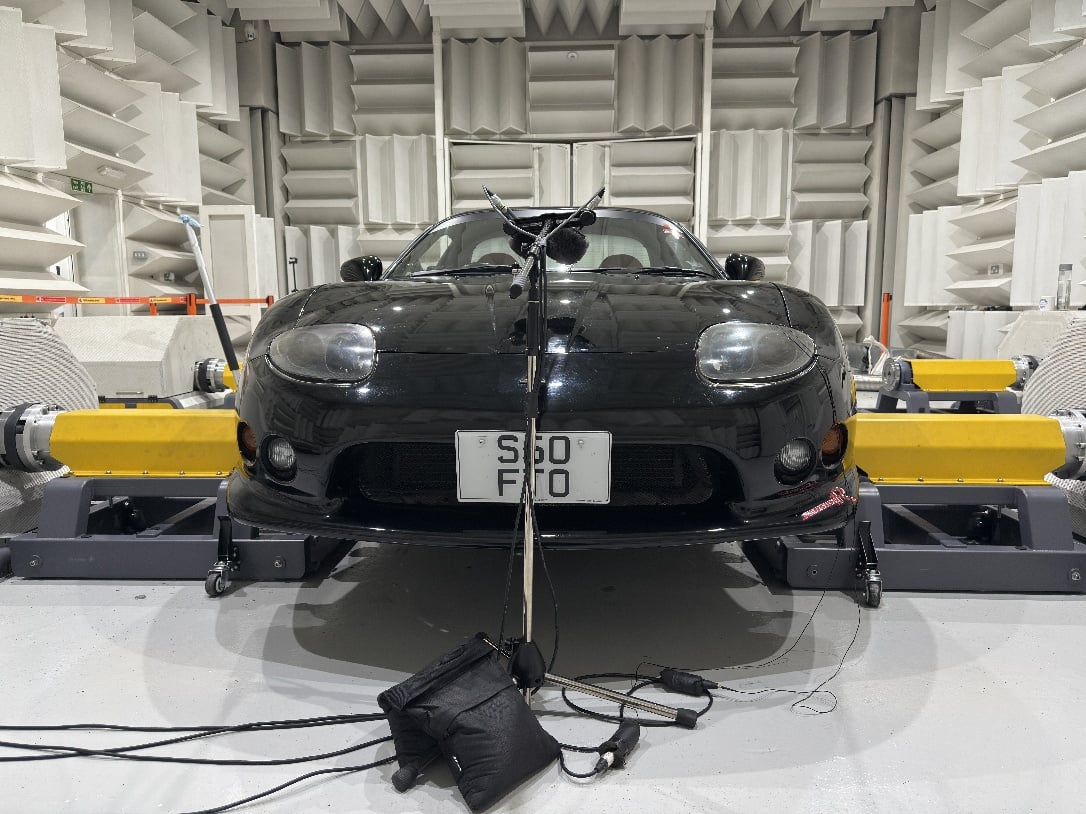
There are two kinds of dyno. A “hub dynamometer” bolts directly to the wheel hubs with the wheels removed, and because nothing is spinning against the floor it’s quiet. A “chassis dynamometer” sits the car on rollers, but the generated tire noise can interfere with the recording.
For cars that are difficult to put on a dyno (race cars are the example given), microphones are attached with suction cups, tape, and cable ties, a recorder goes inside, and the car is driven around a circuit.
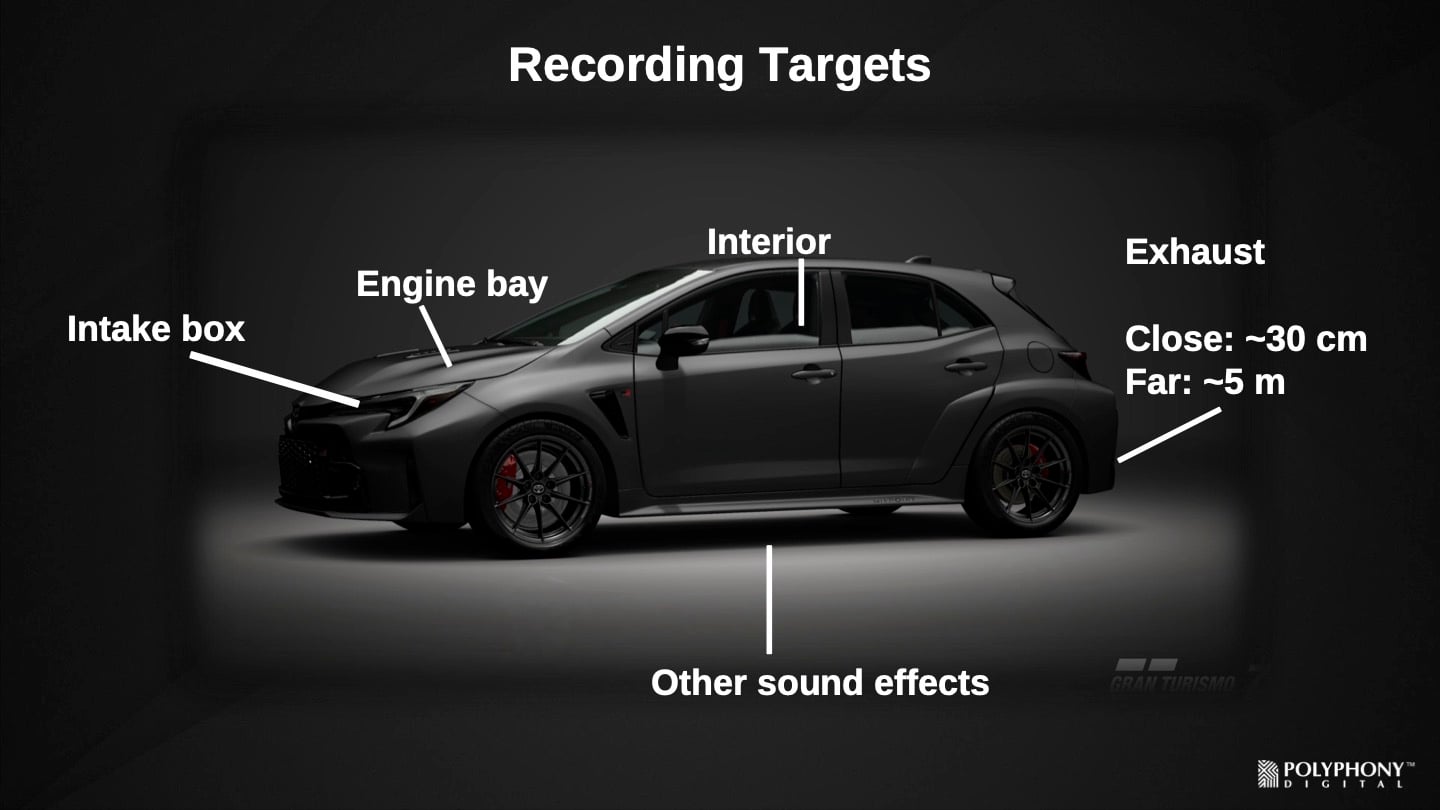
Microphones go on the intake, the engine bay, inside the cabin, and at two distances from the exhaust. The close mic at around 30cm captures the tone in detail, while the far mic at around five meters captures what the car sounds like from behind, and the game’s exhaust note is a mix of the two.
One detail that was new to us is how the team captures the acoustics of the cabin itself. When you’re hearing your own car from inside, the engine sound needs to be muffled and colored the way a real interior would.
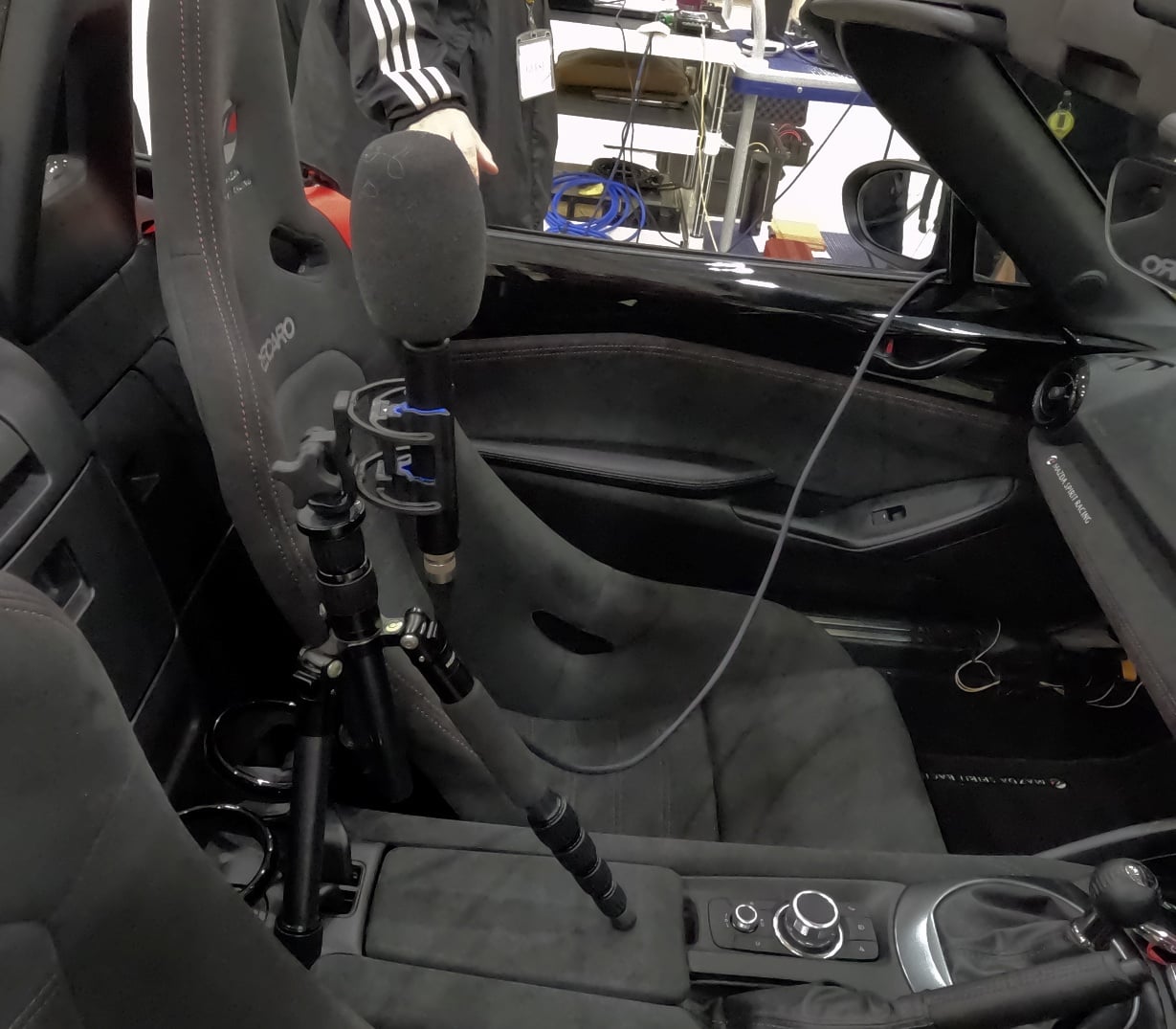
To reproduce that, Polyphony records an “impulse response” of the cabin, which is essentially a measurement of how the space reacts to sound. When mixing the player’s car, the audio is convolved with that measurement, which adds the cabin’s acoustic character to the sound.
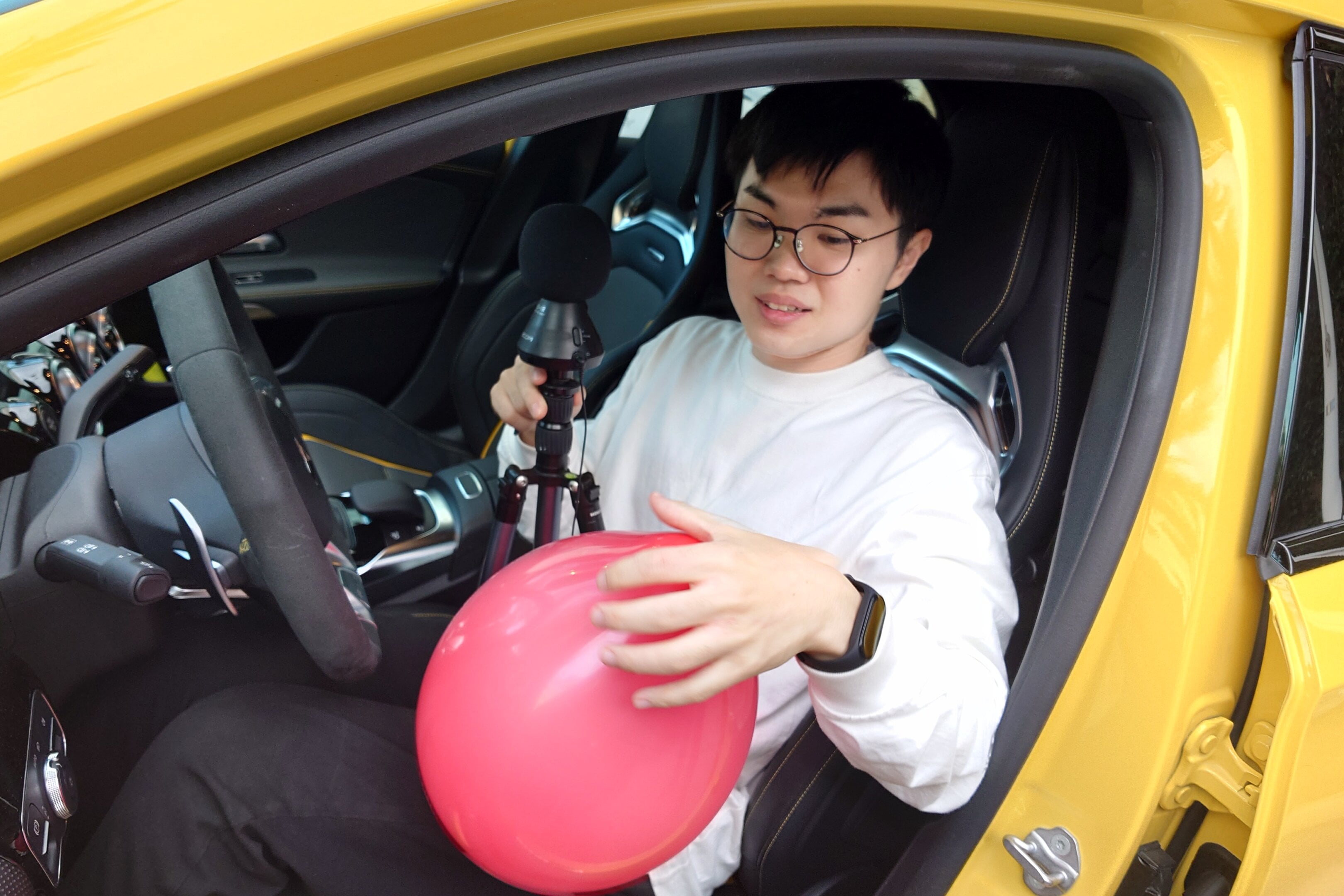
The preferred way to measure this is with a speaker playing a rising tone called a sine sweep, which takes time and equipment the team often doesn’t have on a recording day. When it doesn’t, it falls back on something simpler, like popping a balloon inside the car. A short, sharp bang is enough to capture the basics of how the cabin sounds.
How the Game Plays Them Back
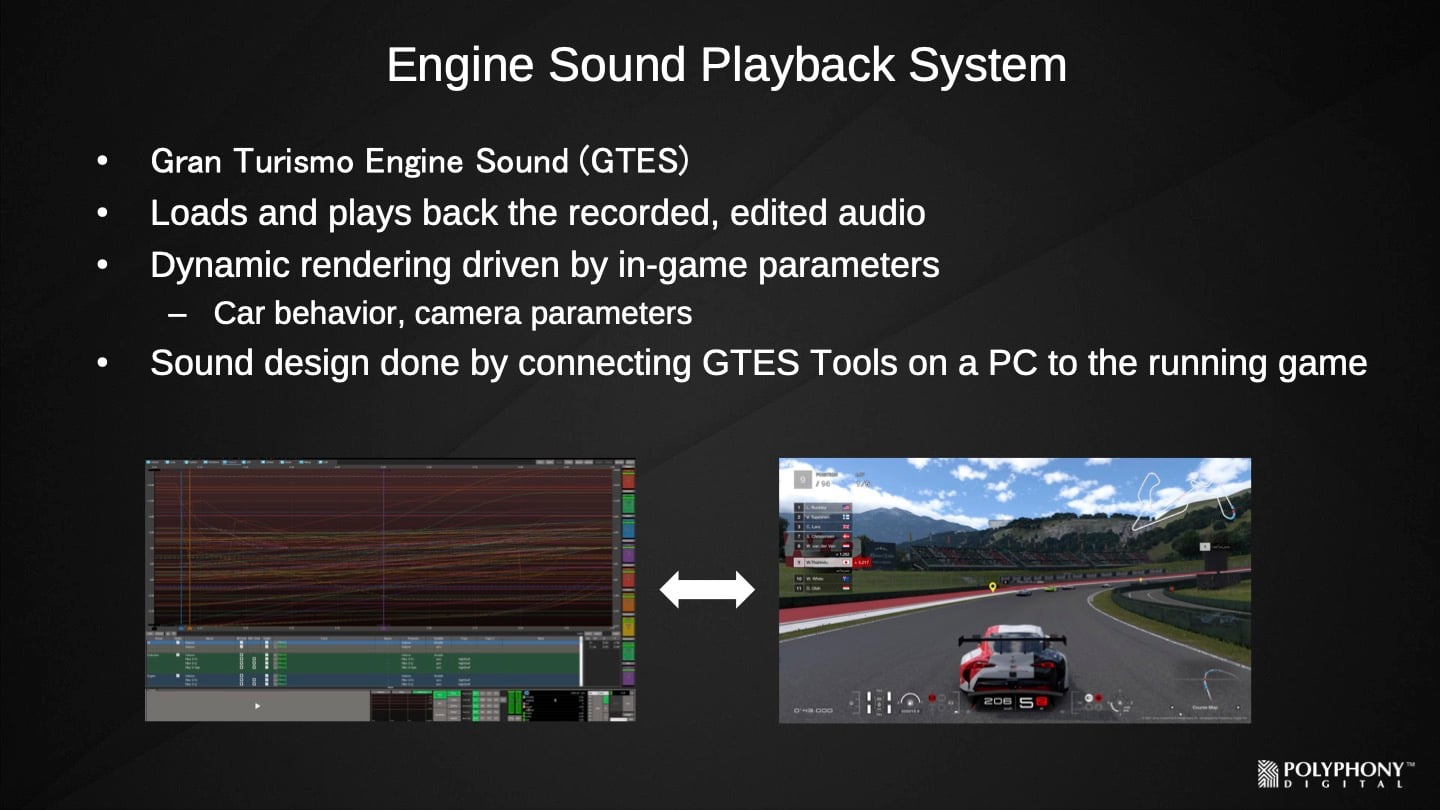
The recordings are loaded into a system Polyphony calls Gran Turismo Engine Sound, or “GTES”. The audio team edits it with a PC tool that connects to the game while it’s running, so designers hear their changes as they make them.
Each “recording target” (the intake, engine bay, interior, exhaust, and so on) becomes a “track” in GTES. A track holds loops recorded at different engine speeds, and as you drive, the game pitch-shifts and crossfades between those loops to follow your RPM, combining the sound from every track into the car you hear. The editing tool works out which RPM each loop belongs to by analyzing the pitch of the recording.
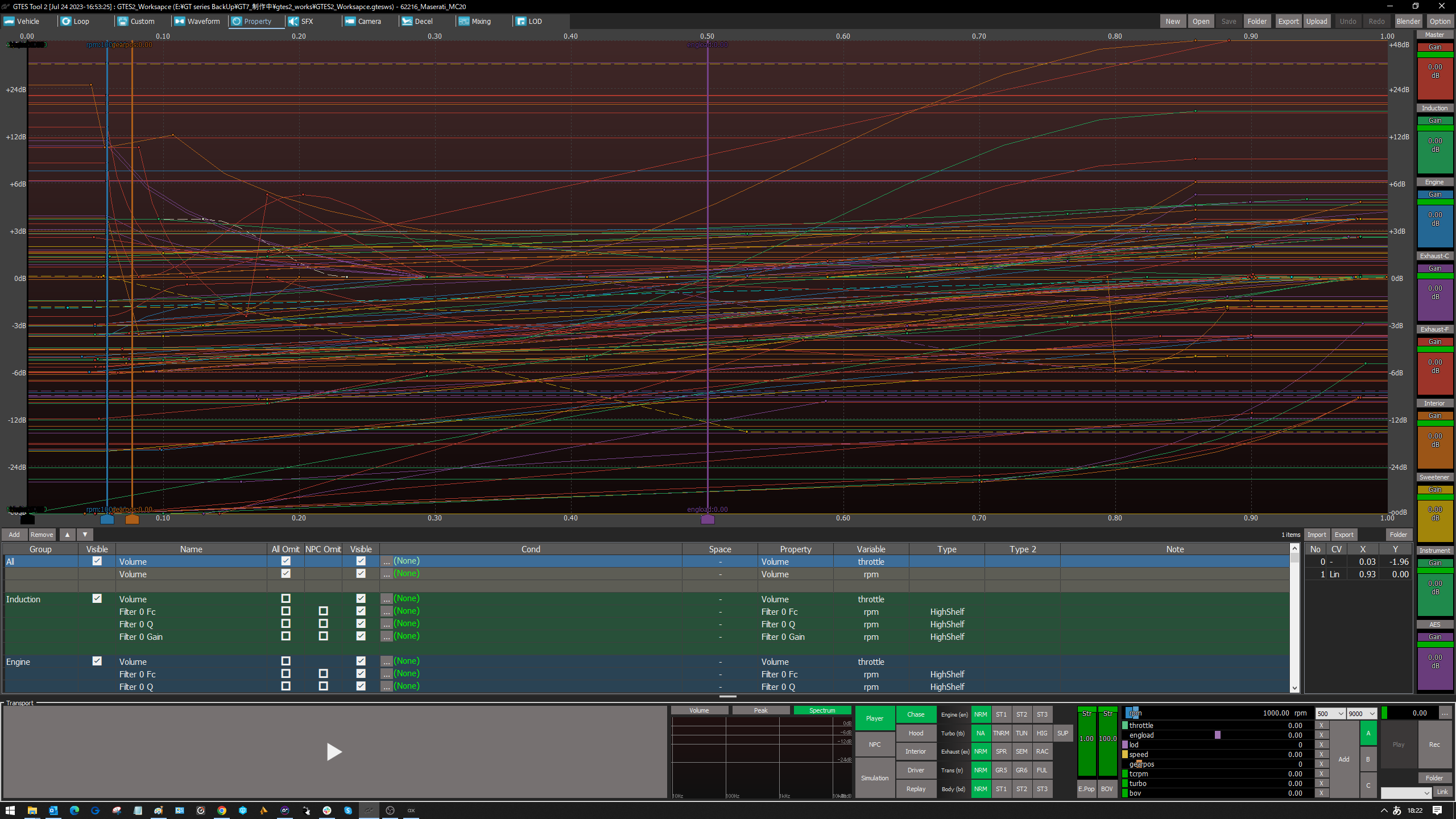
A lot of a car’s personality comes from what happens next. Each track runs through effects like EQ, and those effects are tied to what the car is doing through what Polyphony calls “property curves”. A sound designer draws a curve to define, for example, how the intake sound should change as you press the throttle, or how the exhaust responds under load.
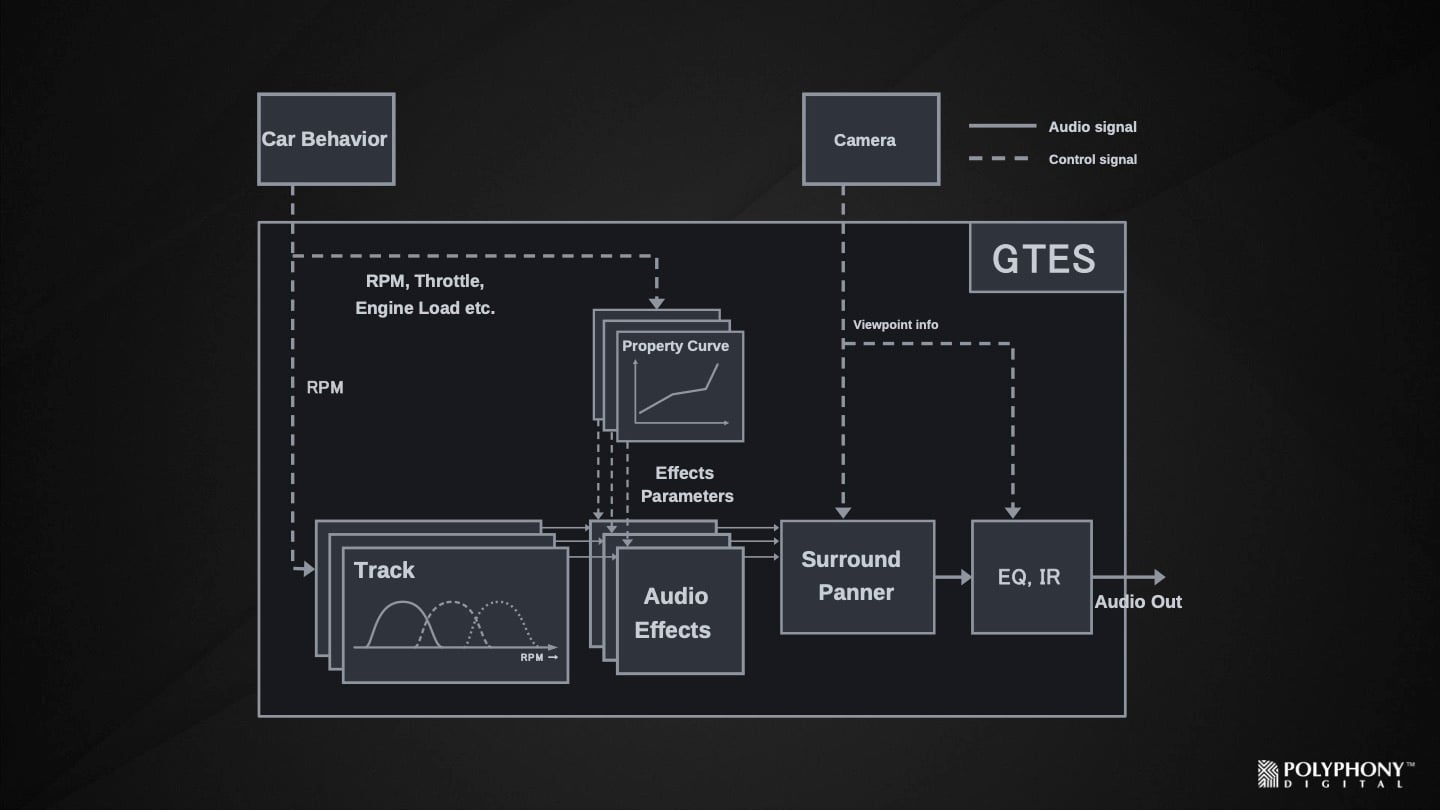
Finally, everything is placed in the surround field based on the camera view, which is how the same set of recordings can sound right from the cockpit, the chase camera, and the roof view.
The Engine Sound Synthesizer
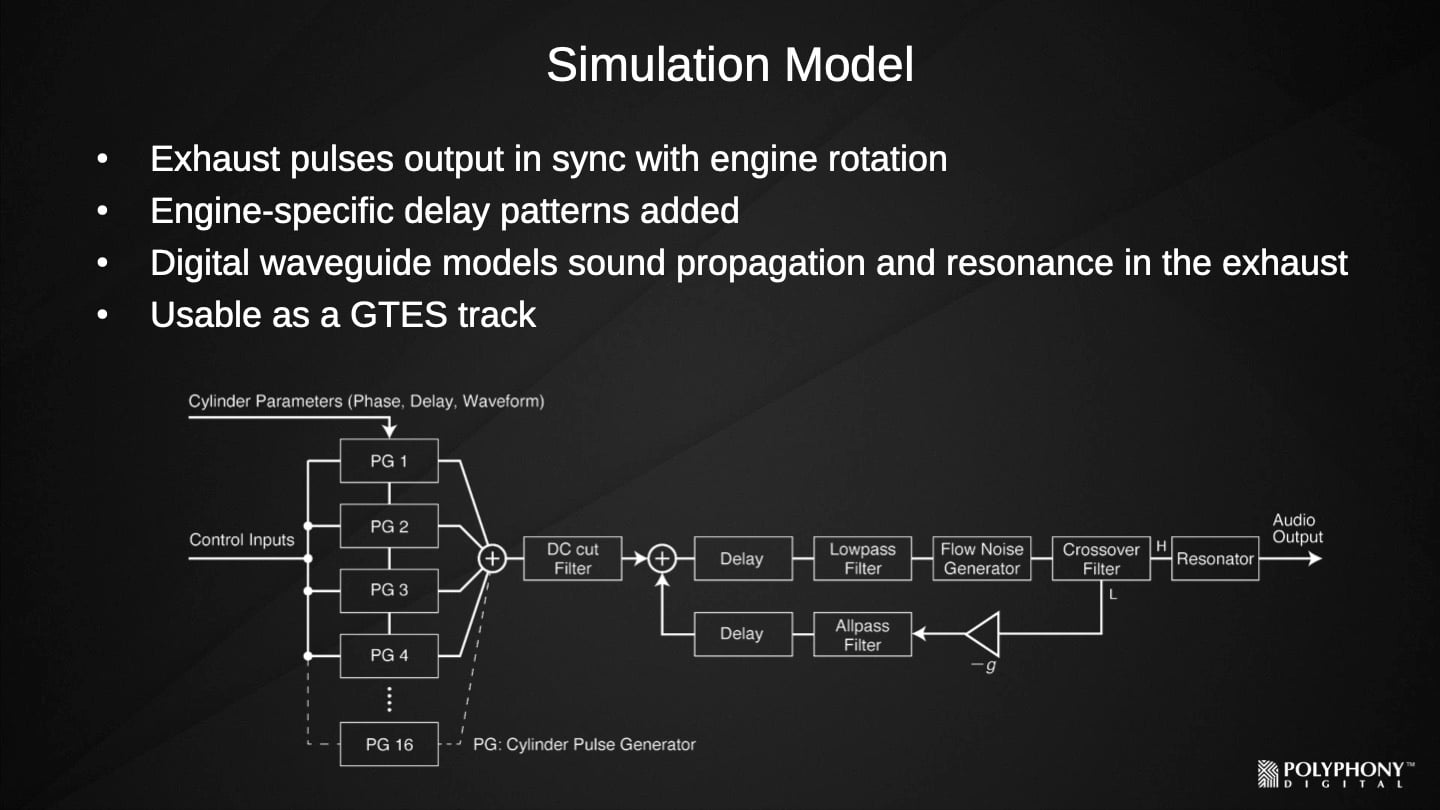
Polyphony’s synthesizer, previously discussed as “AES”, generates engine sounds through physical simulation rather than recordings.
The motivation, as Minagawa put it, is that Polyphony wants to simulate everything. Physics and graphics have become physically based, so the audio team wanted to try the same approach for sound. It also gives the studio a way to make noise for cars that are hard to record, whether that’s a Vision Gran Turismo concept, a car that can’t be driven, or a car that no longer exists.
The short version of how it works is that it’s a virtual engine and exhaust.
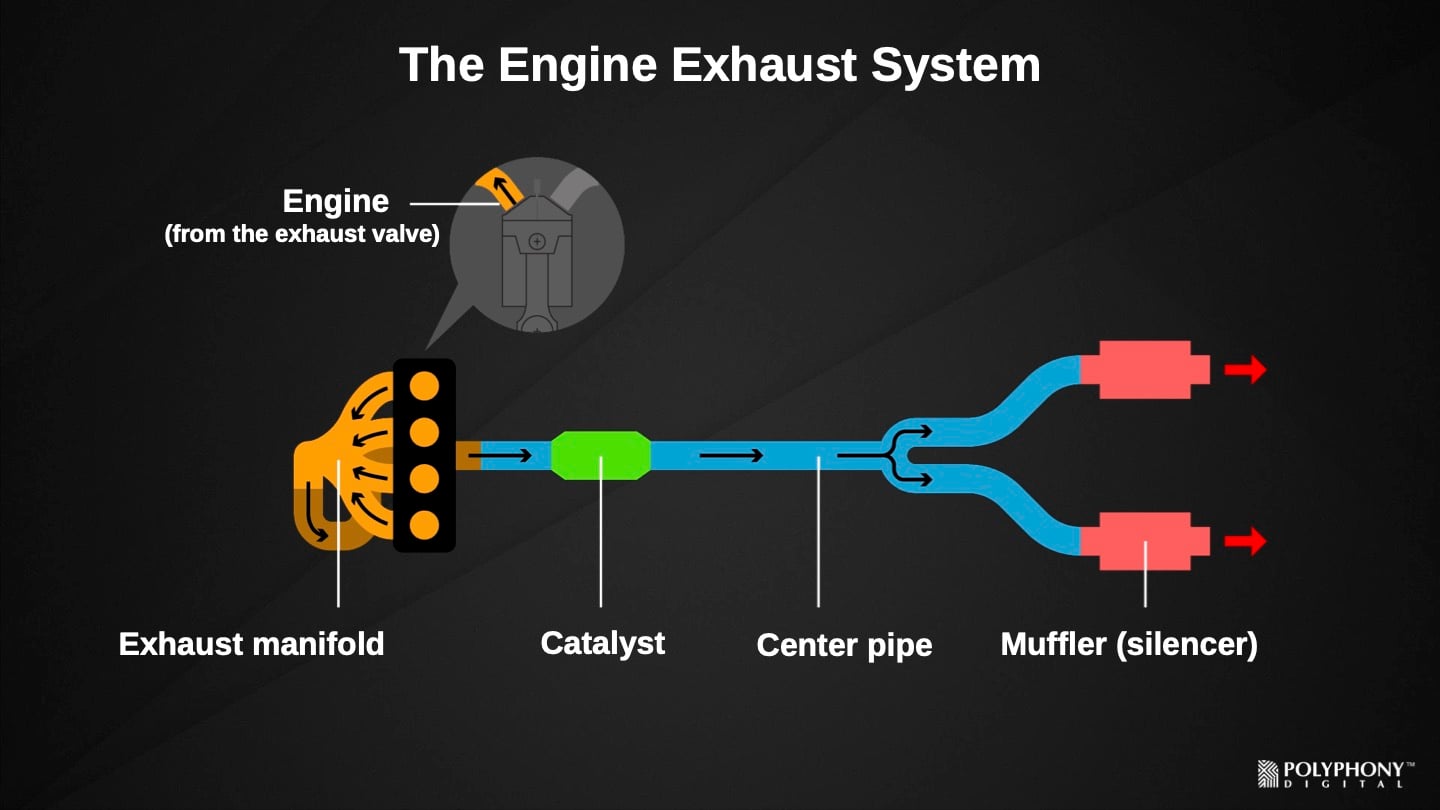
The model spins a virtual crankshaft and fires a pulse of exhaust from each cylinder in turn. Those pulses pass through virtual pipes representing the exhaust manifold, where the cylinders merge, with pipe lengths that vary from engine to engine and contribute to its character.
The combined pulse then travels down a simulated exhaust system, bouncing and resonating along the way, before radiating out of the tailpipe as sound. Different engine layouts produce their own signature harmonics.
The synthesized sound can then be used as a regular GTES track, which means it can be mixed with real recordings in the same car.
Making Circuits Sound Like Circuits
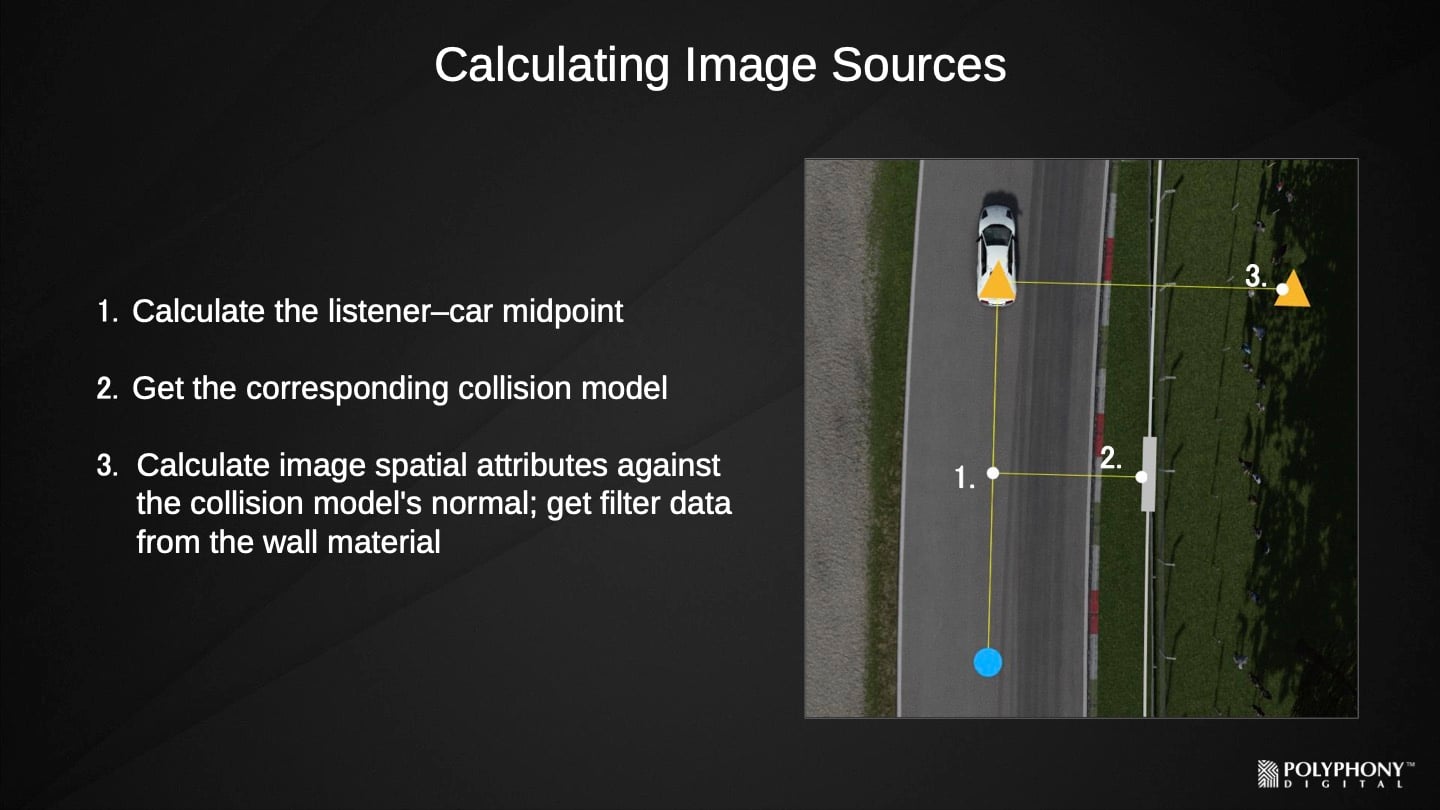
The final part of the talk covered reflections, the echoes of your car’s sound off the environment around it.
Polyphony’s early-reflection effect works by treating a reflection as if it were coming from a mirror-image copy of your car on the far side of a nearby surface, using the game’s collision geometry to find those surfaces and work out what they’re made of. Each mirrored source gets its own position, speed, and orientation derived from the real car, and the differences in Doppler shift between them can produce a chorusing effect against the direct sound.
Longer reverberation is handled differently outdoors and in partly enclosed spaces. Out in the open, the game uses impulse responses recorded at real outdoor locations (the same technique used for the cabin, applied to a whole environment).
In tunnels and underpasses, it adds a “directional reverb” that can have a different reverb time in each direction, so driving through a tunnel lengthens the reverb in whichever direction the space opens up.
What It All Means
The presentation, of course, does not talk specifically about what how the company plans to refine or improve Gran Turismo audio. It’s an explanation of how the game’s audio works today, built from real recordings, physical synthesis, and a lot of spatial processing on top.
The revealed cars, on the other hand, certainly do open up a lot of questions about the future…
See more articles on Audio, Lotus, and Polyphony Digital.