Fanatec’s new Podium Pedals Sport are available to order today. At $599.99, it’s the cheapest way into Fanatec’s new flagship pedal range, and right now it’s also the only Podium Pedals configuration you can actually buy.
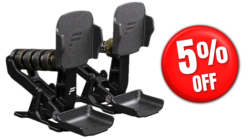
The good news for GTPlanet readers is that our GTPLANET5 Fanatec discount code works on the Podium Pedals Sport, knocking 5% off at checkout.
The code doesn’t work on items already marked down, but the Podium Pedals Sport is standard-price launch stock, and you can use any of the affiliate links in this article. If the Formula’s launch is anything to go by, don’t expect stock to hang around for long. The first batch of the Podium Pedals Formula sold out in roughly seven minutes back in June.
What Is It?
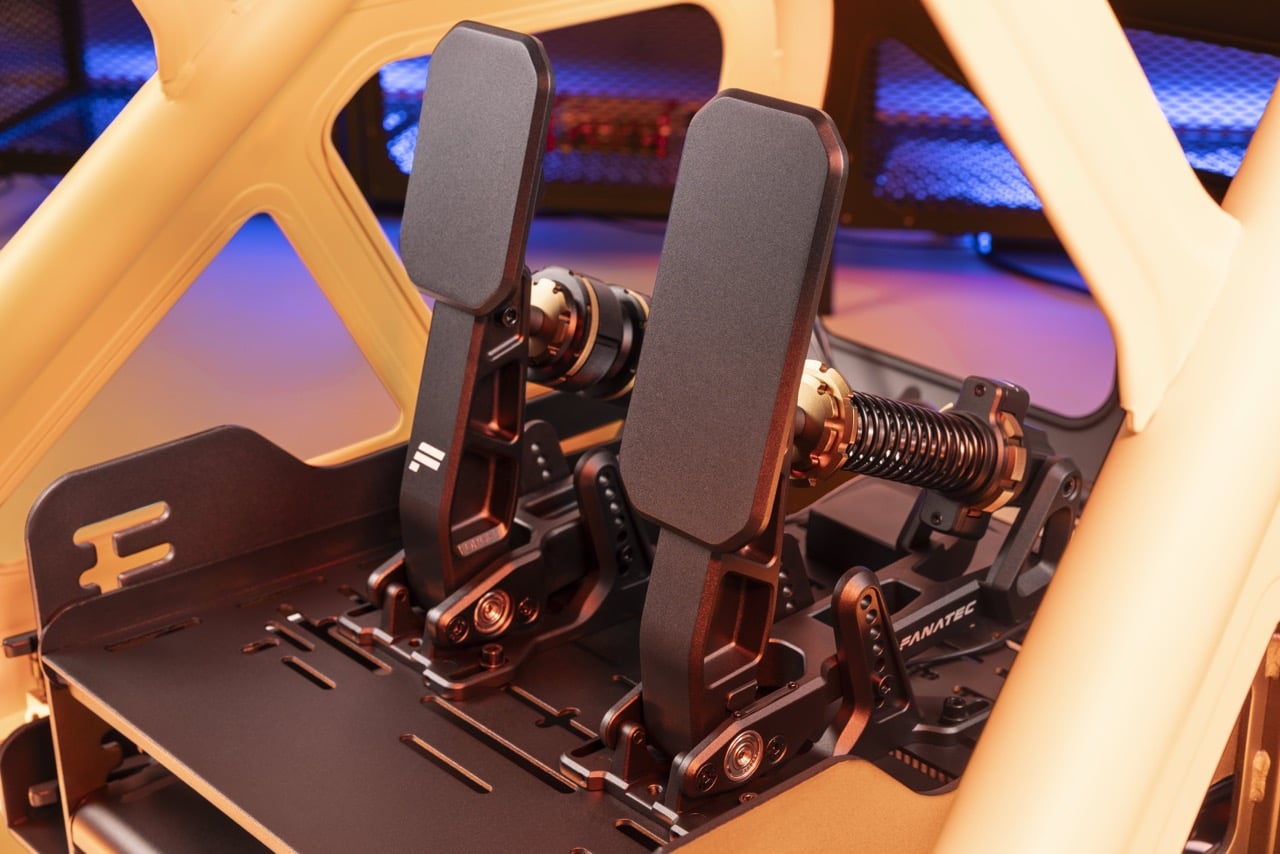
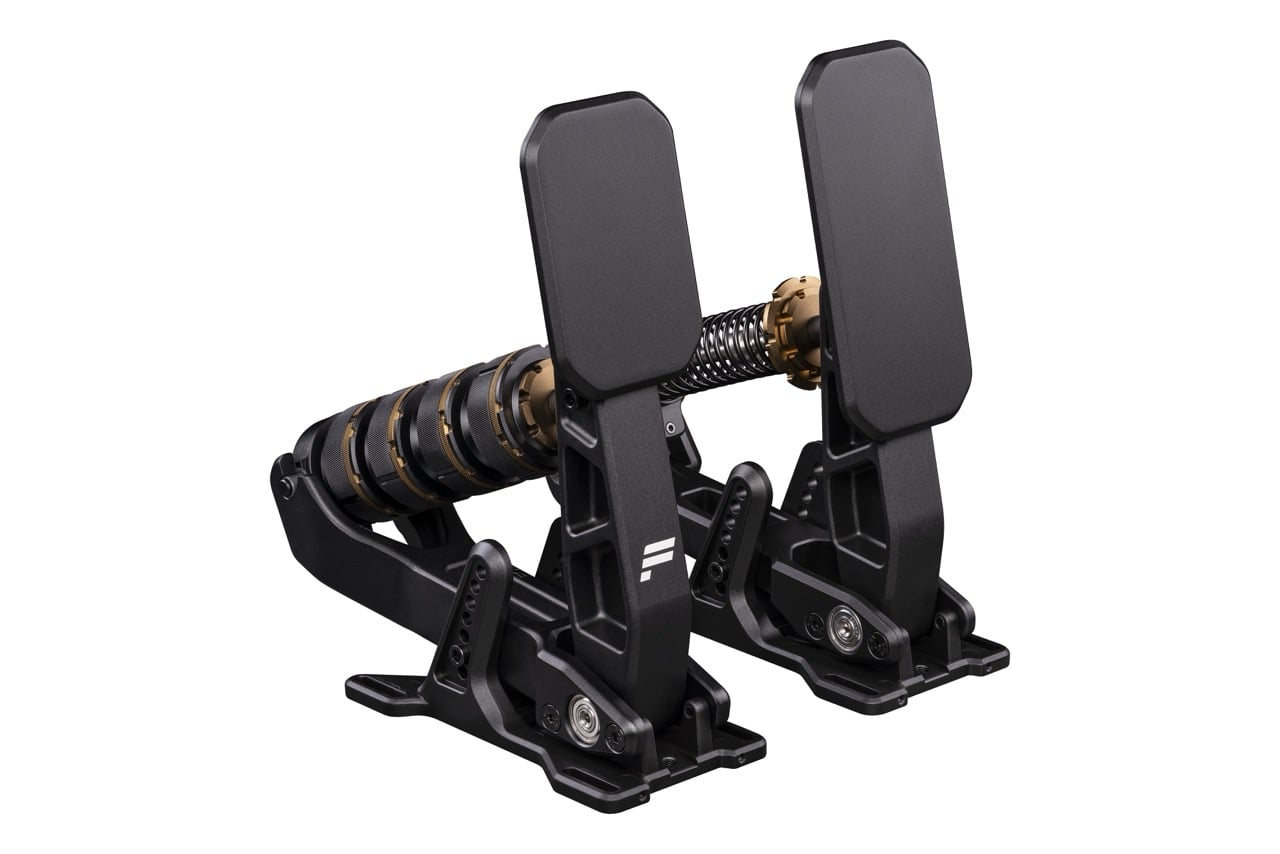
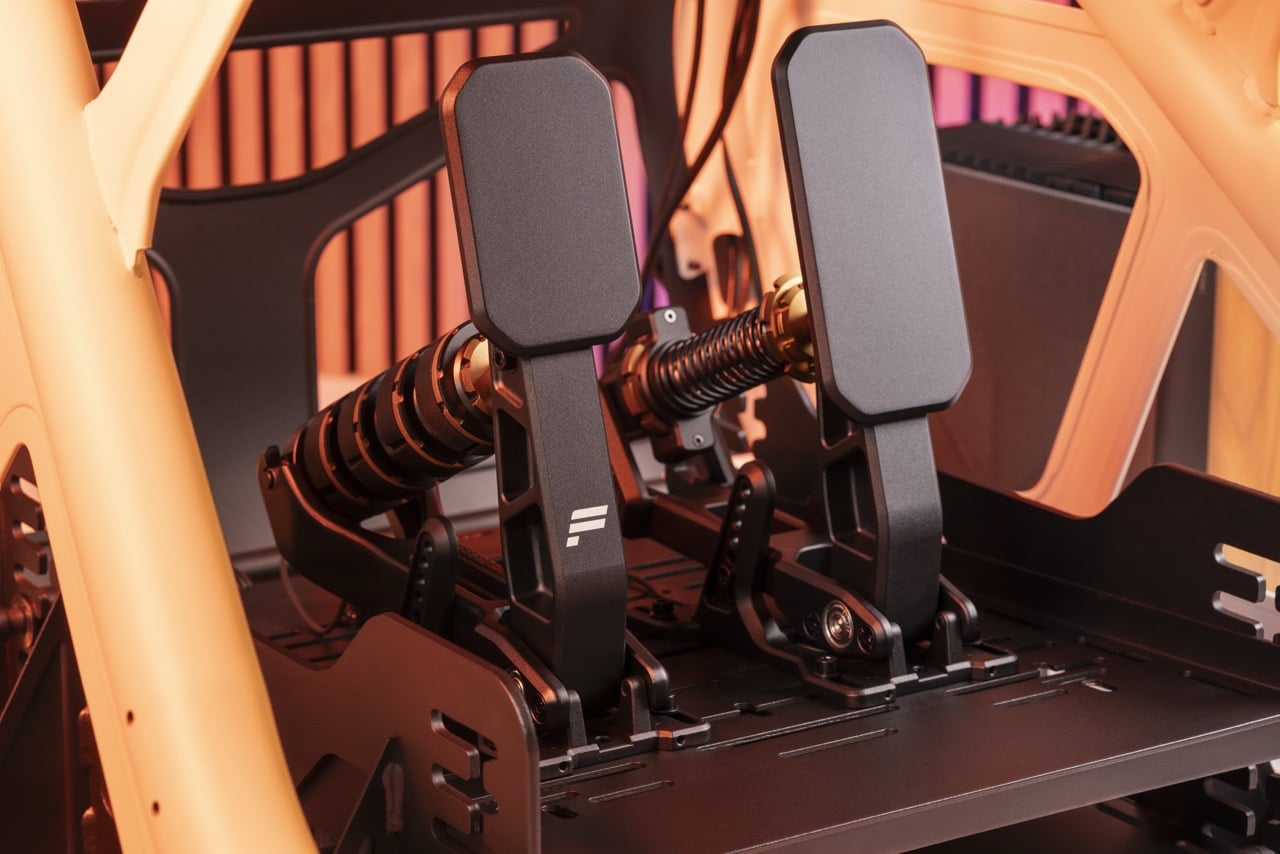
Fanatec announced the Sport back in August as a third configuration of the Podium Pedals, and it’s the easiest one to explain. It’s the two-pedal Podium Pedals with the GT-style aluminum pedal plates and no clutch.
That makes it the sensible choice for a lot of people. The Podium Pedals Formula (the carbon fiber version with heel cups and side supports) is built around a left-foot braking technique. The flat GT plates on the Sport work for either left- or right-foot braking.
Pricing is as follows:
- $599.99 USD
- €599.95 EUR
- $950 AUD
- ¥100,000 JPY
That’s $100 less than the Podium Pedals Formula, and the saving comes from replacing the Formula’s carbon fiber pedal plates and heel cups with flatter aluminum plates. All three Podium Pedals variants use identical mechanical components, so the pedal arms, sensors, bearings, and springs are the same whichever one you buy.
The Sport is also upgradeable in both directions. The clutch module and the Formula carbon fiber components will be available separately, so you can start with the Sport and build toward either of the other two configurations later.
The Hardware
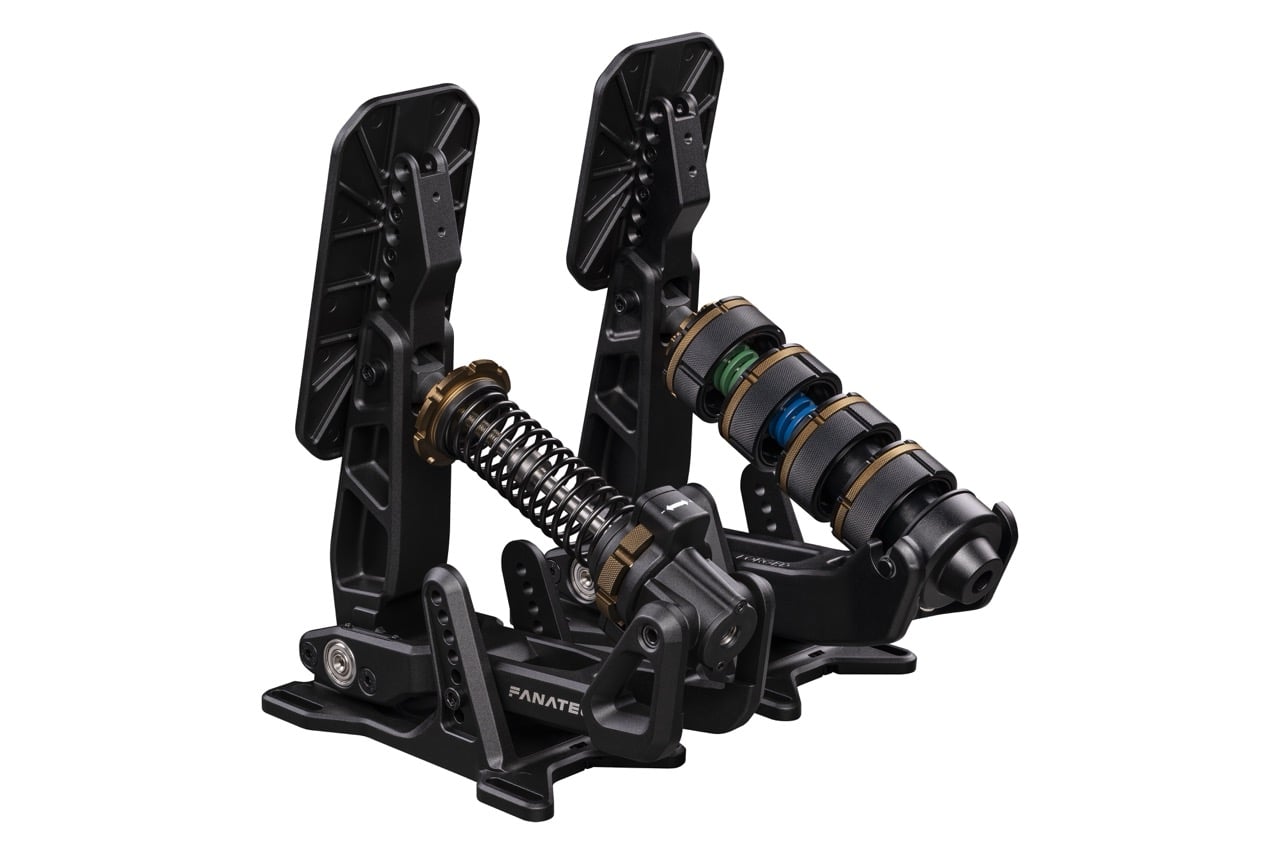
The Podium Pedals are an all-new platform, developed at Fanatec’s German headquarters with input from Igor Fraga, and they become Fanatec’s new flagship pedal platform above the ClubSport Pedals V3 (which traces its architecture back to the original 2008 ClubSport Pedals).
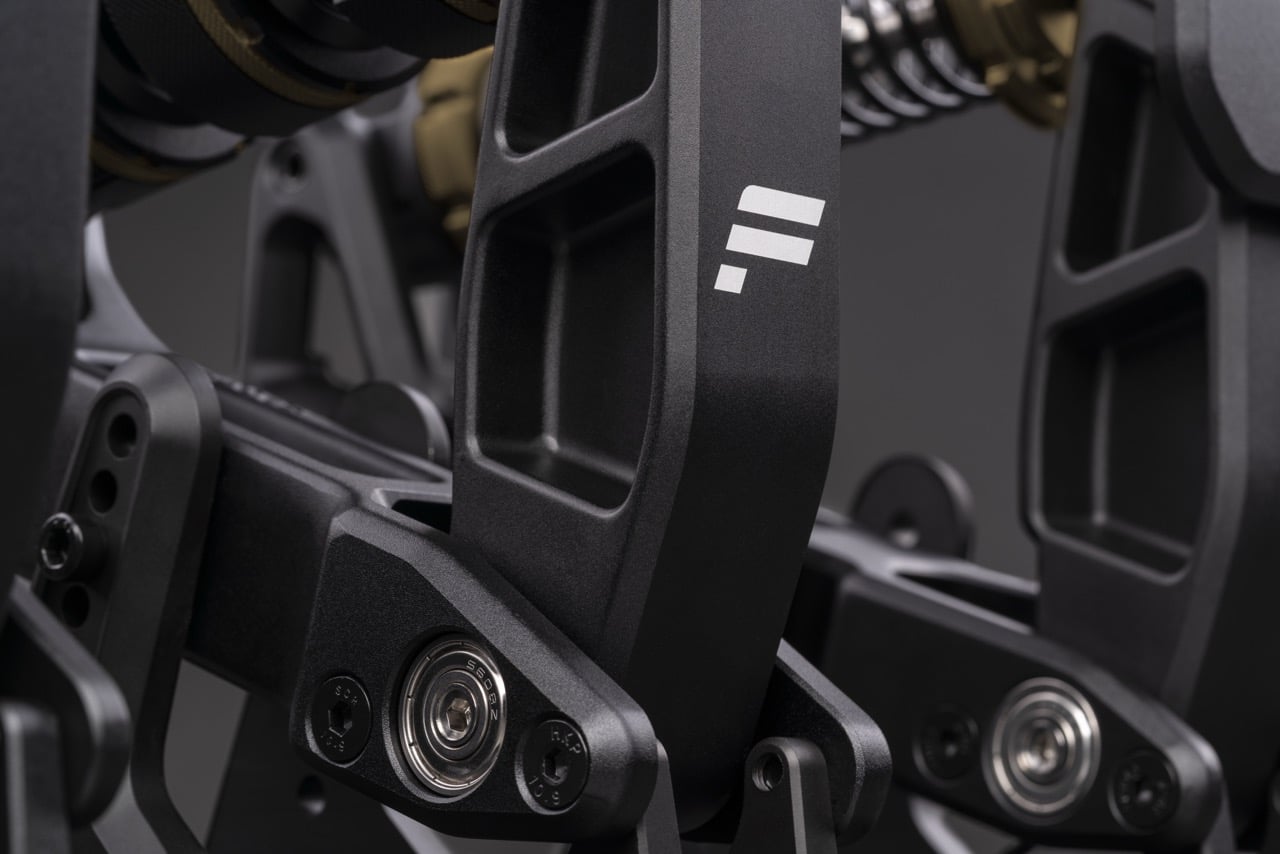
The brake is the main event, with a pedal arm and mid-arm of forged aluminum. Fanatec claims its an industry first, and the custom load cell is rated for more than 200 kg while being calibrated for 150 kg at the pedal plate. The pivot runs on an industrial-grade ball bearing.
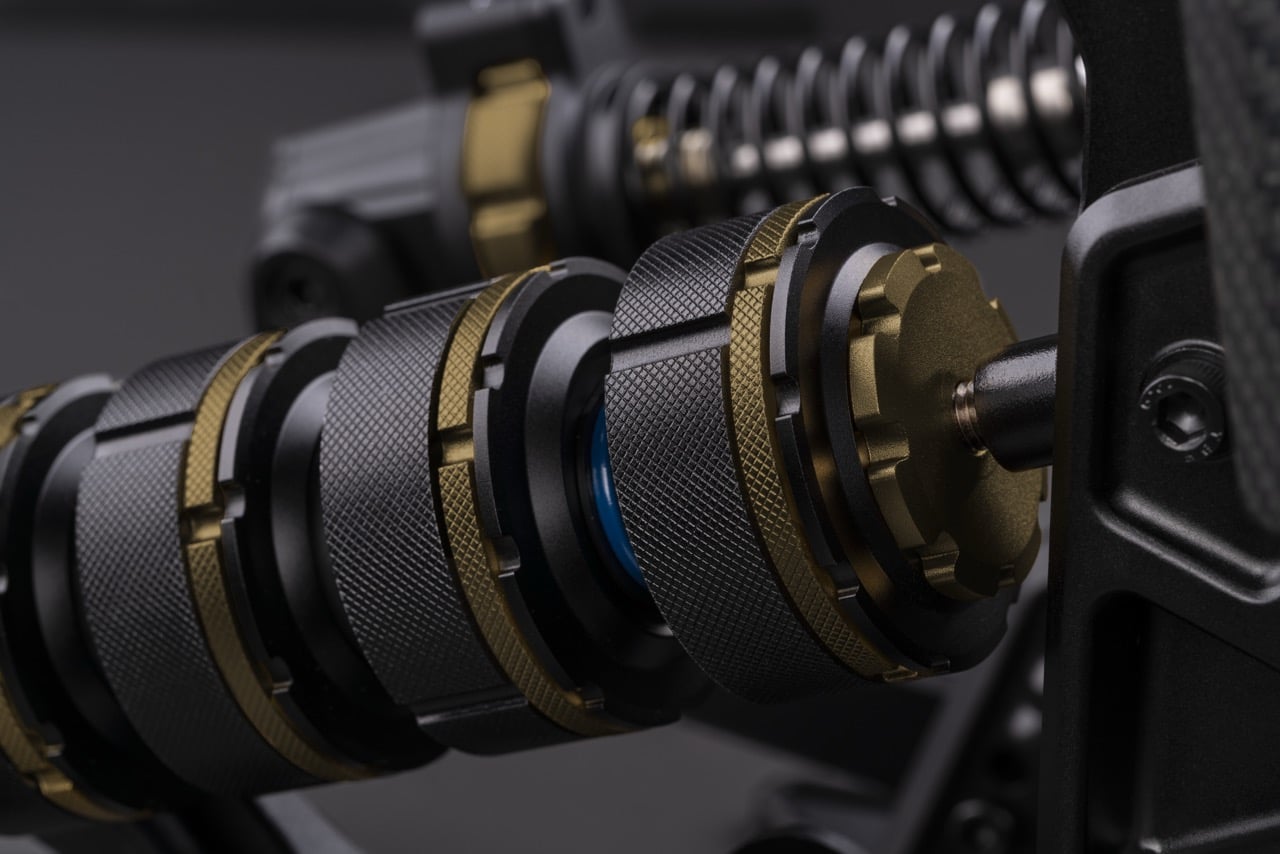
Resistance and travel are handled by Fanatec’s patented “Compression Control System”. In plain terms, the brake’s four elastomers each sit inside a threaded cup, and screwing each cup in or out changes travel and resistance without any tools. The cups also act as mechanical limiters, so the elastomers can’t be over-compressed, which is what Fanatec credits for the consistent feel from one session to the next.
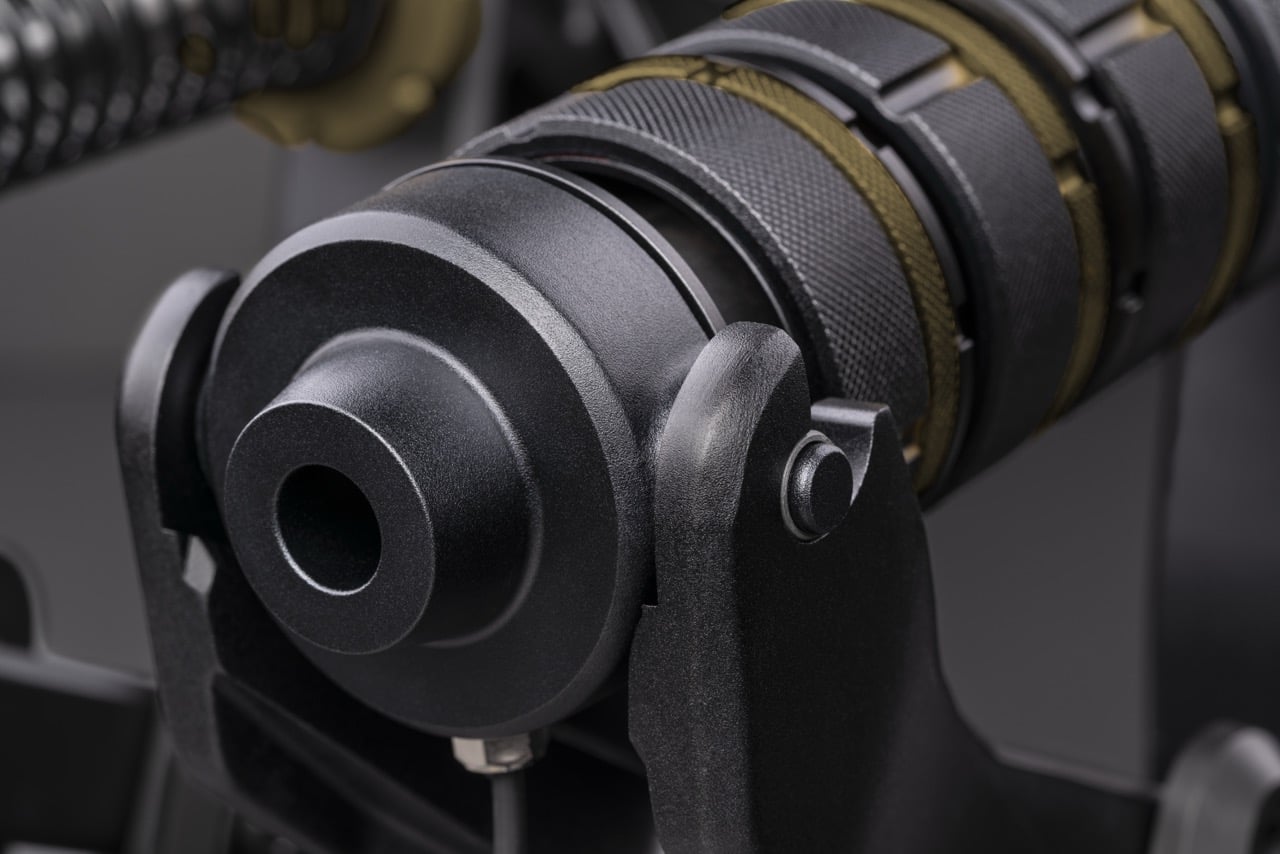
Staggering the four cup positions gives you a mechanically progressive brake, before you touch any software. Close all four cups fully and you get the “brick wall” pedal of certain race cars. Open them all up with the four included springs installed and you get the softest, longest-travel setting. Gold locking rings hold each cup in place once you’ve found a setting you like.
Fanatec also says the elastomers follow a common industry size, so harder or softer compounds from third-party suppliers will fit if you want to go further.
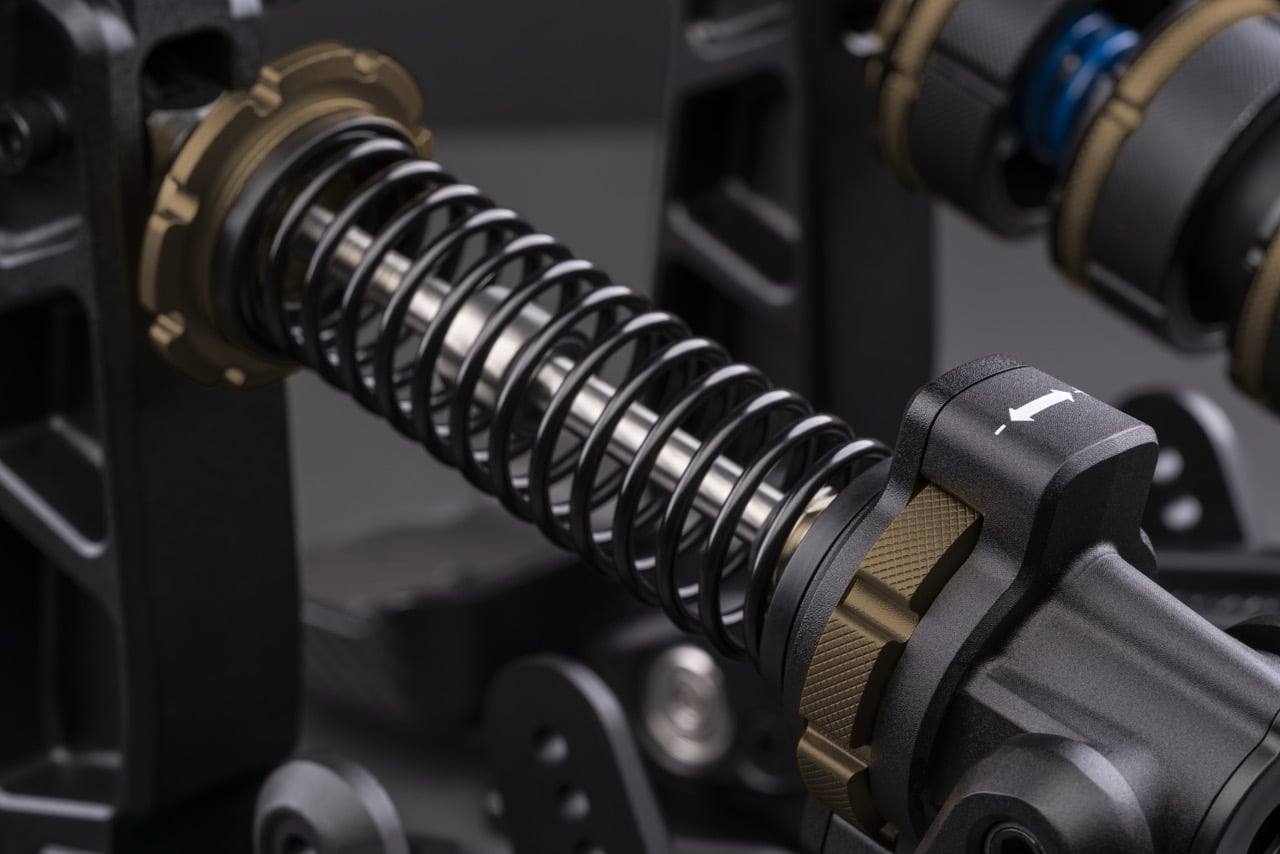
The throttle uses a factory-calibrated Hall sensor and gets independent, tool-free travel and preload adjustment (around 20 mm of travel adjustment), which Fanatec says was one of the most requested features from professional sim racers.
One thing to be aware of is that the throttle has been designed deliberately with more resistance than you may be used to. Fanatec’s argument is that the extra effort makes modulation finer and more repeatable, and it says it may take a few sessions to adapt.
Angle adjustment is available on every pedal, and the whole mechanism moves with the angle so the geometry (and the feel) stays the same.
Console Support and Pedal Curves
For GT7 players, the important detail is how the pedals behave on PlayStation.
Pedal curves and dead zones are set up in the Fanatec App on a PC, but they’re saved to the pedals’ internal memory, so custom curves work on console too.
You can also switch between presets and your custom slots from the Tuning Menu on the wheel itself, without going back to a PC. Fanatec does say your wheel base may need a firmware update to detect the Podium Pedals correctly, so plan on running the Fanatec App at least once.
Fanatec lists the pedals as compatible with the CSL DD, the Gran Turismo DD Pro, the ClubSport DD and DD+, and the Podium DD1, DD2, and new Podium DD bases. On PlayStation, the pedals connect to the console through a compatible PlayStation-licensed Fanatec wheel base via RJ12, and work on both PS4 and PS5 that way. The USB-C connection is for PC use, and the control box lets RJ12 and USB-C stay plugged in at the same time.
Mounting
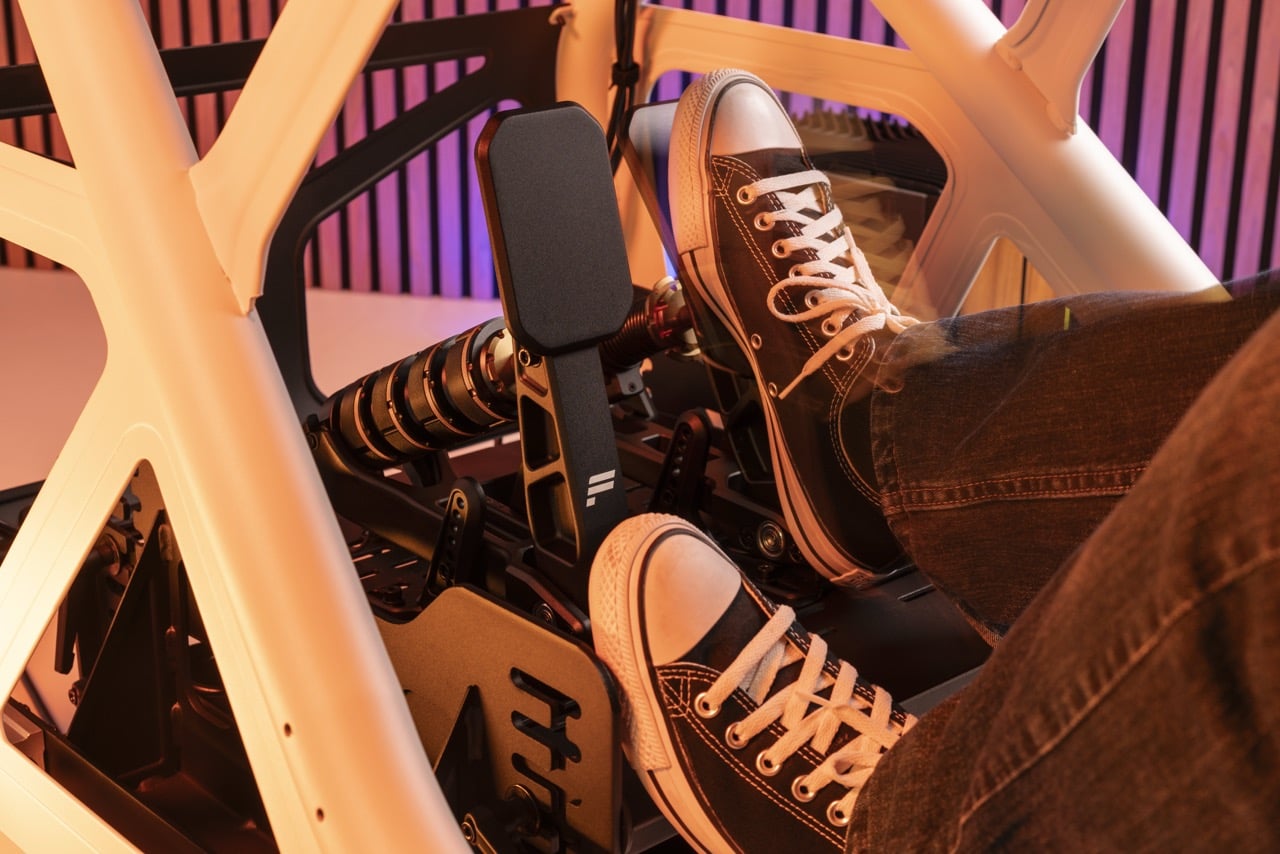
The pedals can mount directly to the pedal trays of most sim rigs, without the optional mounting plate, and the individual pedal mounting points follow industry standards.

If you’d rather have a single plate, the Podium Pedals Mounting Plate and Heel Rest is sold separately. It’s an extruded aluminum plate with integrated T-nuts for adjusting pedal spacing, a removable 4 mm steel heel rest, and mounting points for the control box. It uses the standard Fanatec pedal mounting pattern.
The Formula and the Three-Pedal Set
The Podium Pedals Formula is currently still out of stock at the time of publication.

The full three-pedal Podium Pedals set was originally expected in October after manufacturing problems with the clutch pushed it back from the original schedule. Fanatec’s product page now lists it as shipping in Q4 2026, and the separate clutch module is still described as upcoming.
In the meantime, if you’ve already ordered a set, or you’re weighing the Sport against waiting for the Formula, the GTPlanet Forums are the place to compare notes.