- 1,772

- Sydney
- snakebacon97
Now that's a pretty car! It's Kodo but also grrrrr.🫦


Good pull. Didn’t think of this one. That particular car did somewhat come to fruition with the 2005 GT40. Let’s hope for the same with the RX Vision!!GT LM Race car Spec II


And yet, interested enough to tell the entire forum how uninterested you are. 🤔Ain't interested much, sorry to say.
Sorry, didn't realise I shouldn't state an opinion on a discussion forum. Thanks for the reminder.And yet, interested enough to tell the entire forum how uninterested you are. 🤔
Ain't interested that much in this response 🤣Sorry, didn't realise I shouldn't state an opinion on a discussion forum. Thanks for the reminder.


Giulia Gr3 and Gr4 would be nicePersonally, I hope this is a foreshadowing of updates to the other PD created GR3 cars, like the Mustang, RCZ, Alfa, etc. Heck, an additional "Evo" of any of the PD created cars would be welcomed.
Imagine a GR3 Giulia 🫶


For honda...maybe the Civic getting a Gr3 or the VGT in a Gr3 modification would go hard too, or an Hyundai Elantra Gr3...oooor an Alpine gr3/4 to replace Renault offerings but that's just wishful thinkingAnd yet, interested enough to tell the entire forum how uninterested you are. 🤔
Personally, I hope this is a foreshadowing of updates to the other PD created GR3 cars, like the Mustang, RCZ, Alfa, etc. Heck, an additional "Evo" of any of the PD created cars would be welcomed.
Imagine a GR3 Giulia 🫶
An Alpine 110R GR3 would be sick and fill a hole in the line up, as would a VW Gr1 and YES a new Honda for Gr3 and Gr2For honda...maybe the Civic getting a Gr3 or the VGT in a Gr3 modification would go hard too, or an Hyundai Elantra Gr3...oooor an Alpine gr3/4 to replace Renault offerings but that's just wishful thinking

Won't be able to afford a PS6 to drive these in GT8 if you keep up with that.Since we're talking about "Evos"
Chiron GR3
View attachment 1558327
Peugeot RCZ GR3 Evo
View attachment 1558329
If not for GT7, it's an idea for GT8 (images from Google Nano Banana)

It's fair to state how you feel in response to something. It would be against the spirit of a forum/public discussion place to only post positive stuff or not say anything if you feel negatively about it.And yet, interested enough to tell the entire forum how uninterested you are. 🤔
Personally, I hope this is a foreshadowing of updates to the other PD created GR3 cars, like the Mustang, RCZ, Alfa, etc. Heck, an additional "Evo" of any of the PD created cars would be welcomed.
Imagine a GR3 Giulia 🫶
Sure, but posting disinterest is pointless. Even A negative post would have been more productive. Heck, my initial post was somewhat negative. I like the car, but dislike that they will likely ignore Sophy support yet again.It's fair to state how you feel in response to something. It would be against the spirit of a forum/public discussion place to only post positive stuff or not say anything if you feel negatively about it.
I disagree. Nothing wrong with going "it does nothing for me", even if you don't straight dislike it. It can be data for the studio should they see it. Maybe you still want to commit to your plans anyway, but it's good to take into account. Also, I feel the same thing applies that it's a forum so it's still valid even outside of that, IMO.Sure, but posting disinterest is pointless. Even A negative post would have been more productive. Heck, my initial post was somewhat negative. I like the car, but dislike that they will likely ignore Sophy support yet again.
Let's face it, the only reason to have the PS5 version over the PS4 version is Sophy. I have both (PS4Pro and PS5Pro) and the graphical difference is barely noticeable. I have the ray tracing turned off on my PS5 because, imho, it makes the game look worse rather than better. And yet, with Sophy having been such a big deal, it doesn't seem like they care about pushing it much.
All the new cars be snuck into a Sophy race, and for the most part, they work fine. Why hold back on the feature?
I dunno. I've been using the 2022 Porsche and watching my teammate use it. I haven't hit a track so far where it doesn't work. Although, I recall that the Unimog doesn't work properly on Catalunya.They probably don't want to officially add the semi-supported cars as compatible unless there are situations where they don't work properly, and maybe they're not able to spend the time to test them right now (they might also consider testing these a waste of time until they know for sure it's supported, I assume they'd get the heads up from Sony AI).


I like the idea of adding new cars, but dislike that you use AI sludge to portray the addition of said cars.I like the car, but dislike that they will likely ignore Sophy support yet again.

I think that's why I like it.
It's funny that I happened to read an article in Autosport yesterday about GT3 now being approached with three new cars that are not really GT3s in the same way that existing cars are, i.e. they are being built from the ground up as GT3 race cars, which is not really the point of GT3. Funnily enough, I'd love to see this car for real, but as a road car first, and then a GT3 race version. Of all the cars with 'Vision' in its name, it's easily the best looking and the best to use.
 ), but the best comparison I can make is the current Mustang vs the Lexus and Mercs.
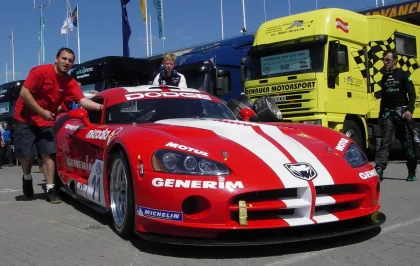

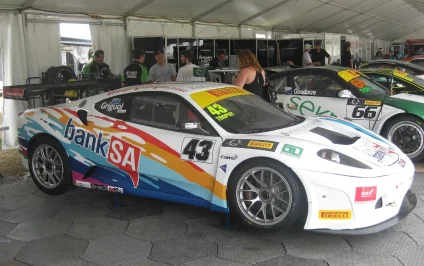


I didn't know modern GT3/hypercars were so combined, parts wise. I guess I never thought about it but maybe subconsciously I assumed GT3s were based on the road car and then upgraded to meet GT3 specs. Like the older GT3 cars as you mentioned in your post. Cool to know, though, thanks for sharing!GT3 cars have already been disconnected from production variants for several years, I’d argue almost a decade now. They share virtually no parts with the production version, and they few they do are usually only head/tail light modules or joints for mounting doors or hoods. The chassis is redesigned and rebuilt from scratch, the engine is “based” on the architecture of the production model but is a fundamentally different unit, and in most cases all the paneling or even the chassis itself is a completely different material or construction concept.
Right now the Mercedes and Lexus GT3s are the oldest, and retain some semblance of “older” construction designs and methods, but both of those are being replaced within the next 6-18 months. The McLarens also share a lot in common with the production chassis, but that’s more so because McLaren’s design philosophy is to build everything around a carbon tub, basically everything they make has racing tech built in, and all of their road cars are designed somewhat similarly to how race cars are designed.
This all happens because part of the GT3 rulebook enforces that the same engine placement and layout of the production unit is used on the race car, so by starting the platform with a Motorsport purpose in mind, it makes the race car far more competitive and advantageous as a platform to potential customers. This has turned into in everything being built with engines and transmissions shoved closer and closer to the driver, or rear mounted transaxles on FR layouts. In general engines and transmissions are now stressed members of the chassis, directly mounted to the firewall with no additional bracing, exactly the same way prototype and formula race cars are built.
I’ve shared some of this before in other threads, but modern GT3s basically have 6-10 external panels that just clip together, and can be carried off in chunks, reducing the differences between their construction and the Hypercar class prototypes they share a track with:
BMW GT3:
View attachment 1558421
BMW Hypercar/GTP:
View attachment 1558135
View attachment 1558435
Porsche GT3:
View attachment 1558128
Porsche Hypercar/GTP:
View attachment 1558134
I haven’t seen every single platform completely disassembled yet (though I’m not far off
Mustang replacing its test week engine with the race week engine:
View attachment 1558430
View attachment 1558432
Lexus and Mercedes partly disassembled - note how many pieces the bumpers, splitters, and wheel wells require. Also, the amount of additional bracing the Lexus has for its engine mount:
View attachment 1558425
View attachment 1558426
View attachment 1558427
View attachment 1558428
Compared to a Corvette’s much simpler puzzle pieces:
View attachment 1558436
View attachment 1558438
Early GT3 cars back in the late 2000s and early 2010s were basically modified and race prepped road cars rather than stuff built from scratch.
View attachment 1558441View attachment 1558442View attachment 1558443View attachment 1558444View attachment 1558445
Nowadays only GT4, TCR, and various Cup classes use cars pulled directly off the production line.
Here’s some smashed ones I saw at Sebring:
View attachment 1558129
View attachment 1558130
View attachment 1558132
View attachment 1558133
Most GT3 cars are outright built by current prototype/formula/general racing car development firms. The Mustang is built by multimatic, who produce the Porsche 963 and Valkyrie chassis, and actually previously built the chassis for Mazda’s old DPi prototype. Oreca made the older vipers and current Ferrari 296s, and are the main LMP2 provider as well as the tub and floor supply for the Acura, Alpine, Genesis, and soon Ford GTPs/Hypercars. At IMSA events you’ll see Oreca hauler trucks that carry parts both for LMP2s and Ferrari 296s on board:
View attachment 1558434
Tying this back to the Mazda vision, if this were to be a real car both for the road and for racing, it most likely would be in GT3 (nothing else higher exists for production-related racing anymore), and will likely be a lot like the upcoming Toyota GR-GT in how it was designed and developed. Engine rammed waaaayyy far back into the fire wall, transaxle behind the driver, both of which mount directly to the main tub of the car with no additional bracing, and the nose pushed forward a bit to fit larger splitters and cooling solutions.
View attachment 1558447

The AI doesn't know that the RCZ Group 3 is mid-engined...Since we're talking about "Evos"
Chiron GR3
View attachment 1558327
Peugeot RCZ GR3 Evo
View attachment 1558329
If not for GT7, it's an idea for GT8 (images from Google Nano Banana)

Bugatti is that one brand that has a a missing link for the Manufacturers Cup, where there is a Veyron Gr. 4, but no Gr. 3 car to date.Since we're talking about "Evos"
Chiron GR3
View attachment 1558327
Peugeot RCZ GR3 Evo
View attachment 1558329
If not for GT7, it's an idea for GT8 (images from Google Nano Banana)
Yeah, most race cars come apart in this way now because it’s advantageous to have a car that’s easier to service than your competitors. These platforms are primarily designed for endurance racing, meaning you’re anticipating high chances of damage or mechanical issues. If you can get to any component by just taking off 2-3 panels it’s a pretty big deal, and it’s the current design direction and innovation that’s now making its way into production cars. Ease of service is a major benefit for boutiques who only have so many specialists available.I didn't know modern GT3/hypercars were so combined, parts wise. I guess I never thought about it but maybe subconsciously I assumed GT3s were based on the road car and then upgraded to meet GT3 specs. Like the older GT3 cars as you mentioned in your post. Cool to know, though, thanks for sharing!
Thanks for the info! Never thought about ease of service but it makes sense. I assume you can gain track time data/setup advantages from the time won over multiple services through quicker mechanical changes.Yeah, most race cars come apart in this way now because it’s advantageous to have a car that’s easier to service than your competitors. These platforms are primarily designed for endurance racing, meaning you’re anticipating high chances of damage or mechanical issues. If you can get to any component by just taking off 2-3 panels is a pretty big deal, and it’s the current design direction and innovation that’s now making its way into production cars. Ease of service is a major benefit for boutiques who only have so many specialists available.
In many cases body paneling just covers “empty space” between the tub, drivetrain, axles, and wheels. Just look at how little “car” there is when you strip down a current LMP2:
View attachment 1558478
View attachment 1558480
View attachment 1558479
GT cars generally have more “meat” on them, but even so, pretty much everything around the engine side of the car comes apart like the prototype. Empty space generally also means more room to work on componentry for the mechanics. That’s also part of what Evo packages provide, aside from improved aero, cooling, and optimized mounts or geometry.
View attachment 1558481
The 296 really pushed this trend forward, much like the 2016 Ford GT was the catalyst to GTE development (which, ironically, is where GT3 development has come from). I’ve personally seen one of these cars with the engine all the way out, and assumed the car had a fairly terminal problem and would be missing a practice session, but less than an hour later the car drove past me in the garages. I was told by a member of a rival manufacturer’s team that the 296 from the moment it goes its air jacks can have the engine and gearbox fully removed from the car within 20-30 minutes, likely fully swapped out in around and hour and a half to two hours depending on how long the calibration process is:
View attachment 1558484
View attachment 1558483
View attachment 1558482
This kind of construction isn’t at all in the 296 road car, but the 296’s successor will very likely take on some of the learnings and hardware philosophies of the 296 GT3. It’s almost like an inverse timeline and outcome of old homologation specials.

Never thought about ease of service

My ArticleAerodynamics is the key — Evo cars usually mix this with improvements to reliability, ease of servicing, and drivability, though this doesn’t exactly apply to GT — with changes all around the RX-Vision GT3.