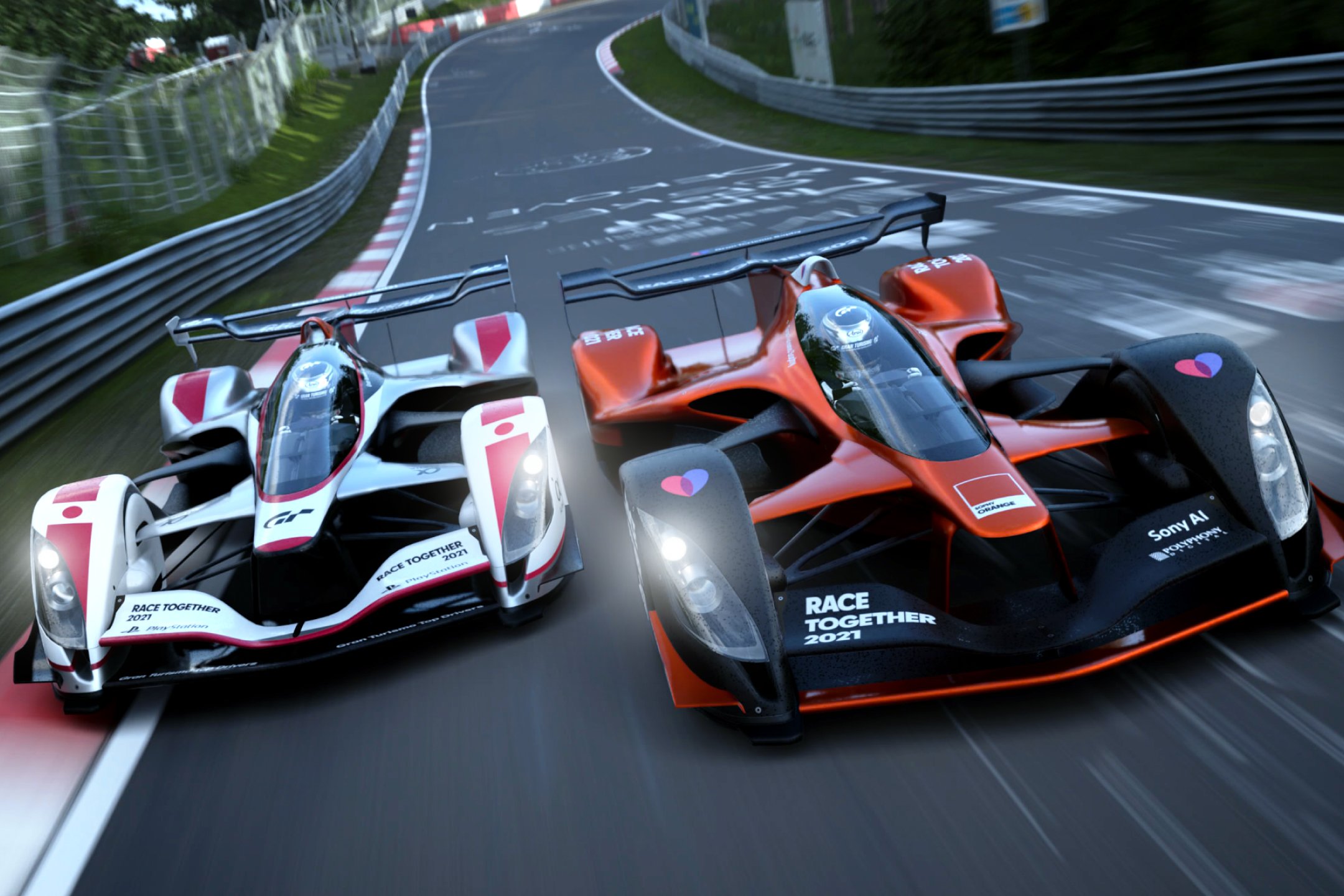
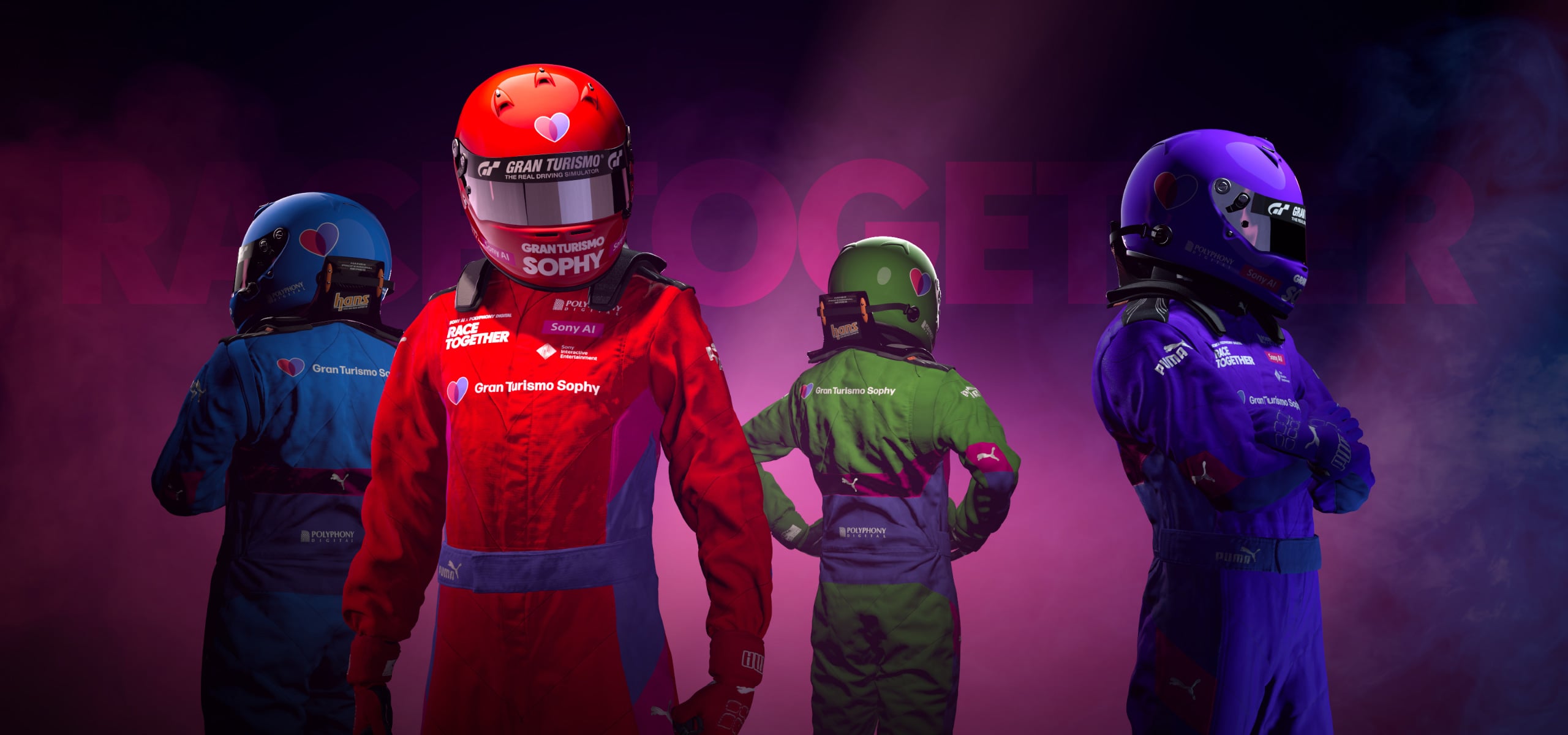
GT Sophy taught itself to outrace the best Gran Turismo players in the world, and the achievement was significant enough to land on the cover of Nature in 2022. Now, new research from Sony AI suggests that the next leap for the technology might not just be faster or smarter racing agents, but ones whose behavior can be shaped by anyone willing to type a sentence.
The implications for future Gran Turismo games are tantalizing: AI opponents with distinct driving personalities, and perhaps even a return of B-Spec, where players could manage an AI driver using natural language instructions instead of crude sliders.
How It Works: ChatGPT for AI Drivers
Building the original Sophy required a tremendous amount of behind-the-scenes effort that had nothing to do with the AI itself. A team of reinforcement learning experts and game designers at Sony AI spent countless hours hand-crafting the “reward functions” that guided Sophy’s behavior: the numerical rules that reward progress around the track and punish collisions, corner-cutting, and unsportsmanlike driving.
A new research paper from Sony AI wants to automate that entire process, and the tool it uses to do so is the same kind of large language model (LLM) technology that powers ChatGPT.
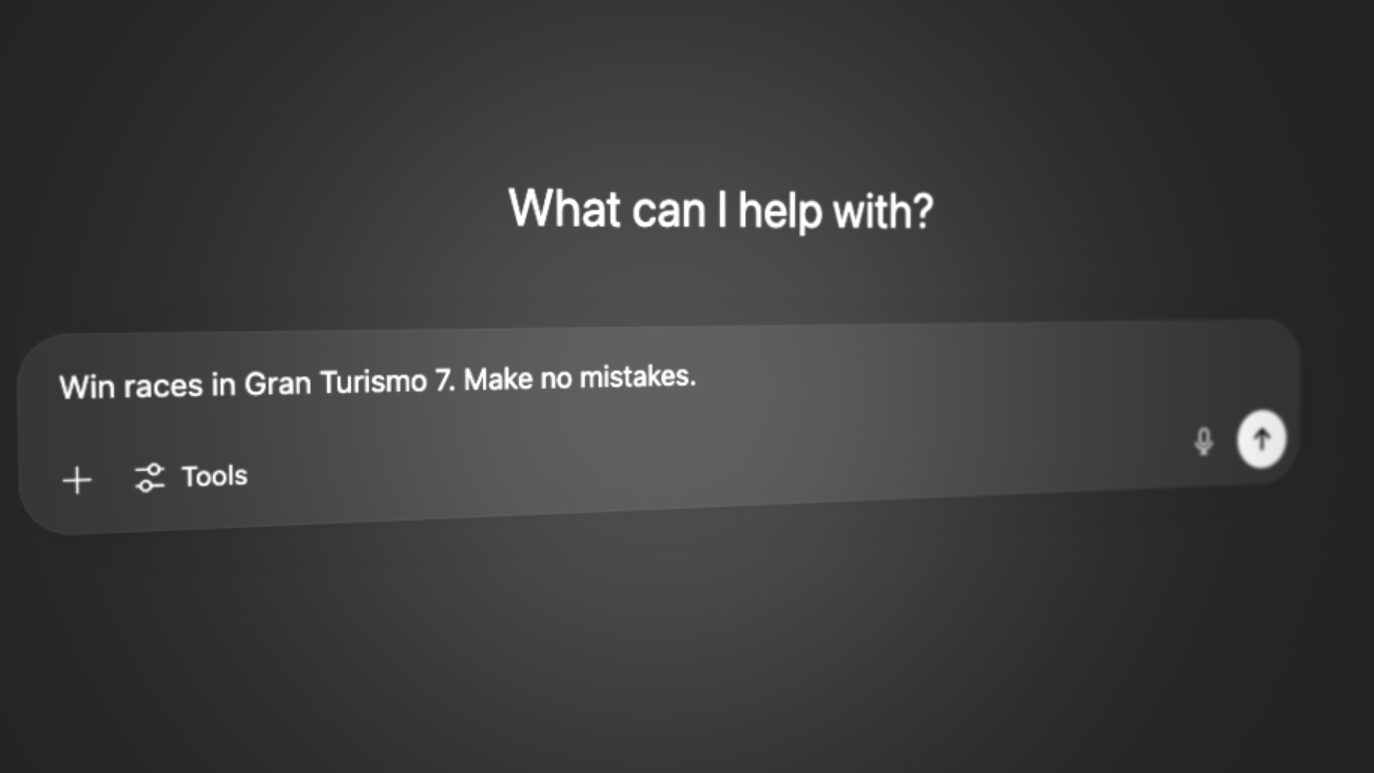
The paper, titled “Automated Reward Design for Gran Turismo” and presented at the NeurIPS 2025 conference in San Diego last December, describes a system where a user simply types a description of how they want the AI to behave.
That description is handed off to an LLM (specifically, OpenAI’s GPT-4o) which generates the reward function code automatically. The code is used to train a racing agent, a vision-language model evaluates the results by watching the agent drive, and the process repeats over several iterations until the behavior converges.
Beating Sophy at Its Own Game
The researchers tested it with a deliberately vague prompt: “win races while obeying standard motorsport racing rules and maintaining good sportsmanship.” The results were striking.
Out of ten runs, every single one produced an agent that met the team’s standards for clean racing. Three of those agents actually outperformed the hand-tuned GT Sophy, and the best one finished races closer to the lead car than Sophy did.
But competitive results aren’t the most exciting part — it’s what happens when you change the prompt.
The team tested more creative instructions like “race as fast as possible in reverse at all times” and “drift as much as possible while otherwise obeying standard motorsport rules.” Both produced working agents that did exactly what was asked: an AI that drifts through corners on command and an AI that races backward around Lake Maggiore, all from a single sentence.
What This Could Mean for Gran Turismo
If behavior can be defined by a text prompt, the implications for future Gran Turismo titles are significant.
Consider the AI opponents you race against in single-player events today, all of which drive in more or less the same way. Now imagine a future where Polyphony Digital could generate dozens of distinct driving personalities simply by writing a few sentences describing each one. An aggressive late-braker. A cautious tire-saver. A driver who’s fast in the wet but makes mistakes under pressure. The single-player racing experience could become dramatically more varied and lifelike.
Is This the Future of B-Spec?
Then there’s the prospect that will immediately spring to mind for long-time Gran Turismo fans: B-Spec.
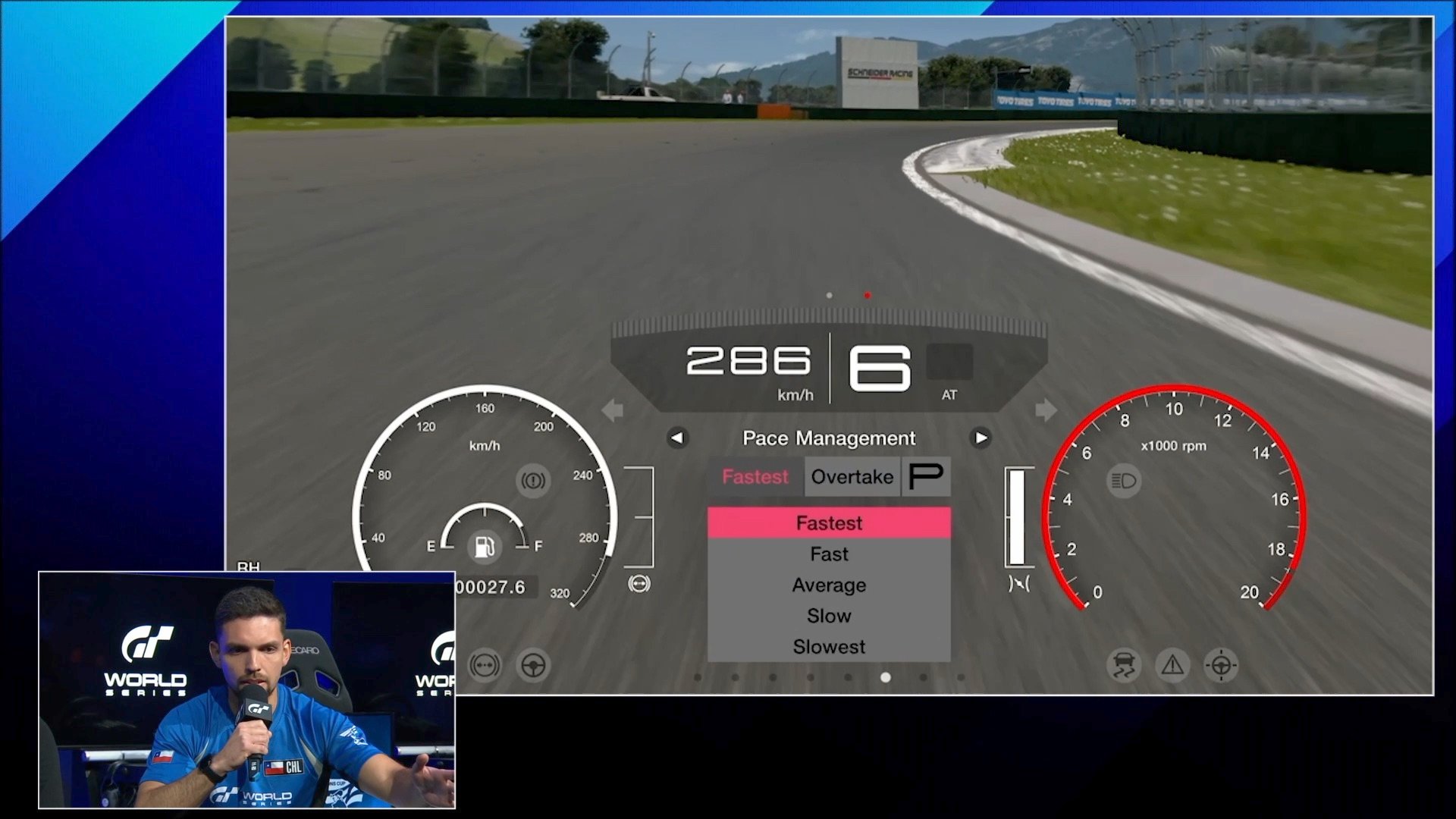
The mode, which hasn’t appeared since Gran Turismo 5, let players take on the role of a race director, managing an AI driver from the pit wall. It was a popular feature, but the AI tools available at the time were limited to crude sliders for pace and aggression, and the driver’s response to those inputs was approximate, to put it generously.
The technology described in this paper could be the foundation for something far more sophisticated.
Imagine instructing your B-Spec driver to “qualify aggressively but conserve tires during the race,” or “stay close to the leader for the first two laps, then push hard.” Instead of nudging a slider and hoping for the best, you’d be giving your AI driver meaningful strategic instructions.
Research, Not a Product Announcement
Of course, this is an academic research paper from Sony AI, not a product announcement from Polyphony Digital, and not a feature coming to any specific game.
The system still requires significant computational resources; each iteration involves training reinforcement learning agents on high-end GPUs, a process that takes days, not seconds. You won’t be typing race strategies into a text box in real time any time soon, but it’s easy to see that’s where things could end up.
The gap between “describe what you want” and “get an agent that does it” is closing. Even if real-time, user-facing prompting remains further out, this technology could fundamentally change how Polyphony and Sony AI develop AI behaviors for Gran Turismo going forward.
What once required weeks of expert tuning could eventually be accomplished in a fraction of the time, opening the door to a much richer variety of AI-driven racing experiences.
Kazunori Yamauchi himself hinted at the possibility of a Sophy-powered B-Spec mode back when the technology was first revealed. Research like this brings that vision considerably closer to reality, and makes it far more exciting to think about what it could actually look like.
See more articles on Gran Turismo Sophy and Sony AI.