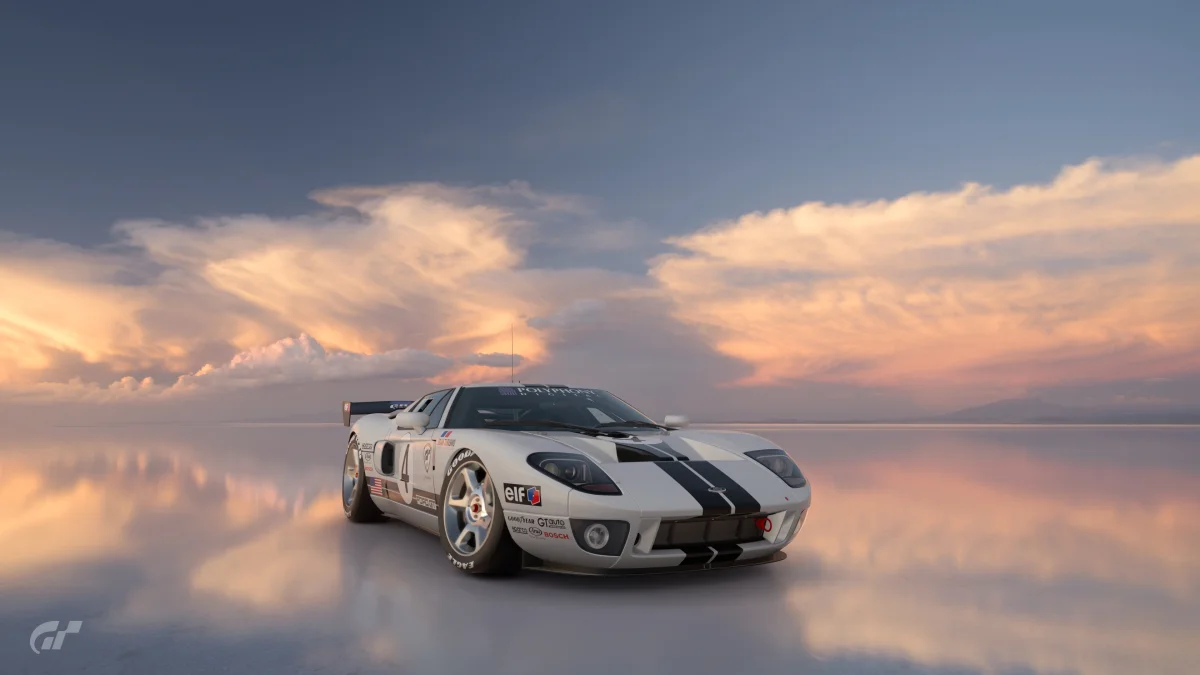
For almost ten years, Gran Turismo has been quietly rendering light that no television could actually show you, but that’s starting to change.
At the CEDEC developers conference in Yokohama last week, Polyphony Digital and Sony finally put that hidden light on screen, running Gran Turismo 7 on a prototype display capable of sustaining more than 10,000 nits across a full white screen, roughly ten times the full-screen brightness cited for typical HDR displays.
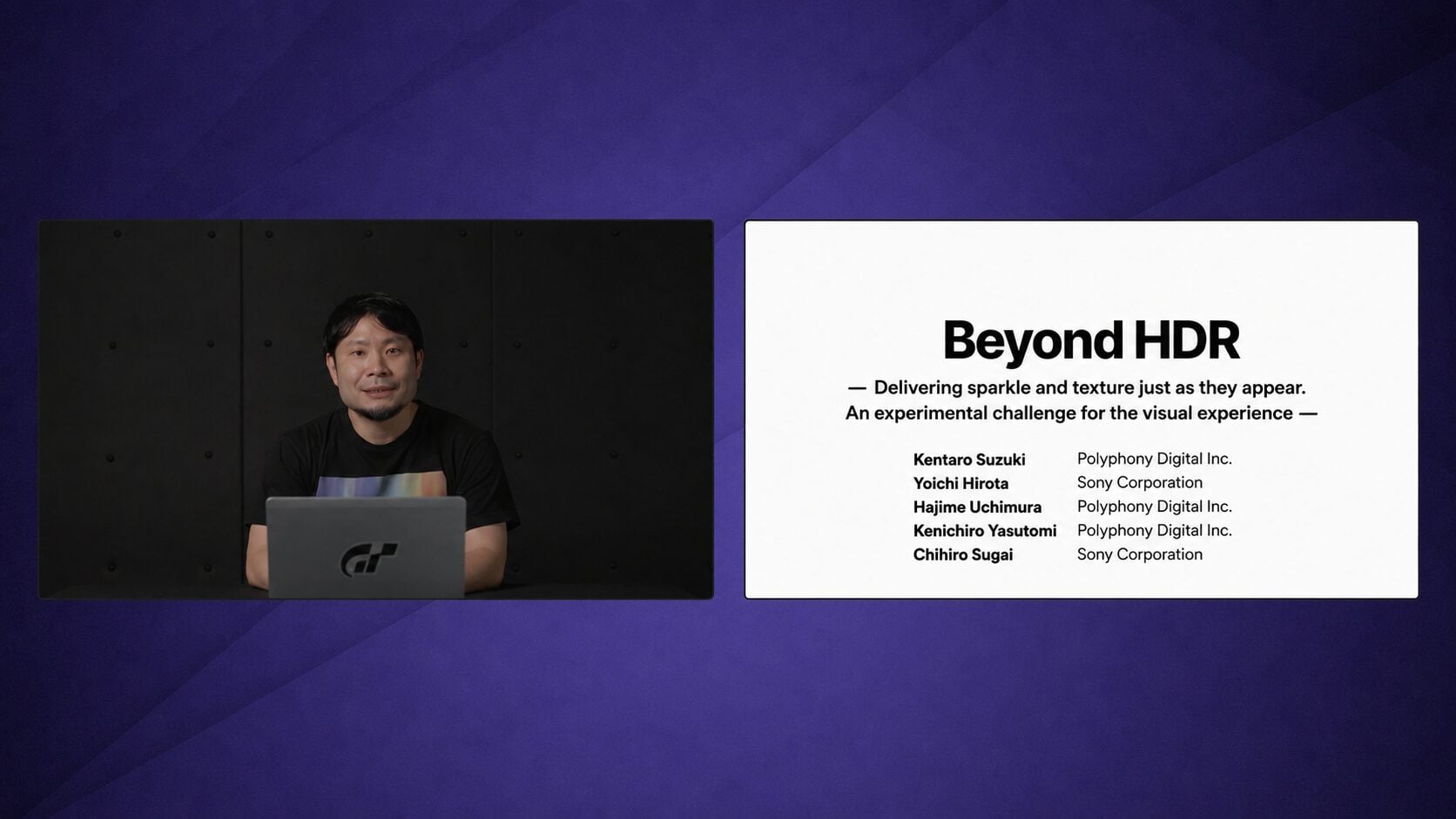
The session, titled “Beyond HDR”, was presented by three Polyphony Digital engineers (Kentaro Suzuki, Hajime Uchimura, and Kenichiro Yasutomi) alongside Yoichi Hirota and Chihiro Sugai from Sony’s research labs.
If those first two names sound familiar, they should. Uchimura and Suzuki were credited on the technical deep-dive on GT Sport’s HDR support back in 2018, and all three Polyphony presenters were credited on the studio’s tone mapping presentation at SIGGRAPH last year. Uchimura also co-presented the AI rendering research we covered in March. The presenters include several of the engineers who have led Polyphony’s public HDR work since the GT Sport era.
The full presentation has not yet been published, but Japanese gaming outlets 4Gamer and GAME Watch viewed the talk and have shared their own reports. We’ve translated some of the slides they captured into English and put our best efforts into explaining what was discussed below.
It’s also important to note the images in this article are not HDR, so a lot of the examples won’t look very different even if you’re viewing this on an HDR screen. To truly view HDR content, it must be in a compatible format on a compatible screen.
A Ten-Year Bet on Technology
Suzuki opened by heading off the obvious misunderstanding: this prototype display is not just a really bright screen. Blinding brightness isn’t the point of HDR; the point is using all that extra headroom to pack more detail and richness into the picture.
Screen brightness is measured in “nits”. The HDR video standard, written back in 2015, can describe brightness all the way up to 10,000 nits. That figure was derived from measurements of human eyesight, covering most of the luminance range relevant to normal visual experience. The technology didn’t exist yet, but the standard was designed for the future.

For most of the following decade, practical display hardware remained far behind that ceiling. Even today, a very good TV manages around 1,000 nits, and usually only in small patches of the screen.
Polyphony started HDR work in late 2015 for GT Sport, and the HDR televisions of the day were nowhere near capable of showing what the format promised.
Yasutomi shared a story from that era which has become a running joke inside the studio: more than once, the team huddled around a screen debating how the HDR image looked, only to realize they’d been staring at the regular non-HDR picture the whole time. The studio built for the full range anyway.
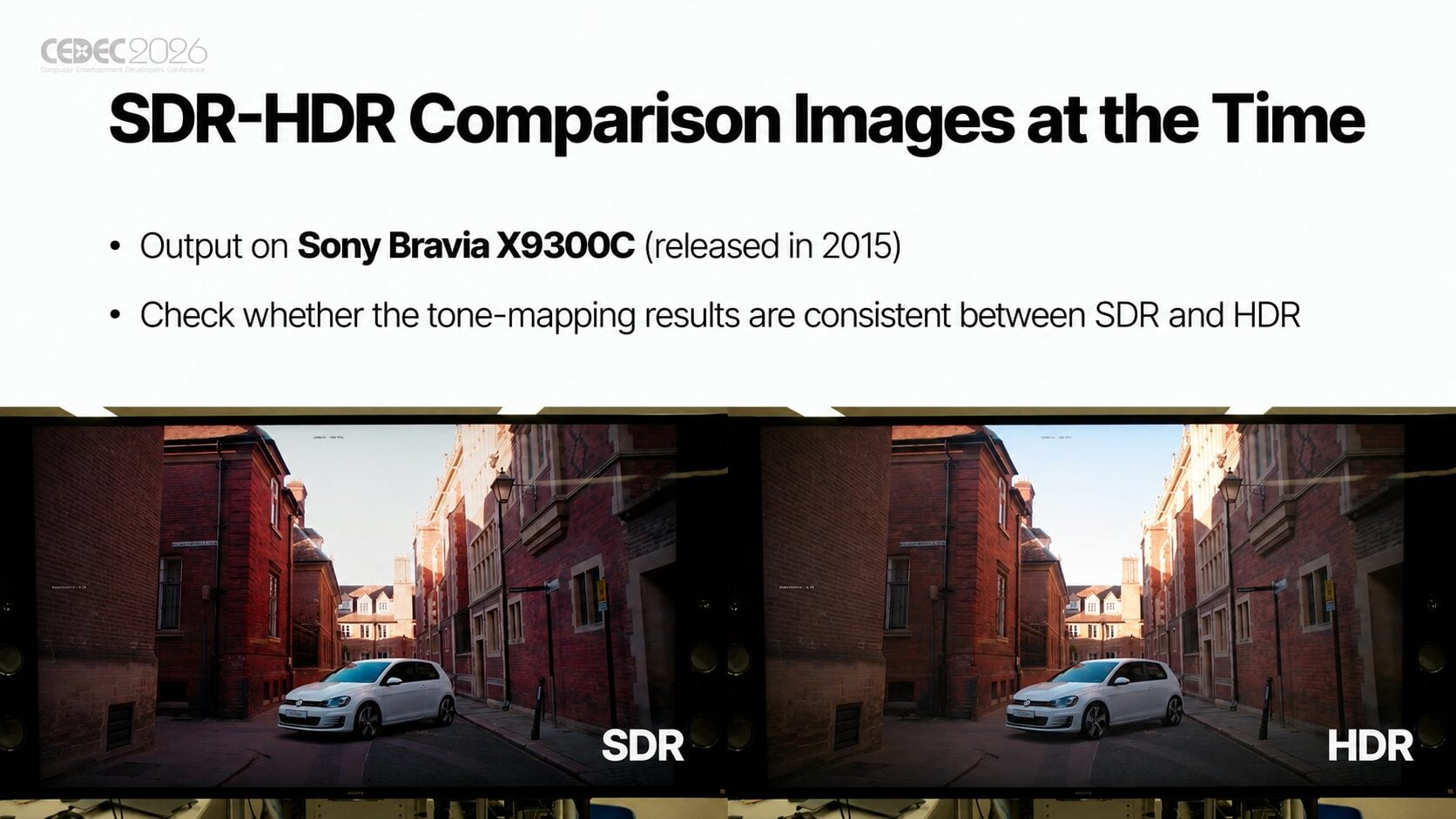
Yasutomi called it a commitment to the “invisible 10,000 nits”. Polyphony maintained an internal HDR pipeline with enough dynamic range to preserve highlights well beyond what contemporary displays could reproduce, and held to a policy that this range should carry through consistently to whatever output the display side could eventually handle.
The collaboration with Sony’s display engineers came about almost by accident. Polyphony had long wanted to see what “real” HDR was supposed to look like, and when word got around that Sony’s research division had built an ultra-bright prototype display, they went to talk.
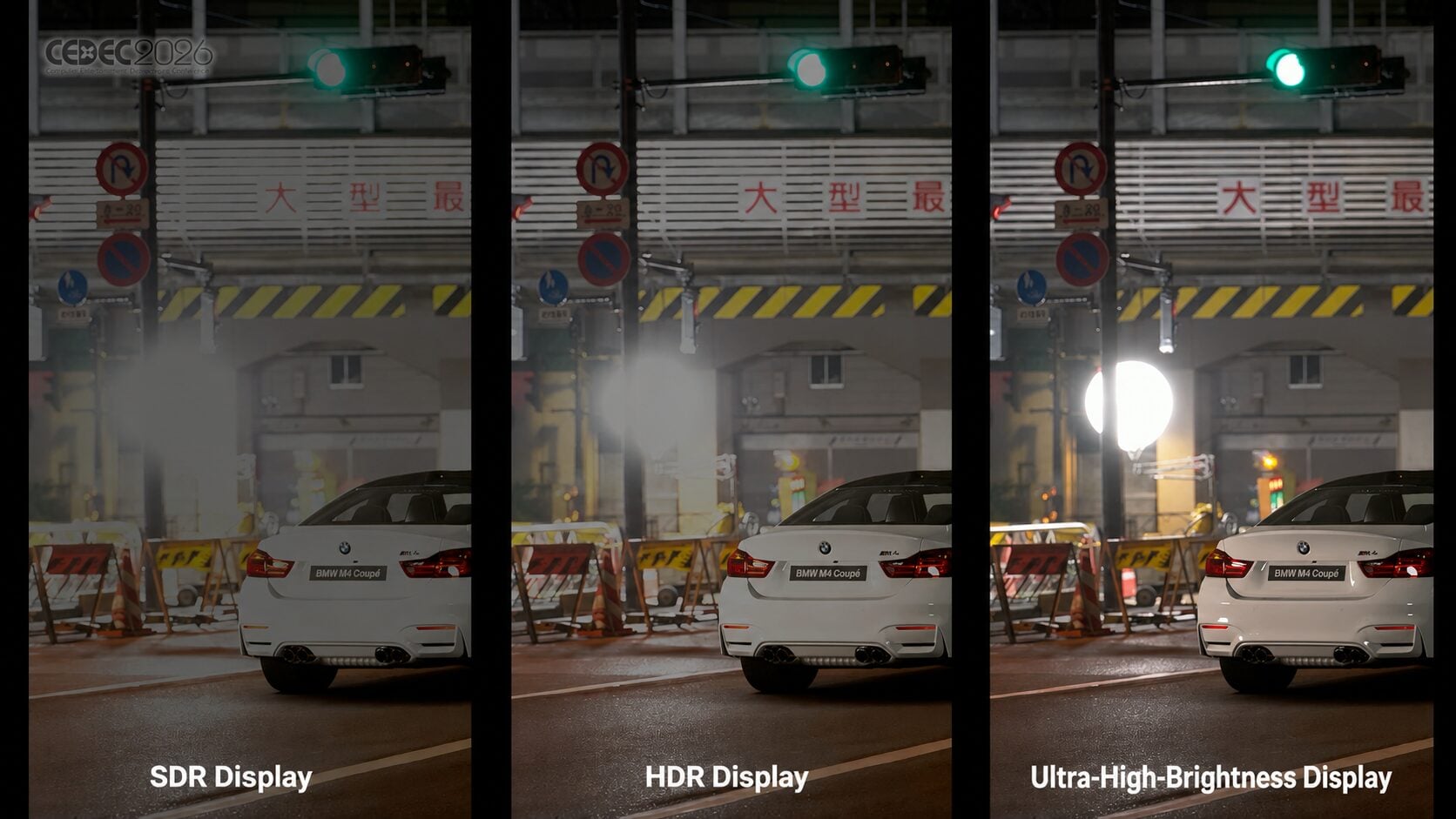
Sony had the display but was looking for content capable of exploiting its full range, and properly built content in that class turned out to be quite scarce. Because nearly all HDR material is mastered for the 1,000-nit TVs people actually own, very little exists that can put a 10,000-nit screen through its paces with a known, trustworthy pipeline behind it.
That, Yasutomi explained, is why Gran Turismo was a natural candidate.
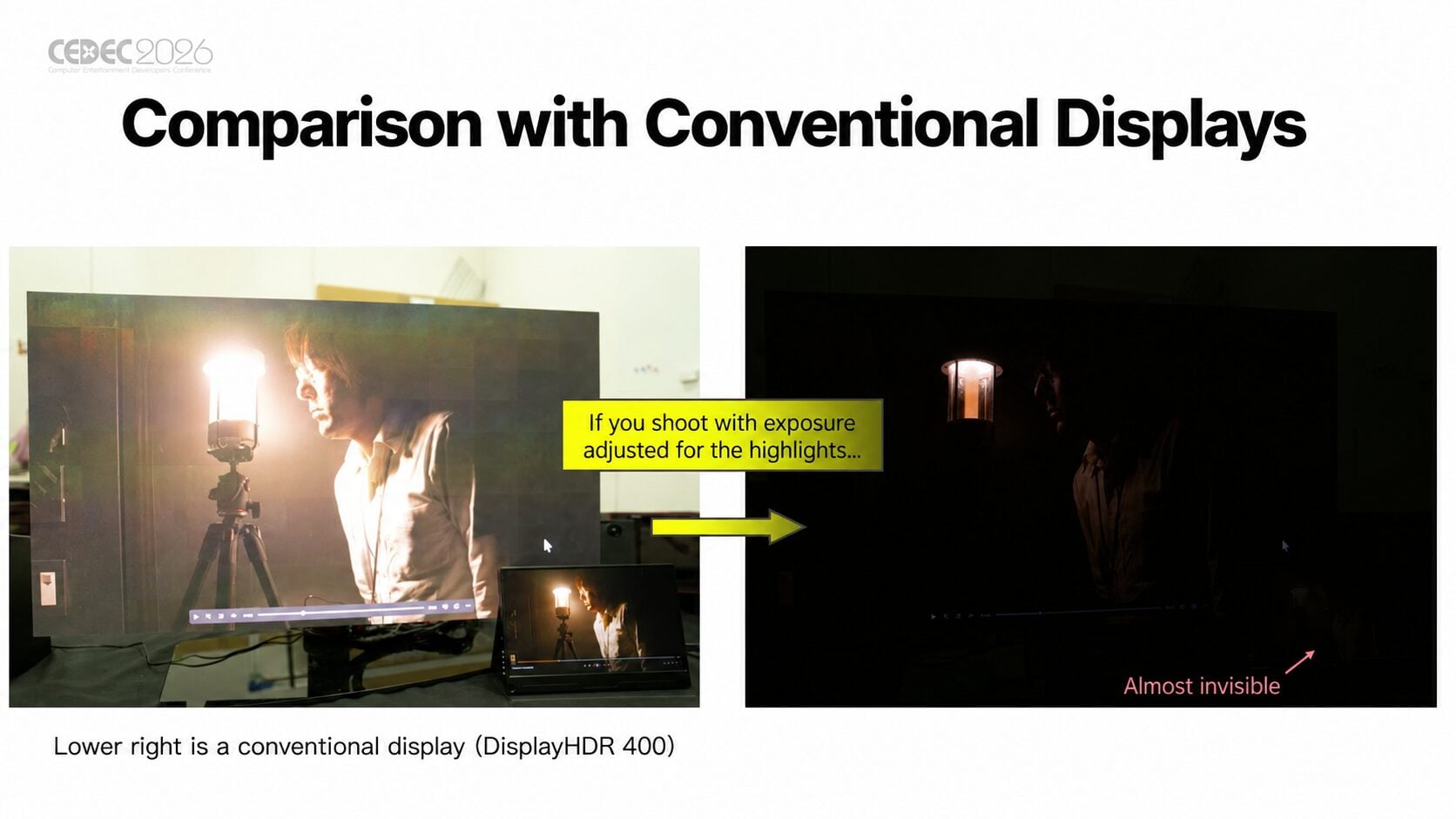
Why the Display Had to Be Built
Sony’s prototype is really something special, and it does things that are impossible for most display technologies.
An LCD TV shines a backlight through a filter, which leaks light into dark scenes and hits heat limits when pushed bright. An OLED can turn individual pixels off completely, but its organic materials are fragile when hot, so only small portions of the screen can go truly bright. Ask an OLED for a bright full-screen scene and it dims itself right back down to basically SDR.
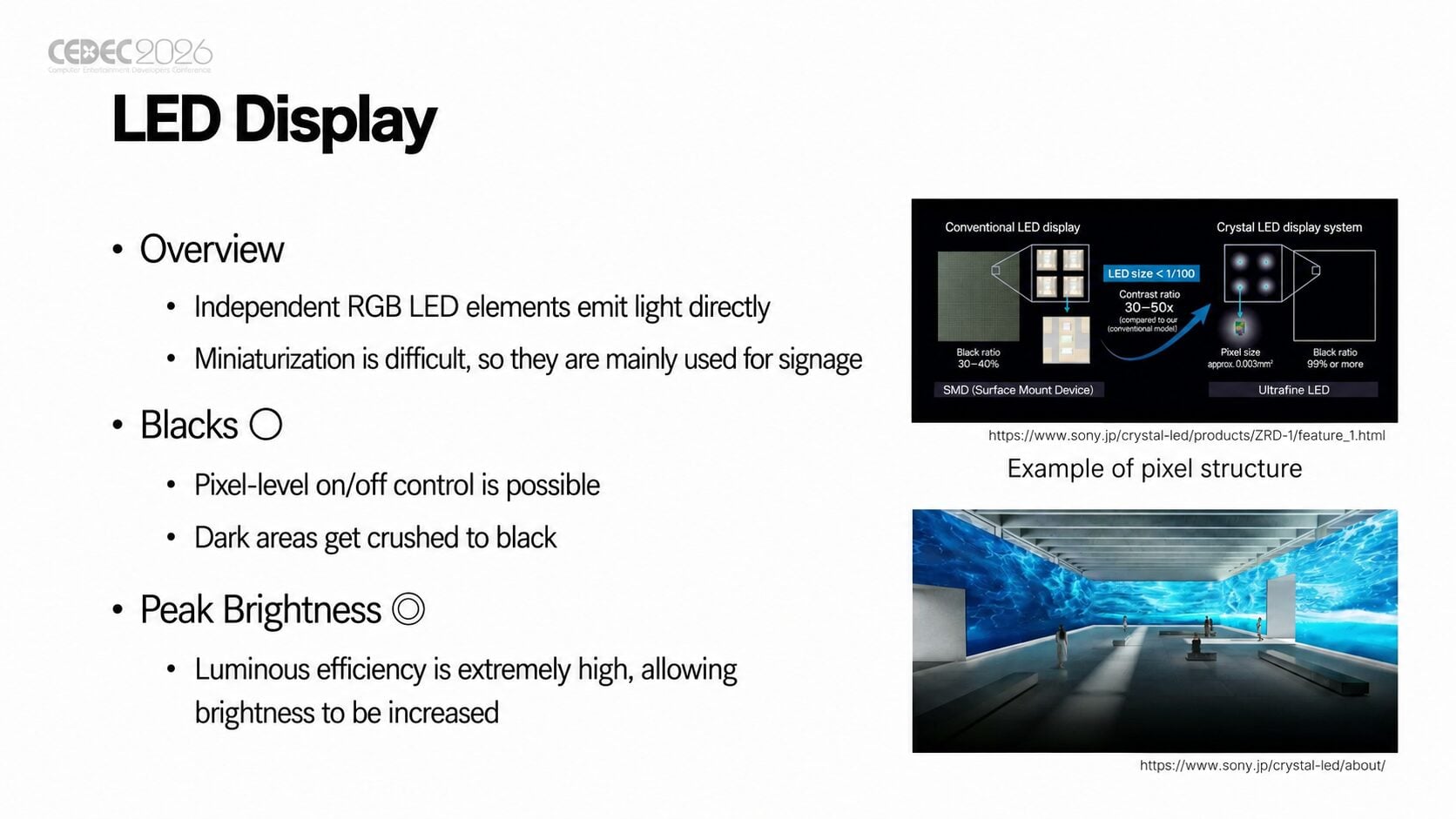
Sony’s answer came from an unexpected place: the giant LED billboards you see on stadiums and buildings, where every pixel is its own tiny light.
That technology is extremely bright and durable, but it’s normally huge, and it’s bad at being slightly lit, so shadows tend to fall off a cliff into pure black.
The prototype shrinks it down to an ordinary monitor size and adds Sony’s own processing to smooth out those shadows. The result achieved more than 10,000 nits of full-white brightness across the entire screen, something no consumer TV can come close to.
When the team fed it the most extreme HDR test footage available, it displayed the whole thing without washing out the highlights or crushing the shadows.
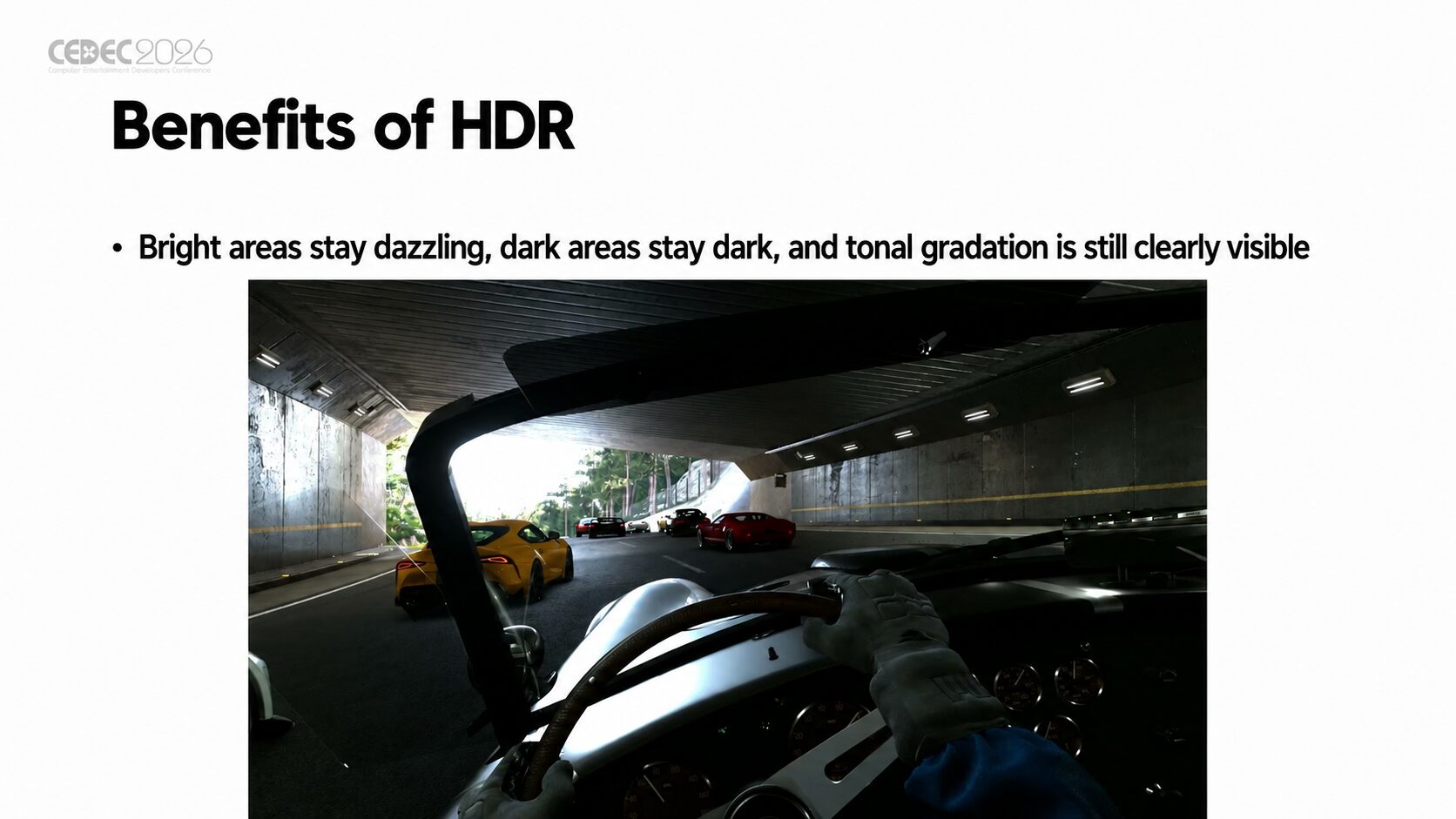
“Reality Finally Caught Up”
So what did Gran Turismo 7 actually look like on it? Yasutomi’s answer, after ten years of waiting, was that reality had finally caught up to the game.
His specific observations are fascinating. The prototype is only a 1080p panel, yet it looked sharper than that, because extreme contrast makes edges pop in a way pixel counts can’t.
The greater intensity and color range of specular reflections (like the glints of light off paint and chrome) made the materials feel more convincing and physically present, almost touchable.

Just as interesting was what broke.
Image processing techniques the game uses to look good on ordinary screens, like automatic exposure adjustment and contrast correction, had to be removed. Corrections that look pleasant on a normal TV could flatten meaningful brightness changes or make colors appear unnaturally dense and saturated. The team had predicted this would happen, and they were right.
The strangest effect they documented was how it changed the act of actually looking at the image. On a normal screen you can take in the whole picture at a glance. On the prototype, the gap between bright and dark is so vast that your eyes cannot resolve both at once.
Your vision adapts to whichever region you’re looking at, in a way that feels much closer to how we see the real world. Your impression of the scene shifts depending on where you happen to look.
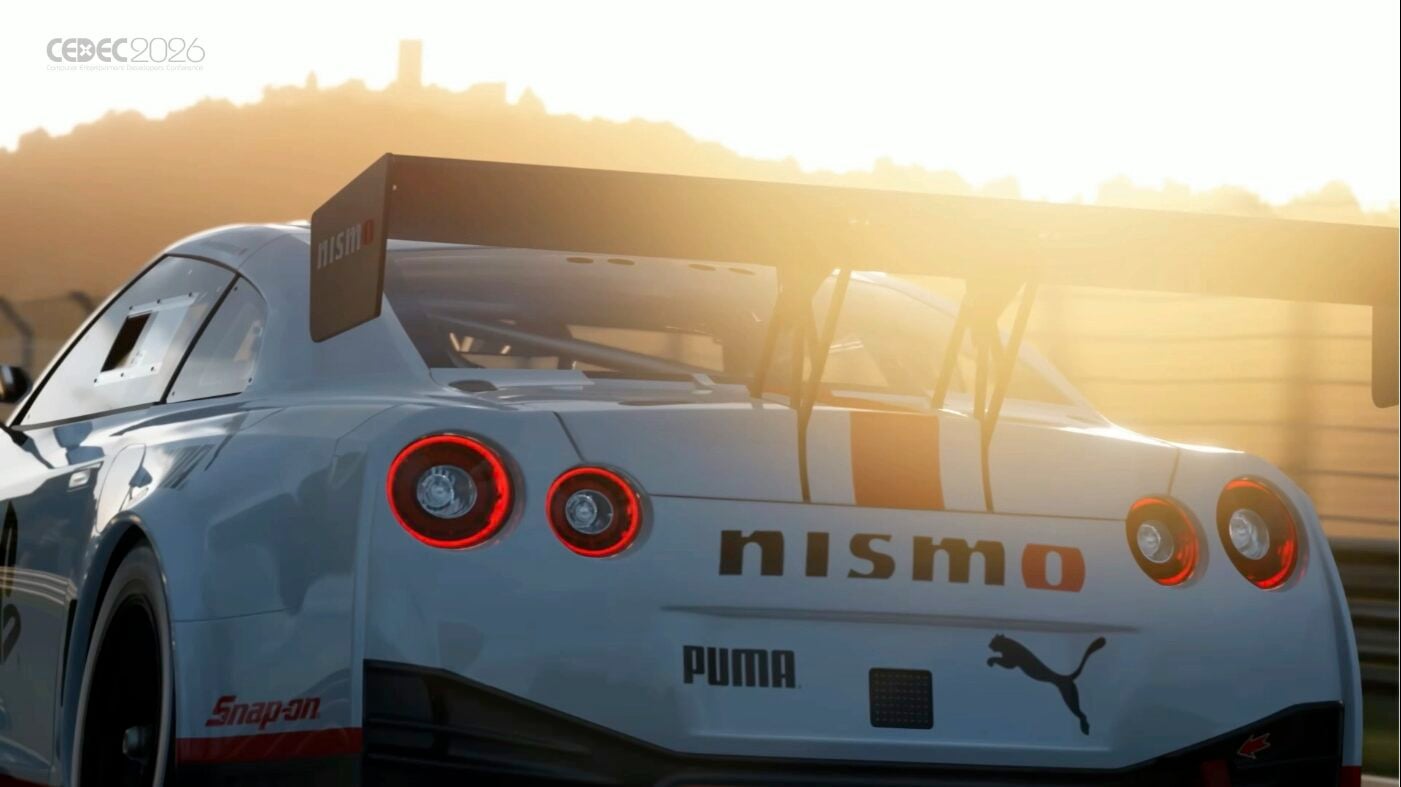
There was a filmmaking lesson buried in there, too: blazing light in the middle of the screen feels aggressive, while the same light at the edge of the frame keeps the drama without the assault. His example was a shot from GT7’s Spec II opening movie, framed on the rear of a Nissan GT-R with the sun burning away in the top corner.
Yasutomi-san was honest about the downsides, too. It’s intense enough to be tiring over a long session, and he admitted regular screens are easier on the eyes. This kind of HDR, he suggested, will need its own rulebook and careful calibration.
They Built a Camera, Too
The second half of the presentation could have implications for how Gran Turismo gets made in the future.
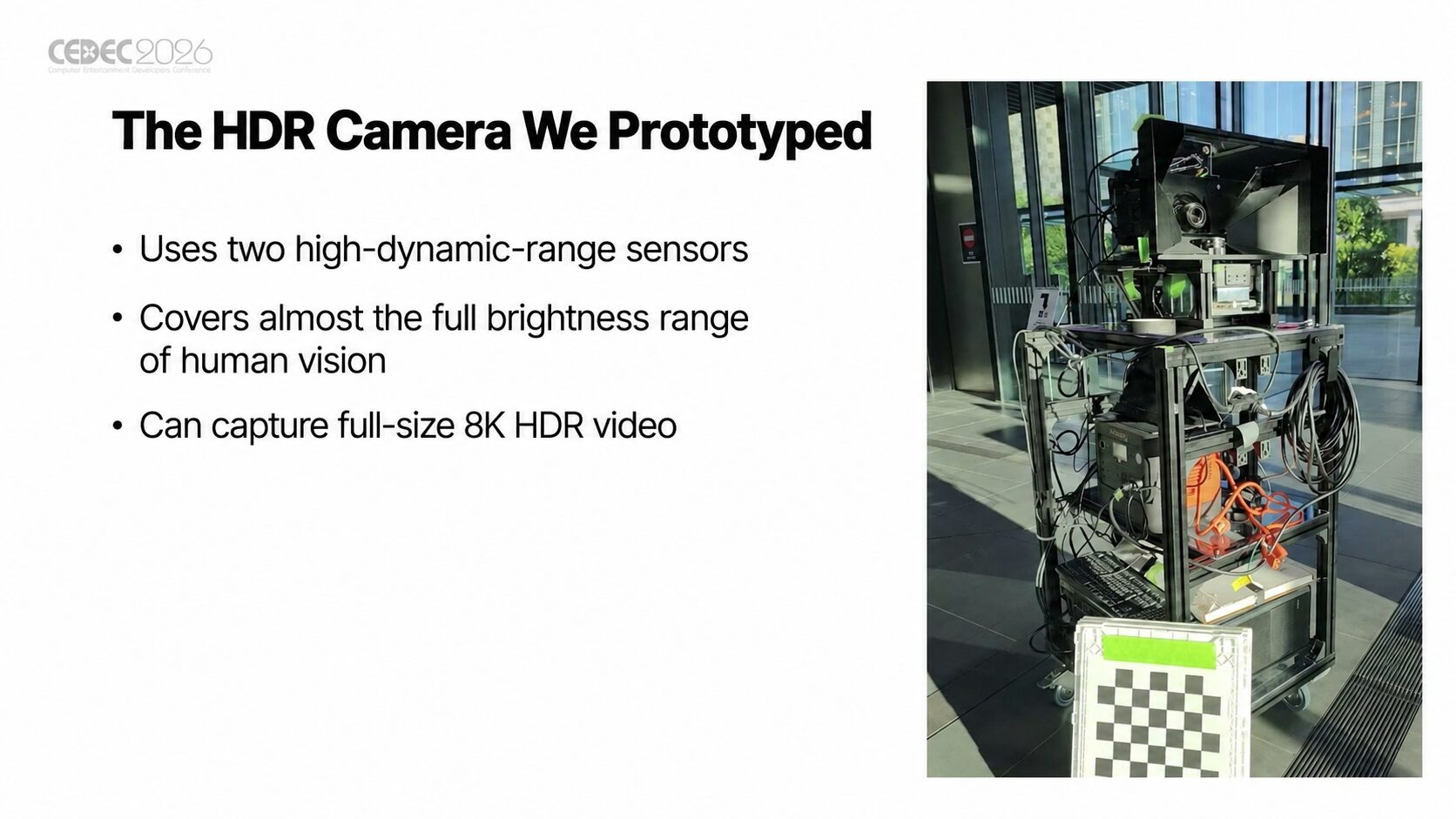
Cameras have the same problem screens do: the real world contains far more light than they can capture. Point one at a sunset and you can expose for the sky or for the ground, but not both. Every photographer has learned to work around that limit, and Polyphony’s location photography for the series has always had to deal with that, too.
Sony’s prototype HDR camera tackles it with brute force: two sensors behind a half-mirror, filming the same scene at different exposures simultaneously, merged together every frame.
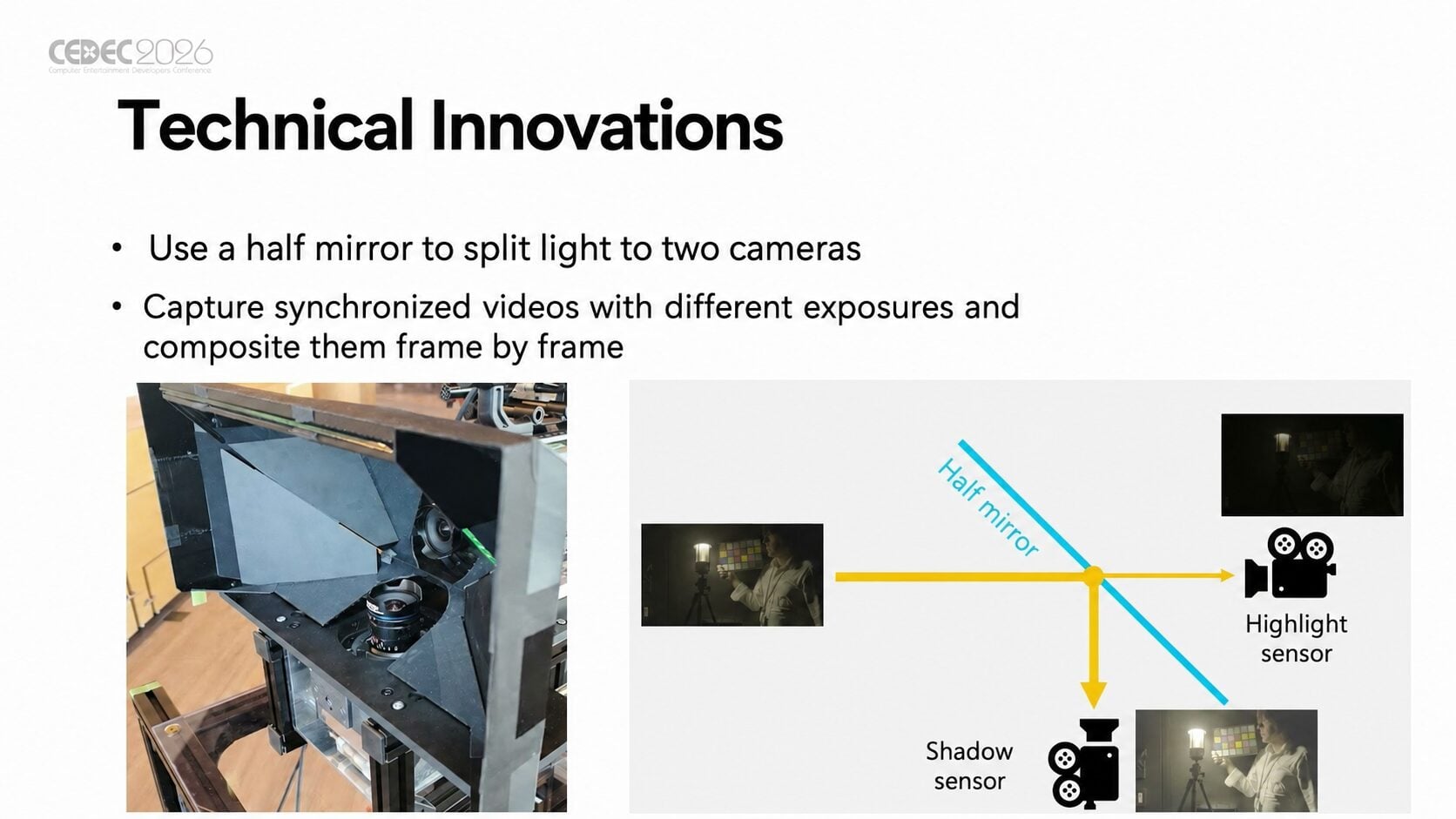
The result captures nearly the full range of light our eyes can work with, in 8K. In the demonstration footage shown, the merged image kept clean detail in interior shadows while preserving the bright exterior through the windows, with neither end sacrificed for the other.
Hirota described the strange sensation the prototype produced: with almost everything visible already being recorded, conventional exposure adjustment could feel unnecessary. They even built a matching viewfinder using a tiny 10,000-nit screen, and Hirota said that in use it becomes genuinely difficult to tell whether you’re looking at the electronic viewfinder or through an optical one.
Put the camera and the display together and the pipeline becomes something new: a far wider portion of real-world light carried all the way from capture to screen without the severe compression that every previous step in the chain used to impose.
For a studio that photographs real locations for Scapes and measures actual automotive paint, the appeal is obvious. It could allow Polyphony to bring home a considerably more faithful record of a location’s light than any camera before it.
Not a Product (Yet), But a Direction
To be clear, Sony is not announcing a 10,000-nit television or camera. Both prototypes were presented as experiments, not products.
But Yasutomi noted the ground is starting to shift, with products advertising 10,000-nit specifications beginning to appear in 2026, and he expects the way HDR content gets made to change with them. (Remember, though: those consumer figures describe peak brightness in small highlight areas, which is a very different thing from the full-screen output the prototype demonstrated.)
The encouraging part for players is what this says about the game you already own. GT7’s rendering pipeline contains highlight range that today’s better displays can reveal more of than the televisions available when Polyphony began this work, and that gap will keep closing as screens improve.
The game’s built-in HDR calibration feature exists precisely to match its output to whatever display it is being sent to, so it’s worth a minute of your time if you’ve never run through it. Just don’t expect the result to be quite as dramatic as what the team was talking about in this presentation!
If you saw the demo in person in Yokohama, we’d love to hear what it actually looked like. Let us know in the comments!
See more articles on CEDEC, HDR, Polyphony Digital, and Sony.