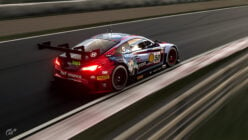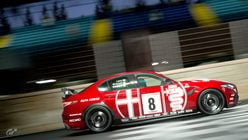
Almost two weeks after first being teased, the fifth update this calendar year for Gran Turismo 7 is now upon us and it brings some significant under-the-hood changes as we’d been somewhat expecting.
Despite bringing a modest four cars to the game — bringing the total since launch to a nice, round 150 — the 1.71 update is pretty chunky. The PlayStation 5 version is a fraction below 2.1GB, while PlayStation 4 owners have a 2.12GB download (and the usual long wait to copy it over).
As is the usual state of affairs for these things, we had advanced notice of a lot of the broad strokes already. However there’s plenty of details that weren’t known until this morning, including a pretty major refresh of the game’s physics.
Gran Turismo 7 Update 1.71: New Cars
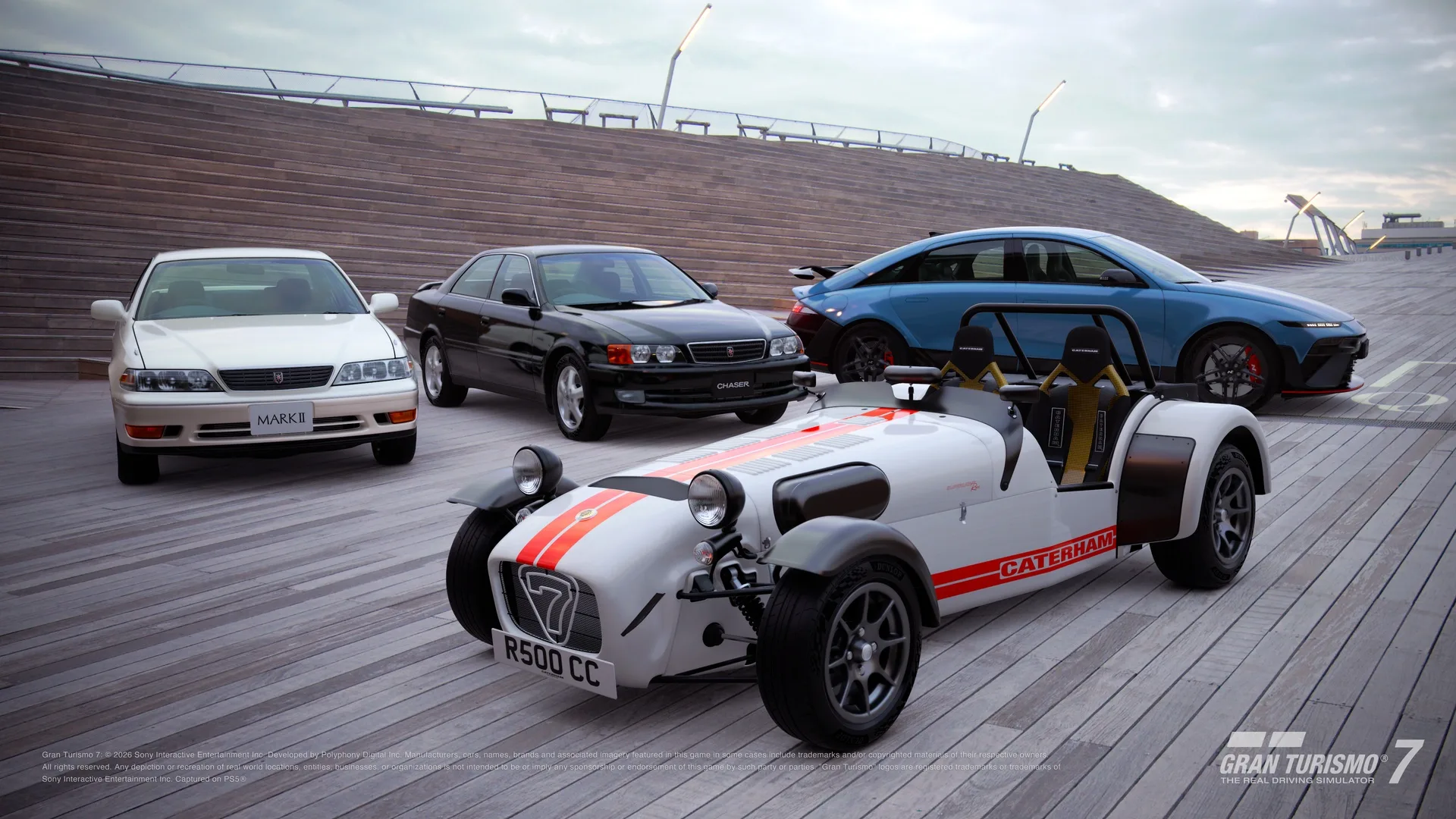
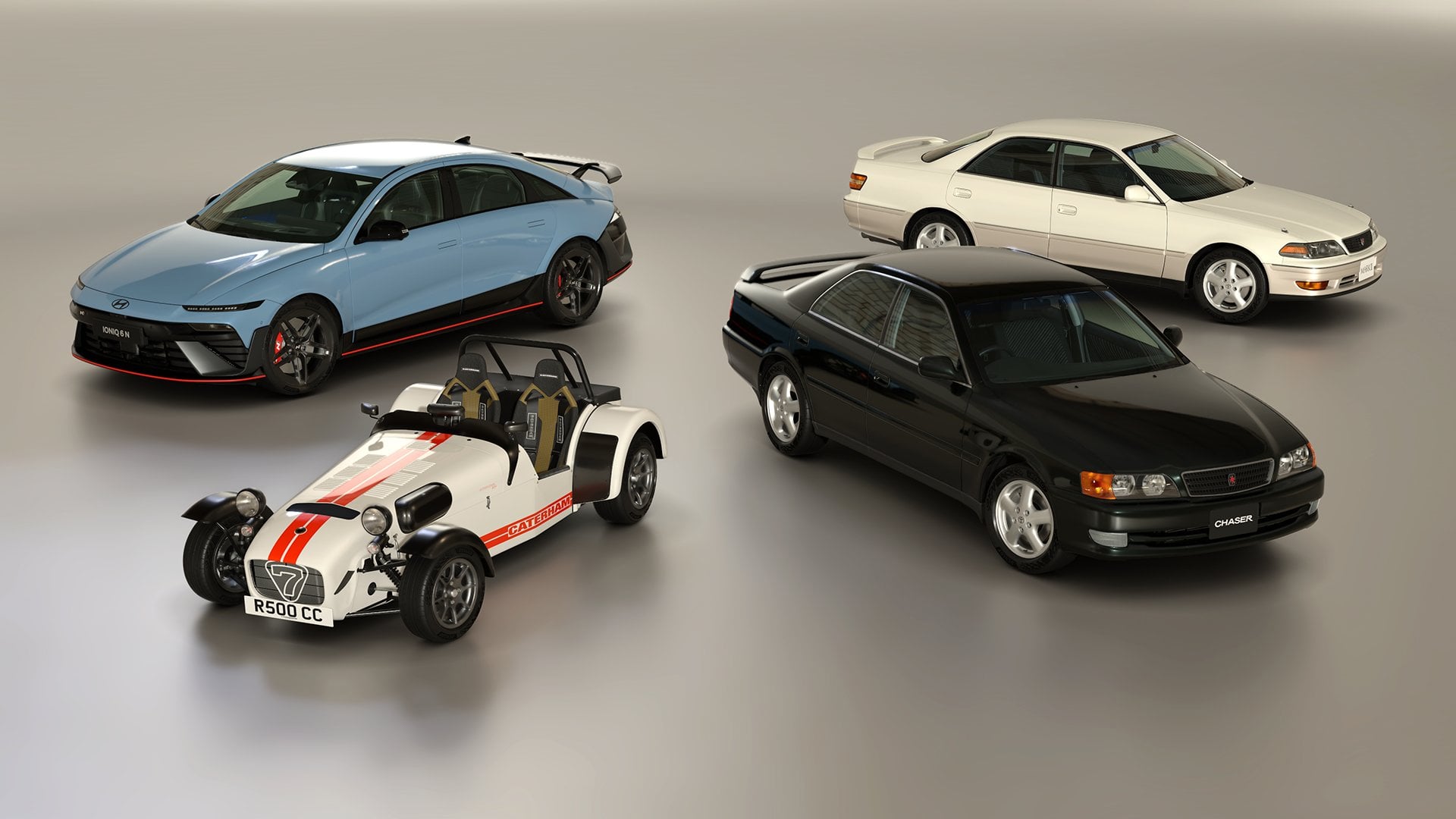
New content is always the headline feature of a content update, and while we’ve known about the cars broadly since August 9 there’s still the matter of pricing left open until today:
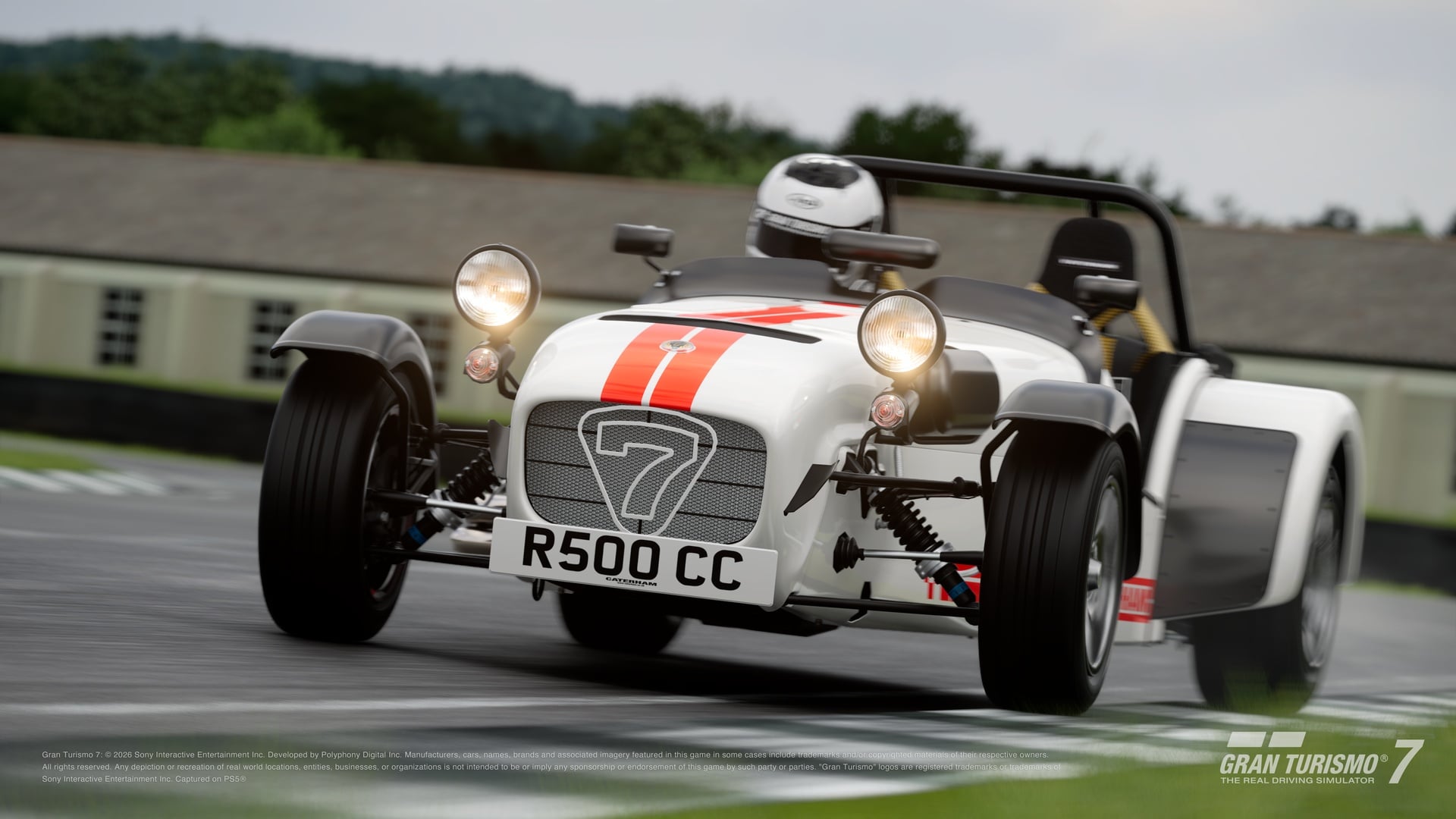
- Caterham Seven Superlight R500 2008 – Brand Central – 75,000cr
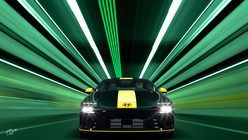
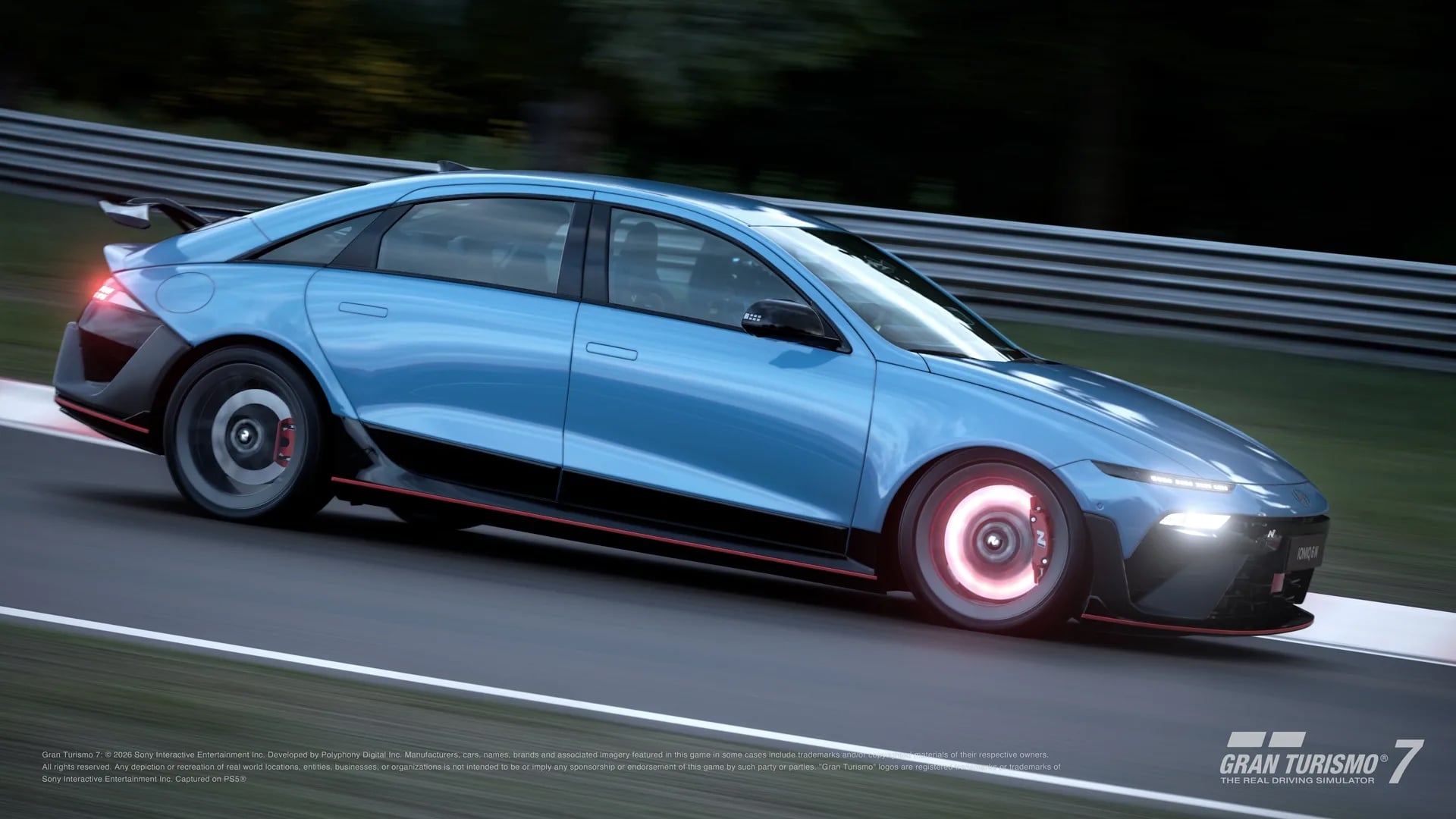
- Hyundai Ioniq 6N 2025 – Brand Central – 90,000cr
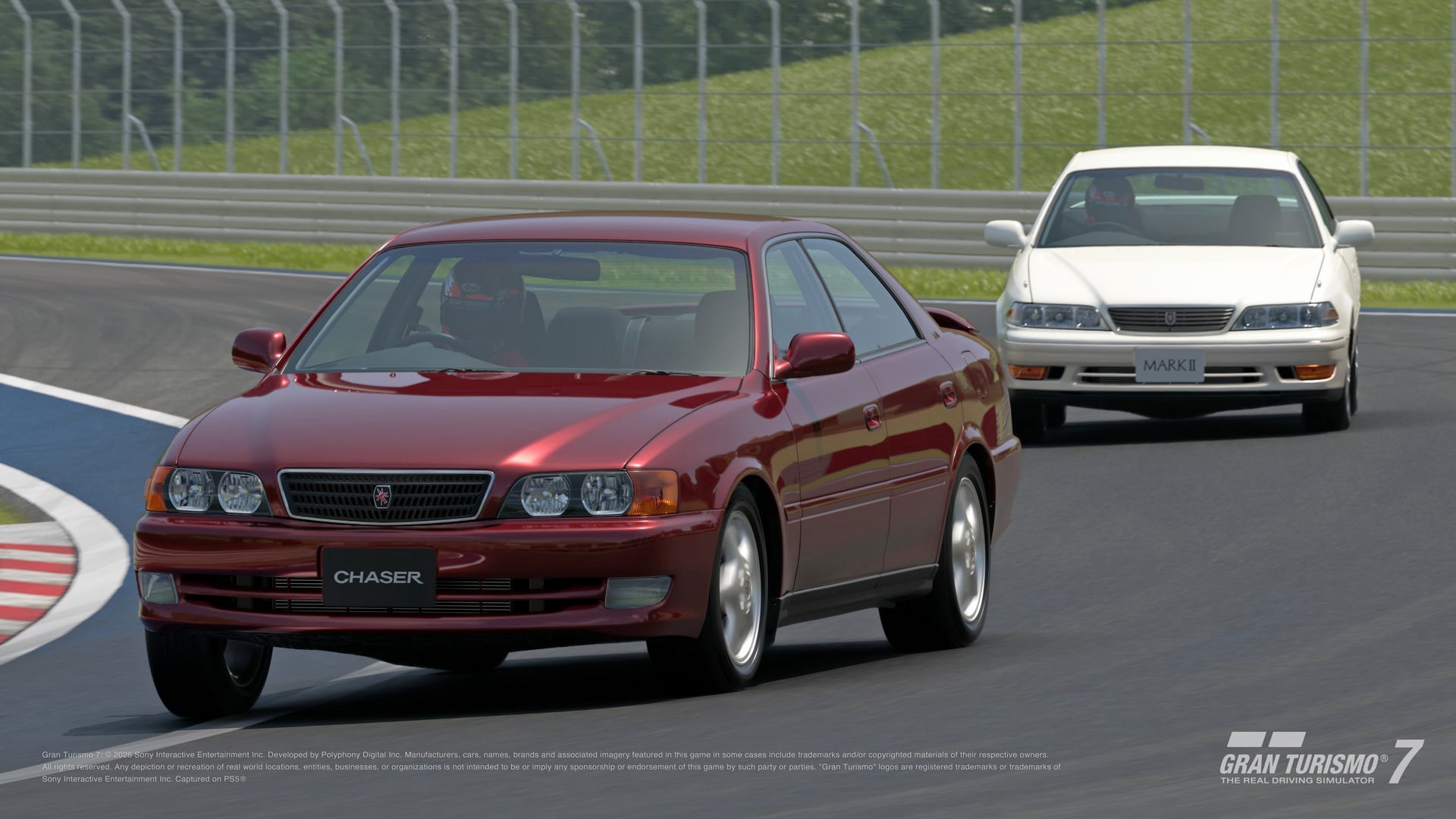
- Toyota Chaser Tourer V 1997 – Used Cars – 70,000cr*
- Toyota Mark II Tourer V 1997 – Used Cars – 70,000cr*
Unlike the pretty robust pricing of June’s Hypercar update, which would set you back over 12m credits, it’s a relatively cheap month. In fact, of the 39 updates so far, 1.71 is the fifth least expensive in terms of initial outlay for cars.
None of the quartet breaks into six figures, and that’s even with the “Hot”, low-mileage pricing of the two used cars. The Toyotas will be cheaper down the line when they enter the regular stock rotation there.
Gran Turismo 7 Update 1.71: Physics Overhaul
Now we’re into the meat of this particular update, which sees one of the largest changes to the game’s underlying physics since launch and the biggest since the 1.49 update back in 2024.
There’s significant changes for just about every aspect of the physics, as well as input device adjustments, and a recalculation of the Performance Points values across the game’s fleet likely necessitated by the other changes.
Physics begins with tires of course — hence the game’s current, and second, tire-manufacturer partnership, with Dunlop — and it looks like every aspect has been tweaked. There’s new calculations for rolling resistance, heating, and wear, primarily when the tires are slipping, while there’s an unspecified change to how grip loss occurs with “Real” off-track settings.
Along with that there’s a new map for engine torque control, with improvement to partial throttle behavior and control while drifting. Steering geometry across the board has been changed, along with new calculations for damping forces.
Significantly, there’s new default suspension and differential settings. That’s going to have a major effect on how cars handle right out of the box. The same applies to aerodynamic settings, where applicable, and range of adjustment in all three categories has been altered.
Another factor here is changes to how traction control and ABS behave, with new settings for how and when TCS interferes and changes to cornering manners while ABS is active.
Also tweaked in this update is the downshift prevention mechanism. While PD hasn’t gone into specifics here, only noting that it has been “adjusted”, initial testing suggests that you can force a downshift in manual mode — resulting in engine over-revving — earlier than when it was first introduced last December, but still not to the extremes of before.
There’s a few specific changes to a handful of cars, with the Hyundai Ioniq 5N gaining new freedom in the torque control system, and changes to the engine/motor rpm limits for some EVs, the Super Formula cars, and two of the 2016 Super GT GT500 cars.
Along with all of that, there’s changes to input device functions too. Standard controllers have new steering, throttle, and brake characteristics, while those with wheels have new throttle and brake input and response maps and changes to force feedback strength, as well as new vibrations during understeer.
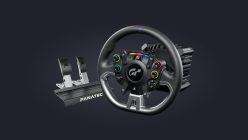
Players with Fanatec wheels also gain new settings, with a specific setup optimised for GT7 as well as — at long last — support for the FullForce feedback system.
All of that has some downstream consequences for the game.
On a minor level, there’s now new Performance Point limits for the Lightweight K Cup which previously featured the lowest restricted PP of any series (but not any individual race) in the game at 400PP. The bar is now 450PP, even if the event description still says the former value.
More notably there’s an across-the board reset of all event leaderboards, and all target times, with brand-new demonstration lap ghosts across Circuit Experience, Licences, and Missions.
This one can cause some confusion, as your own record remains visible to you and can mislead due to the new targets. In essence, your progression remains untouched: if you already achieved a gold, this isn’t taken away from you if your record is now only good enough for silver; if you hadn’t yet achieved a gold, it isn’t granted to you even if your record is now good enough for gold.
Even Music Rally has had its leaderboards reset…
Gran Turismo 7 Update 1.71: New Races & Events
Although the physics update section is pretty weighty, there’s not a huge change to the things you can do with the 574 (plus one) cars.
We knew about the three new races — and yes, just three, despite the four new cars — yesterday, but the formats and rewards remained under wraps until this morning.
Aside from that there’s only a new collection-based Seasonal Menu, and a new Circuit Experience (for the sixth time in six successive updates). The update adds no further races, missions, or menu books, whether bonus or extra.
Gran Turismo 7 Update 1.71: New World Circuits Races
- European Clubman Cup 600 – Barcelona-Catalunya GP/NC (4 laps) – 75,000cr
- Japanese FR Challenge 450 – Kyoto Yamagiwa (2 laps) – 40,000cr
- World Touring Car 600 – Suzuka Circuit (4 laps) – 95,000cr
As expected, the Caterham is the cover star for the European event, the Toyotas for the Japanese event, and the 6N for the WTC600 race.
Even though all three races are on circuits that are on the longer side, it’s just ten laps of new racing this time round.
Gran Turismo 7 Update 1.71: New Circuit Experience
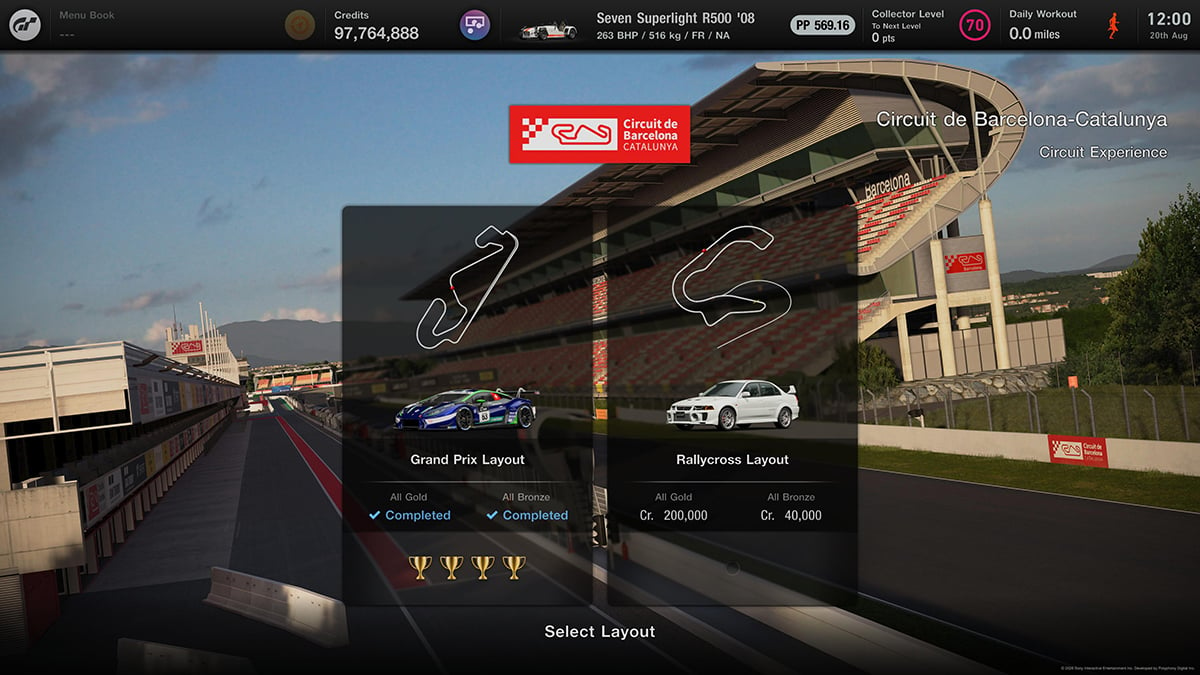
This one’s pretty wild, with a rare appearance of a road car in a Circuit Experience event. It takes you to the game’s only mixed-surface course, Circuit de Barcelona-Catalunya Rallycross, and it comprises just one test. Just like Northern Isle Speedway, this is the full-lap attack only.
You’ll be driving the Mitsubishi Lancer Evo V GSR ’98 for this one, with a gold time of 51.5 seconds. Confusingly that’s worth 30,000cr (for the “sector”) and a bonus 240,000cr (for all-gold), or 270,000cr for 50 seconds’ work…
Gran Turismo 7 Update 1.71: New Seasonal Menu
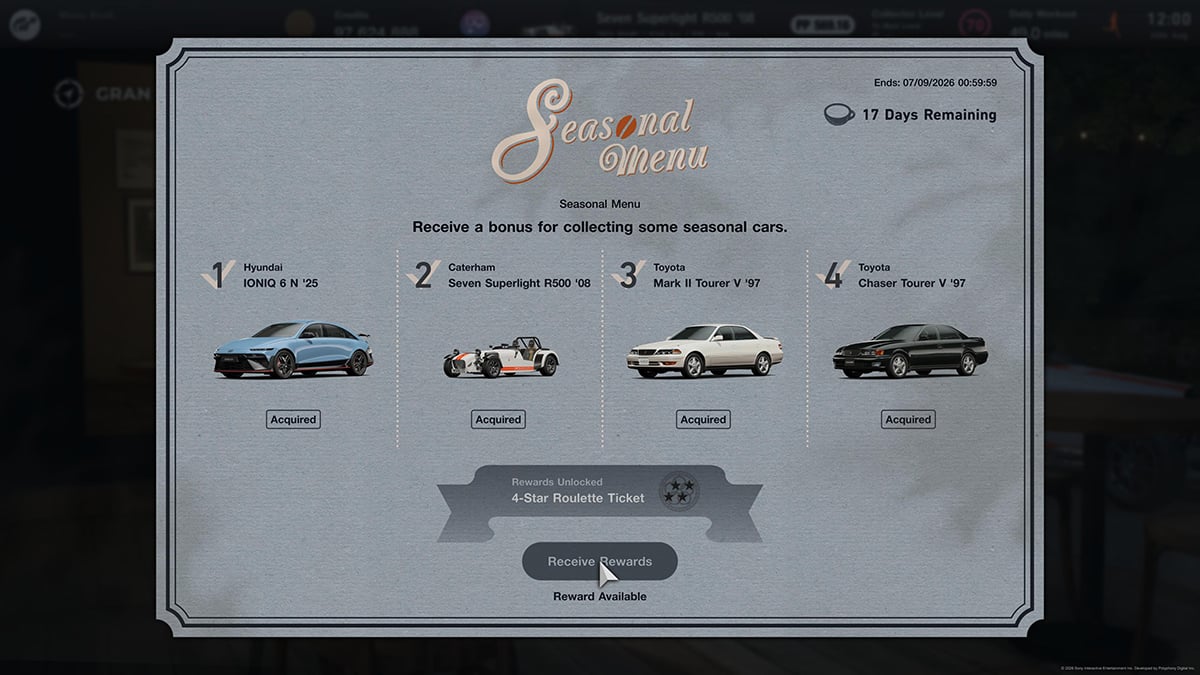
As expected, there’s a new Seasonal Menu, requiring you to collect cars from the update within a short window of just 17 days.
Unexpectedly, you’ll need to pick up all four cars from the update, and the incentive for doing so is a Four-Star Roulette Ticket. As this has basically a 50% chance of giving you a reward of 30,000cr or less, the incentive is not particularly enticing.
Gran Turismo 7 Update 1.71: New Engine Swaps
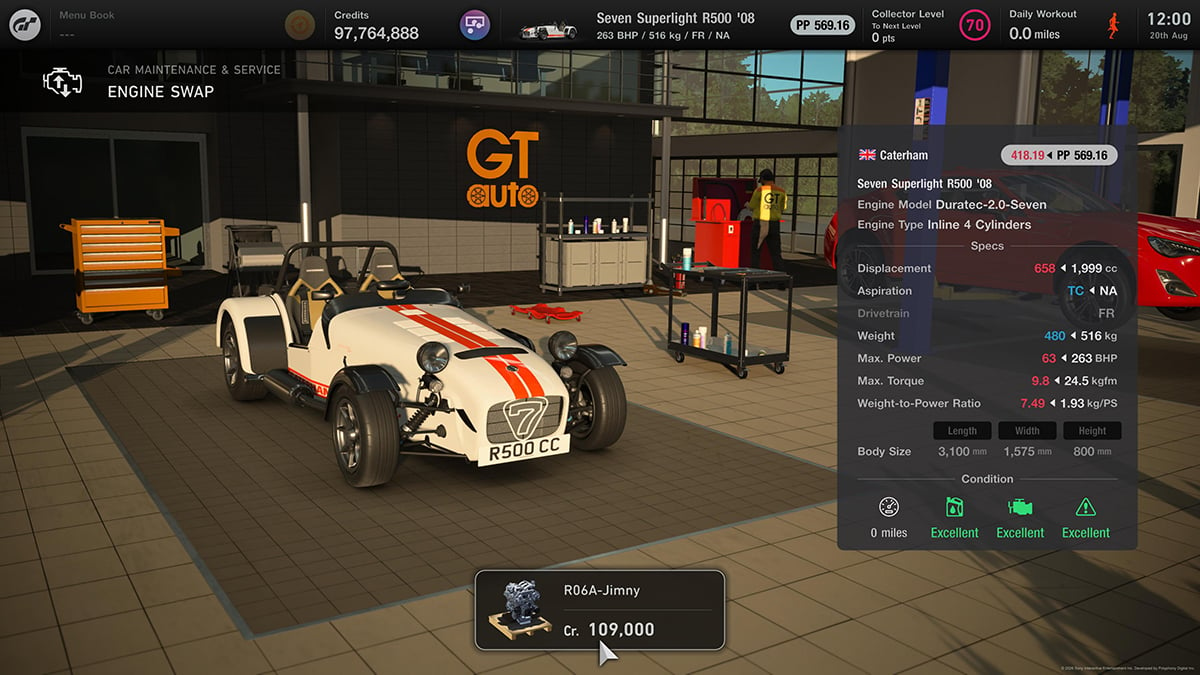
There’s a bumper crop of ten engine swaps in the update, bringing the total available close to 300 now, and unusually the new cars are involved in the set.
That starts with the Caterham, which has a rare downgrade available in the shape of the Suzuki Jimny’s 660cc unit. This one is obviously inspired by the Seven 160/170, which had a similar turbocharged Suzuki engine (just with more power) to make it eligible for kei car benefits in Japan — though it was a special narrow-body version of the car, not the standard chassis of the Superlight.
Both the Toyotas have some big boosts, taking the Lexus SC430 Super GT car’s V8 in a clearly drift-inspired swap. Another car getting Super GT power is, oddly, the Red Bull X2014 Junior which now accepts the NSX’s unit.
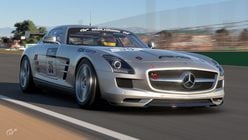
It’s a bit mix-and-match elsewhere. The Red Pig Mercedes can now ditch the old V8 for a newer engine from the 2020 Mercedes-AMG GT3, while the SLS AMG gets a little family upgrade to the Pagani Huayra’s V12 AMG engine.
Ford Windsor power is now available for the Ford Focus RS and Mitsubishi Lancer Evo IX — both a second swap for these cars — while the 996 Porsche GT3 now takes the Turbo S engine from the 992.
Finally, and topping the charts for crazy points, the 2007 Suzuki Swift Sport joins its 2017 sibling in accepting the miniscule but potent V8 from the brand’s Vision GT car.
Gran Turismo 7 Update 1.71: Other Changes
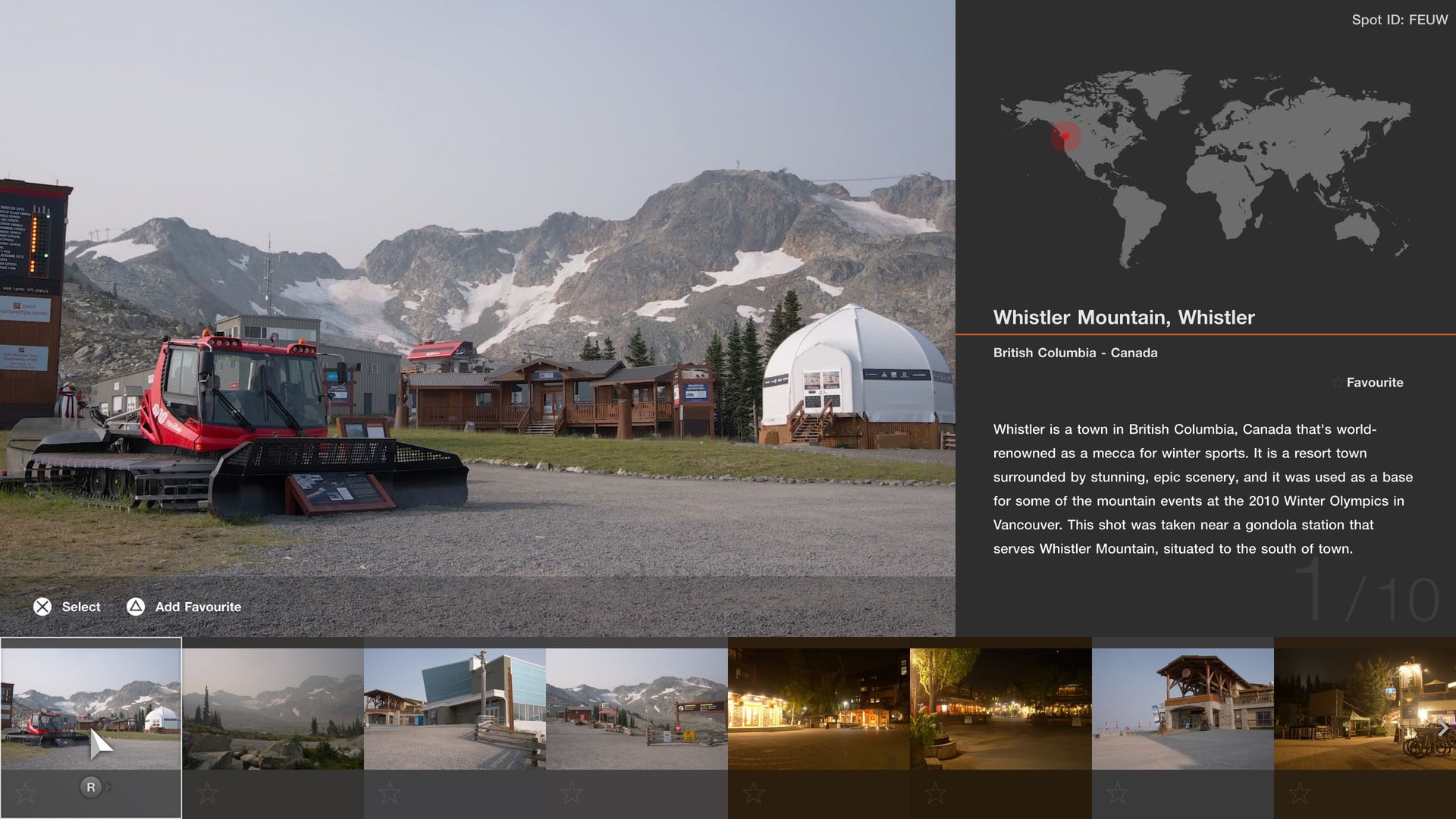
Obviously there’s some more Scapes, with the former Winter Olympic host town of Whistler in Canada now the site of ten new locations. Notably this is the second appearance in the series of Whistler, with the Ice Arena in Gran Turismo 4 hosting a race called the “Whistler Ice Race”.
A big change for PlayStation 5 Pro players is an update to support the latest version of the PlayStation Spectral Super Resolution (PSSR) upscaler, itself launched back in February.
Elsewhere there’s an interesting note that the decision matrix for shortcut penalties has been “toned down”, which we’re likely to see in action in the Daily Races and the GTWS Exhibition season starting this weekend. Also probably debuting in the latter is a new “Championship” setting for mechanical damage, which increases the frequency and recovery time of light damage.
Otherwise that’s it for bigger changes — unless the various GT Cafe conversations float your boat — and anything else will be by way of details not specifically mentioned in the patch notes.
Our community will be uncovering these in the regular Undocumented Changes thread over the coming days and before you ask it doesn’t included any updated Suzuka signage despite that appearing in the GTWS event last weekend. Three years since its debut…
See more articles on Gran Turismo 7 Game Update.